To prevent false alarms caused by your pets, look for alarm systems with pet-friendly motion sensors that analyze movement, size, and heat signatures, ignoring small pet activity. Adjust sensitivity levels and avoid placing sensors where your pets frequently pass. Proper setup, training, and safe spaces help your pets coexist peacefully with security devices. To discover advanced features and tips for staying secure without chaos, explore how these systems are designed to fit your home and pet life.
Key Takeaways
- Use pet-friendly motion sensors with advanced algorithms that ignore small pet movements to prevent false alarms.
- Adjust sensor sensitivity based on pet size and activity to balance detection accuracy and false alarm reduction.
- Properly position sensors at pet height and away from pet pathways to minimize false triggers.
- Train pets with positive reinforcement and create safe spaces to reduce anxiety around security devices.
- Incorporate ongoing technology improvements, such as AI-driven detection, for smarter, more reliable pet-safe alarm systems.
How Do Pet-Friendly Motion Detectors Reduce False Alarms?

Pet-friendly motion detectors are designed to distinguish between your pets and potential intruders, substantially reducing false alarms. They use advanced sensor technology that analyzes animal behavior, such as movement patterns, size, and heat signatures. This technology allows the system to recognize when a small pet is moving within its range, preventing unnecessary alerts. Instead of triggering on every movement, these detectors focus on more significant activity typical of intruders. By understanding animal behavior, the sensors can adapt to different pet sizes and movement styles, ensuring your system remains reliable. Incorporating animal behavior analysis further enhances the system’s ability to differentiate pets from intruders. Additionally, many of these systems utilize sensor calibration techniques to fine-tune detection parameters based on your specific pets and environment, leading to fewer false alarms. Leveraging sensor sensitivity adjustment helps optimize detection accuracy according to your home’s layout and pet activity levels. This combination of sophisticated sensor tech and behavioral analysis means fewer false alarms, so you can feel more secure without constant false alerts disrupting your day. Implementing pet motion detection also helps prevent common issues like pets triggering alarms while they move freely around the house. Moreover, ongoing advancements in sensor technology continue to improve accuracy and reduce false positives even further.
What Are the Key Features of Pet-Safe Alarm Systems?

Pet-safe alarm systems often feature pet-friendly motion sensors that avoid triggering false alarms when your pets move around. You can also adjust sensitivity levels to match your pet’s size and activity, ensuring the system responds appropriately. These key features help keep your home secure without risking unnecessary alerts or distress for your pets. Incorporating connected technology can further enhance your security by enabling remote monitoring and alerts via your smartphone. Additionally, some systems include pet-safe sensors designed specifically to differentiate between human and pet movements, reducing false alarms even further. Implementing user-friendly controls can make managing your security system easier, especially for busy pet owners. To optimize performance, it’s important to select accurate motion detection that is tailored to pet behavior patterns. Recognizing pet movement patterns helps refine system sensitivity and minimizes false alarms.
Pet-Friendly Motion Sensors
To guarantee your alarm system detects intrusions without triggering false alarms when your pets move around, pet-friendly motion sensors are designed with specific features that set them apart. These sensors often include specialized detection algorithms that ignore pet hair and small movements, reducing false alarms. Proper sensor placement is essential; you should install sensors high on walls or in corners, away from pet pathways, to prevent accidental triggers. Some sensors use infrared technology that differentiates between human and pet heat signatures, adding another layer of accuracy. Additionally, they are often equipped with pet-resistant casings and adjustable mounting options, helping you customize the setup. Sensor calibration is also crucial, as it ensures the system accurately distinguishes between pets and potential intruders. Implementing advanced detection technology further enhances the system’s ability to differentiate threats from everyday pet activity. Using detection algorithms that analyze movement patterns can improve accuracy, making sure the system responds appropriately to real threats. Incorporating smart sensor features that adapt over time can also help maintain reliability as your pets’ behavior changes. Regular system updates ensure that the sensors stay optimized for current detection challenges, maintaining their effectiveness. With these features, your system stays alert to real threats while accommodating your pets’ daily activity.
Adjustable Sensitivity Levels
Adjustable sensitivity levels are a crucial feature that allows you to tailor your alarm system’s response to your home environment and your pets’ activity. By adjusting sensitivity calibration, you can prevent false alarms caused by small pets or minor movements. This feature enables alarm customization to suit your household’s unique needs. For example, you can:
- Increase sensitivity for larger pets or active households.
- Decrease sensitivity to avoid false triggers from small animals or shadows.
- Fine-tune settings to balance prompt alerts with minimizing chaos.
- Proper calibration of sensitivity settings ensures optimal performance and reduces false alarms. Additionally, understanding motion detection technology can help you optimize these settings for better accuracy. Recognizing the detection range of your system allows for more precise sensitivity adjustments based on your space.
With adjustable sensitivity levels, you gain better control over your alarm’s performance, ensuring it detects genuine threats without unnecessary disturbances. This customization enhances your peace of mind, making your pet-safe alarm system more effective and reliable.
Which Pet-Friendly Alarm Systems Are the Best?
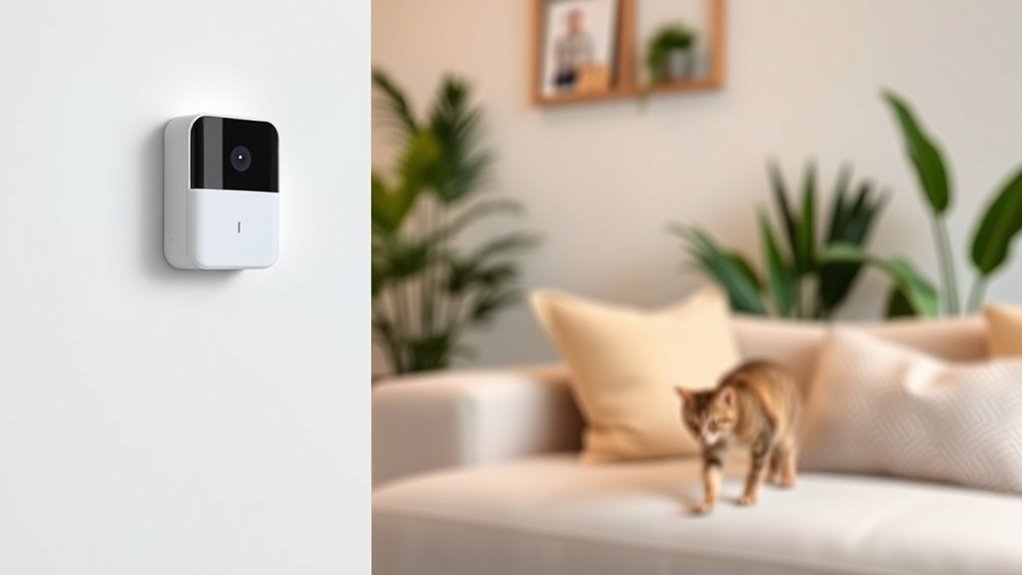
Choosing the right pet-friendly alarm system can give you peace of mind while keeping your furry friends safe. The best systems are designed to recognize pet behavior and minimize false alarms caused by pet hair or movement. Look for detectors with adjustable sensitivity levels and pet-specific modes that ignore small animals. Wireless systems with smart alerts allow you to monitor your home remotely and respond quickly if needed. Some systems use infrared sensors that distinguish between humans and pets, reducing chaos during daily activity. Consider brands known for pet safety features, like SimpliSafe, Ring, or Arlo. These systems prioritize pet-friendly technology, ensuring your home remains secure without sacrificing your pet’s comfort or risking false alarms triggered by pet behavior or pet hair. Additionally, sensor technology plays a crucial role in accurately differentiating between pets and humans, helping to prevent unnecessary alerts. Incorporating thermal imaging sensors can further improve detection accuracy by monitoring temperature differences, which helps in distinguishing pets from intruders. Exploring advanced motion detection options can also enhance the system’s ability to reduce false alarms caused by pets. Furthermore, proper system calibration is essential for maintaining optimal pet safety and alarm reliability over time. Incorporating field‑of‑view adjustments enables the system to better adapt to your specific home environment, further reducing false alarms related to pet movements.
How to Set Up Your Pet-Safe Motion Detection System
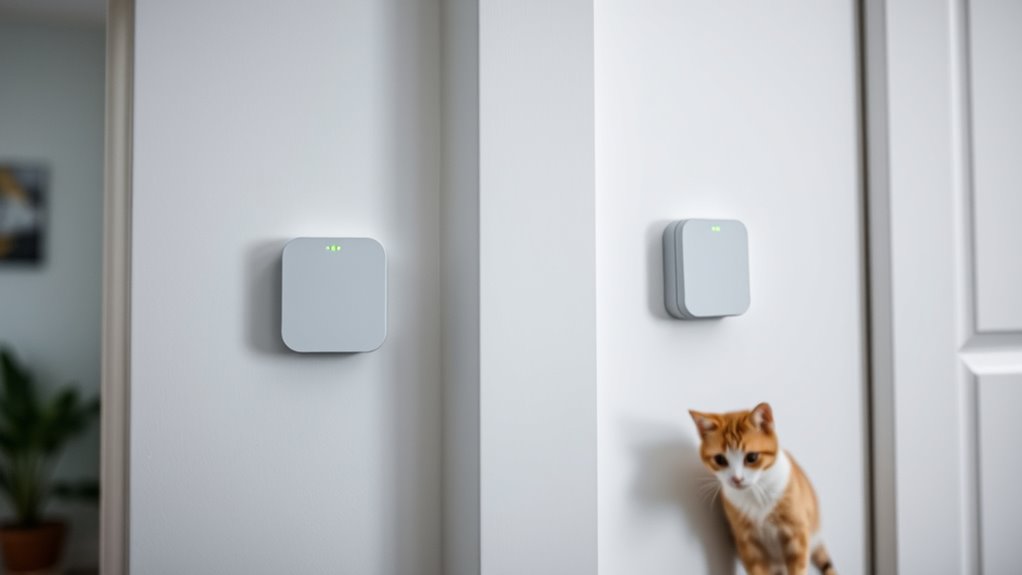
Setting up your pet-safe motion detection system correctly is essential for preventing false alarms and ensuring your pets’ safety. To do this effectively, consider these steps:
- Position sensors at pet height to avoid pet allergy awareness issues triggered by fur or movement.
- Adjust sensitivity settings to differentiate between pets and intruders, reducing false alarms.
- Integrate veterinary alarm notifications for quick response if your pet shows signs of distress or if unusual activity is detected.
Common Problems With Pet Motion Sensors and How to Fix Them

Even with careful placement and sensitivity adjustments, pet motion sensors can still encounter common issues that interfere with their performance. One frequent problem is pet motion false alarms, which occur when the sensor detects your pet’s movements as a threat. This often results from improper sensor calibration, where the device isn’t tuned to ignore small or harmless motions. To fix this, recheck your sensor’s placement—avoid areas with direct sunlight or drafts—and recalibrate it according to the manufacturer’s instructions. Additionally, adjusting the sensitivity settings can help prevent false alarms caused by your pet’s size or activity level. Regularly testing and fine-tuning your system ensures it responds accurately, reducing unnecessary alerts and maintaining reliable pet-friendly motion detection.
Tips for Training Pets to Coexist With Security Systems

To help your pets feel comfortable around security systems, start with positive reinforcement techniques that reward calm behavior. Creating designated safe spaces gives your pets a retreat when they feel overwhelmed by alarms or sensors. By consistently applying these methods, you’ll make coexistence easier for both your pets and your security setup.
Positive Reinforcement Techniques
Training your pets to coexist peacefully with security systems can be effective when you use positive reinforcement techniques. By rewarding good pet behavior around alarms or motion detectors, your pet learns to associate the system with positive experiences. Consistency is key—praise or treats should follow calm reactions to alarm sounds or sensor activations. To reinforce this, consider these tips:
- Use treats or praise immediately after your pet remains relaxed during system triggers.
- Gradually introduce the alarm sounds at a low volume, rewarding calmness throughout.
- Avoid punishment; instead, redirect your pet’s attention with toys or commands when they show signs of anxiety.
Employing positive reinforcement helps your pet feel safe and reduces stress, making coexistence with security systems smoother.
Designated Safe Spaces
Have you considered creating designated safe spaces for your pets to help them feel secure around security systems? These areas offer pet enrichment and reduce anxiety caused by motion detectors. By training your pet to associate these spaces with comfort, you prevent chaos during security alerts. Use familiar bedding, toys, and calm music to reinforce safety. Incorporate wildlife deterrents nearby to discourage outdoor animals from triggering alarms, keeping your pet calm indoors. Here’s a simple idea layout:
| Safe Space Features | Benefits |
|---|---|
| Cozy bedding | Comfort and security |
| Interactive toys | Mental stimulation |
| Quiet corner | Reduces overstimulation |
Designated safe spaces build a sense of trust and help your pet coexist peacefully with your security system.
How to Keep Your Home Secure Without Disturbing Your Pets
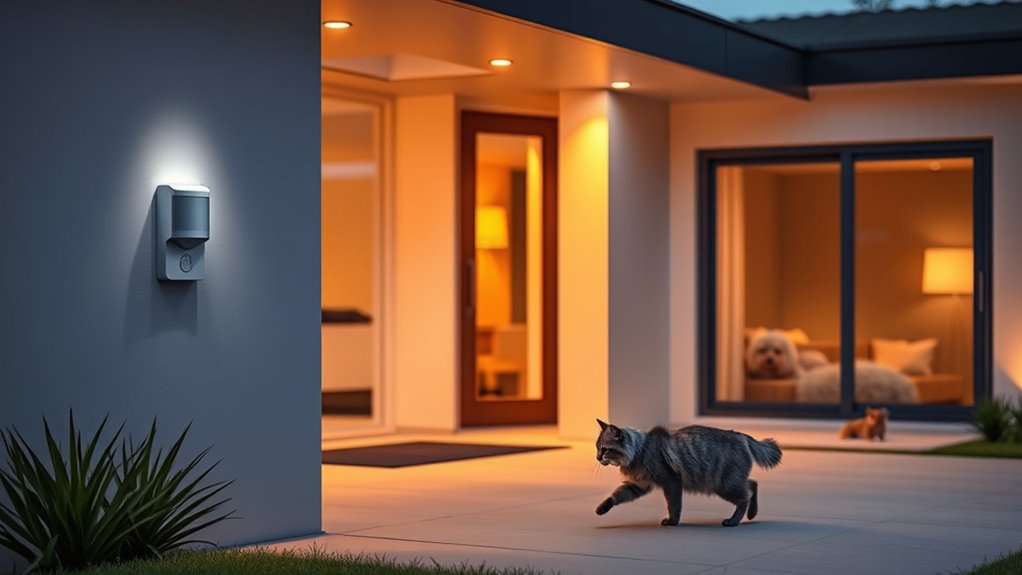
Maintaining home security is essential, but it doesn’t have to come at the expense of your pets’ comfort. To prevent unnecessary stress, focus on understanding your pet’s behavior and customizing your alarm system accordingly. Here are three tips:
- Use alarm customization features to set zones that avoid areas where your pets frequently move.
- Adjust motion detection sensitivity to prevent false alarms caused by pet movement.
- Implement pet-friendly sensors that differentiate between human and animal motion.
Future Trends in Pet-Friendly Home Security Systems

Advancements in technology are shaping a future where home security systems become smarter and more adaptable to pet owners’ needs. Expect to see more integrated smart technology that can distinguish between pets and intruders, reducing false alarms and enhancing safety. These systems will likely incorporate AI-driven motion sensors that adapt to your pet’s behavior and activity patterns. Energy efficiency will also play a key role, with devices designed to minimize power consumption while maximizing performance. Wireless connectivity and remote monitoring will become more seamless, allowing you to control and customize your security setup effortlessly. As these innovations evolve, your home will become safer and more responsive without sacrificing convenience or pet comfort, ensuring peace of mind for you and your furry friends.
Frequently Asked Questions
Do Pet-Friendly Alarm Systems Work With Smart Home Integrations?
Yes, pet-friendly alarm systems often work with smart home integrations. They use pet detection technology to distinguish your pets from potential intruders, which helps reduce false alarms. When integrated with your smart home system, you can customize alerts and responses, ensuring your pets don’t trigger the alarm unnecessarily. This seamless setup enhances security while maintaining peace of mind, especially when your furry friends are around.
Can Pet Motion Detectors Distinguish Between Different Types of Animals?
Did you know that advanced pet motion detectors can identify specific animals? These systems use animal recognition technology to distinguish between pets and humans, notably reducing false alarms. You can set your alarm to better recognize your cat or dog, ensuring it only triggers during true threats. This targeted detection helps reduce false alarm reduction, giving you peace of mind without constant false alerts, even with multiple pets roaming around.
Are Pet-Safe Alarm Systems Suitable for Outdoor Use?
Yes, pet-safe alarm systems are suitable for outdoor use, as they’re designed to handle diverse animal behavior and resist weather conditions. These systems feature durable sensors that withstand rain, wind, and temperature changes, ensuring reliable detection without false alarms. You can confidently install them outside, knowing they’re built to endure the elements and accurately differentiate between animals and potential intruders, keeping your property secure and your pets safe.
How Do Pet Activity Levels Affect Motion Detection Accuracy?
Pet activity levels considerably impact motion detection accuracy. If your pets are highly active, the system’s motion sensitivity needs to be adjusted to avoid false alarms caused by their movements. Conversely, if your pets are calmer, you can set the sensitivity higher for better security. Regularly monitoring and tweaking the motion sensitivity ensures your alarm system correctly distinguishes between your pets’ activity and potential intruders, maintaining reliable protection.
What Is the Typical Lifespan of Pet Motion Sensors?
Pet motion sensors typically last between 3 to 5 years, but their lifespan depends on factors like pet battery life and sensor calibration. Did you know regular calibration can prolong their effectiveness? You should check the sensor’s battery life annually and replace batteries as needed to ensure consistent performance. Proper maintenance keeps your system reliable over time, giving you peace of mind that your pet’s safety is always protected.
Conclusion
With the right pet-friendly alarm system, you can strike a perfect balance between safety and peace of mind. Imagine your home as a symphony where your pets and security work in harmony, not chaos. By choosing the right technology and training your pets, you create a sanctuary where everyone feels secure. Embrace these tools and tips, and turn your home into a fortress of love and safety—without the noise of false alarms disrupting your harmony.