

When evaluating secure IoT platforms, focus on features like strong device authentication, robust data encryption, and seamless security management. Check if the platform supports advanced methods such as digital certificates and secure key exchanges. Look for architecture that integrates easily, scales with your needs, and includes layered security measures to counter threats. Prioritize platforms that provide continuous updates and activity monitoring. Exploring these criteria more deeply will help you identify the best solution for your needs.
Key Takeaways
- Robust device authentication methods like digital certificates and secure key exchanges ensure only authorized devices access the platform.
- End-to-end data encryption using TLS and AES protects data confidentiality and integrity during transmission.
- Continuous security updates, patches, and activity monitoring address vulnerabilities and detect suspicious actions promptly.
- Seamless integration, scalability, and layered security measures provide comprehensive protection across existing and future infrastructure.
- Effective access controls, audit logs, and proactive threat mitigation foster trust and adapt to evolving security challenges.

Have you ever wondered how safe your connected devices really are? In today’s world of interconnected systems, ensuring the security of your IoT platform is essential. When evaluating secure IoT platforms, one of the first things to consider is how they handle device authentication. A robust platform must verify each device’s identity before granting access to the network. This process prevents unauthorized devices from infiltrating your system, reducing the risk of malicious attacks. Look for platforms that employ advanced device authentication methods, such as digital certificates or secure key exchanges, to strengthen security. These measures create a trusted environment where only verified devices communicate, helping to safeguard your data and infrastructure.
Alongside device authentication, data encryption plays a key role in maintaining security. Any data transmitted between your devices and the platform should be encrypted using strong algorithms. This means that even if someone intercepts the data, they can’t decipher its contents without the decryption key. An effective IoT platform should offer end-to-end encryption, ensuring data remains confidential from the moment it leaves a device until it reaches its destination. Not only does this prevent eavesdropping, but it also guards against data tampering, which could lead to false readings or malicious commands. When evaluating a platform’s security features, verify that it supports up-to-date encryption standards like TLS or AES, which are industry benchmarks for protecting sensitive information.
Beyond these core features, think about whether the platform provides mechanisms for continuous security updates and patches. IoT environments are dynamic, and new vulnerabilities can emerge rapidly. A secure platform should have a clear process for deploying updates that address known threats without disrupting ongoing operations. Also, check if it offers thorough access controls and audit logs, allowing you to monitor device activity and trace any suspicious actions back to their source. Incorporating knowledge of security layers enhances your understanding of how comprehensive protection can be achieved.
Finally, evaluate the platform’s overall security architecture. Does it integrate seamlessly with your existing infrastructure? Is it scalable enough to accommodate future device additions? A platform that combines strong device authentication, robust data encryption, and flexible security management will give you confidence that your IoT ecosystem remains protected as it grows. Remember, securing IoT isn’t just about implementing a few features; it’s about adopting a layered, proactive approach that anticipates and mitigates potential threats at every point.
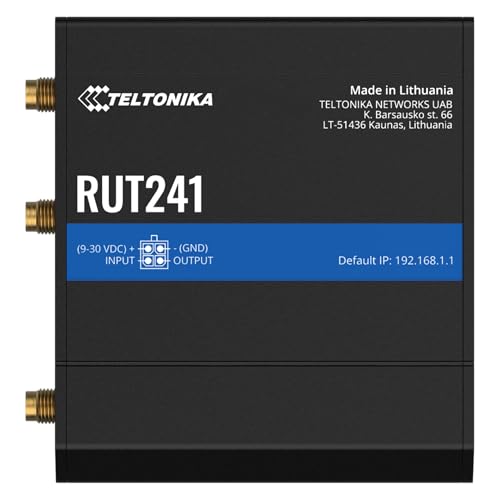
Teltonika RUT241 RUT241098000 Industrial 4G LTE Router (Cat 4) with WiFi, Dual Ethernet Ports, SIM Slot, RMS Remote Management – North America Version, AT&T & Verizon Certified
- Connectivity: Reliable 4G LTE with fallback to 3G/2G
- Wi-Fi Hotspot: Built-in wireless access point for multiple devices
- Remote Management: Compatible with Teltonika RMS for monitoring and control
As an affiliate, we earn on qualifying purchases.
As an affiliate, we earn on qualifying purchases.
Frequently Asked Questions
How Do Iot Platforms Handle Real-Time Security Threats?
You can rely on IoT platforms to handle real-time security threats through continuous threat detection, which monitors device activity and network traffic for anomalies. When threats are identified, incident response mechanisms kick in quickly, isolating affected devices and alerting you to take action. These platforms often integrate automation to swiftly mitigate risks, ensuring your IoT environment remains secure and resilient against evolving threats.
What Are the Costs Associated With Implementing Secure Iot Platforms?
Implementing secure IoT platforms involves costs like hardware, software, and ongoing maintenance. You should conduct a thorough cost analysis to understand expenses and plan your budget accordingly. Factors such as security features, scalability, and integration impact costs considerably. By carefully evaluating these elements, you can ensure your budget planning aligns with your security needs, avoiding unexpected expenses and enabling a smooth deployment process.
How Scalable Are Current Secure Iot Solutions for Large Deployments?
You’ll find that modern secure IoT solutions are like a mighty river, capable of handling vast deployments with ease. They scale seamlessly, managing countless devices through robust device management and data encryption, ensuring secure communication at every turn. As your network grows, these platforms adapt and expand, providing a steady flow of reliable, protected data without bottlenecks, making large-scale IoT implementations not just possible but effortless.
Can Existing Infrastructure Be Integrated With New Secure Iot Platforms?
Yes, you can integrate existing infrastructure with new secure IoT platforms, but you’ll face interoperability challenges with legacy systems. You’ll need to evaluate compatibility and possibly implement middleware or adapters to bridge different protocols and standards. This process requires careful planning to ensure seamless communication and security. Addressing these challenges upfront helps you achieve a unified, secure IoT environment that leverages your current infrastructure effectively.
What Are the Common Compliance Standards for Iot Security?
Did you know 80% of organizations face challenges with IoT security compliance? You need to understand common standards like GDPR, which emphasizes data privacy, and ISO/IEC 27001, focusing on information security management. Regulatory compliance guarantees your IoT devices protect user data and prevent breaches. Staying current with these standards helps you maintain trust, avoid penalties, and secure your IoT ecosystem effectively.
end-to-end IoT data encryption devices
As an affiliate, we earn on qualifying purchases.
As an affiliate, we earn on qualifying purchases.
Conclusion
In your quest for a secure IoT platform, prioritize protection, performance, and privacy. By carefully checking criteria and features, you’ll confidently choose a platform that safeguards sensitive data, supports seamless connectivity, and ensures user trust. Remember, focusing on functionality fosters faith, and thorough evaluation empowers your enterprise. So, stay sharp, scrutinize smartly, and secure successfully—because a safe, secure IoT system starts with your vigilant, vigilant vigilance.

Energizer Connect Smart 1080p HD Outdoor Security Socket Camera with Siren Alarm, Remote Access, Motion Alerts, 2 Way Audio and Night Vision, 2.4GHz Wi-Fi, Black
- HD Pan and Tilt Camera: 355° horizontal and 48° vertical movement
- Night Vision: Color and black-and-white night vision
- Two-Way Audio: Listen and talk with built-in mic and speaker
As an affiliate, we earn on qualifying purchases.
As an affiliate, we earn on qualifying purchases.

Teltonika RUTX10 RUTX10000200 Industrial Ethernet Router, Dual-Band Wi-Fi 5 Router with 4X Gigabit Ethernet Ports, Advanced Routing, Firewall, Remote Management & VPN, North America Version
- High-Speed Connectivity: Dual-band Wi-Fi 5 and Gigabit Ethernet
- Advanced Routing Features: Supports VLANs, load balancing, and segmentation
- Secure VPN Support: OpenVPN, IPsec, WireGuard, L2TP, ZeroTier
As an affiliate, we earn on qualifying purchases.
As an affiliate, we earn on qualifying purchases.