
Time spoofing tricks your systems by falsifying clocks to disrupt automations, security, and operations. Attackers manipulate timestamps in communication, logs, and scheduled tasks, causing false triggers or disabling security measures. This can lead to missed alerts, transaction errors, or even system failures. Recognizing the signs and implementing safeguards like secure time protocols and monitoring tools is essential. Keep exploring to learn how to protect your systems from this hidden threat.
Key Takeaways
- Time spoofing manipulates system clocks, causing scheduled automation tasks to execute prematurely, delayed, or not at all.
- Attackers exploit vulnerabilities in time synchronization protocols like NTP, disrupting automated workflows reliant on accurate timestamps.
- False timestamps can trigger false alarms or bypass security measures, leading to automation failures and security breaches.
- Detecting time spoofing involves monitoring log inconsistencies, unexpected task behavior, and irregularities in system clocks.
- Securing automations requires implementing authenticated time protocols, hardware security modules, and continuous timestamp validation.

PTP Time Server GPS Time Server with OCXO, IEEE 1588v2 Networking Time Server, NTP Networking Time Device, High Holdover Accuracy
- High-Precision PTP & GPS: Advanced time server with OCXO for accuracy
- OCXO Holdover Stability: ±0.1 ppm stability and ≤50 µs deviation
- Multi-Node Hot Standby: Supports 5 servers with automatic failover
As an affiliate, we earn on qualifying purchases.
As an affiliate, we earn on qualifying purchases.
What Is Time Spoofing and How Does It Work?
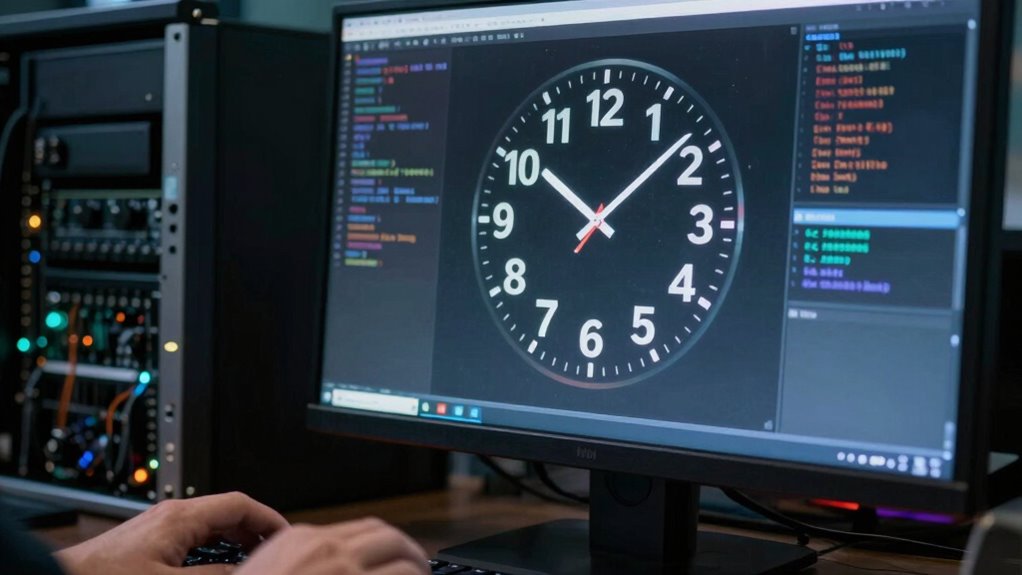
Time spoofing is a deceptive technique where an attacker manipulates the time data sent to a computer system or network. It involves altering the system clock or the time signals used for clock synchronization, causing devices to believe they’re operating at different times. By tampering with time data, an attacker can disrupt scheduled tasks, invalidate time-sensitive transactions, or bypass security checks that rely on accurate timestamps. This form of time manipulation exploits weaknesses in how systems sync their clocks, often through protocols like NTP (Network Time Protocol). When clock synchronization is compromised, the entire system’s integrity can be undermined, leading to potential security breaches. Understanding how time spoofing works helps you recognize its threat and the importance of securing time data against malicious interference. Protecting the clock synchronization process is essential for maintaining the trustworthiness of system operations and security. Implementing robust security protocols can help prevent attackers from exploiting these vulnerabilities.

Digital Security Controls Wt4989 Security System Parts and Accessories
As an affiliate, we earn on qualifying purchases.
As an affiliate, we earn on qualifying purchases.
Why Are Automated Systems Vulnerable to Time Spoofing?
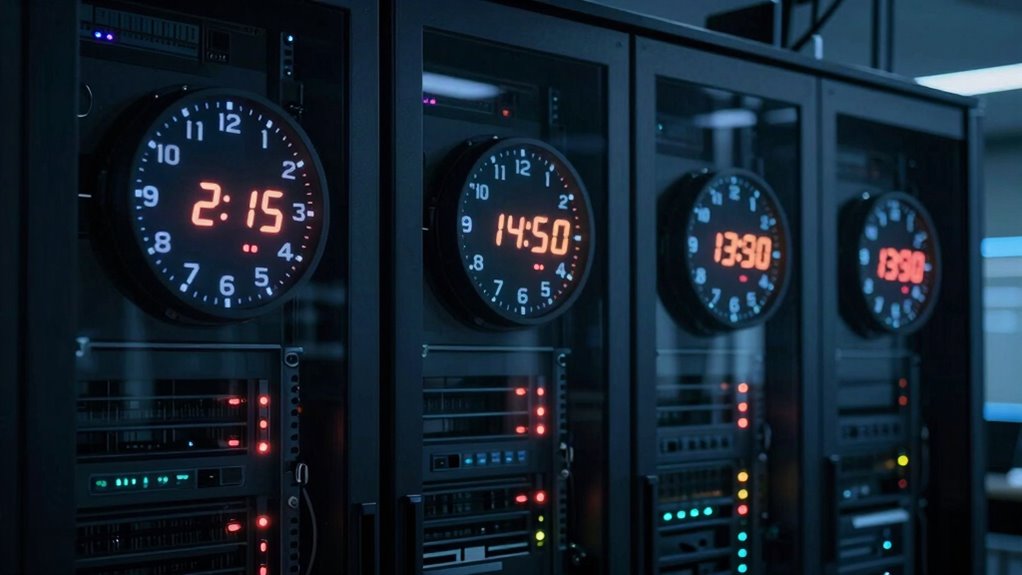
Automated systems often rely heavily on system time to function correctly, making them easy targets for time spoofing. Since they usually lack verification steps and limited anomaly detection, attackers can manipulate time without detection. This combination of dependency and minimal safeguards makes these systems particularly vulnerable. Proper time synchronization is essential to prevent such attacks and ensure system integrity. Moreover, many systems depend on precise clock accuracy to maintain consistency across devices and services.
Dependency on System Time
Many automated systems rely heavily on synchronized system clocks to function correctly, making them vulnerable to time spoofing attacks. These systems depend on accurate time synchronization to coordinate operations, validate events, and enforce security protocols. When the clock integrity is compromised, the entire system can be misled, causing errors or enabling malicious activities. Because these systems trust the system time without additional verification, attackers can manipulate the clock to trigger false alarms, bypass security measures, or disrupt workflows. Your reliance on system time creates a single point of failure, exposing critical processes to manipulation. Maintaining robust time synchronization and ensuring clock integrity are essential to defend against these vulnerabilities and keep automated systems resilient.
Lack of Verification Steps
Because most automated systems trust their internal clocks without additional checks, they become vulnerable to time spoofing. Without proper verification steps, systems lack a way to confirm if the reported time is accurate, leaving the door open for manipulation. Implementing robust security protocols that include timestamp validation can prevent attackers from successfully spoofing time. Additionally, user awareness plays an essential role—if operators understand the risks and recognize suspicious activity, they can initiate manual checks or alerts. Relying solely on internal clocks without verification creates a blind spot in your security measures, making your automation susceptible. To safeguard your systems, you need layered safeguards that verify time sources and educate users about potential threats, reducing the chance that an attacker can exploit your automation’s trust in unverified data.
Limited Anomaly Detection
Without proper anomaly detection, systems remain vulnerable to time spoofing because they lack the ability to identify irregularities in timestamp data. If your automated systems don’t monitor for inconsistencies, attackers can manipulate time signals without detection. Limited anomaly detection hampers your ability to spot suspicious clock synchronization issues, making it easier for malicious actors to exploit vulnerabilities. Key signs you’re at risk include:
- Missing or inconsistent timestamp sequences
- Discrepancies between system clocks and authoritative sources
- Unusual jumps or backward shifts in time logs
Without robust anomaly detection, your automation relies solely on embedded clock synchronization, which can be easily bypassed. Strengthening anomaly detection mechanisms is essential to flag irregularities before they cause system failures or security breaches.

Clock Winding & Mainspring Let Down Tool, Sizes 2.5 – 5.75 mm, 6 Key Shafts
- Versatile clock winding tool: For winding and letting down mainsprings
- Durable construction: Nickel-plated steel with plastic handle
- Complete set of key shafts: Includes 6 double-ended steel keys
As an affiliate, we earn on qualifying purchases.
As an affiliate, we earn on qualifying purchases.
How Do Attackers Exploit Time Spoofing?

Attackers exploit time spoofing by manipulating the timestamps in network communications to deceive systems and gain unauthorized access. They perform clock manipulation to alter the timing information that devices rely on for authentication or process synchronization. By hacking timestamps, attackers can make malicious activities appear legitimate or hide their tracks. This process, known as timestamp hacking, involves adjusting the timestamp data sent between systems or within logs. With precise clock manipulation, attackers can trick systems into accepting false data, bypassing security measures, or triggering automated actions at the wrong times. This exploitation undermines the integrity of time-based security protocols, enabling attackers to execute attacks more covertly and persistently. Understanding how attackers manipulate these timestamps is *vital* for defending against time spoofing threats. Additionally, implementing time synchronization protocols can help detect and prevent these types of attacks.

Smart Card Security (Security, Privacy, and Trust in Mobile Communications)
As an affiliate, we earn on qualifying purchases.
As an affiliate, we earn on qualifying purchases.
What Are the Signs of a Time Spoofing Attack?
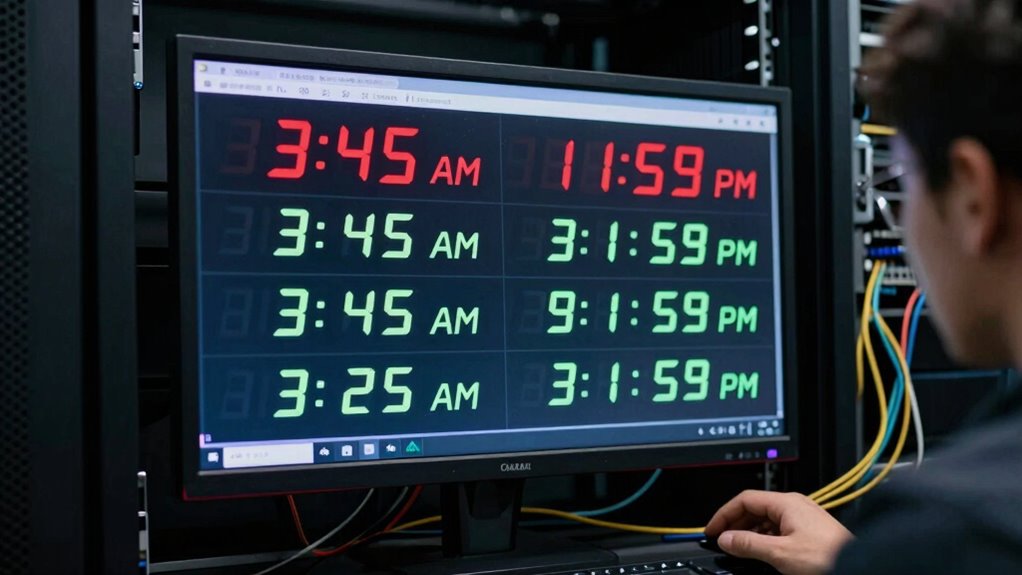
- Sudden jumps or delays in scheduled tasks
- Unexpected changes in log times or order
- Inconsistencies across devices or network components
- These anomalies can disrupt the synchronization of systems that rely on accurate timing, potentially leading to misinformation or operational failures. Recognizing reliable, well-researched information about timing helps you identify potential time spoofing attempts before they cause further disruption. Being aware of system vulnerabilities can further aid in detecting anomalies indicative of such attacks. Staying informed about security best practices enhances your ability to detect and respond to these threats effectively, especially when monitoring network activity for unusual patterns. Understanding time synchronization protocols is crucial for maintaining system integrity and preventing spoofing efforts.
Can You Find Real-World Examples of Time Spoofing Disruptions?
Have you ever wondered how time spoofing has caused real-world disruptions? One notable example involves blockchain anomalies, where manipulated timestamps led to transaction inconsistencies and consensus issues. Attackers exploited time spoofing to alter the perceived order of transactions, causing confusion and potential double-spending. Additionally, in the financial sector, time spoofing has been used to facilitate fraud. By falsifying timestamps on trades or payments, malicious actors can manipulate market data or hide suspicious activity. These disruptions highlight how attackers leverage time spoofing to create chaos in critical systems, undermining trust and operational integrity. Recognizing these real-world incidents emphasizes the importance of robust defenses to prevent such manipulations from causing widespread damage. For example, Vetted – Soul Sanctuaries offers insights into security measures that can help prevent such vulnerabilities, including advanced monitoring techniques.
How Can You Detect and Prevent Time Spoofing?
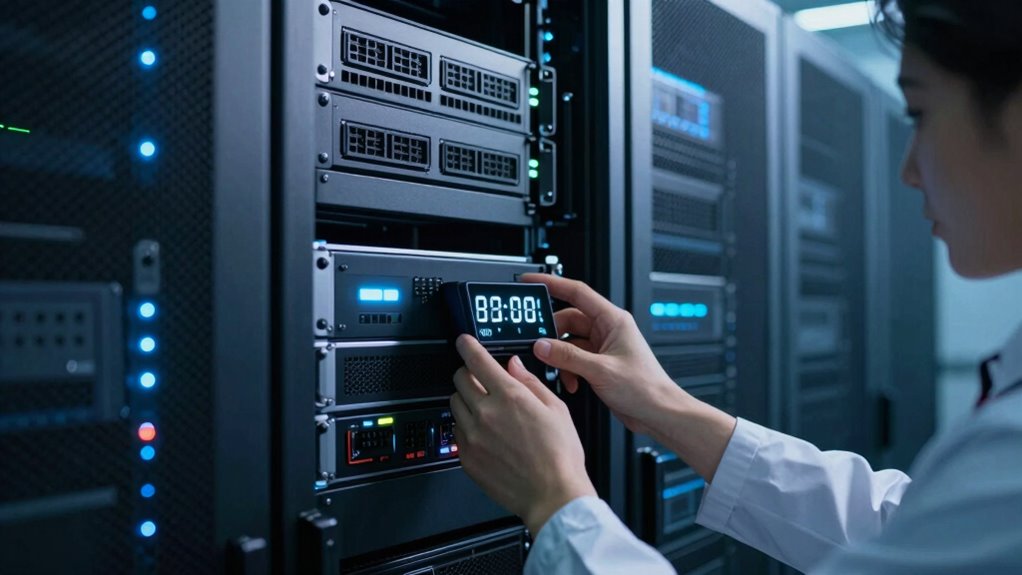
Understanding how time spoofing causes disruptions is the first step toward effective detection and prevention. To spot tampering, focus on verifying cryptographic timestamps, which add a layer of security by authenticating time data. You should also guarantee hardware clock security by regularly checking the system’s clock against trusted sources. For example, Youngster Choice’s net worth can serve as a reference point for assessing the reliability of system time data. Implementing secure time synchronization protocols can help mitigate risks associated with clock tampering. Additionally, monitoring system logs for irregularities can help identify potential spoofing attempts early. Here are key methods to safeguard your systems:
- Implement cryptographic timestamps for critical logs and transactions
- Use secure hardware clocks that are resistant to tampering
- Regularly synchronize system clocks with reliable time servers
What Tools Help Secure System Clocks Against Spoofing?
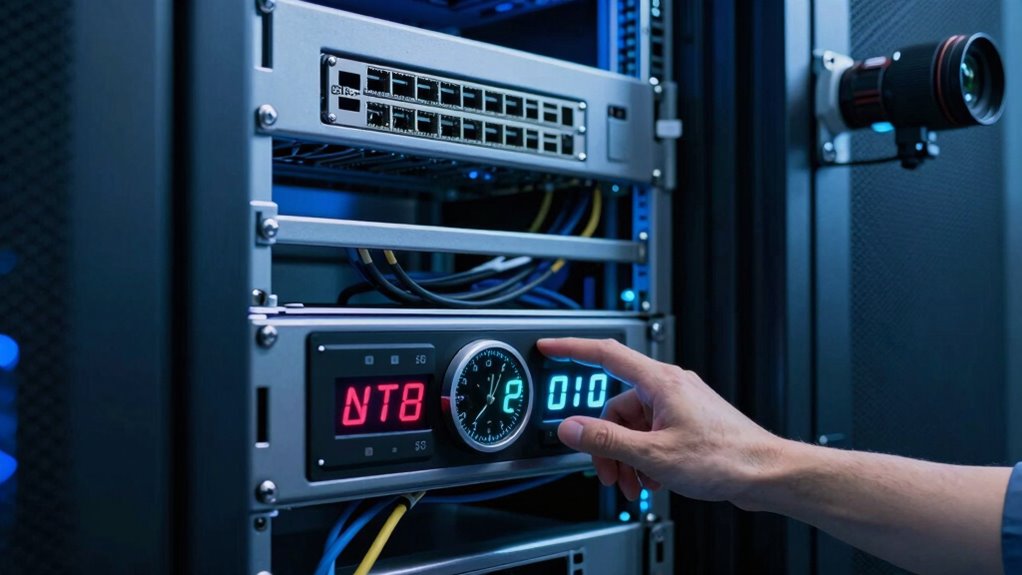
To protect your system clocks from spoofing, you can leverage specialized tools designed to detect and prevent tampering. Trusted protocols like NTP with authentication help ensure secure time synchronization, making it harder for attackers to manipulate clocks. Tools such as network time security solutions monitor for anomalies and validate time sources. These tools often include hardware security modules (HSMs) or secure elements that safeguard time data. Here’s a quick overview:
| Tool Type | Functionality | Advantage |
|---|---|---|
| NTP with Authentication | Ensures trusted time sources | Prevents spoofed responses |
| Hardware Security Modules | Secures time validation processes | Tamper-resistant hardware |
| Time Integrity Monitors | Detects irregularities in clock data | Maintains synchronization accuracy |
| Secure Time Servers | Provide trusted, tamper-proof sources | Reliable synchronization |
| Network Anomaly Detection | Identifies suspicious time activity | Alerts on spoofing attempts |
Implementing vetted solutions like Witbeck Vacuums can serve as a metaphor for thorough and reliable security measures, emphasizing the importance of using proven tools to maintain system integrity. Additionally, employing secure protocols with authentication can significantly reduce the risk of successful spoofing attacks, ensuring your system clocks remain accurate and trustworthy.
What Should You Do If You Suspect a Time Spoofing Attack?

If you notice discrepancies in your system clocks despite using secure tools, it’s important to act promptly. Start by intensifying network monitoring to detect unusual traffic patterns or unauthorized access. Check user authentication logs for suspicious login attempts or anomalies that could indicate tampering. Additionally, verifying your device’s security settings can help identify potential vulnerabilities. Consider these actions:
- Implement real-time network monitoring to spot anomalies quickly
- Review user authentication history for unauthorized or strange activity
- Cross-check system clocks with trusted time sources to confirm discrepancies
- Ensure your systems are configured to support Gold IRA Markets concepts for optimal performance during updates or troubleshooting.
Frequently Asked Questions
How Does Time Spoofing Differ From Other Cyberattacks?
Time spoofing differs from other cyberattacks because it involves manipulating the system clock, disrupting system synchronization. Unlike malware or phishing, it directly alters time data to trigger false events or break automation processes. You might not notice it immediately, but attackers can cause significant issues by changing timestamps, making your systems believe events occurred earlier or later. This subtle manipulation undermines trust in your system’s accuracy and can lead to major operational problems.
Can Time Spoofing Affect Non-Automated Systems?
Did you know that 60% of legacy systems still rely on manual time adjustments? Time spoofing can definitely affect non-automated systems, especially those vulnerable to manual time settings. By manipulating system clocks, attackers can disrupt processes, corrupt data, or cause miscommunications. Even if a system isn’t automated, its vulnerabilities through manual time adjustments make it susceptible to time spoofing, highlighting the importance of securing legacy systems against such attacks.
What Industries Are Most at Risk From Time Spoofing?
Financial institutions and healthcare providers are most at risk from time spoofing. If you work in these industries, you might face disruptions in transaction timestamps, patient records, or security protocols. Attackers can manipulate system clocks to deceive automated processes, leading to fraud or compromised data. You need to implement robust time verification measures to protect your systems from this subtle but damaging threat, ensuring data integrity and security.
Are There Legal Implications for Conducting Time Spoofing Attacks?
You might think spoofing time is harmless fun, but it’s actually illegal. Engaging in time spoofing can lead to serious legal consequences, especially if it disrupts services or breaches regulatory compliance. Authorities take these attacks seriously because they undermine trust and safety. So, while it might seem like a clever hack, you risk hefty fines or criminal charges, making this “fun” activity anything but harmless.
How Often Should System Clocks Be Synchronized to Prevent Spoofing?
You should synchronize your system clocks at least once a day to guarantee proper time synchronization and maintain clock accuracy. More frequent synchronization, such as every few hours, can help prevent time spoofing attacks by keeping your clocks aligned with trusted time sources. Regular updates reduce discrepancies that attackers can exploit, so implementing automated synchronization protocols like NTP ensures your systems stay accurate and secure against spoofing threats.
Conclusion
To protect your systems from time spoofing, stay vigilant like a watchful guardian. Regularly check for irregularities, keep your software updated, and use trusted security tools. If you notice suspicious activity, act quickly—don’t let attackers manipulate your automation like a puppet on strings. Staying proactive is your best defense, ensuring your systems run smoothly and securely, just like a well-tuned clock that keeps perfect time.