When searching for the best PoE network switch rackmount, it’s essential to balance power, port count, manageability, and price. The NETGEAR 24-Port Gigabit Ethernet Unmanaged Switch (GS324) stands out as the overall top pick, offering reliable performance for most setups. For those needing managed features, the PoE Switch, 16 Port Managed PoE+ Ethernet Switch provides advanced control, while the YuanLey 16 Port Gigabit PoE Switch delivers excellent value with a high wattage budget. Buyers often face tough choices between unmanaged ease and managed flexibility, as well as between higher port density and budget constraints. Continue reading for a detailed breakdown to find the best fit for your network needs.
Key Takeaways
- The top switches balance port density, PoE power budget, and manageability for versatile deployments.
- Managed switches tend to be more expensive but offer greater control over network traffic and security.
- Unmanaged options provide straightforward setup, ideal for smaller or less complex networks.
- Higher wattage PoE budgets are critical for powering larger devices like PTZ cameras or access points.
- Build quality and rackmount design influence longevity and ease of installation in professional environments.
| NETGEAR 24-Port Gigabit Ethernet Unmanaged Switch (GS324) |  | Best Overall for Small Offices and Home Networks | Number of Ports: 24 | Interface: RJ45 | Data Transfer Rate: 24 Gigabits per second | VIEW LATEST PRICE | See Our Full Breakdown |
| PoE Switch, 16 Port Managed PoE+ Ethernet Switch with 2 Gigabit Uplink and SFP |  | Best for Power-Driven IP Devices in Small Networks | Number of Ports: 16 PoE+ ports | PoE Power Budget: 240W | Uplink Ports: 2 Gigabit | VIEW LATEST PRICE | See Our Full Breakdown |
| TP-Link TL-SG1218MP 16-Port Gigabit PoE Switch with 2 Uplink Ports and 2 SFP Slots |  | Best for Power-Intensive Small Networks with High-Speed Uplinks | Number of Ports: 16 PoE+ ports | PoE Power Budget: 250W | Uplink Ports: 2 gigabit | VIEW LATEST PRICE | See Our Full Breakdown |
| YuanLey 16 Port Gigabit PoE Switch with 2 Gigabit Uplink, 16 PoE+ Ports, 250W, Unmanaged |  | Best for Budget-Conscious Small Networks Needing PoE | Number of Ports: 16 PoE+ ports | PoE Power Budget: 250W | Uplink Ports: 2 gigabit | VIEW LATEST PRICE | See Our Full Breakdown |
| NETGEAR 24-Port PoE Switch Unmanaged – 24 Gigabit Ports with 16 PoE+ Ports (190W) |  | Best Overall PoE Rackmount Switch for Small Businesses | Number of Ports: 24 | PoE Ports: 16 PoE+ ports | Total Power Budget: 190W | VIEW LATEST PRICE | See Our Full Breakdown |
| NETGEAR 16-Port Gigabit Ethernet Unmanaged PoE Switch (GS116LP) |  | Best Value Unmanaged PoE Switch with Expandable Power | Number of Ports: 16 | PoE+ Ports: 16 | Total Power Budget: 76W, expandable to 183W | VIEW LATEST PRICE | See Our Full Breakdown |
| TP-Link 8 Port Gigabit PoE Switch (TL-SG1008MP) |  | Best Compact PoE Switch for Small Networks | Ports: 8 PoE+ RJ45 ports | PoE Power: Up to 30W per port | Total PoE Budget: 153W | VIEW LATEST PRICE | See Our Full Breakdown |
| Yuanley 24 Port PoE Switch with 2 Gigabit Uplink Ports, 400W Power, Unmanaged, Rackmount |  | Best High-Power PoE Switch for Industrial or Large-Scale Deployments | Number of Ports: 26 (24 PoE/PoE+ + 2 Gigabit uplinks) | PoE Power Budget: 400W | PoE Standards Supported: IEEE 802.3af/at | VIEW LATEST PRICE | See Our Full Breakdown |
| NETGEAR 8 Port PoE Gigabit Ethernet Easy Smart Managed Switch (GS308EP) |  | Best Overall for Small Managed Setups | Number of Ports: 8 Gigabit Ethernet ports | PoE+ Ports: 8 | Total Power Budget: 62W | VIEW LATEST PRICE | See Our Full Breakdown |
| NETGEAR 8-Port Gigabit Ethernet Unmanaged PoE Switch (GS108PP) |  | Best Value for Simple PoE Expansion | Number of Ports: 8 | PoE Ports: 8 PoE+ | Total Power Budget: 123W | VIEW LATEST PRICE | See Our Full Breakdown |
| Aumox 18-Port Gigabit PoE Switch, 16 PoE Ports with 2 Uplink Gigabit Ports, 250W, Metal Casing, Rackmount, Unmanaged |  | Best for High-Density PoE Needs in Small to Medium Environments | Ports: 18 (16 PoE + 2 uplink) | PoE Power: 250W | Uplink Ports: 2 Gigabit | VIEW LATEST PRICE | See Our Full Breakdown |
| TP-Link 24 Port Gigabit Ethernet Switch Desktop/Rackmount Plug & Play Shielded Ports |  | Best for Large, Quiet Network Expansion | Ports: 24 Gigabit RJ45 | Form Factor: Desktop or Rackmount | Dimensions: 11.6″L x 7.1″W x 1.7″H | VIEW LATEST PRICE | See Our Full Breakdown |
More Details on Our Top Picks
NETGEAR 24-Port Gigabit Ethernet Unmanaged Switch (GS324)
The NETGEAR GS324 stands out for its straightforward, plug-and-play setup, making it ideal for users who want reliable connectivity without complex configuration. Its silent, fanless design ensures operation in noise-sensitive environments, while versatile mounting options make it adaptable to various setups. Compared to the TP-Link TL-SG1218MP, it offers fewer management features but excels in simplicity and energy efficiency. This switch is designed primarily for small offices or home use, so large enterprise networks or advanced management needs might find it lacking. Its 24 auto-sensing Gigabit ports deliver solid performance for typical network loads, and the all-metal case adds durability. The tradeoff involves limited management features, which could be a drawback for users needing more control. This pick makes the most sense for users seeking a reliable, easy-to-install switch for small-scale environments.
Pros:- Plug-and-play setup with auto-sensing ports
- Silent, fanless operation suitable for quiet spaces
- Multiple mounting options including rackmount
Cons:- Lacks advanced management features for enterprise control
- Limited to unmanaged functionality, restricting customization
Best for: Small business owners or home users who need a dependable, unmanaged switch with simple setup
Not ideal for: Large enterprises requiring advanced management and routing capabilities
- Number of Ports:24
- Interface:RJ45
- Data Transfer Rate:24 Gigabits per second
- Switch Type:Metal
- Case Material:Metal
- Warranty:3-year limited hardware
Bottom line: This switch is perfect for users wanting straightforward, reliable connectivity in small or home office environments.
PoE Switch, 16 Port Managed PoE+ Ethernet Switch with 2 Gigabit Uplink and SFP
The STEAMEMO 16-port managed PoE+ switch excels for small networks needing reliable power and data transfer to IP cameras, VoIP phones, or IoT devices. Its 240W PoE budget and smart management via web and app make it a flexible choice for small businesses or security setups. Compared to the YuanLey 16 Port, it offers enterprise-level security and VLAN support, but at the cost of a slower 100 Mbps data rate, which may limit performance in data-heavy environments. The fanless, durable metal design ensures silent operation, ideal for quiet office spaces. However, the lack of Layer 3 routing features means it’s not suitable for larger, more complex networks. The main tradeoff involves slower data transfer speeds, which could hinder high-bandwidth applications.
Pros:- Supports high-power PoE+ with 240W budget
- Smart management via web, app, and software
- Silent operation with durable metal design
Cons:- Limited to 100 Mbps data transfer rate
- No Layer 3 routing capabilities
Best for: Small business owners installing IP cameras or VoIP systems needing PoE power and management
Not ideal for: Large enterprise networks requiring high-speed data transfer and advanced routing
- Number of Ports:16 PoE+ ports
- PoE Power Budget:240W
- Uplink Ports:2 Gigabit
- SFP Ports:1
- Switch Type:Flow switch
- Warranty:1 year
Bottom line: This switch is well-suited for small networks that prioritize PoE power and ease of management over raw data throughput.
TP-Link TL-SG1218MP 16-Port Gigabit PoE Switch with 2 Uplink Ports and 2 SFP Slots
The TP-Link TL-SG1218MP offers a robust combination of 16 PoE+ ports with a substantial 250W power budget, making it suitable for powering multiple security cameras, VoIP phones, or access points simultaneously. Its 1 Gbps gigabit ports and dual SFP slots provide high-speed uplinks, giving it an edge over less equipped switches like the YuanLey 16 Port. Its durable metal case and plug-and-play setup make it easy to deploy in rack environments or small offices. However, the 250W PoE budget might fall short for very high-power devices, and its lack of advanced management features limits customization for larger network architectures. The slightly larger footprint could also be a concern for tight spaces.
Pros:- High PoE power budget supports multiple devices
- Gigabit uplinks and SFP slots for high-speed connectivity
- Durable metal casing for reliability
Cons:- Limited to 250W PoE capacity, restricting high-power device support
- No advanced management features included
Best for: Small to medium-sized businesses needing high PoE power and fast uplinks for security or Wi-Fi access points
Not ideal for: Large enterprises or those needing detailed network management and routing features
- Number of Ports:16 PoE+ ports
- PoE Power Budget:250W
- Uplink Ports:2 gigabit
- SFP Slots:2
- Switch Type:Gigabit Ethernet
- Warranty:Limited lifetime
Bottom line: This switch makes sense for networks requiring high PoE power and high-speed uplinks in small to medium environments.
YuanLey 16 Port Gigabit PoE Switch with 2 Gigabit Uplink, 16 PoE+ Ports, 250W, Unmanaged
The YuanLey 16 Port Gigabit PoE Switch offers a straightforward, unmanaged solution with 16 PoE+ ports and a 250W power budget, making it a budget-friendly choice for powering IP cameras and small access points. Its gigabit ports ensure decent data speeds, and the metal construction adds durability. Compared to the NETGEAR GS324, it provides PoE support and VLAN features, but lacks management controls, limiting customization. Its 250W power budget supports multiple devices, but not high-power ones, and the absence of advanced features makes it less suitable for complex networks. The device’s plug-and-play design simplifies deployment, but the limited configuration options might be a drawback for growing or more demanding setups.
Pros:- Supports PoE+ with 250W power budget
- Gigabit ports for decent data transfer speeds
- Simple plug-and-play setup with VLAN support
Cons:- No managed features for advanced control
- Limited to 250W PoE, restricting high-power device support
Best for: Small offices or home networks needing basic PoE power at an affordable price
Not ideal for: Networks requiring detailed management or high-power PoE devices
- Number of Ports:16 PoE+ ports
- PoE Power Budget:250W
- Uplink Ports:2 gigabit
- Speed:1000Mbps
- Material:Metal
- Additional Features:VLAN support
Bottom line: This switch is suitable for budget-conscious users who need basic PoE capabilities without management complexities.
NETGEAR 24-Port PoE Switch Unmanaged – 24 Gigabit Ports with 16 PoE+ Ports (190W)
This unmanaged switch stands out for its combination of high port density and ease of use, making it ideal for small business environments or AV setups that need reliable power and data transfer without complex management. Compared with the Yuanley 24 Port PoE Switch, it offers a slightly lower power budget but benefits from plug-and-play simplicity and a well-established brand reputation. Its 16 PoE+ ports support IEEE 802.3at, automatically managing power allocation, which reduces setup headaches. The main tradeoff is the lack of advanced management features, which could limit future flexibility. Still, for users prioritizing quick deployment and energy efficiency, this switch delivers solid performance. It’s perfect for those who want a straightforward, rackmountable PoE solution with reliable operation.
Pros:- Easy plug-and-play setup with no configuration needed
- Supports IEEE 802.3at PoE+ with automatic power management
- Flexible installation options with included rackmount kit
- Energy-efficient and operates quietly
Cons:- Limited to unmanaged switch functionality, no VLAN or QoS controls
- Designed primarily for North America, not suitable for wider voltage standards
- No advanced management features for network tuning
Best for: Small businesses, AV integrators, or office environments needing reliable plug-and-play PoE without management complexity
Not ideal for: Network administrators requiring advanced control, VLAN configuration, or detailed monitoring tools
- Number of Ports:24
- PoE Ports:16 PoE+ ports
- Total Power Budget:190W
- Data Transfer Rate:24 Gigabits per second
- Voltage:240 Volts
- Dimensions:13″L x 8.1″W x 1.7″H
Bottom line: This switch is best suited for small-scale deployments where simplicity and reliable PoE power are priorities.
NETGEAR 16-Port Gigabit Ethernet Unmanaged PoE Switch (GS116LP)
The NETGEAR GS116LP offers a compelling balance of affordability and expandability, making it suitable for growing networks or smaller setups that need straightforward PoE. Compared to the Yuanley 26-port switch, it provides fewer ports but benefits from a reputation for durability and a lifetime warranty. Its 16 ports support PoE+ with up to 76W, which can be expanded to 183W with an additional power supply, giving flexibility for future device expansion. However, the need for a separate purchase to extend power capacity can add to costs and complexity. Its plug-and-play nature, combined with silent operation, makes it a good choice for office or retail environments without requiring management features. It’s ideal for users who want a reliable, expandable unmanaged switch at a lower price point.
Pros:- Simple plug-and-play setup with no software required
- Flexible mounting options—desktop, wall, or rackmount
- Expandable power capacity with optional additional power supply
- Silent and energy-efficient operation
Cons:- Limited to unmanaged switch features, no VLAN or QoS support
- Requires an extra purchase for power supply expansion
- Lower total power budget compared to higher-end models
Best for: Small to medium-sized offices or retail spaces seeking a budget-friendly, expandable unmanaged PoE solution
Not ideal for: Networks requiring VLAN, QoS, or advanced management features for traffic control
- Number of Ports:16
- PoE+ Ports:16
- Total Power Budget:76W, expandable to 183W
- Mounting Options:Desktop, wall, rackmount
- Warranty:Limited Lifetime
- Supported Devices:Desktop, Printer, Router, Camera
Bottom line: This switch offers a solid, cost-effective solution for small deployments that may grow over time, but lacks management features for more complex networks.
TP-Link 8 Port Gigabit PoE Switch (TL-SG1008MP)
The TP-Link TL-SG1008MP is an excellent choice for smaller setups needing reliable PoE+ power with minimal fuss. It offers 8 ports, each supporting up to 30W, with a total budget of 153W. Compared with the 24-port options, it’s better suited for compact environments or edge deployments where space is limited, and simplicity is key. While it doesn’t include management features, its port priority system prevents overloads, making it more reliable than cheaper unmanaged switches. The durable metal case and plug-and-play design make it straightforward to install. The main limitation is its port count, which may restrict larger networks or extensive device expansion. This switch makes the most sense for small offices, retail counters, or security camera setups that don’t need a large port count.
Pros:- Easy plug-and-play setup with no software needed
- Reliable PoE+ power with port priority to prevent overloads
- Durable metal case suitable for various environments
- Supports up to 30W per port for most PoE devices
Cons:- Limited to 8 ports, not suitable for large-scale deployments
- No management features for traffic control or VLAN
- PoE power limited to 30W per port, restricting some device types
Best for: Small offices or home security setups needing a compact, reliable PoE switch
Not ideal for: Larger networks requiring VLAN, QoS, or advanced traffic management
- Ports:8 PoE+ RJ45 ports
- PoE Power:Up to 30W per port
- Total PoE Budget:153W
- Speed:10/100/1000 Mbps
- Case Material:Sturdy metal
- Mounting Options:Desktop or rackmount
Bottom line: This switch is ideal for small-scale installations where space and simplicity are priorities, but it falls short for larger or managed networks.
Yuanley 24 Port PoE Switch with 2 Gigabit Uplink Ports, 400W Power, Unmanaged, Rackmount
The Yuanley 24 Port PoE Switch excels in delivering high power capacity, making it suitable for large-scale or industrial environments where multiple PoE devices are deployed simultaneously. Compared to the NETGEAR GS324P, it provides a significantly higher power budget of 400W, supporting devices like high-power cameras or access points. Its VLAN support adds security and network segmentation, a feature absent in many unmanaged switches. With 2 Gigabit uplink ports, it ensures smooth data transfer for larger bandwidth needs. The tradeoff lies in its unmanaged status—lacking features like VLAN configuration or QoS—limiting control over traffic. Its industrial-grade metal construction and cooling make it ideal for rackmount setups in demanding environments. This switch is best for network operators needing high PoE power and rugged reliability without management complexity.
Pros:- High 400W PoE power budget supports demanding devices
- VLAN support enhances security and network management
- Plug-and-play setup with durable metal construction
- Includes 2 Gigabit uplink ports for high-speed data transfer
Cons:- Unmanaged switch, no VLAN or QoS customization
- Maximum 30W per port, which may be insufficient for some high-power devices
- Limited management features for network tuning
Best for: Industrial, surveillance, or large-scale deployments requiring high PoE power and VLAN support
Not ideal for: Small offices or users needing managed features or detailed traffic control
- Number of Ports:26 (24 PoE/PoE+ + 2 Gigabit uplinks)
- PoE Power Budget:400W
- PoE Standards Supported:IEEE 802.3af/at
- Maximum Power per Port:30W
- Transmission Range:250 meters with VLAN isolation
- Form Factor:Rackmount
Bottom line: This switch is the best fit for high-power, rugged deployments where control over traffic isn’t a priority, but extensive PoE capacity is needed.
NETGEAR 8 Port PoE Gigabit Ethernet Easy Smart Managed Switch (GS308EP)
The NETGEAR GS308EP stands out for offering a user-friendly management interface combined with reliable PoE+ support, making it ideal for small networks that require some control without complexity. Compared to the unmanaged GS108PP, it provides easier configuration and monitoring, but its 62W power budget limits powering larger PoE devices. This switch is perfect for small offices or retail environments where straightforward management is valued over advanced features. However, users with extensive PoE needs or larger network demands might find its power budget restrictive. Its lightweight design and flexible mounting options add to its convenience, while the limited management capabilities could be a drawback for those needing detailed control. Best for small businesses seeking simple management, but not suited for large, power-intensive setups.
Pros:- Intuitive management interface for easy setup
- Supports PoE+ for powering devices like VoIP phones and small cameras
- Flexible mounting options for desktop or wall installation
Cons:- Limited advanced management features might restrict scalability
- Power budget of 62W may be insufficient for larger PoE deployments
Best for: Small businesses or offices needing manageable PoE devices with easy setup
Not ideal for: Large enterprise networks or setups requiring high PoE power capacity and advanced management
- Number of Ports:8 Gigabit Ethernet ports
- PoE+ Ports:8
- Total Power Budget:62W
- Mounting Options:Desktop or Wall Mount
- Management:Easy Smart Managed
- Data Rate:Gigabit
Bottom line: This switch is ideal for small, managed network environments where ease of use and PoE support are priorities.
NETGEAR 8-Port Gigabit Ethernet Unmanaged PoE Switch (GS108PP)
The NETGEAR GS108PP provides a straightforward, plug-and-play solution for expanding network capacity, with 8 PoE+ ports and a generous 123W power budget. Unlike the GS308EP, it lacks management features, making it better suited for plug-and-play environments where configuration isn’t needed. Its energy-efficient, silent operation makes it ideal for offices or retail spaces where noise and power consumption matter. While it offers more PoE power than the GS308EP, its unmanaged nature limits control and troubleshooting options. It’s especially appealing for small networks that prioritize quick setup over granular management. The design is simple, but its U.S.-centric voltage and limited advanced features mean it’s less flexible for international use or complex setups. Best for small networks needing hassle-free expansion, but not for those requiring detailed management or advanced configurations.
Pros:- Easy plug-and-play setup with no configuration needed
- High PoE power budget of 123W supports multiple devices
- Silent, energy-efficient operation with flexible mounting options
Cons:- Lacks management features for network customization
- Limited to U.S. and Canadian voltage standards
Best for: Small businesses or retail setups needing quick, reliable PoE expansion without management complexity
Not ideal for: Large networks or environments requiring detailed control and monitoring
- Number of Ports:8
- PoE Ports:8 PoE+
- Total Power Budget:123W
- Data Transfer Rate:1 Gbps
- Switch Type:Unmanaged
- Dimensions:9.3″L x 4″W x 1.1″H
Bottom line: This switch offers excellent value for straightforward PoE expansion where simplicity and power are key.
Aumox 18-Port Gigabit PoE Switch, 16 PoE Ports with 2 Uplink Gigabit Ports, 250W, Metal Casing, Rackmount, Unmanaged
The Aumox 18-Port Gigabit PoE Switch delivers a high port count with robust PoE power, making it well-suited for security cameras, access points, and other PoE devices in a rackmount form factor. Compared to the 8-port options like the GS108PP, it offers more ports and higher wattage, but it remains unmanaged, limiting control for larger or more complex networks. Its sturdy metal casing enhances durability, and the plug-and-play setup simplifies deployment. The 250W power budget is enough for many PoE installations, yet the lack of advanced management features means it’s less adaptable for growing or segmented networks. It’s a solid choice for environments where high PoE density and durability are needed, but not for those seeking detailed network control or future scalability. Best for high-density PoE applications in small to medium-sized networks, but less suitable for highly managed or large enterprise environments.
Pros:- High port density with 16 PoE support
- Durable metal casing for long-term reliability
- Plug-and-play installation with rackmount compatibility
Cons:- Unmanaged switch limits network customization
- No included power adapter, only built-in power supply
Best for: Small to medium-sized network deployments needing many PoE ports and durable hardware
Not ideal for: Large enterprise networks requiring advanced management or extensive configuration
- Ports:18 (16 PoE + 2 uplink)
- PoE Power:250W
- Uplink Ports:2 Gigabit
- Form Factor:Rackmount
- Standards:IEEE802.3af/at
- Data Transfer Rate:1000 Mbps
Bottom line: Ideal for high-density PoE setups in environments where ease of deployment and durability matter most.
TP-Link 24 Port Gigabit Ethernet Switch Desktop/Rackmount Plug & Play Shielded Ports
The TP-Link 24 Port Gigabit Ethernet Switch offers a high-capacity, unmanaged solution for expanding networks with minimal fuss. Its shielded metal ports enhance durability, while the fanless design keeps operation silent—ideal for noise-sensitive environments like offices or libraries. Compared with smaller switches like the GS308EP, it provides far more ports for extensive network growth, yet it lacks management capabilities, making it less suitable for segmented or controlled network environments. Its energy-efficient technology and durable build make it attractive for long-term use, though the absence of mounting hardware or advanced features could be limiting for users needing more customization. This switch is a practical choice for large-scale, quiet network expansion where simplicity and reliability are valued over detailed control. Best for large, quiet office deployments needing extensive port capacity.
Pros:- High port count supports extensive network expansion
- Fanless design ensures quiet operation
- Durable metal casing for long-term reliability
Cons:- Lacks advanced management and customization options
- No included mounting hardware
Best for: Large office or data center environments requiring many ports and silent operation
Not ideal for: Small networks or users needing advanced management features or detailed configuration
- Ports:24 Gigabit RJ45
- Form Factor:Desktop or Rackmount
- Dimensions:11.6″L x 7.1″W x 1.7″H
- Warranty:3 years
- Power Consumption:Energy-efficient technology
- Standards:Gigabit
Bottom line: This switch is perfect for large, quiet environments that need many ports without the complexity of management features.
How We Picked
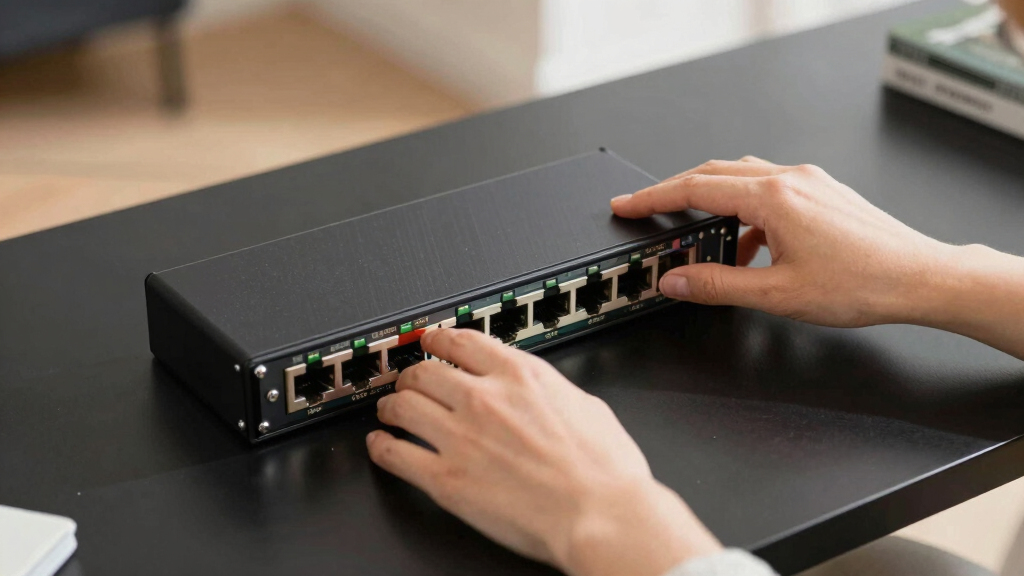
In evaluating these PoE rackmount switches, I prioritized performance, build quality, and ease of installation. Managed versus unmanaged features were weighed based on user control needs, while power budgets and port counts reflected typical deployment scenarios. Reliability, brand reputation, and user reviews also influenced the rankings, ensuring that each pick offers a distinct advantage for different types of buyers. The final list balances affordability with advanced features, catering to small business setups, enterprise environments, and everything in between.Factors to Consider When Choosing Best Poe Network Switch Rackmount
Selecting the right PoE network switch rackmount involves understanding several key factors. Beyond basic port count, consider the total power budget, manageability features, and compatibility with your existing infrastructure. Proper planning helps avoid overspending on unnecessary features or underestimating power needs, which can compromise device performance. The following sections highlight critical considerations to help refine your choice and ensure your network remains reliable and scalable.Port Count and PoE Power Budget
Assess your current and future device needs to determine the appropriate port count. Having too few ports might limit expansion, while excess ports could increase costs unnecessarily. The PoE power budget is equally vital; ensure it can support all powered devices simultaneously, especially if deploying high-power access points or cameras. Balancing these factors helps prevent bottlenecks and ensures consistent device operation.
Managed vs. Unmanaged Switches
Managed switches provide advanced features like VLAN segmentation, QoS, and remote management, making them suitable for larger or more complex networks. Unmanaged switches, however, are simpler to set up and often more affordable, ideal for smaller setups or environments where minimal configuration is sufficient. Knowing your network’s complexity guides you toward the right management level, avoiding unnecessary expenses or limitations.
Build Quality and Rack Compatibility
Durability and ease of installation matter for long-term reliability. Metal casings tend to withstand harsher environments and provide better heat dissipation. Confirm that the switch’s rackmount design matches your existing setup or space constraints. Proper mounting ensures stability and reduces maintenance issues down the line.
Power Efficiency and Future Proofing
Look for switches with energy-efficient features to lower operational costs. Additionally, check for compatibility with upcoming network standards or higher PoE wattages, especially if planning future device upgrades. Investing in a switch that offers scalability can save money and effort later, as it minimizes the need for replacements.
Price and Warranty Considerations
While budget-friendly options are tempting, they often compromise on features or build quality. Consider the warranty and support services offered by the manufacturer—these can significantly affect long-term satisfaction. Sometimes, paying a little more upfront results in better reliability, fewer repairs, and smoother operation.
Frequently Asked Questions
Can I use a non-rackmount PoE switch for my setup?
Yes, non-rackmount PoE switches can work well for small or temporary setups, such as desktop deployments or small offices. However, for permanent, professional installations, rackmount switches provide better stability, organization, and scalability. Rackmount options also facilitate easier cable management and future expansion, especially in larger or more complex networks.
How much PoE wattage do I need for my devices?
The wattage requirement depends on the devices you plan to power. For typical access points and cameras, 15-30W per port is common. Larger devices like PTZ cameras or high-power access points may require 60W or more per port. Always sum the wattage needs of all devices and choose a switch with a sufficient total power budget to avoid underpowering critical equipment.
Is managed switching worth the extra cost?
Managed switches are generally worth considering if you need control over traffic segmentation, security, or remote management. They are especially beneficial in environments with multiple VLANs or QoS requirements. For simple setups or temporary networks, unmanaged switches offer sufficient performance at a lower price, but they lack the flexibility and security features of managed options.
What should I consider regarding future network expansion?
Planning for future expansion involves selecting a switch with extra ports, higher PoE wattage, or modular design options. Ensuring compatibility with upcoming standards and higher power requirements can save costs later. Additionally, choosing a switch with management features allows easier integration and reconfiguration as your network grows.
Are rackmount switches more reliable than desktop models?
Rackmount switches are typically designed for durability and continuous operation in professional environments, which can translate into greater reliability. They are built to withstand mounting stresses and often feature better cooling. For critical or large-scale deployments, rackmount switches are usually a more dependable choice, though high-quality desktop models can suffice for small or temporary setups.