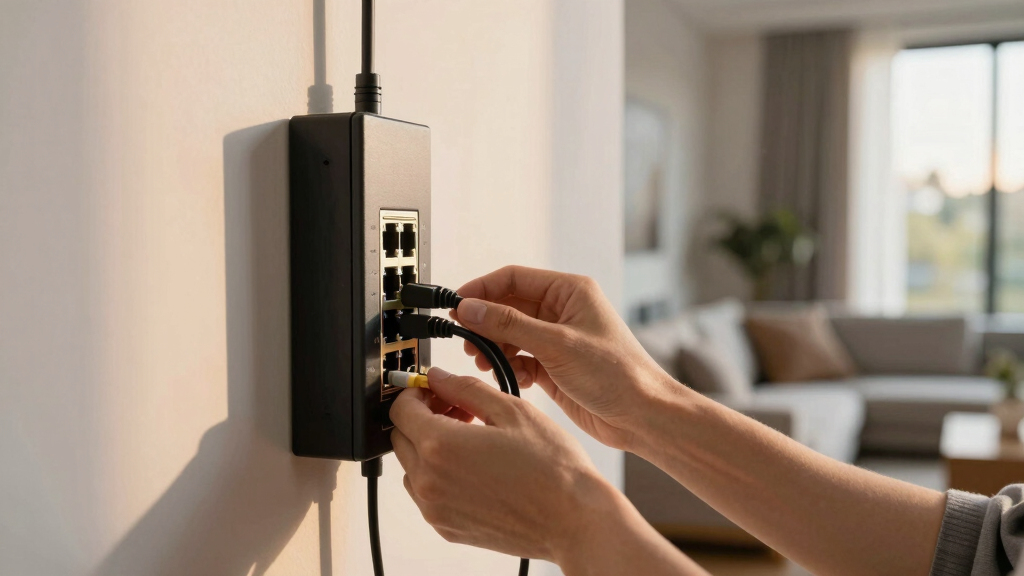

If you’re searching for the best PoE network switch with high power budget, you need a device that can reliably power multiple high-demand network devices like cameras, access points, and VoIP phones. The NETGEAR GS524UP stands out as the overall top pick for its balance of high power output and straightforward management. For those seeking maximum capacity, the YuanLey 48 Port Gigabit PoE Switch offers an impressive 800W budget, ideal for large setups. Meanwhile, the 4 Port Unmanaged POE++ Switch is a compact choice with high per-port power, perfect for smaller deployments. Keep reading for a full breakdown of these options and what makes each suitable for different needs.

Get privacy and security gear delivered free — and shop member deals
- Fast, free delivery on millions of items
- Access to Prime Big Deal Days deals on October 6–7
- Prime Video, Amazon Music and more included
Key Takeaways
- High power budgets are often paired with unmanaged switches, but managed options offer better control.
- Capacity and port count vary widely; larger setups benefit from switches with more ports and higher wattage.
- Some switches focus on unmanaged simplicity, while others provide advanced features like VLANs and network management.
- Tradeoffs include size, ease of setup, and price—more power typically costs more or requires more complex features.
- Choosing the right switch depends heavily on your deployment size, device power requirements, and future scalability.
| NETGEAR 24-Port PoE Gigabit Ethernet Unmanaged Network Switch (GS524UP) |  | Best Overall for High Capacity and Simplicity | Number of Ports: 24 | PoE Ports: 8 PoE+ and 16 Ultra60 PoE++ | Total Power Budget: 480W | VIEW LATEST PRICE | See Our Full Breakdown |
| YuanLey 48 Port Gigabit PoE Switch Unmanaged with 2 1000Mbps SFP Uplink, 800W High Power PoE+ Network Switch |  | Best for Large Networks with High Power Needs | Ports: 48 Gigabit PoE+ RJ45, 2 SFP uplink | Power Budget: 800W | Switching Capacity: 56Gbps | VIEW LATEST PRICE | See Our Full Breakdown |
| 4 Port Unmanaged 802.3bt POE++ Gigabit Switch, 90W per Port, 250W Total, 2 Uplinks, UL Listed, TAA Compliant |  | Best for High-Powered Single Devices in Compact Setups | Number of Ports: 4 | Power per Port: 90 Watts | Total Power Budget: 250W | VIEW LATEST PRICE | See Our Full Breakdown |
| Yuanley 24 Port PoE Switch with 2 Gigabit Uplink Ports, 400W Power, Unmanaged, Rackmount |  | Best for Industrial-Grade PoE Deployments | Ports: 24 PoE/PoE+ RJ45 | Power: 400W | Speed: 10/100Mbps for PoE ports | VIEW LATEST PRICE | See Our Full Breakdown |
| 8 Port 2.5Gb PoE (130W) + 2 Port 10Gb RJ45 Network Switch Unmanaged NICGIGA |  | Best for Modern High-Speed PoE Devices in Compact Form | Ports: 8 PoE, 2 10Gb uplinks | PoE Power Budget: 130W | Total Power: 150W | VIEW LATEST PRICE | See Our Full Breakdown |
| TP-Link TL-SG1218MP 16-Port Gigabit PoE Switch |  | Best Overall for Reliable High-Power Network Expansion | Number of Ports: 16 PoE+ ports, 2 non-PoE ports, 2 SFP slots | PoE Power Budget: 250W | PoE Power per Port: Up to 30W | VIEW LATEST PRICE | See Our Full Breakdown |
| NETGEAR 24-Port PoE Gigabit Ethernet Unmanaged Network Switch (GS324P) |  | Best Value for High Port Density with Moderate Power Budget | Number of Ports: 24 | PoE Ports: 16 | Total PoE Power Budget: 190W | VIEW LATEST PRICE | See Our Full Breakdown |
| UGREEN 10-Port PoE Ethernet Switch with 8 PoE+ Ports and 2 Gigabit Uplink Ports |  | Best for Compact, Flexible PoE Deployments with Moderate Power | Number of Ports: 10 | PoE+ Ports: 8 | Total Power Budget: 60W | VIEW LATEST PRICE | See Our Full Breakdown |
| TP-Link TL-SG116P, 16 Port Gigabit PoE Switch |  | Best for Cost-Effective PoE with Extended Transmission Range | Number of Ports: 16 | PoE Power Budget: 120W | PoE Standard: 802.3at/af | VIEW LATEST PRICE | See Our Full Breakdown |
| Omada ES220GMP 16-Port Gigabit Managed PoE Switch |  | Best for Advanced Network Management with High Power Budget | Number of Ports: 16 | PoE Budget: 250W | PoE Standards: 802.3af/at | VIEW LATEST PRICE | See Our Full Breakdown |
| poe network switch with high power budget | Number of Ports |
|---|---|
| NETGEAR 24-Port PoE Gigabit Et | 24 |
| YuanLey 48 Port Gigabit PoE Sw | — |
| 4 Port Unmanaged 802.3bt POE++ | 4 |
| Yuanley 24 Port PoE Switch wit | — |
| 8 Port 2.5Gb PoE | — |
| TP-Link TL-SG1218MP 16-Port Gi | 16 PoE+ ports, 2 non-PoE ports, 2 SFP slots |
| NETGEAR 24-Port PoE Gigabit Et | 24 |
| UGREEN 10-Port PoE Ethernet Sw | 10 |
| TP-Link TL-SG116P | 16 |
| Omada ES220GMP 16-Port Gigabit | 16 |
More Details on Our Top Picks
NETGEAR 24-Port PoE Gigabit Ethernet Unmanaged Network Switch (GS524UP)
This switch stands out for offering a high 480W power budget across 24 gigabit ports, making it ideal for powering multiple high-demand devices simultaneously. Compared with the YuanLey 48-port switch, the GS524UP delivers a more straightforward, unmanaged setup that suits small to medium networks without requiring configuration. Its fanless, silent operation enhances quiet environments, while the plug-and-play design simplifies deployment. However, its unmanaged nature means it lacks advanced control features seen in managed switches like the Omada ES220GMP. For users who prioritize a robust, high-power solution with minimal fuss, this model offers a reliable, high-capacity option. The tradeoff is sacrificing network management features that could optimize performance in complex setups.
Pros:- High 480W power budget supports many high-powered devices simultaneously
- Gigabit Ethernet ports for fast, reliable data transfer
- Fanless, silent operation ideal for noise-sensitive environments
- Plug-and-play setup with flexible mounting options
Cons:- No management features or advanced configuration options
- Limited to unmanaged network functionality
Best for: Small to medium-sized businesses or network administrators seeking a plug-and-play high-power switch with no need for management features.
Not ideal for: Advanced network users wanting detailed control, VLAN configuration, or monitoring capabilities, since it’s unmanaged.
- Number of Ports:24
- PoE Ports:8 PoE+ and 16 Ultra60 PoE++
- Total Power Budget:480W
- Connectivity:Gigabit Ethernet
- Design:Fanless, metal, desktop or rack-mount
- Management:Unmanaged
Our verdict“This switch is best for those needing high power and capacity with simple deployment in small to medium networks.”
YuanLey 48 Port Gigabit PoE Switch Unmanaged with 2 1000Mbps SFP Uplink, 800W High Power PoE+ Network Switch
This switch provides an impressive 800W power budget across 48 ports, ideal for extensive deployments with IP cameras, access points, and VoIP devices. Compared to the NETGEAR GS524UP, it offers more ports and a higher total power capacity, making it better suited for larger networks. Its IP30 protection and wide temperature range support industrial or outdoor environments, while the plug-and-play setup simplifies installation. The inclusion of SFP uplink ports adds flexibility for fiber connections, which is absent in the GS524UP. However, it remains unmanaged, lacking features for detailed network control, similar to the GS524UP. This makes it suitable for large networks needing high power with minimal configuration, but not for those requiring advanced management.
Pros:- Massive 800W power budget supports many high-power devices
- 48 Gigabit ports plus SFP uplinks for flexible network expansion
- Rugged IP30-rated metal housing for durability
- Wide operating temperature range for versatile environments
Cons:- Unmanaged switch limits advanced network control
- No included power supply details
Best for: IT managers and network installers managing large-scale IP camera or access point deployments in industrial or outdoor settings.
Not ideal for: Small office users or those needing managed features for traffic optimization, since it lacks configuration options.
- Ports:48 Gigabit PoE+ RJ45, 2 SFP uplink
- Power Budget:800W
- Switching Capacity:56Gbps
- Protection Level:IP30
- Operating Temperature:-10°C to +55°C
- Mounting Options:Desktop and rack-mount
Our verdict“This switch is designed for large, high-power networks that require durability and extensive port capacity without complex management features.”
4 Port Unmanaged 802.3bt POE++ Gigabit Switch, 90W per Port, 250W Total, 2 Uplinks, UL Listed, TAA Compliant
This compact switch offers up to 90W per port with a total of 250W, making it suitable for powering demanding devices like high-end cameras or lighting systems. Its gigabit speeds and backward compatibility with 802.3af/at standards add versatility. Compared to larger switches like the YuanLey model, this unit is limited to only four ports but excels at delivering maximum wattage per port, which is essential for high-demand applications. Its UL listing and TAA compliance add confidence for enterprise environments. However, the small port count may restrict its use to specific high-power devices rather than larger networks. Its unmanaged nature means no advanced controls, and there’s no mention of PoE passthrough, limiting flexibility for complex setups.
Pros:- High 90W power per port supports demanding devices
- Gigabit speeds for fast data transfer
- UL listed and TAA compliant for enterprise confidence
- Compact form factor suitable for small setups
Cons:- Limited to just 4 ports, not suitable for large networks
- Lacks management and PoE passthrough features
Best for: Setup where a single or a few high-power devices like cameras or lighting require reliable gigabit PoE++ power in small form factors.
Not ideal for: Larger network implementations or users needing managed features; it’s too limited in ports and control for those needs.
- Number of Ports:4
- Power per Port:90 Watts
- Total Power Budget:250W
- Uplink Ports:2
- Speed:Gigabit
- UL Listed:Yes
Our verdict“This switch is best for high-power, small-scale deployments focusing on individual device needs rather than network-wide management.”
Yuanley 24 Port PoE Switch with 2 Gigabit Uplink Ports, 400W Power, Unmanaged, Rackmount
The Yuanley 24-port switch offers a solid 400W power budget across 24 PoE/PoE+ ports, making it a good choice for IP cameras and access points needing moderate power. Its VLAN isolation and industrial-grade metal case support secure, durable installations, especially in challenging environments. Compared to the NETGEAR GS524UP, it provides fewer gigabit ports but adds VLAN features that improve traffic management and security. The limited speed (10/100 Mbps for PoE ports) may concern users expecting gigabit PoE, but the rugged design makes it suitable for outdoor or industrial settings. The switch’s unmanaged nature limits advanced controls, but its high power capacity and environmental resilience make it ideal for specific deployment scenarios.
Pros:- Supports multiple PoE devices with a 400W budget
- Rugged, weather-resistant metal construction
- VLAN isolation enhances security
- Plug-and-play with easy installation
Cons:- Limited to 10/100 Mbps speeds on PoE ports
- No management features or PoE passthrough
Best for: Industrial or outdoor network installations requiring durable hardware and moderate PoE power capacity.
Not ideal for: High-speed gigabit PoE applications or enterprise networks that demand managed switches for traffic control.
- Ports:24 PoE/PoE+ RJ45
- Power:400W
- Speed:10/100Mbps for PoE ports
- VLAN Support:Yes
- Protection Level:Industrial-grade
- Mounting:Rackmount
Our verdict“This switch is ideal for industrial environments needing reliable power and durability over high-speed gigabit performance.”
8 Port 2.5Gb PoE (130W) + 2 Port 10Gb RJ45 Network Switch Unmanaged NICGIGA
This switch offers a balanced combination of high-speed uplinks and PoE power, with 8 ports supporting 2.5Gb PoE and 2 additional 10Gb uplink ports. Compared to the 4-port POE++ switch, NICGIGA is better suited for networks that need faster uplinks for streaming or high-bandwidth devices, while still providing sufficient PoE power at 130W total. Its unmanaged design keeps setup simple, but limits advanced controls. The fanless, silent operation appeals for quiet environments, though the maximum PoE power per port is 30W, which is lower than the high-demand models. This makes it suitable for users wanting modern high-speed connectivity with manageable power requirements, but not for those needing ultra-high wattage per port.
Pros:- High-speed 2.5Gb PoE ports suitable for modern devices
- Two 10Gb uplink ports for fast network backbones
- Fanless, silent operation for quiet environments
- Plug-and-play with automatic device detection
Cons:- Supports only up to 30W per PoE port
- Limited to unmanaged features and no PoE passthrough
Best for: Small enterprise setups or tech-savvy home networks with high-speed needs and moderate PoE power.
Not ideal for: Large networks or high-demand PoE devices requiring 90W per port; it’s more suited for moderate power needs.
- Ports:8 PoE, 2 10Gb uplinks
- PoE Power Budget:130W
- Total Power:150W
- Supported PoE Standard:IEEE 802.3af/at
- Maximum Power per Port:30W
- Cooling:Fanless
Our verdict“This switch is ideal for high-speed, moderate power requirements in compact, modern network environments.”
TP-Link TL-SG1218MP 16-Port Gigabit PoE Switch
The TP-Link TL-SG1218MP stands out for its high PoE power output, delivering up to 30W per port with a total budget of 250W, making it well-suited for powering multiple high-demand devices like IP cameras and wireless access points. Compared to the NETGEAR GS324P, which has a lower 190W budget, this model provides more headroom for power-hungry equipment. Its simple plug-and-play setup and robust metal casing make it ideal for environments where ease of deployment and durability matter most. However, its 16-port capacity may limit scalability for larger networks, and the absence of advanced management features could be a drawback for users needing detailed control. This switch is perfect for small to medium setups needing reliable, high-power PoE while prioritizing ease of use.
Pros:- High PoE power output suitable for multiple high-power devices
- Easy plug-and-play setup ensures quick deployment
- Durable metal casing for demanding environments
Cons:- Limited to 16 ports, which may restrict future expansion
- Lacks advanced management features for fine-tuned control
Best for: Small to medium-sized businesses seeking reliable PoE expansion without complex management
Not ideal for: Large enterprise networks requiring advanced configuration and stacking features
- Number of Ports:16 PoE+ ports, 2 non-PoE ports, 2 SFP slots
- PoE Power Budget:250W
- PoE Power per Port:Up to 30W
- Connectivity:10/100/1000 Mbps
- Casing Material:Metal
- Warranty:3 years
Our verdict“This switch makes the most sense for small to medium networks prioritizing power and simplicity over advanced features.”
NETGEAR 24-Port PoE Gigabit Ethernet Unmanaged Network Switch (GS324P)
The NETGEAR GS324P offers 24 ports, including 16 PoE+ ports, with a total PoE budget of 190W, making it a solid choice for small to medium networks that need high port density without high power demands. Its unmanaged design simplifies installation, similar to the TP-Link TL-SG116P, but with more ports at a slightly lower power budget. For deployments with many low to moderate power devices, this switch provides a balanced solution, though it might fall short if powering numerous high-demand PoE devices simultaneously. Its fanless, compact, metal design ensures silent operation and durability. The main tradeoff is the limited power budget for high-power devices, making it less suitable for setups with many PoE cameras or APs drawing 30W each.
Pros:- High port density supports larger device counts
- Plug-and-play setup for quick deployment
- Silent, energy-efficient operation
Cons:- Limited total PoE power for high-demand devices
- Unmanaged, lacking advanced control features
Best for: Businesses needing a high-port-count switch for moderate PoE power without complex management
Not ideal for: Networks with many high-power PoE devices that require more than 190W total power
- Number of Ports:24
- PoE Ports:16
- Total PoE Power Budget:190W
- Port Speed:1.0Gbps
- Design:Fanless, metal, compact
- Mounting Options:Desktop or rack-mount
Our verdict“Ideal for expanding small networks with many low to moderate PoE devices needing straightforward connectivity.”
UGREEN 10-Port PoE Ethernet Switch with 8 PoE+ Ports and 2 Gigabit Uplink Ports
The UGREEN 10-Port PoE Switch provides 8 PoE+ ports with a total power budget of 60W, making it suitable for small security or wireless setups. Its intelligent power management and auto-recovery features help maintain stable operation, similar to the TP-Link TL-SG116P, but with fewer ports and lower total power capacity. This switch excels in environments where space and power efficiency are priorities, such as small offices or retail outlets. The main tradeoff is the limited 60W power budget, which restricts powering multiple high-power devices simultaneously. Additionally, manual mode switching for different operation modes adds some complexity for basic users.
Pros:- Supports multiple operation modes for flexibility
- Auto power recovery for device stability
- High-speed gigabit uplink ports
Cons:- Limited total power budget restricts high-demand devices
- Requires manual switching between modes
Best for: Small-scale networks with low to moderate PoE device requirements and space constraints
Not ideal for: Larger networks or setups with many high-power PoE devices exceeding 60W total
- Number of Ports:10
- PoE+ Ports:8
- Total Power Budget:60W
- Uplink Ports:2 Gigabit
- Extend Mode Range:820 ft
- PoE Power per Port:Up to 30W
Our verdict“This switch is best suited for small, flexible deployments where moderate PoE power and space efficiency matter most.”
TP-Link TL-SG116P, 16 Port Gigabit PoE Switch
The TP-Link TL-SG116P offers 16 ports with a 120W PoE budget, supporting 802.3at/af standards and extending transmission up to 250 meters in Extend Mode. Compared to the TP-Link TL-SG1218MP, it provides a lower power budget but includes useful features like priority and isolation modes for network management. Its automatic PoE device recovery increases reliability, making it a solid choice for surveillance or security-focused setups. However, its 120W budget limits powering multiple high-demand devices simultaneously, and in Extend Mode, speeds can drop to 10 Mbps, which might affect performance in some applications.
Pros:- Supports high PoE power and extended transmission range
- Includes priority and isolation modes for network control
- Automatic PoE device recovery enhances reliability
Cons:- Speed drops to 10 Mbps in Extend Mode
- Limited total power budget for high-demand devices
Best for: Security system setups requiring extended range and basic network management
Not ideal for: High-demand PoE environments needing more than 120W total power
- Number of Ports:16
- PoE Power Budget:120W
- PoE Standard:802.3at/af
- Data Transmission Range:up to 250m in Extend Mode
- Warranty:3 years
- Speed in Extend Mode:10 Mbps
Our verdict“Suitable for surveillance and security setups where extended range and basic management are priorities over raw power capacity.”
Omada ES220GMP 16-Port Gigabit Managed PoE Switch
The Omada ES220GMP combines a 16-port gigabit design with a substantial 250W PoE budget, supporting 802.3af/at standards and extending PoE range up to 800 feet. Its standout feature is the ability to manage the network remotely via the Omada Cloud platform, similar to the NETGEAR GS324P, but with added control and security features. The 5-year warranty and advanced segmentation options make this switch ideal for networks needing centralized management and high reliability. Its main tradeoff involves the need for cloud-based management, which might be overkill for simple setups, and it lacks stacking capabilities for larger scalability. Nonetheless, for users wanting control alongside high power capacity, it’s a compelling choice.
Pros:- Supports advanced remote management via Omada Cloud
- High PoE power budget with extended range
- Robust security and network segmentation features
Cons:- Requires cloud platform for full management capabilities
- Potential complexity for users needing only basic connectivity
Best for: Medium-sized enterprises or sophisticated networks that require remote management and high PoE power
Not ideal for: Basic small networks or users preferring unmanaged switches with minimal setup
- Number of Ports:16
- PoE Budget:250W
- PoE Standards:802.3af/at
- PoE Power per Port:30W
- PoE Range:up to 800 feet
- Warranty:5 years
Our verdict“This switch is ideal for networks that need comprehensive management features and high PoE capacity combined with remote control.”

How We Picked
The switches in this roundup were evaluated based on their total power budget, port count, ease of installation, build quality, and feature set. Priority was given to devices that deliver a high wattage per port, ensuring compatibility with power-hungry devices. We also considered user reviews, reliability, and value for money, balancing performance with affordability. The ranking reflects a combination of raw power, usability, and suitability for different types of deployments—from small offices to large enterprise setups. Ultimately, the goal was to identify switches that offer the best mix of high capacity and practical features for diverse needs.Factors to Consider When Choosing Best Poe Network Switch With High Power Budget
When selecting a PoE switch with a high power budget, several factors can influence your overall satisfaction and network performance. Understanding these elements can help you avoid common pitfalls and choose a device that truly fits your current and future needs. The right switch should not just meet your power requirements but also offer scalability, ease of management, and reliability.Power Budget and Per-Port Power
The total power budget is the maximum wattage the switch can distribute across all ports. For high-demand devices like IP cameras or wireless access points, a switch with at least 400W is advisable. Additionally, check the per-port power limit—some switches provide high wattage per port (like 90W or more), which is essential for power-hungry devices. Balancing total capacity with per-port output ensures your setup can support all devices simultaneously without issues.
Port Count and Scalability
The number of ports determines how many devices you can connect directly. Larger networks require switches with more ports, but also consider future growth. A switch with 24 or more ports provides room to expand without replacing hardware. Keep in mind that higher port counts often come with increased size and cost, so evaluate your current needs against future expansion plans to avoid overpaying or under-specifying.
Management Features
Managed switches offer advanced control over network traffic, VLAN segmentation, and security, which can be invaluable in complex setups. On the other hand, unmanaged switches are simpler to deploy and often more affordable, making them suitable for smaller or less critical environments. Consider whether your network requires granular management or if plug-and-play simplicity suffices, as this impacts both usability and cost.
Build Quality and Reliability
Durability and build quality directly influence long-term performance. Look for switches with sturdy metal cases, reliable power supplies, and good cooling. A well-made switch can prevent downtime caused by overheating or hardware failure. Also, check for features like UL listing or TAA compliance if you need certification for enterprise or government use, which indicates adherence to safety and quality standards.
Price and Overall Value
High power capacity often comes with a higher price, but not all switches offer the same value. Compare features against costs to find the best fit for your budget. Sometimes, investing a bit more yields significant benefits in performance, management, and future-proofing. Conversely, for small-scale setups, a less expensive unmanaged switch might be sufficient, saving money without sacrificing essential features.
Frequently Asked Questions
How much power do I need for my PoE switch?
The amount of power depends on the devices you plan to connect. For standard PoE devices like VoIP phones and access points, a budget of 60-150W may suffice. However, for high-power devices such as PTZ cameras or Wi-Fi 6 access points, a switch with at least 400W or more is recommended. Always add some margin to accommodate future devices or upgrades, ensuring the switch can handle your expanding network without immediate replacement.
Should I choose a managed or unmanaged PoE switch?
Managed switches provide greater control over your network, including VLAN segmentation, QoS, and security features, which are valuable in larger or security-sensitive environments. Unmanaged switches, while simpler and often less expensive, are suitable for small setups or home use where basic connectivity suffices. Your choice should align with your technical comfort level and the complexity of your network, balancing control against ease of use.
Is a higher port count always better?
A higher port count allows for more device connections, which is beneficial if you plan to expand your network. However, larger switches tend to be more expensive and may take up more space. If your current needs are modest, opting for a smaller switch with a sufficient power budget can save money and reduce clutter. Always consider potential growth, but avoid overpaying for unused ports.
What features should I look for in a high-power PoE switch?
Beyond just high wattage, look for features like individual port wattage limits, support for the latest PoE standards (like 802.3bt), and reliable build quality. Management capabilities can be critical if you need network segmentation or troubleshooting tools. Additionally, check for certifications and compliance, especially if deploying in enterprise or regulated environments. These features ensure your switch remains flexible, reliable, and future-proof.
Can I upgrade my switch later if my power needs increase?
While some switches offer modular designs or high capacity from the start, most are fixed in their power and port configurations. Upgrading later often means replacing the entire switch, which can be disruptive and costly. To avoid this, evaluate your current and future device requirements carefully when choosing a switch, opting for models with higher wattage and more ports than you initially need if expansion is likely.
Conclusion
For most users, the NETGEAR GS524UP offers the best overall balance of power, ease of use, and reliability. Small businesses or home setups aiming for affordability should consider unmanaged options like the YuanLey 24 Port PoE Switch. For larger deployments or future scalability, the YuanLey 48 Port Gigabit PoE Switch provides extensive capacity, while enterprise users needing advanced control might prefer the Omada ES220GMP. Newcomers should prioritize simple, unmanaged switches, whereas those with more technical expertise will benefit from managed models with advanced features. Each choice aligns with different priorities, ensuring your network can grow without compromise.
Evergreen bestsellers Picks
bestsellers
As an affiliate, we earn on qualifying purchases.