
To sweep your home for hidden cameras, start by physically inspecting common hiding spots like outlets, picture frames, and vents for unusual objects or wires. Use a flashlight to spot reflections and detect suspicious devices, then employ electronic tools like wireless signal detectors or infrared scanners to find active transmitters or heat signatures. Stay aware of typical disguises, and adopt a systematic sweep approach. If you want detailed steps and tips, continue exploring the essential counter-surveillance methods.
Key Takeaways
- Conduct a physical inspection of common hiding spots like outlets, vents, behind pictures, and furniture seams.
- Use wireless signal detectors or bug sweepers to identify unusual or persistent electronic signals.
- Employ infrared cameras or sensors to detect heat signatures from hidden cameras emitting infrared light.
- Look for suspicious objects, wires, or reflections with flashlights and visual cues during your sweep.
- Regularly update your knowledge of local laws and maintain ongoing vigilance for new surveillance threats.
Recognizing Common Types of Hidden Cameras
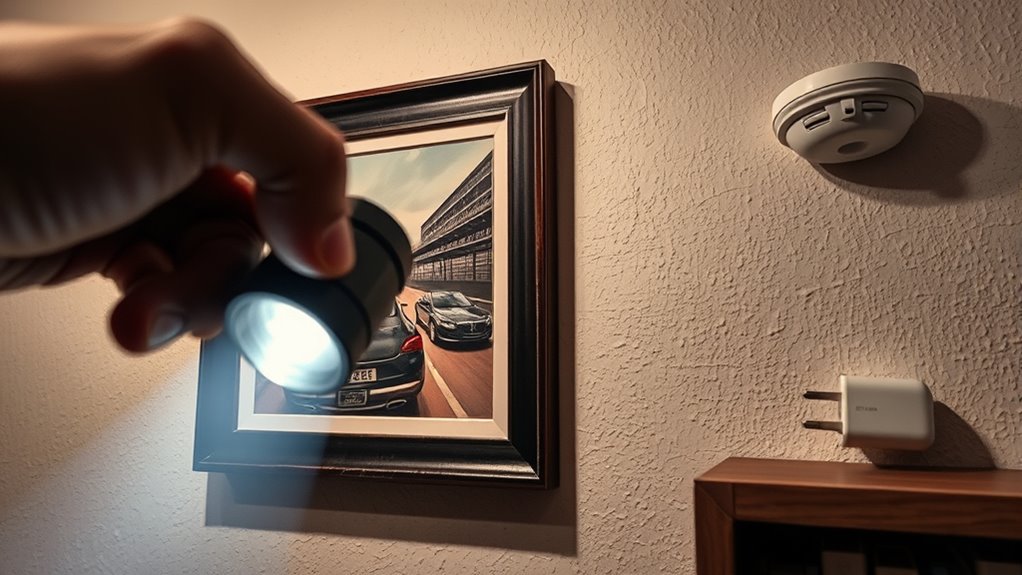
Hidden cameras come in many forms, making it essential to know what to look for. Most covert devices are small, discreet, and easy to overlook. Common types include pinhole cameras, disguised as everyday objects like clocks, chargers, or picture frames. Some are built into everyday electronics, such as USB chargers or smoke detectors. Understanding hidden camera laws helps you determine what’s legal and what’s a violation of privacy rights. For instance, capturing footage in private spaces without consent is often illegal, and awareness of these laws guides your detection efforts. Keep an eye out for unusual objects or suspicious wires. Recognizing these common types helps you spot hidden cameras early, protecting your privacy and ensuring you stay within legal boundaries. Additionally, being aware of Glycolic Acid Benefits can improve your skin’s appearance if you notice any skin irritation or reactions from detection devices or cleaning chemicals used during surveillance sweeps.
Tools and Techniques for Detecting Hidden Devices

To effectively detect covert devices, you need to be familiar with specific tools and techniques designed for this purpose. Wireless signal analysis is a key method; it involves scanning your environment for unusual or persistent signals that might come from hidden cameras or microphones. Using a signal detector or bug sweeper can help identify active transmitters. Infrared detection is another useful technique, as many hidden cameras emit infrared light, especially when recording in low light. A flashlight with an infrared filter or an infrared sensor can reveal these hidden devices by reflecting infrared light back to you. Combining wireless signal analysis with infrared detection increases your chances of uncovering covert devices and maintaining your privacy. Additionally, understanding Bedroom layouts can help you identify potential hiding spots for surveillance equipment.
Performing a Physical Sweep of Your Space
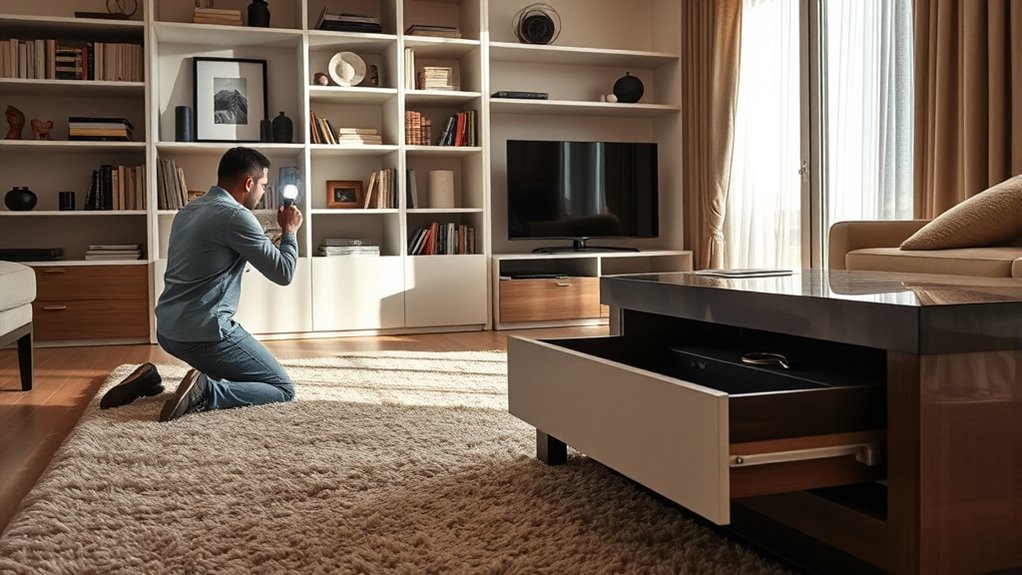
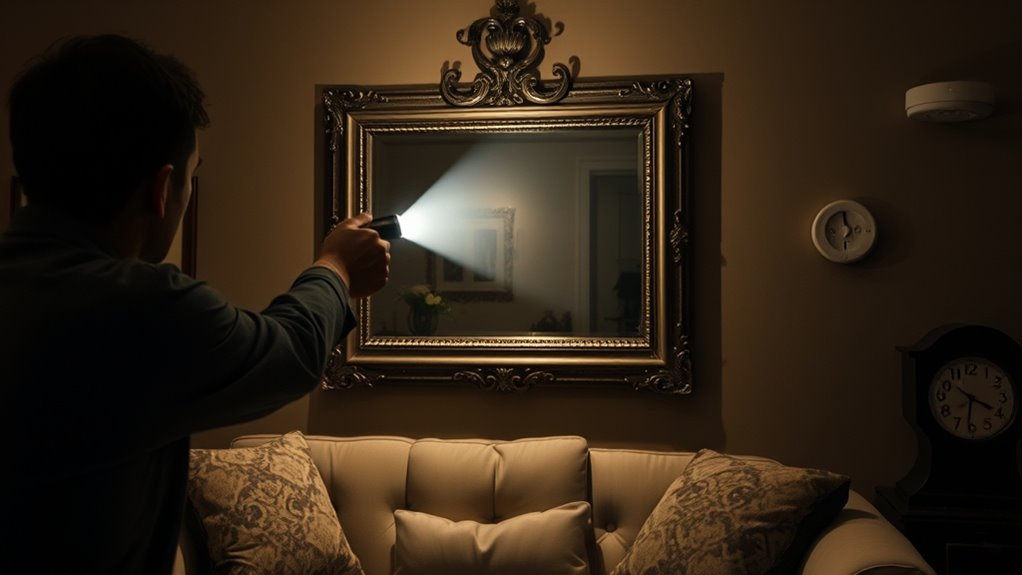
Conducting a thorough physical sweep of your space is essential for uncovering covert devices that electronic detection might miss. Start by inspecting common hiding spots—near electrical outlets, behind pictures, and inside vents. Be mindful of privacy concerns and legal considerations, ensuring you don’t overstep boundaries or invade others’ privacy. Use a flashlight to spot unusual objects or reflections. Keep a checklist to track areas checked. Additionally, understanding hidden cameras and their placements can improve your detection effectiveness.
| Area to Check | Key Signs to Look For |
|---|---|
| Outlets & Switches | Unusual objects, tiny holes |
| Furniture | Small cameras hidden in seams |
| Vents & Fixtures | Suspicious wires or lenses |
| Clocks & Decor | Hidden cameras or microphones |
| Windows & Curtains | Cameras with reflective lenses |
This methodical approach helps you identify hidden devices while respecting legal limits.
Using Electronic Devices to Identify Surveillance Equipment
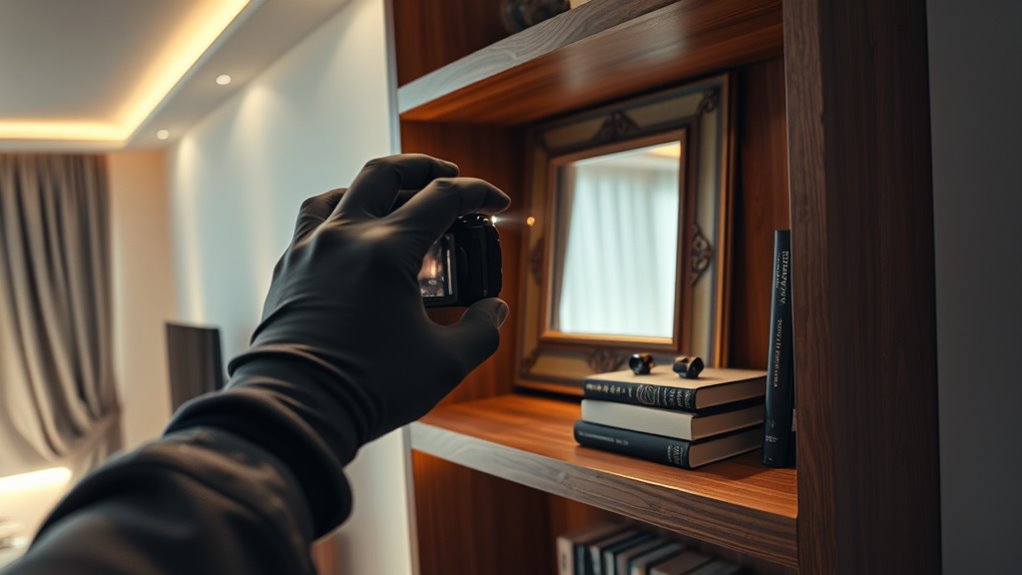
Using electronic devices to identify surveillance equipment can substantially enhance your detection capabilities. Wireless signal detection tools help you identify hidden cameras or microphones transmitting data nearby. These devices scan for unusual radio frequencies, allowing you to locate active surveillance gear that might be concealed in your home. Infrared camera scanning is another effective method; it detects heat signatures from electronic devices, revealing hidden cameras that emit slight warmth. When using these tools, move slowly through your space, paying attention to areas with strange signals or heat sources. Keep in mind that some advanced devices can bypass basic detection methods, so combining multiple techniques increases your chances of success. Regularly employing wireless signal detection and infrared scanning ensures you stay vigilant against covert surveillance. Incorporating specialized detection tools can further improve your ability to uncover hidden cameras and microphones.
Best Practices for Maintaining Privacy and Ongoing Vigilance
Building on your efforts to detect surveillance equipment, maintaining privacy requires consistent habits and proactive measures. Regularly review and update your privacy policies at home and work to clarify who can access your personal information. Stay informed about legal considerations related to surveillance, including laws on hidden cameras and recording devices. Practice secure habits like changing passwords frequently and avoiding public Wi-Fi for sensitive activities. Be vigilant about new threats, such as device vulnerabilities or unexpected devices appearing. Educate yourself on privacy rights and legal boundaries to ensure your vigilance aligns with the law. Additionally, understanding payment processing systems can help you recognize and prevent digital privacy breaches related to financial information. By establishing these routines, you protect your privacy proactively and reduce the risk of covert surveillance compromising your personal space.
Frequently Asked Questions
How Often Should I Perform a Home Sweep for Hidden Cameras?
You should perform a home sweep for hidden cameras regularly to maintain your privacy precautions. The surveillance frequency depends on your situation, but generally, doing it once a month is a good rule of thumb. If you notice any suspicious activity or changes in your environment, increase the frequency. Staying proactive helps prevent unauthorized surveillance and keeps your private space secure. Consistent checks guarantee you’re always aware of potential threats.
Can Hidden Cameras Be Detected Through Wi-Fi Signals Alone?
Hidden cameras can’t be detected through Wi-Fi signals alone, since many operate on separate frequencies or use wired connections. Wi-Fi scanning can reveal devices connected to your network, but it won’t necessarily identify hidden cameras that aren’t linked online. Signal interference might help spot unusual devices, but it’s not a reliable method. For thorough detection, combine Wi-Fi scans with physical sweeps and specialized bug detection tools.
Are There Legal Considerations When Conducting a Home Sweep?
Imagine you’re a detective, carefully searching for hidden threats. When you sweep your home, you must consider the legal implications to protect your privacy rights. Laws vary by location, so make certain you’re not trespassing or violating wiretapping rules. Failing to do so could lead to legal trouble, even if your intentions are to keep your space secure. Stay informed, and respect privacy laws to avoid unintended consequences.
What Are Signs That I May Already Be Under Surveillance?
If you suspect you’re under surveillance, pay attention to privacy concerns and look for suspicious device indicators. Signs include unexplained wires, unusual lights, or strange sounds near your devices. You might notice unfamiliar objects or tech that doesn’t belong, or your devices acting oddly. Trust your instincts and conduct a thorough sweep, because these clues could reveal hidden cameras or listening devices, helping you protect your privacy.
How Do I Differentiate Between Legitimate and Suspicious Devices?
To differentiate between legitimate and suspicious devices, you need to focus on device identification and signal analysis. Legitimate devices are typically familiar, like your Wi-Fi router or security cameras. Suspicious devices may emit unusual signals, appear out of place, or lack clear identification. Use a signal analyzer to detect hidden or unauthorized devices, and check for unfamiliar networks or hardware. Trust your instincts and investigate any devices that seem out of place.
Conclusion
By regularly sweeping your space, you become the guardian of your privacy, like a lighthouse cutting through the fog of unseen eyes. Every mirror, outlet, and shadow holds the potential for hidden cameras, but your vigilance keeps them at bay. With each scan, you restore clarity to your sanctuary, ensuring your personal moments stay private. Stay alert, trust your instincts, and let your awareness be the shield that keeps your home safe from prying eyes.