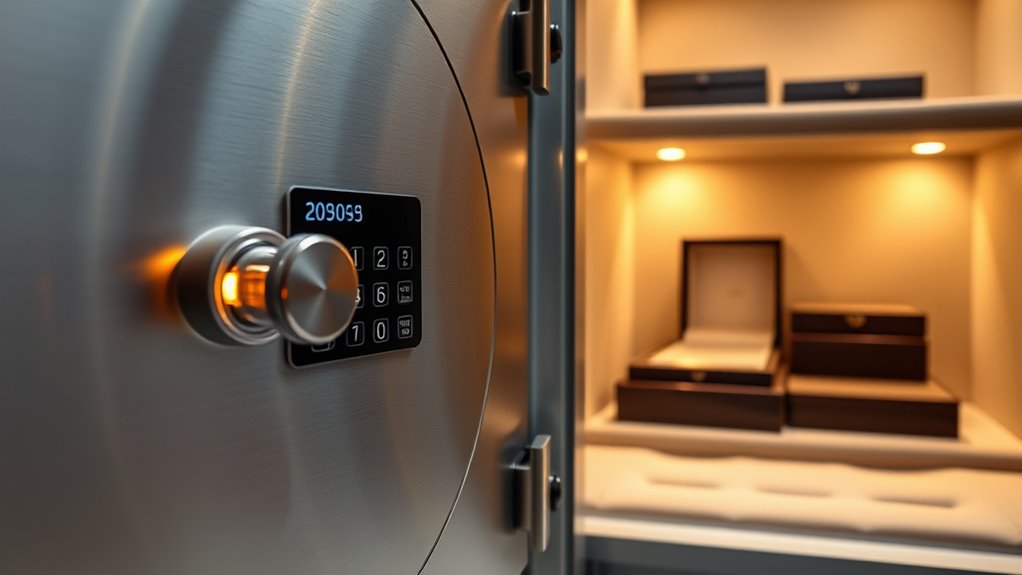

Residential safe deposit boxes are growing in popularity because they offer quick, secure protection for your valuables from theft, fire, and disasters. With features like fire-resistant materials, biometric locks, and various sizes, they provide convenience and peace of mind. However, consider potential risks like accessibility issues or vulnerability if not hidden properly. To find out if a home safe suits your needs and how to choose the right one, explore further.

Get privacy and security gear delivered free with Prime
- Fast, free delivery on millions of items
- Prime Video, Amazon Music and more included
- Member-only deals all year
Key Takeaways
- Residential safe deposit boxes offer enhanced security, fire protection, and quick access for valuables and important documents.
- Advances like biometric locks and fire-resistant materials increase their effectiveness and user convenience.
- They reduce theft and damage risks but require proper placement and security practices to prevent vulnerabilities.
- Comparing safes to other security measures helps determine if they meet specific protection needs and budget.
- Proper selection, insurance, and security measures make residential safes a worthwhile investment for peace of mind.
As an affiliate, we earn on qualifying purchases.
Understanding the Growing Popularity of Home Safes

In recent years, the demand for home safes has surged as more homeowners seek convenient ways to protect their valuables. Advances in fire resistant materials have made safes more reliable during emergencies, providing peace of mind for your important documents, jewelry, or cash. Additionally, biometric locks have gained popularity, offering enhanced security through fingerprint recognition, so only you can access your safe. These features make home safes not only more secure but also user-friendly. As concerns over burglaries and fires increase, more people realize that a safe deposit box at home is a practical investment. You want quick, easy access to your valuables without sacrificing security, and these innovations help achieve that goal efficiently. Incorporating secure storage techniques like specialized safes further enhances protection and peace of mind.
As an affiliate, we earn on qualifying purchases.
Types of Residential Safe Deposit Boxes and Their Features

Choosing the right type of residential safe deposit box depends on your specific needs and the items you want to protect. Fireproof safes are ideal for safeguarding documents, jewelry, or sensitive data from fire damage. Biometric locks add a layer of security by allowing access only through fingerprint recognition. Here’s a quick overview:
| Safe Type | Security Features | Best For |
|---|---|---|
| Fireproof Safe | Fire-resistant, waterproof | Important documents, valuables |
| Biometric Safe | Biometric lock, tamper-proof | Jewelry, cash, small valuables |
| Combination Safe | Traditional lock, durable | General storage |
| Digital Safe | Electronic keypad, quick access | Frequent access items |
| Wall Safe | Hidden, tamper-resistant | Small valuables, cash |
Additionally, considering the sound design techniques involved in creating secure environments can help in choosing safes with better deterrent features.
As an affiliate, we earn on qualifying purchases.
Advantages of Installing a Safe Deposit Box at Home

Having a safe deposit box at home offers a convenient and secure way to protect your most valuable items. Unlike storage in other locations, a home safe can be quickly accessed when needed, saving you time. Many safes are designed with fire safety in mind, helping to shield important documents and valuables from fire damage. Additionally, owning a safe deposit box at home can enhance your insurance coverage by providing a dedicated space for high-value items, making it easier to document and claim them if necessary. This added layer of security ensures that your treasures are protected from theft, fire, or other hazards. For those interested in modern security solutions, home safes now incorporate advanced locking mechanisms and digital controls to further ensure safety. Overall, installing a safe deposit box at home gives you peace of mind, knowing your valuables are both accessible and safeguarded.
digital security safe for documents
As an affiliate, we earn on qualifying purchases.
As an affiliate, we earn on qualifying purchases.
Potential Drawbacks and Risks to Consider

While a home safe deposit box offers security, it also introduces certain risks and drawbacks you should consider. Fire hazards pose a significant threat, as most safes aren’t fireproof, risking the loss of valuables in a blaze. Additionally, theft vulnerabilities remain, especially if the safe isn’t securely hidden or is easily accessible to intruders. If a burglar discovers your safe deposit, they might target your home more aggressively. Besides that, if you forget the combination or lose the key, retrieving your possessions can become difficult or impossible without professional help. These risks highlight that, despite the convenience, a home safe deposit box isn’t foolproof and requires careful planning to minimize vulnerabilities. It’s essential to weigh these potential drawbacks against the benefits. Moreover, understanding the security properties of your safe can help you make more informed decisions about its placement and use.
Comparing Home Safes to Other Security Measures

When choosing between home safes and other security options, you need to consider how accessible and convenient each method is for you. It’s also important to compare their security levels to see which offers better protection for your valuables. Finally, think about the costs involved and which solution provides the best investment for your safety. Interestingly, viral commercial star Laurel Coppock’s rise to prominence highlights how media exposure can influence public perception of security and safety measures.
Accessibility and Convenience
Home safes offer quick and easy access to valuables, making them a convenient security option for everyday use. With digital access, you can open your safe swiftly, avoiding fumbling with keys or combinations. This feature enhances emergency readiness, allowing you to respond promptly in urgent situations. Compared to traditional lock-and-key safes or physical safe deposit boxes, home safes provide immediate accessibility without needing to visit a bank or secure location. You can set up multiple users or access codes, making it simple for trusted family members to retrieve items when needed. Overall, home safes deliver a balance of security and convenience, ensuring your valuables are accessible when you need them most, without sacrificing ease of use or quick access. Additionally, contrast ratio plays a crucial role in how clearly the contents inside the safe can be viewed, especially in low-light conditions.
Security Level Comparison
Comparing the security levels of home safes to other measures reveals key differences that can influence your choice. Home safes offer targeted theft protection and fire resistance, but their effectiveness varies. Unlike security systems, safes provide physical storage that’s harder for intruders to access. Fire-resistant safes protect your valuables during fires, but may not prevent theft if left accessible. Other measures, like security alarms or surveillance, can deter burglars more effectively but don’t provide physical protection. Additionally, integrating technology private placement investments into your security strategy can enhance overall protection through innovative solutions.
Cost and Investment
Evaluating the costs of different security options helps you determine which measures offer the best value for protecting your valuables. Home safes often have an upfront purchase price, plus ongoing maintenance fees for locks or electronic systems. Comparing this to other measures, like residential safe deposit boxes, can be insightful. Additionally, consider the battery maintenance and potential power sources needed for electronic security devices to ensure consistent protection.
Factors to Consider When Choosing a Safe Deposit Box

Choosing the right safe deposit box involves considering several key factors to guarantee your valuables are secure and accessible. First, look for fireproof materials to protect against unexpected disasters. Confirm the box offers biometric access for quick, secure entry, adding an extra layer of protection. Think about the location’s security measures and accessibility, so you can access your items without hassle. Consider size options to fit all your valuables comfortably. Finally, check for insurance coverage in case of loss or damage. Additionally, reviewing the best anime movies can provide a relaxing break from security concerns.
Real-Life Examples: Success Stories and Cautionary Tales

Real-life examples highlight the importance of carefully selecting a safe deposit box. One success story involves someone who stored valuable documents and jewelry, ensuring they had adequate insurance coverage in case of theft or damage. Their digital security measures, like strong passwords and encryption, protected sensitive information stored digitally. Conversely, a cautionary tale involves a homeowner who neglected insurance coverage, leaving them vulnerable when a fire destroyed their valuables. They realized too late that digital security lapses, such as weak passwords, could have compromised their data. Additionally, understanding newborn safety guidelines can help prevent accidents and ensure proper protection of valuables. These stories emphasize that choosing a safe deposit box requires attention to digital security and insurance coverage. Proper safeguards can make the difference between peace of mind and devastating loss.
Making an Informed Decision: Is a Safe Deposit Box Right for You?

Deciding whether a safe deposit box suits your needs depends on evaluating your specific circumstances and priorities. Consider if you need extra protection for valuable documents or sentimental items that insurance policies alone can’t fully cover. Think about the fire resistance of the box—can it safeguard your treasures against disasters? Reflect on potential risks, such as theft or natural calamities, and whether a secure location provides peace of mind.
Ask yourself:
- Will it give you confidence in your valuables’ safety?
- Do insurance policies meet your protection needs?
- Are you comfortable with access limitations?
- Could it prevent emotional distress during emergencies?
- Is the cost justified for your peace of mind?
Making an informed choice means balancing safety, accessibility, and affordability.
Frequently Asked Questions
How Do Home Safe Deposit Boxes Compare in Cost to Bank Safety Deposit Boxes?
When comparing home safe deposit boxes to bank safety deposit boxes, you’ll find that cost varies based on size and features. Home options often have a higher upfront cost but eliminate recurring fees, offering convenience. Bank safety deposit boxes usually involve monthly or annual fees but provide advanced security features like monitored vaults. Consider your security needs and budget to determine which option provides the best cost comparison and peace of mind.
Are Home Safes Effective Against Fire and Water Damage?
You might wonder if home safes are effective against fire and water damage. Fireproof security and water-resistant safes provide a good barrier, but no safe is completely foolproof. You should select a safe rated specifically for fire and water resistance, and consider additional measures like placing it in a secure, less vulnerable location. Regularly check the safe’s ratings and maintain it to ensure maximum protection for your valuables.
What Are the Legal Considerations for Storing Valuables at Home?
Imagine your valuables as treasures in a castle, needing guards to protect them. You must guarantee legal compliance by understanding local laws about storing certain items. Privacy concerns are like secret corridors—balancing security and discretion. Keeping valuables at home requires knowing the legal landscape and safeguarding privacy, so your treasures stay protected without inviting trouble. Stay informed and consult legal advice to avoid inadvertent violations and secure your prized possessions effectively.
Can a Safe Deposit Box Be Easily Accessed During Emergencies?
During emergencies, a safe deposit box isn’t easily accessible because it’s usually in a bank or secure facility with limited hours. To improve accessibility during urgent situations, you should consider theft prevention strategies like storing a backup key at a trusted location or choosing a home safe with quick access. This way, you balance security with emergency readiness, ensuring your valuables are protected yet accessible when needed most.
How Do Insurance Policies Cover Items Stored in Home Safes?
Did you know that home insurance policies often cover only up to a certain limit for valuables in safes? Your insurance coverage typically includes items stored in your home safe, but liability limits vary. It’s crucial to review your policy details to understand what’s covered and consider additional coverage if your valuables exceed standard limits. This way, you guarantee your assets are protected during unforeseen events.
Conclusion
Considering the rise of residential safe deposit boxes, it’s clear they’re becoming a popular security choice—over 30% of homeowners now use them to protect valuables. Before deciding, weigh the benefits against potential risks and compare with other security options. If you prioritize safeguarding important documents or heirlooms, a safe deposit box might be worth it. Ultimately, making an informed choice helps you keep what matters most secure and peace of mind within your reach.
Halloween Picks
halloween
As an affiliate, we earn on qualifying purchases.