Doorbell scams targeting seniors often involve scammers impersonating utility workers, delivery personnel, or even family members, using fake IDs or urgent language to pressure quick decisions. They may ask for personal info, payment, or try to trick you into opening the door. Recognizing these scripts, such as fake delivery requests or fake government benefits calls, can help you stay safe. Stay alert and discover more about how to spot these scams to protect yourself.
Listen free for 30 days with Audible
Thousands of audiobooks and originals — cancel anytime.
As an affiliate, we earn on qualifying purchases.
Key Takeaways
- Recognize fake utility workers impersonating officials needing urgent bill payments or ID verification.
- Be cautious of delivery scams claiming urgent package needs or pickups with pressure to open the door.
- Watch for scammers demanding payment via gift cards or wire transfers, often claiming emergencies or benefits.
- Verify IDs directly with issuing agencies and avoid sharing personal info with unknown visitors.
- Always confirm suspicious calls or visits with trusted contacts or official numbers before acting.
As an affiliate, we earn on qualifying purchases.
What Are Doorbell Scams and Why Are Seniors Targeted?
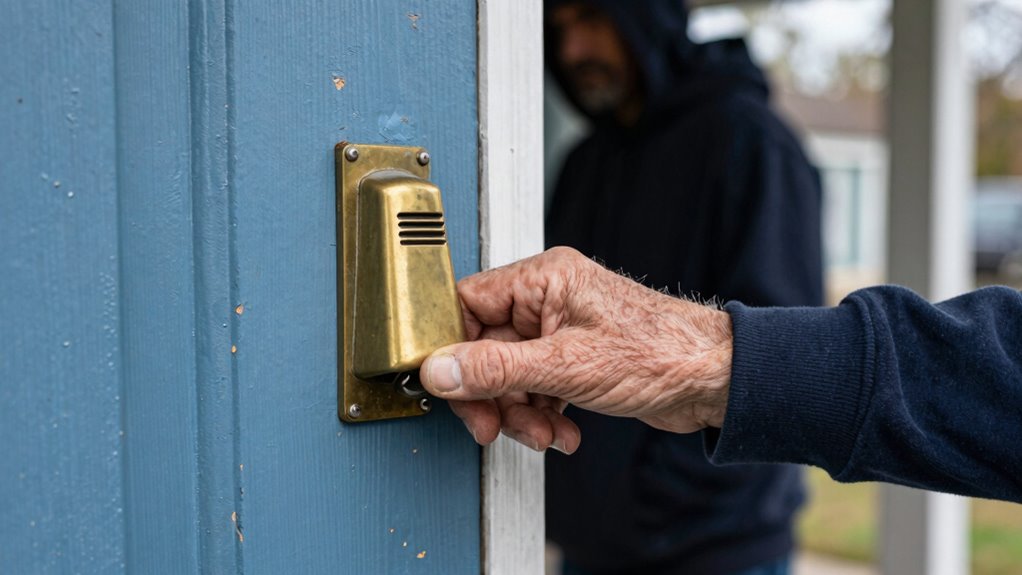
Doorbell scams are deceptive tactics where scammers ring your doorbell to trick you into giving them money or personal information. They often target seniors because they may have less scam awareness or be more trusting, making them easier targets. These scammers exploit the sense of security that comes with home security measures, pretending to be workers or neighbors to gain entry or information. Understanding why seniors are targeted helps you stay vigilant. Scammers know that seniors might hesitate to question strangers or may not recognize the dangers of false identities. By raising your scam awareness and reinforcing your home security, you can better protect yourself from these manipulative tactics. Recognizing the motives behind these scams is vital in defending your personal information and financial security. Additionally, being aware of projector technology can help you better identify and question suspicious claims or offers related to home security and safety devices. Staying informed about common scam scripts enables seniors to spot and avoid these fraudulent schemes more effectively. Being familiar with common scam scripts can help seniors recognize red flags early and prevent falling victim to these schemes.
video doorbell with motion detection
As an affiliate, we earn on qualifying purchases.
As an affiliate, we earn on qualifying purchases.
Common Doorbell Scam Scripts Seniors Should Recognize
Scammers often pose as utility workers or delivery personnel to gain your trust quickly. They might claim there’s an emergency or a missed package that needs immediate attention. Recognizing these common scripts can help you stay alert and avoid falling for their tricks. Be aware that affiliate relationships may influence the content you see, so stay vigilant. Additionally, understanding media literacy can help you critically evaluate suspicious requests and prevent deception. Familiarizing yourself with scam tactics, such as specific dialogue patterns, common in these scripts can further enhance your ability to identify and avoid scams. Remember that water safety principles, like verifying identities, are crucial in preventing scams related to water-related services.
Impersonation of Utility Workers
Impersonating utility workers is a common tactic used in doorbell scams targeting seniors. Scammers often pretend to be from the electric, water, or gas company to gain your trust. They might claim you missed a bill or that urgent repairs are needed. To avoid falling victim, always ask for proper identification and verify their credentials. Use security devices like cameras and connect with your neighborhood watch group to stay informed about suspicious activity. Remember, many of these scams rely on creating a sense of urgency to pressure victims into quick decisions. Additionally, be wary of scam red flags such as high-pressure tactics or requests for immediate payment without proper documentation. Being aware of common scam tactics can help you recognize and thwart attempts to deceive you. Developing self-sufficiency in verifying utility workers can further reduce your risk of falling prey to these scams. Staying informed about urgent scam strategies can help you recognize and thwart attempts to deceive you.
Fake Delivery Requests
One common tactic used in doorbell scams targeting seniors involves fake delivery requests. Scammers pose as delivery personnel, claiming there’s a package they need to deliver or pick up. This creates a sense of urgency, prompting you to act quickly. Be wary if you see these signs:
- The caller or visitor insists you’re expecting a package but can’t provide details.
- They ask you to open the door or hand over money for a delivery fee.
- The scammer pressures you to act fast, warning the package will be returned or stolen.
These package scams prey on your trust, making you believe you’ve ordered something when you haven’t. Always verify delivery requests directly with the delivery company before opening the door or sharing any information.
As an affiliate, we earn on qualifying purchases.
How Scammers Pretend to Be Utility Workers or Officials
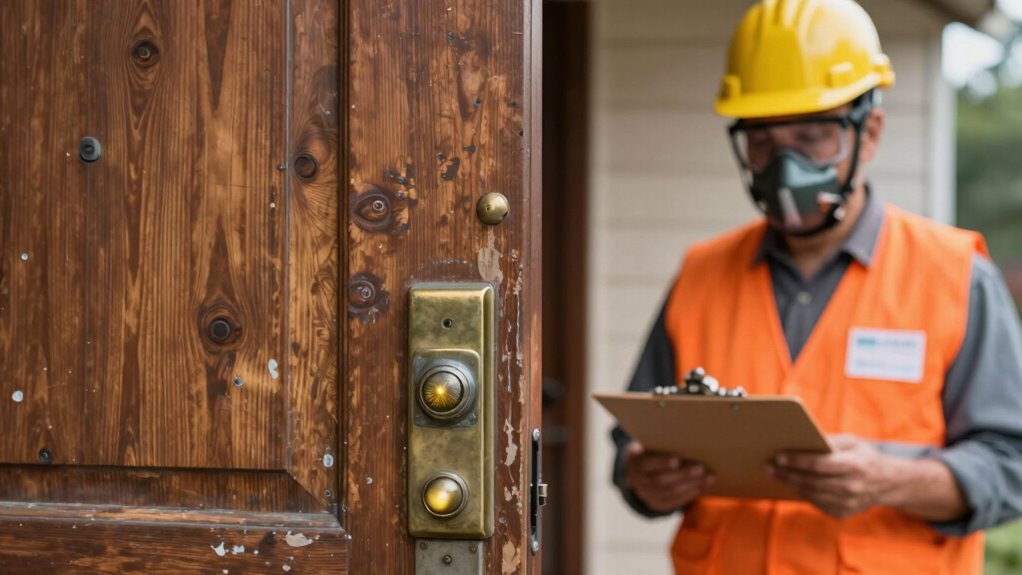
Scammers often pose as utility workers or officials to gain your trust by showing fake IDs or uniforms. They create a sense of urgency or use intimidation to pressure you into quick decisions. You might be asked for immediate payment or personal information, making it essential to stay cautious. Being aware of imaging‑scale and other technical details can also help you recognize suspicious activity around your property. Additionally, knowing common scam scripts can help you identify and avoid falling victim to these deceptive tactics. Recognizing cultural symbols associated with authority figures can also assist in verifying the legitimacy of their identity. Familiarity with visual cues can further enhance your ability to spot a scammer before it’s too late. Paying attention to identification details such as proper logos and official insignia can provide additional reassurance of authenticity.
Fake Identification Tactics
When scammers want to gain your trust, they often carry fake identification cards that look official and convincing. These cards are designed to appear legitimate, making it easier to deceive you. To spot fraudulent identification, watch for these signs:
- Poor-quality printing or inconsistent logos that seem off from real IDs.
- Slight misspellings or outdated logos that don’t match current official designs.
- Lack of official seals or holograms that verify authenticity.
Additionally, scammers may use improper security features to make their IDs seem more authentic, increasing the risk of identity theft. They rely on convincing IDs to gain access or information, pretending to be utility workers or officials. Always scrutinize IDs carefully—if anything looks suspicious, verify directly with the agency before cooperating. Being aware of common identification forgery tactics can help you better recognize genuine documents.
Urgency and Intimidation
Criminals often pressure seniors by claiming urgent issues, such as a water leak or overdue bill, to create a sense of immediate danger. They use psychological tactics and deception strategies to make you feel you must act now. Scammers impersonate utility workers or officials, asserting that immediate action is required. They may threaten service disconnection or legal trouble to intimidate you. Being aware of common scam tactics can help you recognize and avoid falling victim to these schemes.
Payment Demands
Pretending to be utility workers, scammers often call seniors and claim there’s an urgent problem with their account, such as a missed payment or a meter issue. They use convincing scam tactics to pressure you into acting quickly. Here’s what they might do:
- They threaten disconnection if you don’t pay immediately, claiming it’s the only way to avoid service interruption.
- They ask for payment via gift cards, prepaid debit cards, or wire transfers, insisting it’s the only acceptable method.
- They may provide fake employee IDs or call-back numbers to seem legitimate, reinforcing their payment demands.
- These scams often exploit vetted wave and wind to create a sense of urgency and legitimacy, making victims more likely to comply without verifying.
- Recognizing scam tactics such as high-pressure language and false claims can help you avoid falling victim to these schemes.
- Always remember that legitimate utility companies will never demand immediate payment or threaten disconnection without prior notice, which is a key security measure to watch for.
- Staying informed about consumer protection tips can help you recognize and prevent such scams before they happen.
doorbell camera with two-way audio
As an affiliate, we earn on qualifying purchases.
As an affiliate, we earn on qualifying purchases.
Tricks Scammers Use When Posing as Family or Friends
Scammers often pose as family members or friends to gain your trust quickly. They might call claiming to be a grandchild in trouble or a friend needing urgent help. To avoid falling for these tricks, rely on security measures like verifying identities before acting. Call the person directly using a known number instead of responding to the caller’s request. Community outreach programs often share tips about these scams, so stay informed and alert. Be cautious if someone insists on quick decisions or asks for money without proper verification. Remember, scammers target emotional responses to manipulate seniors. Trust your instincts and verify claims before providing any assistance. Staying aware and practicing these security measures can help protect you and your loved ones from falling victim to these schemes.
Recognizing Fake Government Calls and Benefits Scams

Many fake government calls aim to trick you into revealing personal information or paying money, often by claiming you’re owed a refund, overdue taxes, or government benefits. These scammers may use tactics like threatening legal action or claiming your benefits are about to be cut off. To spot these scams, watch out for:
- Calls demanding immediate payment for a fraudulent charity or false warranty, insisting you’ll face penalties if you don’t act now.
- Unsolicited requests for personal details like Social Security or bank info, especially when pressured.
- Offers that sound too good to be true, such as claiming you’ve won a government grant or benefit you never applied for.
Always verify directly with official government agencies before sharing any information or making payments.
How to Spot and Avoid Doorbell Scam Scripts

Doorbell scam scripts often follow a pattern designed to quickly gain your trust or create a sense of urgency. Scammers mimic telemarketing tactics or email phishing strategies, making their stories seem convincing. To spot these scripts, look out for requests for immediate payment, pressure to keep the call secret, or offers that seem too good to be true. They may claim you’re eligible for a prize or emergency assistance. Remember, legitimate organizations won’t pressure you or ask for sensitive info at your door. Here’s a quick comparison:
| Red Flags | Typical Tactics | How to Protect Yourself |
|---|---|---|
| Urgency or pressure | Creating panic or fear | Take your time, verify first |
| Unsolicited calls | Mimicking official authority | Hang up and call back using official contacts |
| Request for personal info | Email phishing-like scripts | Never give out sensitive info |
| Payment demands | Asking for cash or gift cards | Confirm legitimacy first |
Frequently Asked Questions
How Can Seniors Verify the Identity of a Doorbell Visitor Safely?
To verify a visitor’s identity safely, never open the door without confirming who they are first. Use a peephole or security camera to observe their appearance. Engage in safe confrontation by asking for identification or details they should know. If unsure, call a trusted neighbor or family member for confirmation before opening. Remember, protecting your safety is more important than immediate answers, so trust your instincts and stay cautious.
What Are the Common Signs of a Doorbell Scam in Progress?
You can spot a doorbell scam by noticing warning signs like pushy behavior or urgent requests for access. Scam patterns often include strangers claiming to be officials or service workers, especially if they avoid showing ID. Be wary if they ask for personal info or insist you act immediately. Recognizing these warning signs helps you stay safe and avoid falling for common scam patterns. Always verify before opening your door.
Are There Legal Ways to Confront or Report Scam Callers?
Think of confronting scam callers like steering a river—you need the right tools. You have legal options to protect yourself, such as reporting procedures to the FTC or local authorities. You can also block numbers and document suspicious activity. Reporting procedures are straightforward: gather evidence, contact your phone provider, and file a complaint. These steps help safeguard you and others from falling victim to scams.
How Can Community Programs Help Protect Seniors From Doorbell Scams?
Community programs can help protect seniors by organizing outreach efforts and volunteer patrols that increase neighborhood vigilance. You can participate in local initiatives that educate seniors about scam tactics and encourage them to stay cautious. Volunteer patrols also provide a visible presence, deterring scammers from targeting vulnerable residents. Together, these initiatives foster a safer environment, giving seniors the confidence and support they need to recognize and avoid doorbell scams.
What Technology Tools Can Alert Seniors to Potential Scam Attempts?
Think of technology tools as your digital watchdogs. Video doorbell security lets you see who’s at your door in real-time, so you’re not caught off guard. Scam alert apps send instant notifications of suspicious activity or scam attempts, giving you time to respond. These tools work together to create a virtual fence, protecting you from scammers and keeping your home safer and more secure.
Conclusion
Stay alert like a lighthouse guiding ships safely home. Recognize the signals scammers send with familiar scripts, and don’t let your trust be the bridge they cross. Your awareness acts as a shield, illuminating the darkness of deception. By knowing these scripts, you’re the steady beacon that keeps your loved ones safe from falling into their traps. Remember, your vigilance is the light that keeps scams at bay, protecting what matters most.
Flea & tick season Picks
flea and tick prevention
As an affiliate, we earn on qualifying purchases.