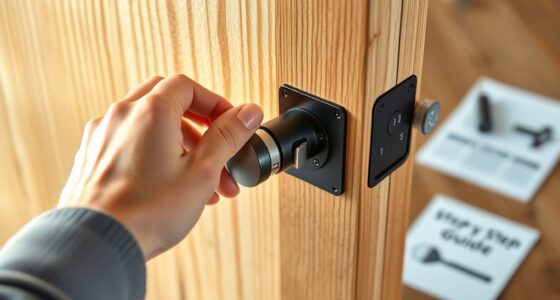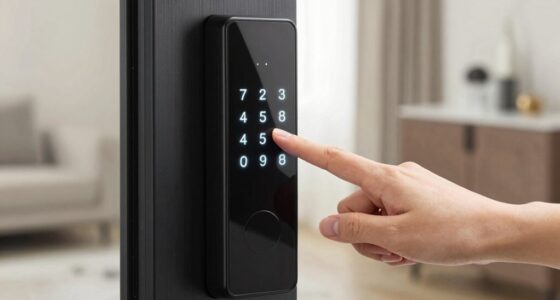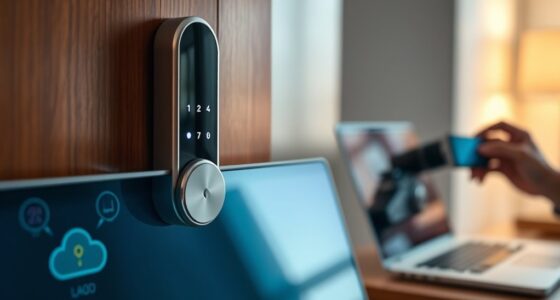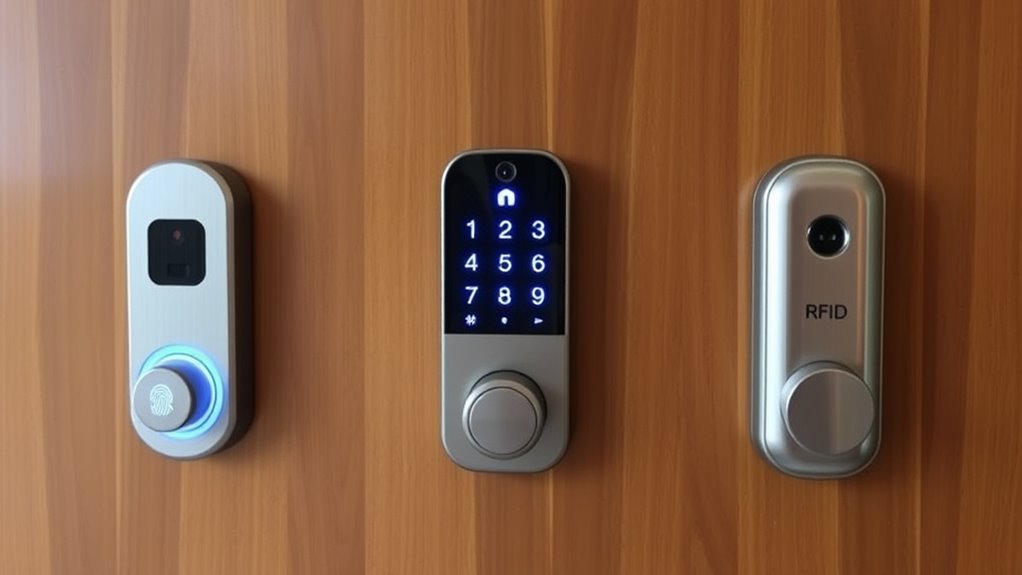

Choosing between biometric, PIN, and RFID smart locks depends on your security needs and lifestyle. Biometric locks offer high security with fingerprint recognition, ideal if you want maximum protection. PIN locks are simple and flexible, great for frequent code changes. RFID locks provide convenience for multiple users and quick access with key fobs. To find out which option suits you best, explore the key features and benefits of each type in more detail.
Key Takeaways
- Biometric locks offer high security with fingerprint recognition, making unauthorized copying difficult.
- PIN locks are affordable and flexible but depend on PIN complexity for security.
- RFID locks provide quick access via key fobs or cards, suitable for multiple users and ease of use.
- Biometric systems excel in security but may be affected by environmental conditions; PIN and RFID are generally more adaptable.
- The best choice depends on security needs, convenience preferences, and user lifestyle.
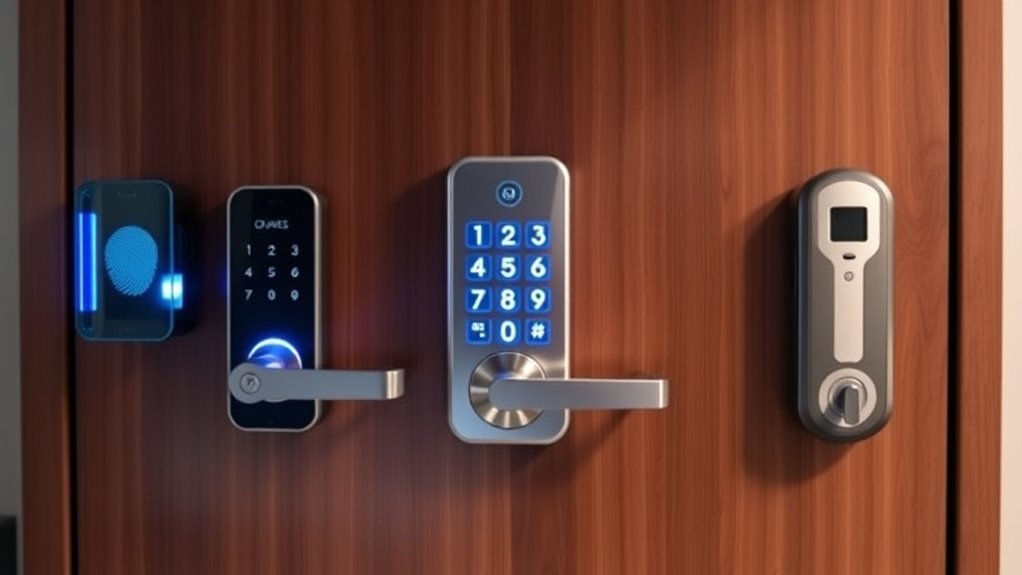
Smart locks have revolutionized home security by offering keyless entry and remote control features, making it easier to manage access for family, friends, or service providers. When you’re choosing between different types of smart locks—biometric, PIN, or RFID—you want to prioritize keyless convenience and security features that match your lifestyle. Each option provides a different way to open your door, and understanding their strengths helps you pick the best fit.
Biometric smart locks use fingerprint recognition to grant access. If security is your top priority, these locks are highly effective because they scan your fingerprint, which is unique to you. This makes unauthorized access extremely difficult since someone can’t copy your fingerprint like a PIN or RFID card. Biometric locks also eliminate the need to carry keys or cards, adding a layer of convenience. However, keep in mind that biometric systems can sometimes struggle with dirty or wet fingers, and they may be slightly more expensive upfront. Still, they offer a high level of security features, especially if you want to prevent accidental lockouts or unauthorized entry. Additionally, biometric systems benefit from advanced sensor technology, which improves reliability and accuracy in various conditions.
Biometric locks offer high security with fingerprint recognition and eliminate the need for keys or cards.
PIN-based smart locks require you to enter a code to unlock the door. They’re popular for their straightforward operation and affordability. With PIN locks, you can easily change codes whenever needed, which is useful if you’re renting out your home or sharing access with multiple people. The keyless convenience here is significant—no physical keys to hide or lose—and you can often set temporary or one-time codes for visitors or service workers. Security features depend on the complexity of your PIN; a longer, random combination is safer. Although PIN codes can be guessed or observed if someone watches you enter it, they still provide a reliable layer of security for everyday use. Plus, they’re simple to install and integrate with existing home automation systems.
RFID smart locks, on the other hand, operate with key fobs or cards that you simply hold near the lock to gain entry. The keyless convenience of RFID is undeniable—you don’t need to remember a code or fingerprint, just keep the fob handy. These locks are especially useful for households with children or elderly family members who may struggle with PINs or fingerprints. Security features are generally robust, but they rely on the physical security of the fob or card. If someone steals or clones the RFID device, they could potentially gain access. Some RFID locks also allow you to disable lost cards remotely, which adds a layer of control. Moreover, RFID technology often supports multiple access levels, allowing you to assign different permissions to different users.
In the end, your choice depends on what’s most important to you—whether it’s the advanced security of biometric locks, the flexibility and simplicity of PIN codes, or the convenience of RFID access. All three offer keyless convenience, but each has distinct security features tailored to different needs.
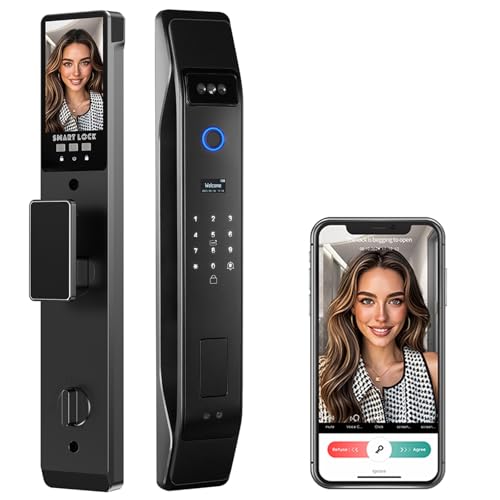
3D Face Recognition Smart Door Lock with Video Intercom, Tuya App Remote Access, Biometric Fingerprint & Palm Print Unlock, Heavy Duty Aluminum Mortise Lock for Home & Office (Black)
MULTIPLE ENTRY METHODS: Unlock your door via fingerprint, keypad passcode, smartphone app, or physical key for maximum convenience…
As an affiliate, we earn on qualifying purchases.
As an affiliate, we earn on qualifying purchases.
Frequently Asked Questions
How Do Biometric Locks Handle False Rejections or Acceptances?
Biometric locks handle false rejections and acceptances through biometric accuracy and a low false rejection rate. If your fingerprint isn’t recognized, the system often offers multiple attempts or alternative methods like PIN entry. Manufacturers continually improve sensor precision to reduce false rejections, ensuring reliable access. You can also calibrate or update the system to enhance accuracy, minimizing errors while maintaining security.
What Is the Typical Battery Life for Each Lock Type?
You’ll find that battery longevity varies by lock type and power consumption. Biometric locks typically last 6 months to a year on a set of batteries, depending on usage. PIN locks tend to have similar or slightly longer battery life, around a year or more. RFID smart locks usually consume less power, often lasting up to a year or longer, thanks to lower power consumption. Regularly checking and replacing batteries guarantees peak performance.
Are RFID Locks Vulnerable to Hacking or Cloning?
RFID locks can be vulnerable to hacking or cloning if their RFID security isn’t strong enough. Hackers may clone RFID cards or intercept signals if proper hacking prevention measures aren’t in place. To protect yourself, choose RFID locks with advanced encryption and security features, regularly update firmware, and avoid sharing RFID credentials. Taking these steps helps guarantee your RFID lock remains secure against potential hacking attempts.
Can Smart Locks Be Integrated With Existing Home Automation Systems?
Yes, smart locks can be integrated with your existing home automation systems. You’ll find many models offer smart home compatibility and system integration options like Z-Wave, Zigbee, or Wi-Fi. This allows you to control your lock remotely, set schedules, or automate access alongside your lights, thermostats, and security cameras. Just guarantee your chosen smart lock is compatible with your current system to enjoy seamless integration and enhanced convenience.
What Maintenance Is Required for PIN and RFID Locks Over Time?
Like tending to a trusty steed, your PIN and RFID locks require regular care. You’ll need to replace batteries when they run low, ensuring smooth operation. Watch for wear and tear on the keypad or RFID scanner, which can affect security and functionality. Periodic cleaning and checking connections prevent malfunctions. Staying proactive keeps your locks reliable, just like caring for a well-loved gadget that guards your home day and night.
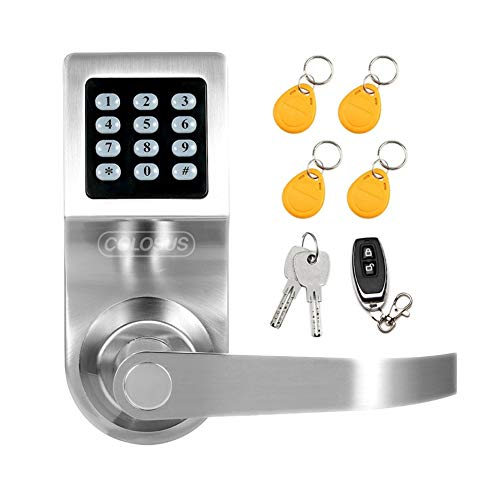
Electronic Smart Door Lock, Keyless Entry with Keypad, Key Fobs, Remote Control, Keys for Home, Office or Commercial, Silver NDL302
✔️ YOUR HOME ESSENTIAL – With our smart door lock, losing, carrying, replacing, or forgetting your keys will…
As an affiliate, we earn on qualifying purchases.
As an affiliate, we earn on qualifying purchases.
Conclusion
When choosing a smart lock, consider your security needs and convenience. Biometric locks offer quick access with a fingerprint scan, while RFID locks let you open with a card, and PIN locks require a code. Curiously, studies show that 70% of homeowners prefer biometric locks for their blend of speed and security. Ultimately, pick the one that fits your lifestyle best—whether you want effortless access or a simple code—your smart lock can keep your home safe and smart.

Veise VE017 Fingerprint Smart Door Lock, App Control, 8-in-1 Keyless Entry, Auto Lock, Emergency Power Port, Electronic Touchscreen Keypad, Biometric Smart Locks for Front Door, Matte Black
Smart User Management: Our smart user management system empowers you to take full, remote control of your property…
As an affiliate, we earn on qualifying purchases.
As an affiliate, we earn on qualifying purchases.