
Using NFC tags for offline arming and disarming makes your security system simple, contactless, and reliable. Just program the tags with commands like ‘arm’ or ‘disarm’ using your smartphone or security app, then place them where you need quick access. To keep things safe, encrypt your tags and restrict access to trusted users. If you experience issues, troubleshooting steps can help, and there’s more to explore if you keep going.

Get privacy and security gear delivered free with Prime
- Fast, free delivery on millions of items
- Prime Video, Amazon Music and more included
- Member-only deals all year
Key Takeaways
- Program NFC tags with specific arm/disarm commands using dedicated security app or customization tools.
- Ensure NFC tags are encrypted and physically secured to prevent unauthorized duplication.
- Tap NFC-enabled devices to the tags for quick, contactless security control without internet reliance.
- Regularly test and reprogram NFC tags to maintain reliable system operation and security.
- Combine NFC tags with layered security measures for enhanced offline protection and ease of use.
NFC tags for security system arming
As an affiliate, we earn on qualifying purchases.
As an affiliate, we earn on qualifying purchases.
What Are NFC Tags and How Do They Work for Contactless Security?
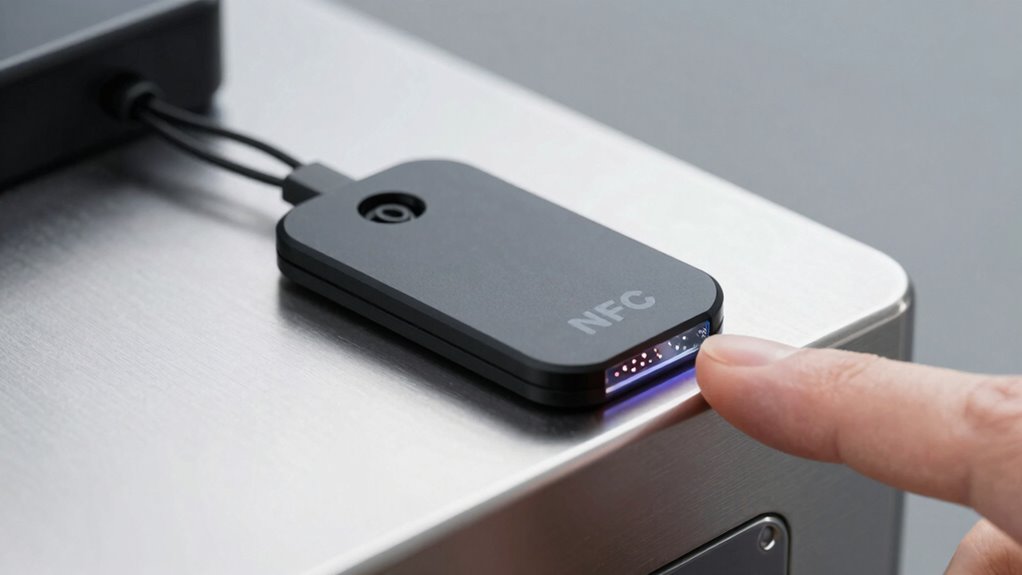
NFC tags are small, passive devices that use Near Field Communication technology to enable quick and secure data exchange over short distances. When you tap your phone or NFC-enabled device against one, the tag activates, transmitting information instantly. Originally popular for contactless payments, NFC technology now extends to security applications, including offline arming and disarming systems. These tags don’t require a power source—they rely on the electromagnetic field generated by your device to operate. This makes them reliable and simple to use for secure access control. When integrated with security systems, NFC tags become a convenient way to activate or deactivate alarms without needing manual codes or keys. Their ease of use and quick response times make them ideal for contactless security solutions, and high-precision communication ensures accurate data transfer even in challenging environments. Additionally, their robust security features help prevent unauthorized access and enhance overall system reliability. Understanding contactless security, which leverages wireless communication, benefits users by reducing the risk of theft or hacking during access. Furthermore, advancements in secure data encryption bolster the safety of NFC-based security systems, making them a trusted choice for modern access management.
encrypted NFC tags for access control
As an affiliate, we earn on qualifying purchases.
As an affiliate, we earn on qualifying purchases.
How to Set Up Your NFC Tag for Offline Arming and Disarming
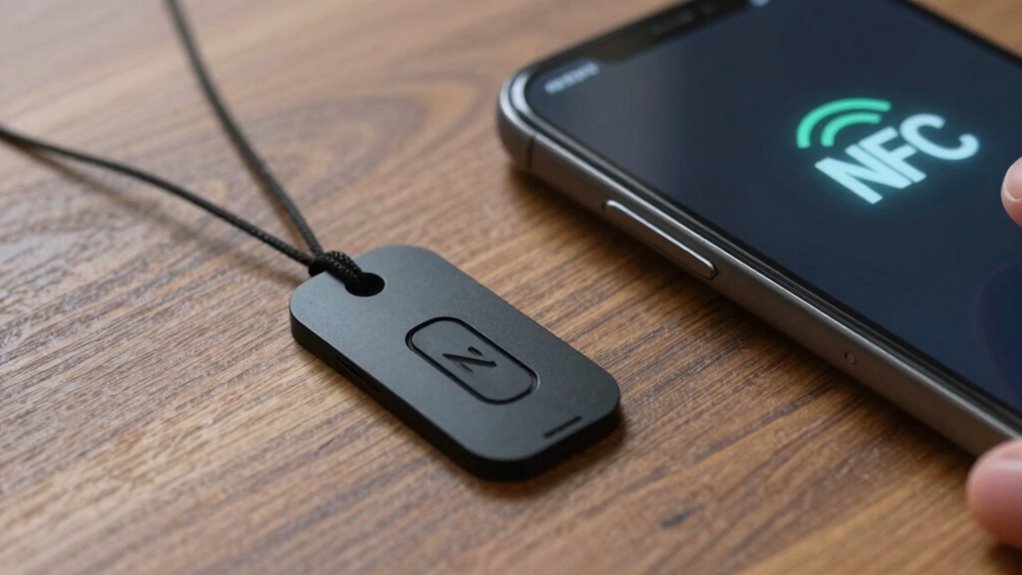
To set up your NFC tag for offline arming and disarming, start by choosing a suitable tag that’s compatible with your security system. Confirm your smartphone supports NFC and is compatible with the security app or system you’re using. Once you have the right tag, you’ll need to customize it by programming specific commands for arming or disarming your system. Use your phone’s NFC tag customization feature or an app designed for this purpose to add these commands. Keep the process simple: select the action (arm/disarm), assign it to the tag, and save the configuration. Testing the tag by tapping it with your smartphone ensures it correctly triggers your security system offline. This straightforward setup makes controlling your security system quick and convenient. Additionally, leveraging trusted businesses and services near you can help you find compatible hardware or professional assistance if needed. Incorporating smart home integration can further enhance your system’s responsiveness and ease of use. Moreover, understanding the impact of cookies and your privacy options can help you manage your online security and data sharing preferences effectively. Remember that security protocols are vital to ensure your NFC system remains safe from potential threats. Being aware of European cloud standards can also help you select more reliable and compliant hardware options for your setup.
As an affiliate, we earn on qualifying purchases.
How to Keep Your NFC Security System Safe and Private

Although NFC tags offer convenience for securing your system offline, ensuring safety and privacy is essential. To protect your system, implement strong encryption protocols that secure data transmission between your NFC tags and controller. This prevents unauthorized access and eavesdropping. Additionally, set up user access control to restrict who can arm or disarm your system, ensuring only trusted individuals have permission. Regularly update your security settings and use unique, hard-to-guess identifiers for each NFC tag. Keep your NFC tags physically secure and avoid sharing them unnecessarily. encryption protocols are crucial for safeguarding sensitive information transmitted by NFC devices. By combining encryption protocols with strict user access control, you create a layered defense that keeps your NFC security system private and resistant to potential threats. Incorporating best security practices can also help you maintain the integrity and longevity of your security devices, including staying informed about wave and wind vulnerabilities that could impact wireless signals. Additionally, understanding wireless signal vulnerabilities helps in implementing comprehensive security measures.
contactless security arming disarming
As an affiliate, we earn on qualifying purchases.
As an affiliate, we earn on qualifying purchases.
What to Do When NFC Contactless Arming or Disarming Fails?

When contactless arming or disarming with NFC tags fails, it can be frustrating and leave your system vulnerable. To address this, try these troubleshooting methods and explore alternative solutions:
- Ensure your NFC tag is properly programmed and within range. NFC programming accuracy is crucial for proper communication between the tag and reader.
- Check for obstructions or interference near the NFC reader.
- Verify that your device’s NFC feature is enabled and functioning correctly.
- Restart your system or NFC reader to reset connections.
- Update firmware or software to fix bugs affecting NFC performance.
- Consider understanding NFC technology principles to better troubleshoot and optimize your setup. Additionally, reviewing wireless communication protocols can help you identify compatibility issues that might affect NFC performance. Recognizing signal interference sources can also help prevent communication failures. If these steps don’t work, consider alternative solutions like using a different NFC tag, trying a different device, or temporarily switching to a manual override method. These troubleshooting methods help identify the issue quickly and keep your system secure.
Tips for Making Your NFC Security Setup More Reliable and User-Friendly
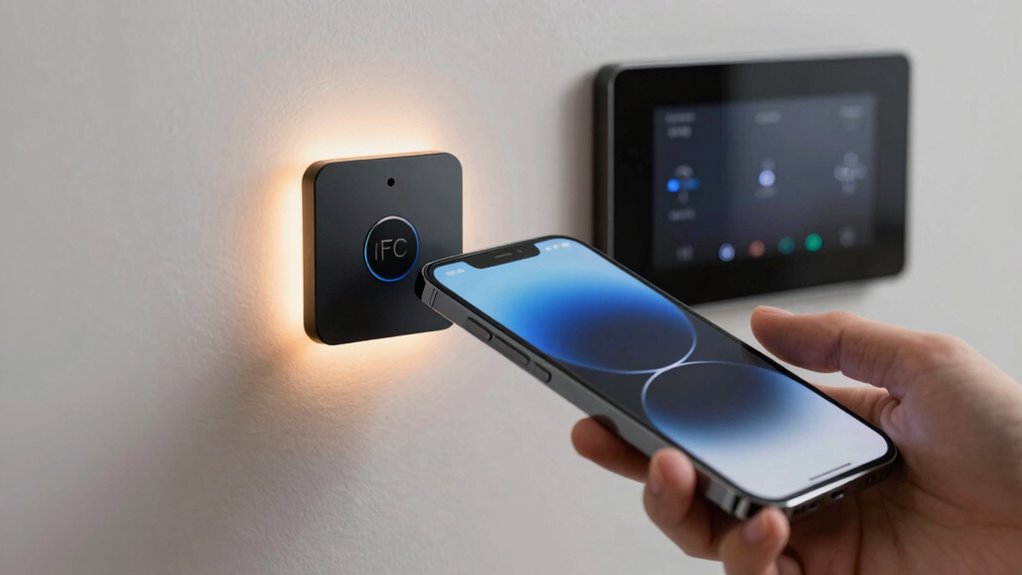
Enhancing the reliability and user-friendliness of your NFC security setup starts with simple, proactive steps. First, guarantee your user authentication process is straightforward yet secure, so authorized users can easily access and manage the system without frustration. Regularly test your NFC tags to confirm they work consistently, replacing or reprogramming any that malfunction. Tag customization is key—personalize tags with clear labels or unique identifiers to minimize confusion. Maintain a clean NFC reader surface to prevent connection issues. Educate users on proper NFC tag placement and usage, reducing errors during arming or disarming. Additionally, understanding the fundamentals of NFC technology can help you troubleshoot issues more effectively, including recognizing common connection problems that may arise. Being aware of interference sources that can disrupt NFC signals can also help prevent unexpected failures. For example, knowing how heat distribution affects NFC components can be useful if you encounter inconsistent readings. Incorporating proper placement techniques can further improve the overall reliability of your NFC setup. By focusing on these aspects, you’ll create a more reliable, user-friendly setup that minimizes frustration and maximizes security.
Frequently Asked Questions
Can I Use Multiple NFC Tags for Different Security Zones?
Yes, you can use multiple NFC tags for different security zones. By assigning each tag to a specific zone, you gain precise control over arming and disarming. When you tap a particular tag, it activates the corresponding security zone instantly. This setup makes managing multiple zones more convenient, allowing you to customize security levels. Using multiple tags streamlines your overall security and enhances convenience in controlling various areas.
How Long Does an NFC Tag’s Battery Last Before Replacement?
Think of your NFC tag as a tiny lighthouse guiding security—its battery lifespan usually lasts several years, often between 5 to 10 years, depending on usage. You won’t need frequent replacement, as these tags are designed for longevity. However, if the signal weakens or the tag stops responding, it’s a sign it’s time for replacement. Regular checks ensure your security remains bright and unwavering.
You might worry about accidental activation, but NFC interference is rare and unlikely to cause unintentional arming or disarming. To minimize this risk, keep NFC tags away from strong electromagnetic sources and avoid placing them in easily accessible or cluttered areas. With proper placement and device handling, you can confidently use NFC tags without concern for accidental activation, ensuring your system remains secure and functional.
Can NFC Tags Be Cloned or Copied Easily?
Think of NFC tags as fragile glass ornaments—easily duplicated if not protected. Cloning vulnerabilities exist, and skilled hackers can copy NFC tags if security measures are weak. This raises serious security concerns, especially if you rely on NFC for sensitive functions. To stay safe, make sure your NFC tags use encryption, secure storage, and anti-cloning technologies. Otherwise, a determined thief might just replicate your system’s key and walk right in.
What Happens if an NFC Tag Is Lost or Stolen?
If your NFC tag is lost or stolen, you should immediately disable its NFC tag security to prevent unauthorized access. Many systems allow you to revoke or deactivate the lost tag remotely, enhancing loss prevention. Regularly updating security settings and monitoring activity helps protect your system. Always keep track of your NFC tags, and consider using secure, encrypted tags for added protection, ensuring your system stays safe even if a tag goes missing.
Conclusion
Think of your NFC security system as a trusty lock, and the NFC tag as the key. When set up right, it offers a seamless, contactless way to arm and disarm your security, making your home feel safer without the hassle. Just like any key, it needs proper care and a little attention to stay reliable. With the right precautions, you’ll enjoy a secure, hassle-free experience that keeps your peace of mind locked tight.
Fall Picks
fall essentials
As an affiliate, we earn on qualifying purchases.