
When you get a suspicious call targeting your home, stay calm and avoid sharing personal info. Use caller ID or voicemail to assess if the call is legitimate, and hang up if it feels off. Ask for the caller’s details and verify them through official channels before proceeding. Stay alert for red flags like urgent demands or threats. If you continue, you’ll discover more ways to protect yourself effectively.
Key Takeaways
- Stay calm and avoid panic; use caller ID or voicemail to assess legitimacy before responding.
- Ask for caller’s identity and purpose, then verify through official contact channels.
- Be alert for urgent or threatening language, and do not share personal or financial info.
- Block suspicious numbers and register your phone with the national do-not-call list.
- Always verify suspicious calls via trusted sources before taking any action or sharing information.
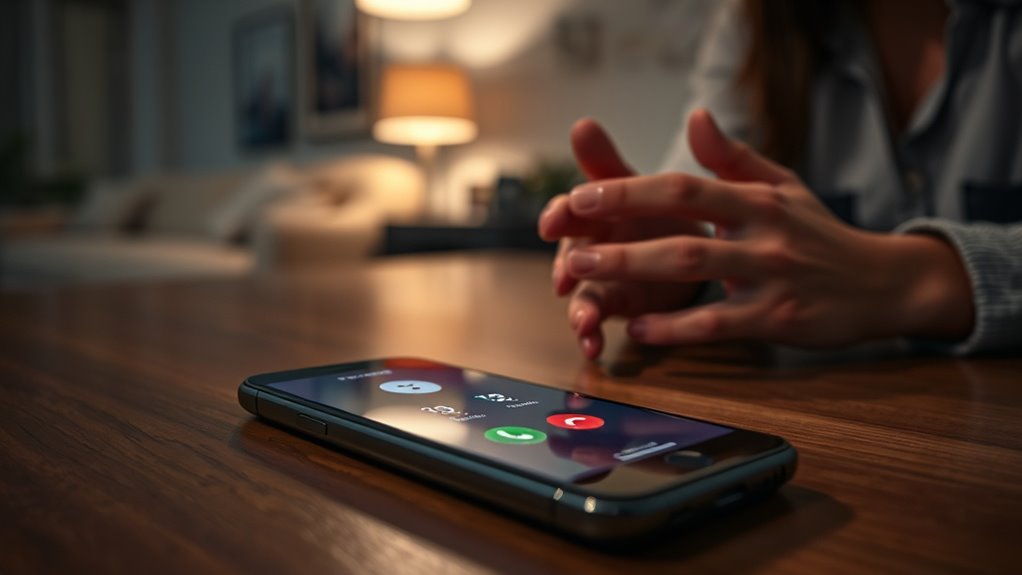
Suspicious phone calls can happen unexpectedly and often aim to deceive or gather personal information. When you answer your phone and hear someone claiming to be from a bank, government agency, or tech support, it’s natural to feel a twinge of concern. But rather than panic, it’s essential to stay calm and approach the situation with a clear plan. Call screening becomes your first line of defense. Instead of immediately engaging, let your phone’s caller ID or voicemail do some work. If the caller is suspicious or unfamiliar, don’t feel pressured to respond immediately. Instead, use call screening to ask for their name, department, or purpose, and then hang up if the caller refuses to identify themselves or if anything sounds off. This gives you a chance to verify their legitimacy later.
Recognizing scams is vital to protecting yourself. Many scam calls follow similar patterns: they create a sense of urgency, threaten legal action, or promise prizes. If a caller claims you’ve won a lottery you never entered or demands payment for a supposed debt, it’s a clear red flag. Stay alert for inconsistencies, such as calls from numbers that don’t match official sources or callers who refuse to give verifiable contact information. Remember, reputable organizations will rarely, if ever, ask for sensitive information over the phone unexpectedly. Trust your instincts—if something feels wrong, it probably is.
To improve your scam recognition skills, educate yourself about common scam tactics. Be skeptical of callers who pressure you to make quick decisions or threaten consequences if you don’t comply right away. Keep a mental checklist: Is the caller asking for personal info like your social security number or bank details? Are they refusing to send official documentation or follow-up emails? If yes, hang up and verify through official channels. Never provide personal or financial information over the phone unless you initiated the contact and are sure of the caller’s identity. Utilizing call blocking features or apps can further help filter out suspicious calls before they reach you.
You can also protect yourself by registering your number on the national do-not-call list and using call-blocking features or apps. These tools can filter out many scam calls before they even reach you. Remember, handling suspicious phone calls isn’t about being paranoid—it’s about being cautious. By practicing call screening, staying vigilant for scam recognition cues, and verifying suspicious callers through official sources, you markedly reduce the risk of falling victim to scams. Staying alert and cautious helps keep your home and personal information safe from malicious actors lurking behind seemingly innocent calls.

CPR V5000 Call Blocker for Landline Phones – You Can Manually Block All Calls with the Big Red Button – Pre-Programmed with 5,000 Known Nuisance Numbers – Caller ID is Required
COMPATIBILITY: For traditional analog landline phones and services from providers such as AT&T, Verizon, Frontier Communications, CenturyLink, and…
As an affiliate, we earn on qualifying purchases.
As an affiliate, we earn on qualifying purchases.
Frequently Asked Questions
How Can I Verify a Caller’s Identity Safely?
To verify a caller’s identity safely, never trust just the caller ID, as caller ID spoofing can make fake caller scams seem legitimate. Ask for specific information you can verify independently, like a company name or employee ID. Hang up and call back using a known number from official sources. Don’t share personal details until you’re confident the caller is genuinely who they claim to be.
What Should I Do if I Accidentally Reveal Personal Information?
Imagine your personal info is like a delicate vase. If you accidentally reveal it, act quickly—contact your bank, credit bureaus, and emergency contacts to alert them. Use privacy safeguards like changing passwords and monitoring accounts. Sometimes, scammers use this info to break in; staying vigilant helps protect your home. Always be cautious during calls, and if you slip, take immediate steps to minimize damage and keep your information secure.
Are There Specific Signs Indicating a Scam Call?
Yes, there are signs indicating a scam call. The caller may pressure you to share personal info, use urgent language, or claim you’re in trouble. They often won’t follow proper phone etiquette or ask for verification. To prevent scams, stay cautious, verify the caller’s identity, and avoid sharing sensitive details. Remember, scam prevention tips include hanging up if something feels off and reporting suspicious calls to authorities.
How Can I Block Unwanted or Suspicious Numbers?
You can block unwanted or suspicious numbers easily by using call blocking features on your phone or carrier services. Many devices have built-in caller identification, so you can see who’s calling before answering. When you receive a suspicious call, add the number to your block list, preventing future calls. Regularly update your contact list and use caller ID to screen calls, minimizing the risk of falling for scams or unwanted calls.
What Resources Are Available for Reporting Scam Calls?
Think of reporting scam calls like sending out a beacon in a foggy night. You can report fraudulent caller identification to agencies like the FTC or your phone carrier, which helps clear the haze. Use resources such as the FTC’s Complaint Assistant or the FCC’s Consumer Complaint Center. These tools contribute to understanding scam call statistics, helping authorities track and combat these deceptive tactics more effectively.

TelPal Call Blocker Box for Landline Phones with Caller ID Display, 4000 Number Capacity – to Block Hidden Numbers, Telemarketer Calls, Nuisance Calls, Hidden Numbers,Area Codes & Spam Calls
This is the latest version Telephone Call Blocker with hidden or unavailable call numbers can be blocked. And…
As an affiliate, we earn on qualifying purchases.
As an affiliate, we earn on qualifying purchases.
Conclusion
Think of suspicious calls as storms on the horizon—they seem threatening but can be navigated safely if you stay alert. By trusting your instincts and staying calm, you become the sturdy lighthouse guiding your home through uncertain waters. Remember, you’re in control of the signals you send back. Keep your defenses up, stay cautious, and let your awareness be the bright beacon that keeps your household safe from the tempests of deceit.

JETech Privacy Screen Protector for iPhone 15, 2-Pack
If bubbles appear, lift a corner of the screen protector and put it down again, and the bubbles…
As an affiliate, we earn on qualifying purchases.
As an affiliate, we earn on qualifying purchases.

Restaurant Supply Reminder, Don't Forget Checklist
DIMENSIONS: Perfect 4-inch by 6-inch size makes this reminder decal easily visible and readable in any kitchen or…
As an affiliate, we earn on qualifying purchases.
As an affiliate, we earn on qualifying purchases.