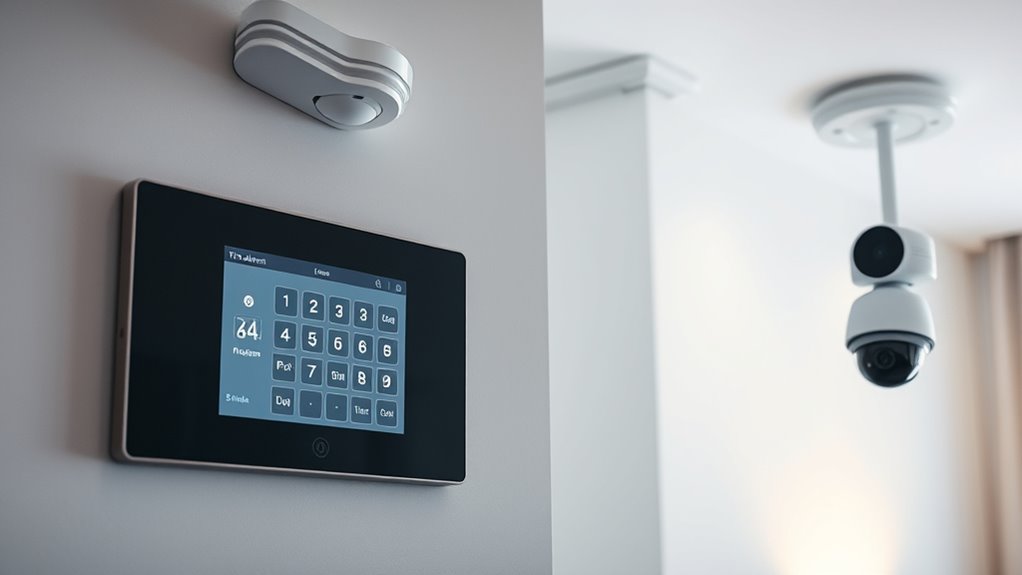

Integrating fire safety equipment with your home security system enables instant alerts and automated responses that can save lives and minimize property damage. When fire detectors connect seamlessly with security setups, they trigger alarms, lights, or HVAC shutoffs, helping your family evacuate quickly. You can also monitor everything remotely for added peace of mind. If you want to discover how to create a thorough safety network for your home, keep exploring the options available.
Key Takeaways
- Modern fire safety equipment can communicate directly with home security systems for seamless alerts.
- Integration enables instant notifications to phones, security services, or authorities during fire incidents.
- Wireless connectivity simplifies setup and ensures compatibility between fire detectors and security platforms.
- Centralized control allows easy management, testing, and maintenance of all integrated fire safety devices.
- Automated responses, such as unlocking doors or activating lights, enhance evacuation and safety efforts.

Have you ever wondered how prepared your home is for emergencies? If not, it’s time to consider how integrating your fire safety equipment with your home security system can make a real difference. Fire alarm integration isn’t just about having alarms; it’s about guaranteeing they work seamlessly with your existing security setup. When your fire alarms are connected to your security system, they can send instant alerts to your phone, security monitoring service, or local authorities. This immediate communication can drastically cut down response times, potentially saving lives and minimizing property damage.
Smoke detector connectivity plays a vital role here. Modern smoke detectors don’t just beep loudly when they detect smoke—they can be programmed to communicate directly with your security system. This means when smoke is detected, the alarm triggers your entire home security network, activating sirens, flashing lights, or even shutting down HVAC systems to prevent smoke spread. The connectivity also allows for remote monitoring, so even if you’re away, you’ll be immediately notified if your smoke detectors detect danger. It’s a smart way to keep your home protected around the clock.
To get the most out of fire alarm integration, you should guarantee your smoke detectors are compatible with your security system. Many newer models come equipped with wireless connectivity, making it easier to integrate without extensive rewiring. Once connected, you can set up automated responses, such as unlocking smart locks to facilitate quick evacuation or turning on smart lights to guide you safely through the house. These integrations help create a comprehensive safety net that not only detects a fire but also acts swiftly to protect everyone inside.
Another benefit of having your fire safety equipment integrated is the ability to centralize control. Instead of juggling separate alarms and systems, you can manage everything from a single app or control panel. This simplifies testing, maintenance, and guarantees all devices are functioning at their best. Additionally, some security systems offer voice alerts or notifications that can be customized to suit your needs, making certain you’re always aware of potential hazards. Moreover, ensuring your system has a high contrast ratio can improve the clarity of alerts in various lighting conditions, further enhancing your home’s safety measures.
wireless smoke detectors compatible with home security systems
As an affiliate, we earn on qualifying purchases.
As an affiliate, we earn on qualifying purchases.
Frequently Asked Questions
Can Fire Safety Devices Trigger Home Security Alarms Automatically?
Yes, fire safety devices can trigger your home security alarms automatically. When connected through proper fire alarm wiring, they send signals to your security system, activating alarms during emergencies. Security system protocols ensure that smoke or heat detection alerts are acknowledged promptly, allowing quick response. This integration provides peace of mind, knowing your fire safety devices work seamlessly with your security system to protect your home and loved ones effectively.
How Do Fire Safety Sensors Communicate With Home Security Systems?
Oh, the marvel of modern technology—fire sensors now whisper sweet nothings through wireless protocols, seamlessly integrating with your home security system. When a sensor detects smoke or heat, it instantly communicates via wireless protocols like Z-Wave or Zigbee, triggering alarms or notifications. This elegant sensor integration guarantees you’re promptly alerted, turning your home into a fortress of safety with minimal fuss and maximum sophistication.
Are There Compatibility Issues Between Different Brands of Fire and Security Equipment?
Yes, brand compatibility can be an issue when it comes to equipment integration. Different brands may use proprietary protocols, making it tricky to connect fire safety sensors with your security system seamlessly. To avoid compatibility issues, check if the brands support standard communication protocols like Z-Wave or Zigbee. Opt for compatible brands or systems designed for easy integration to guarantee smooth operation and reliable safety coverage in your home.
What Is the Maintenance Process for Integrated Fire and Security Systems?
Think of your system as a well-tuned orchestra; regular maintenance routines keep every instrument in harmony. You should schedule periodic inspections, clean sensors, and test alarms to verify they’re responsive. System calibration is essential—adjusting sensitivity levels keeps false alarms at bay and guarantees fire and security functions work seamlessly. Staying proactive with these steps helps your integrated system perform reliably, providing peace of mind when it matters most.
Can Integration Help Reduce False Alarms From Fire Detectors?
Yes, integrating fire safety equipment can help reduce false alarms by improving detection accuracy. When your fire detectors are connected to your security system, they can be calibrated to distinguish between real fires and minor smoke or steam. This integration allows for smarter alerts, minimizing false alarms and ensuring that you’re only notified when there’s a genuine emergency, giving you peace of mind and more reliable safety.
smart fire alarm integration with security system
As an affiliate, we earn on qualifying purchases.
As an affiliate, we earn on qualifying purchases.
Conclusion
By integrating fire safety equipment with your home security system, you’re not just protecting your belongings—you’re safeguarding lives. Some believe combining these systems creates a seamless alert network, ensuring faster response times. While this theory holds promise, ongoing research emphasizes the importance of regular maintenance and updates. Ultimately, embracing this integration can give you peace of mind, knowing your home is smarter and safer. Trust the evidence: a connected system offers a proactive approach to emergency preparedness.
home automation fire safety devices
As an affiliate, we earn on qualifying purchases.
As an affiliate, we earn on qualifying purchases.
remote monitoring fire safety equipment
As an affiliate, we earn on qualifying purchases.
As an affiliate, we earn on qualifying purchases.