To protect your home automation hub from ransomware, keep its firmware and software updated regularly, enabling automatic updates whenever possible. Use strong, unique passwords and activate two-factor authentication to block unauthorized access. Segment your network to isolate your hub from other devices, reducing the damage if infected. Choose security-focused platforms and back up your settings often. Staying informed about new threats and best practices helps you stay one step ahead—if you continue, you’ll discover how to implement these defenses effectively.
Key Takeaways
- Regularly update firmware and software to patch security vulnerabilities exploited by ransomware.
- Use strong, unique passwords and enable two-factor authentication for all home automation accounts.
- Segment your network to isolate the home hub, limiting malware spread and unauthorized access.
- Choose platforms with robust security features, automatic updates, and transparent privacy policies.
- Back up device configurations regularly using encrypted methods to ensure data recovery after an attack.

Hubitat Elevation C-8 Pro Smart Home Hub – Latest Platform Updates – Matter 1.5, Z-Wave 800 LR, Zigbee 3.0 & Bluetooth – Works with Ring, Alexa, Apple HomeKit & Google Home – Local Control (No Cloud)
POWERFUL SMART HOME PERFORMANCE – EVEN WITHOUT INTERNET Hubitat C-8 Pro runs automations inside your home instead of…
As an affiliate, we earn on qualifying purchases.
As an affiliate, we earn on qualifying purchases.
Why Ransomware Attacks on Smart Home Hubs Are a Growing Threat
Ransomware attacks on smart home hubs are increasingly common because hackers see these devices as valuable targets. As IoT vulnerabilities grow, cybercriminals exploit weaknesses in connected devices, making home hubs prime targets. Ransomware evolution has accelerated, with hackers developing more sophisticated methods to infiltrate and lock devices, demanding hefty ransoms. These attacks can disrupt your daily routines, compromise personal security, and expose sensitive data. Smart home hubs often lack robust security measures, making them easier for hackers to access. With the expanding use of IoT devices in homes, cybercriminals recognize the potential for widespread chaos. Staying ahead of ransomware evolution requires awareness of these vulnerabilities and proactive security practices to protect your smart home environment. Security protocols are essential to defend against these emerging threats. Additionally, implementing regular software updates can close security gaps before they are exploited by cybercriminals. Building a robust security infrastructure tailored for IoT devices further enhances protection against ransomware and other cyberattacks, especially considering the lack of standardized security practices across different smart home devices. Incorporating home network segmentation can also help contain breaches and limit hackers’ access to critical devices.

Cryptnox FIDO2 Security Key Card, Two Factor Authentication (2FA) NFC Security Key FIDO 2.1 Level 1 Certified, Passwordless Login & 2FA Via NFC Or Contact, Works with Windows, Mac, iOS, Android
🔐 FIDO2 Level 1 Certified for Advanced Authentication: Cryptnox fido2 security key is certified to FIDO 2.1 Level…
As an affiliate, we earn on qualifying purchases.
As an affiliate, we earn on qualifying purchases.
How Ransomware Targets Your Home Automation Hub and How to Recognize Vulnerabilities
Since home automation hubs connect multiple devices and hold sensitive data, hackers target them to gain control over your smart home. Ransomware often exploits device vulnerabilities and can infiltrate through weak passwords, unpatched software, or unsecured network connections. Recognizing vulnerabilities helps you defend against attacks before they happen. Implementing privacy policies that inform you about data handling can also improve your security posture. Regularly updating your device firmware is crucial as outdated software is a common security vulnerability that hackers exploit. These vulnerabilities can be exploited remotely, making it vital to secure your network adequately. An understanding of cybersecurity best practices can further bolster your defenses against potential threats. Common signs include:
Home automation hubs are prime targets for hackers seeking control over your smart home.
- Outdated firmware or software versions
- Unusual network activity
- Unexpected device reboots
- Unauthorized access alerts
- Slow system response
Hackers use malware infiltration to lock your hub and demand ransom. They often scan for vulnerabilities in device security, making it essential to identify weak points early. Being aware of attack vectors can help you implement targeted defenses to prevent unauthorized access. Staying vigilant about these signs can prevent ransomware from taking control of your home automation system.

The Small Business Network Shield: How to Secure Your Office Wi-Fi, Smart Devices, and Employee Phones Without an IT Degree
As an affiliate, we earn on qualifying purchases.
As an affiliate, we earn on qualifying purchases.
Keep Your Hub Firmware and Software Up to Date to Block Ransomware
Keeping your home automation hub’s firmware and software up to date is one of the most effective ways to prevent ransomware attacks. Firmware updates fix security vulnerabilities that hackers might exploit, so regularly checking for and installing these updates is essential. Software patches also address known weaknesses and improve overall system stability. Many hubs offer automatic updates; enable this feature if available, to guarantee you don’t miss critical patches. Avoid delaying updates, as cybercriminals often target outdated software with known exploits. Staying current with firmware and software ensures your hub has the latest security protections, making it harder for ransomware to infiltrate your network. Regular updates are a simple yet powerful step to keep your smart home safe.

YoLink Hub, 1/4 Mile Super Long Range Smart Hub LoRa Enabled Smart Home Automation Bridge Home Security Monitoring System – Central Controller for YoLink Smart Home Devices – White
As an affiliate, we earn on qualifying purchases.
As an affiliate, we earn on qualifying purchases.
Use Strong Passwords and Enable Two-Factor Authentication to Protect Your Hub
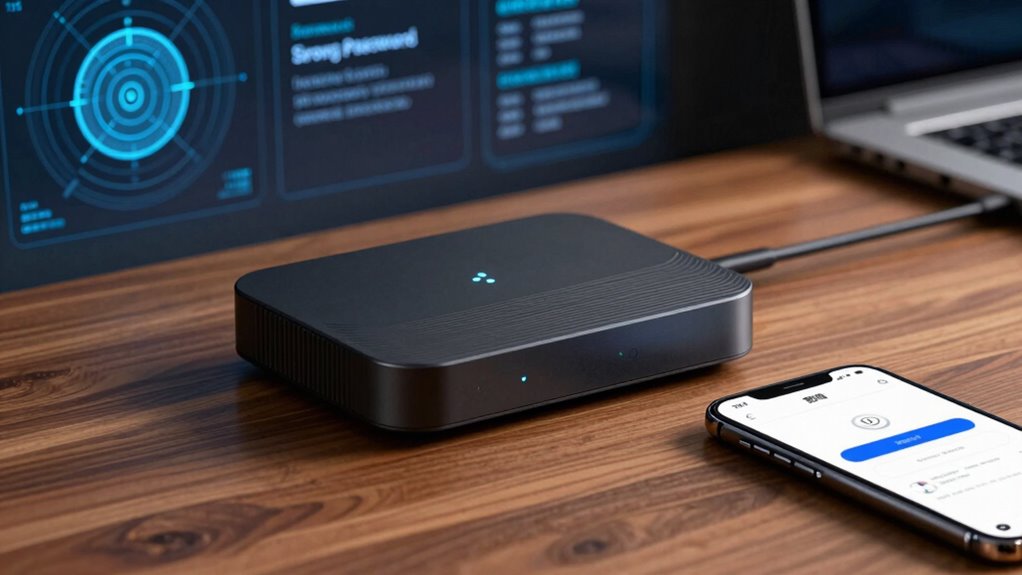
Once your hub’s firmware and software are up to date, the next step is to strengthen access controls. Using strong passwords and enabling two-factor authentication substantially reduce ransomware risks. Make certain your password complexity includes a mix of uppercase, lowercase, numbers, and symbols, making it harder for hackers to guess. Avoid common passwords or reusing credentials from other accounts. Enable two-factor authentication for an added security layer, requiring a second verification step like a code sent to your phone. This way, even if someone gets your password, they can’t access your hub without the second factor. Regularly updating security protocols and staying informed about emerging threats can further enhance protection. Incorporating password management tools can help you generate and store complex credentials securely. Consider these best practices:
- Use unique, complex passwords for your hub
- Avoid sharing login details
- Enable two-factor authentication
- Change passwords regularly
- Use a password manager to track credentials
- Regularly monitor your device for infection risks to prevent ransomware attacks. Additionally, keeping an eye on device vulnerabilities and applying timely patches can fortify your defenses against exploitation.
Segment Your Network to Isolate Your Home Automation Hub From Other Devices
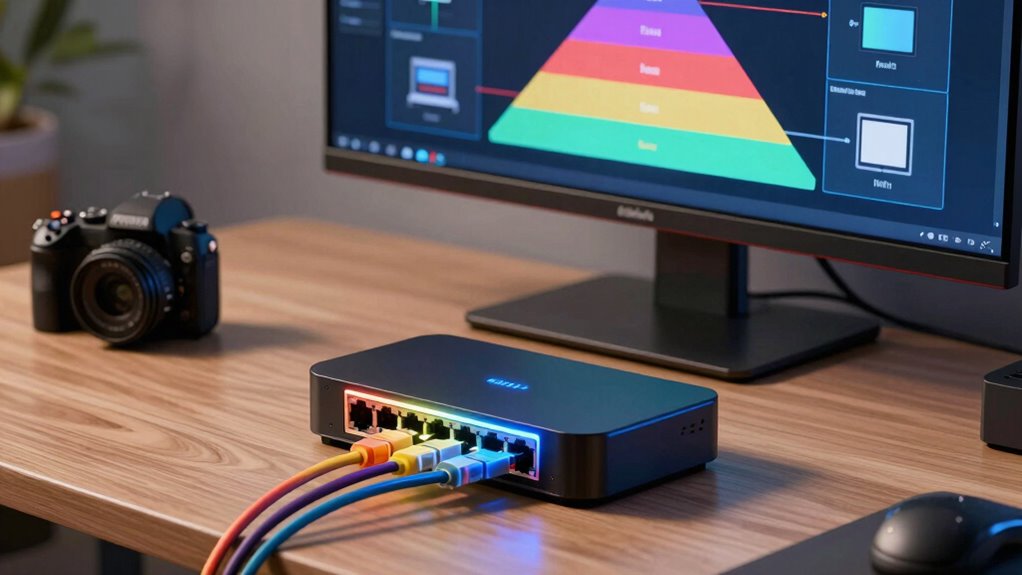
To better protect your home automation hub from potential security threats, you should segment your network to isolate it from other devices. Network segmentation creates separate zones within your network, preventing malware or ransomware from spreading easily. By implementing device isolation, your hub remains separate from computers, smartphones, and IoT devices, reducing attack surfaces. Use a dedicated VLAN or subnet for your automation hub, ensuring it communicates only with necessary devices or services. This approach also makes it easier to apply security updates promptly and effectively. Regularly updating your firmware and network configuration helps close vulnerabilities that could be exploited by attackers. This limits the impact if another device gets compromised. Proper segmentation not only enhances security but also simplifies monitoring and management of your network traffic. Additionally, understanding Network segmentation helps you design an effective security strategy for your smart home. Implementing security best practices further strengthens your network defenses. Incorporating security protocols into your network setup adds an extra layer of protection. Overall, isolating your home automation hub through effective network segmentation minimizes risks and keeps your smart home safer.
Choose Home Automation Platforms That Prioritize Security

When selecting a home automation platform, make sure it offers regular security updates to patch vulnerabilities. Look for robust authentication methods to keep unauthorized users out and transparent privacy policies that clearly explain how your data is handled. Prioritizing these security features helps protect your smart home from potential threats. Additionally, consider platforms that use necessary cookies to ensure essential functionalities are maintained without compromising your security. Implementing security-focused features can further strengthen your defenses against ransomware and other cyber threats. Ensuring the platform employs timely security patches is crucial for staying ahead of emerging vulnerabilities. Incorporating security best practices into your setup can significantly reduce the risk of cyber attacks.
Regular Security Updates
Choosing a home automation platform that prioritizes regular security updates is essential for keeping your smart home safe. Frequent updates help patch software vulnerabilities before hackers exploit them, reducing your risk of ransomware attacks. Staying current also enhances your user awareness, so you understand new features and potential risks. When platforms release updates promptly, they demonstrate a commitment to security, ensuring your devices remain protected. Look for platforms that:
- Provide automatic or easy-to-install updates
- Offer security patches promptly after vulnerabilities are discovered
- Communicate update schedules clearly
- Integrate updates seamlessly without disrupting your system
- Educate users on new security features
- Incorporate wiring basics and safety considerations to prevent vulnerabilities in your setup, which is crucial for maintaining overall system security and safety.
Robust Authentication Methods
Selecting a home automation platform that employs robust authentication methods is essential for safeguarding your smart home. Look for options that support biometric authentication, which adds a layer of security by verifying your identity through fingerprint or facial recognition. These methods make it harder for unauthorized users to access your system. Additionally, prioritize platforms that incorporate hardware security features, such as secure enclaves or tamper-proof modules, to protect sensitive data and credentials. Strong authentication prevents ransomware from gaining control over your devices, reducing the risk of malicious attacks. By choosing platforms with advanced security measures, you ensure only trusted users can access your automation hub, keeping your smart home safe from cyber threats and unauthorized manipulation.
Transparent Privacy Policies
Prioritizing transparent privacy policies guarantees you understand how your data is collected, used, and protected by your home automation platform. When platforms emphasize privacy transparency, they openly disclose data practices, giving you confidence in their data protection measures. Look for providers that:
- Clearly outline what data they collect and why
- Share their data storage and security protocols
- Explain how they handle third-party access
- Offer options to control or delete your data
- Regularly update privacy policies to reflect changes
Choosing platforms with transparent privacy policies ensures your personal information remains secure and you’re informed about data handling practices. This focus on data protection minimizes risks and helps you make smarter decisions about your smart home’s security.
Back Up Your Hub Settings and Connected Devices Data Regularly

Regularly backing up your hub settings and connected device data is essential to protect against data loss from software glitches, cyberattacks, or hardware failures. Using cloud backup options ensures your data is stored securely off-site, accessible when needed. Always enable data encryption during backups to keep your information safe from unauthorized access. Creating regular backups saves time and effort if you need to restore your system quickly after an incident.
| Backup Method | Benefits |
|---|---|
| Cloud Backup | Accessible, secure, scalable |
| Local Backup | Immediate access, control |
| Encrypted Files | Privacy and security |
| Automatic Backups | Consistent, hands-off process |
How to Stay Informed About the Latest Ransomware Threats and Best Security Practices

Keeping your home automation hub protected means staying up-to-date on the latest ransomware threats and security practices. To do this effectively, you should regularly review threat intelligence sources and security alerts from trusted cybersecurity organizations. These sources provide real-time updates on emerging threats and attack techniques. Consider subscribing to industry newsletters or RSS feeds that focus on IoT and home security risks. Participating in online forums and professional groups can also help you learn from others’ experiences. Additionally, follow cybersecurity blogs and vendor advisories for practical tips. Staying informed ensures you can quickly adapt your security measures and respond to new threats before they compromise your system. Consistent vigilance is key to maintaining a resilient, ransomware-proof home automation hub.
Frequently Asked Questions
Can Ransomware Completely Brick My Home Automation Hub?
Yes, ransomware can potentially brick your home automation hub, especially if it corrupts the firmware. To prevent this, make sure you regularly update the firmware to patch vulnerabilities. Also, manage your passwords carefully—use strong, unique ones for your hub’s accounts. If you stay proactive with firmware updates and strong password management, you markedly reduce the risk of ransomware causing permanent damage to your home automation system.
Are There Specific Brands More Vulnerable to Ransomware Attacks?
Some brands are more vulnerable to ransomware attacks due to higher device susceptibility and brand vulnerabilities. Popular brands with widespread devices often become targets because hackers see larger attack surfaces. It’s essential to research each brand’s security practices and updates regularly. You should also prioritize brands with strong security features, frequent firmware updates, and positive security reviews to minimize the risk of ransomware compromising your home automation hub.
How Does Ransomware Spread to Smart Home Devices?
A chain is only as strong as its weakest link, and ransomware spreads to smart home devices through network vulnerabilities. When you neglect to update firmware or use weak passwords, malware propagation becomes easier. Cybercriminals exploit these gaps, infiltrating your devices via unsecured Wi-Fi or compromised access points. Once inside, ransomware encrypts your data, demanding payment. Staying vigilant, updating software, and securing your network are your best defenses against this threat.
What Are the Signs My Home Hub Is Compromised?
If your home hub is compromised, you might notice unusual device behavior, slow responses, or unexpected device encryption messages. Check for irregular firmware updates or failed attempts to access device settings. Keep your firmware updated regularly to patch security vulnerabilities. Additionally, monitor for unfamiliar devices connected to your network. If you spot these signs, reset your hub, update firmware, and strengthen your security measures to prevent further ransomware threats.
Is Professional Cybersecurity Service Necessary for Home Hubs?
If your home automation hub gets ransomware, a professional cybersecurity service can be worthwhile. For example, they can help you strengthen your home network and guarantee data backups are secure, reducing the risk of data loss. While you can implement basic security measures yourself, experts provide tailored advice and ongoing monitoring, giving you peace of mind that your devices and data stay protected against evolving threats.
Conclusion
By staying vigilant and following these security tips, you can protect your smart home hub from ransomware. For example, imagine a homeowner who regularly updates firmware and uses strong passwords; they’re much less likely to fall victim if a new threat emerges. Staying informed about the latest attacks and practicing good security habits guarantees your smart home remains safe and functional, giving you peace of mind in a connected world.