
To think about doorbell vs floodlight coverage, focus on their different roles. A doorbell camera is best at monitoring who’s at your front door, capturing clear faces and activity near entryways. Floodlights, on the other hand, illuminate larger areas, deterring intruders and covering yards or dark spots. Combining both helps you create a layered security system, ensuring you don’t miss anything. Keep exploring to discover how positioning and environment impact their effectiveness.
Key Takeaways
- Assess entry points for doorbell cameras and high-traffic areas for floodlights to determine primary coverage needs.
- Use doorbell cameras for clear facial identification at the front door, and floodlights for broad yard illumination.
- Consider environmental factors like trees and walls that may obstruct camera views when planning placement.
- Combine both to create layered security, with doorbells monitoring visitors and floodlights covering dark or vulnerable zones.
- Proper positioning at eye level for doorbells and height for floodlights ensures optimal coverage and effectiveness.
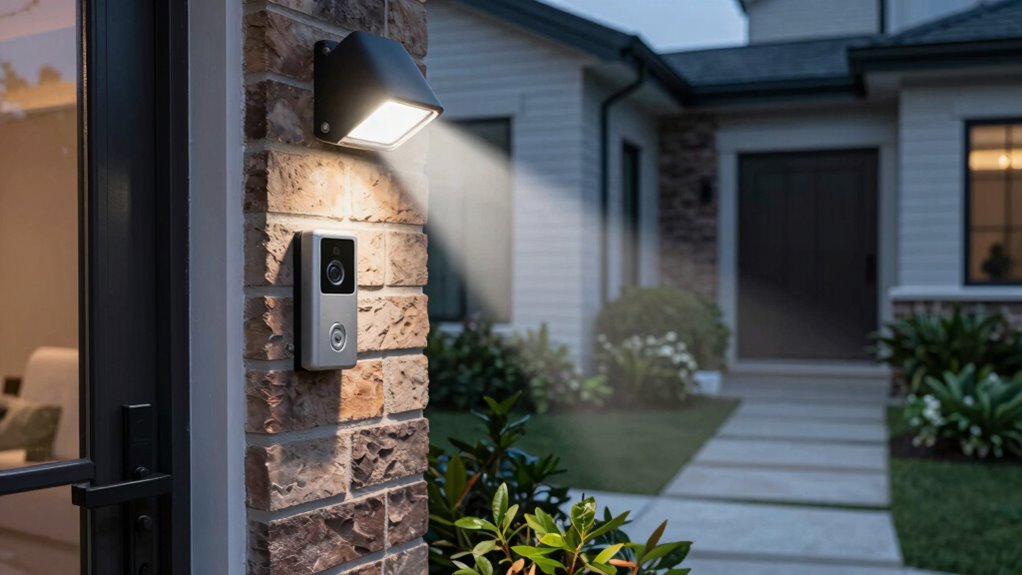
Are you wondering whether a doorbell camera or a floodlight camera offers better coverage for your home security? The answer depends on how you think about your overall security system and where you place your cameras. Both options serve different purposes, but understanding their strengths helps you make smarter decisions about camera placement and coverage. A doorbell camera is typically installed at your front door, capturing anyone who approaches and providing a clear view of visitors. It’s perfect for monitoring who’s at your door, recording activity, and even communicating with visitors remotely. Its placement gives you a focused view of the entry point, but it might not cover the entire front yard or side entrances. To maximize its effectiveness, you should position it at eye level, ensuring it captures faces clearly while avoiding glare or obstructions.
A doorbell camera is ideal for monitoring visitors at your front door with focused, clear views.
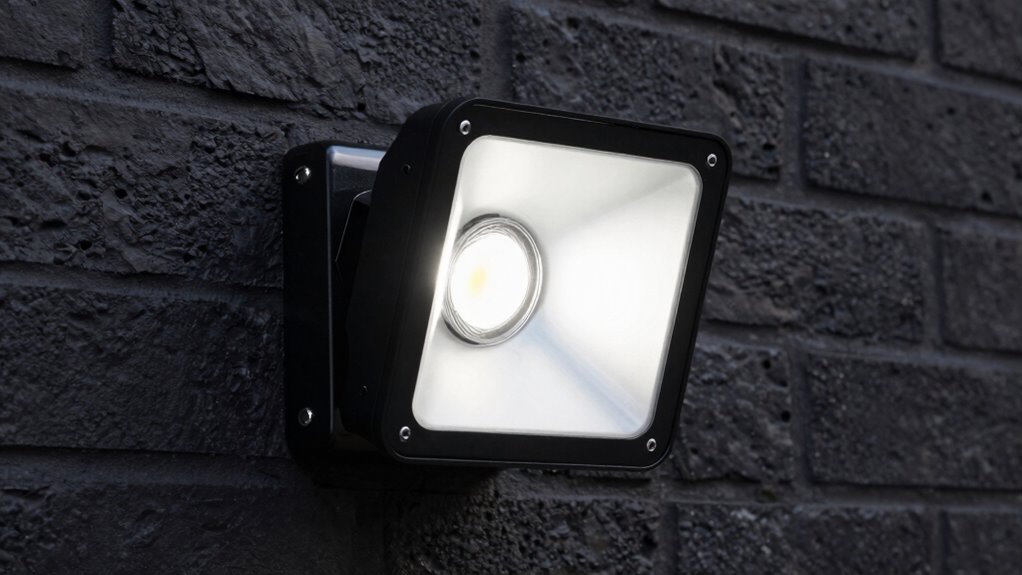
On the other hand, floodlight cameras offer broader coverage, especially for larger areas or dark zones around your property. These cameras combine powerful lighting with motion detection, illuminating intruders or visitors, and recording their activity. When considering camera placement for floodlight cameras, think about high-traffic or vulnerable spots like backyard entrances, driveways, or side yards. Installing them at a height that covers the widest area while minimizing blind spots is key. Because they emit bright light, they’re excellent deterrents, and their coverage extends well beyond the reach of a typical doorbell camera. Understanding camera placement considerations is crucial for optimizing your security setup. Additionally, considering factors like camera field of view can help you maximize coverage and minimize blind spots. Properly integrating these systems can also involve understanding security coverage to ensure comprehensive protection.
Your security system benefits from strategic camera placement, which involves understanding the strengths and limitations of each type. If your main concern is identifying visitors and recording who’s at your front door, a doorbell camera is ideal. But if you want to monitor larger zones or deter intruders at night, floodlight cameras offer more extensive coverage. Think about the environment around your house—obstructions like trees, walls, or porch structures affect camera placement and visibility. Properly positioning your cameras ensures you don’t miss critical activity.
Ultimately, a balanced approach works best. Use a doorbell camera to cover your primary entry point and supplement it with floodlight cameras for broad yard coverage and dark corners. This way, your security system provides layered coverage, maximizing detection and deterrence. Remember, the key lies in thoughtful camera placement—positioning each device where it can serve its purpose without blind spots. As you plan your security setup, keep these considerations in mind, and you’ll enhance your home’s safety with clear, effective coverage.

BOIFUN Video Doorbell Camera Wireless – No Subscription Required, 2K HD
- Wide 166° Field of View: Covers front porch with no blind spots
- f/2.5 Aperture for Clear Images: Soft background blur and crisp facial details
- Supports 2.4 GHz Wi-Fi Only: Ensures stable, strong signal connection
As an affiliate, we earn on qualifying purchases.
As an affiliate, we earn on qualifying purchases.
Frequently Asked Questions
Can Both Doorbell and Floodlight Cameras Be Integrated Into the Same System?
Yes, you can integrate both doorbell and floodlight cameras into the same system, simplifying your security setup. When doing so, consider the video resolution of each device to guarantee clear images. Keep in mind, installation complexity varies—doorbell cameras are usually straightforward, while floodlights might require additional wiring or positioning. With compatible smart home platforms, you’ll manage both easily, gaining thorough coverage without hassle.
What’s the Average Cost Difference Between Doorbell and Floodlight Security Cameras?
Think of the cost difference between doorbell and floodlight security cameras like comparing a sleek sports car to a sturdy SUV. On average, doorbell cameras cost around $100 to $200, offering high video resolution and simple installation. Floodlight cameras tend to be a bit pricier, around $150 to $300, often due to their larger size and more complex installation. Your choice depends on your budget and security needs.
How Do Weather Conditions Affect the Performance of Each Camera Type?
Weather conditions impact both doorbell and floodlight cameras by affecting their weather resilience and signal interference. Rain, snow, and fog can reduce visibility and cause moisture buildup, impairing performance. Extreme temperatures may strain electronics, and wind can shake or dislodge devices. Additionally, heavy weather can interfere with Wi-Fi signals, leading to poor connection or image quality. To guarantee peak performance, choose weather-resistant models and place them where they’re less exposed to harsh elements.
Are There Privacy Concerns Specific to Floodlight Cameras Compared to Doorbells?
You might worry floodlight cameras pose more privacy risks than doorbells, especially since they cover larger areas and can capture neighbors or passersby. Data security concerns also increase, as floodlights often record at night when activity is less predictable. Be mindful of how these cameras record, store, and share footage, and guarantee your privacy settings are robust. Proper placement and security measures help protect everyone’s privacy effectively.
Which Camera Type Offers Better Night Vision Capabilities?
Floodlight cameras generally offer better night vision than doorbells because they use powerful infrared technology and have high low light sensitivity. The bright floodlights illuminate dark areas, making it easier to see details at night. Doorbells may have infrared, but their night vision isn’t as strong due to limited lighting. So, if you want clear, detailed nighttime footage, a floodlight camera is your best choice.

Ring Floodlight Cam Wired Plus, Outdoor home or business security with motion-activated 1080p HD video and floodlights, White
- High-Definition Video: 1080p HD security footage
- Motion-Activated Floodlights: Bright LED floodlights activate on motion
- Security Siren: 105dB siren for alerts and deterrence
As an affiliate, we earn on qualifying purchases.
As an affiliate, we earn on qualifying purchases.
Conclusion
Ultimately, choosing between doorbell and floodlight coverage depends on your needs and priorities. Think about what matters most—security, visibility, or convenience—and weigh the pros and cons. Remember, “a stitch in time saves nine,” so investing in the right coverage now can save you headaches later. By understanding your space and security goals, you’ll make a smarter choice that helps you feel safer and more prepared every day.
Ring Floodlight Cam Wired Plus, Outdoor home or business security with motion-activated 1080p HD video and floodlights, White
- High-Definition Video: 1080p HD security footage
- Motion-Activated Floodlights: Bright LED floodlights activate on motion
- Security Siren: 105dB siren for alerts and deterrence
As an affiliate, we earn on qualifying purchases.
As an affiliate, we earn on qualifying purchases.

Ring Battery Doorbell Plus (newest model), Retinal 2K with wide-angle video, up to 6x Enhanced Zoom, Night Vision, and Quick Release Battery Pack, Nickel Silver
- Video Resolution: Retinal 2K clarity for wide views
- Zoom Capability: Up to 6x Enhanced Zoom
- Night Vision: Color in low light, black & white in darkness
As an affiliate, we earn on qualifying purchases.
As an affiliate, we earn on qualifying purchases.