
If you’re searching for the best NAS with RAID for family backups, you’re likely balancing performance, ease of use, and cost. The Synology DS925+ stands out as the overall best choice thanks to its robust performance and flexible RAID options. For those new to NAS, the Ugreen NAS DH2300 offers simple setup and reliable data protection. Power users and creative families might prefer the UGREEN NAS DXP4800 GT for its advanced features. The main tradeoffs involve balancing cost against features, with higher-end models offering more flexibility but at a higher price. Keep reading to see how these options compare and which may suit your family’s backup needs best.

Get privacy and security gear delivered free with Prime
- Fast, free delivery on millions of items
- Prime Video, Amazon Music and more included
- Member-only deals all year
Key Takeaways
- Top-performing models like the Synology DS925+ balance advanced RAID options with user-friendly interfaces, making them ideal for families with growing storage needs.
- Budget-friendly options such as the UGREEN NAS DH2300 provide essential RAID support and easy setup, suited for beginners or smaller households.
- More feature-rich NAS units like the UGREEN NAS DXP4800 GT cater to creative families or those with higher data demands, but come with a steeper price point.
- Two-bay NAS devices are generally more affordable and simpler to manage but may lack the scalability of four-bay systems for larger backups.
- Ease of use, setup process, and manufacturer support are key factors that distinguish the highest-rated options from less user-friendly models.
| Synology 4-Bay DiskStation DS925+ (Diskless) |  | Best Overall for Family Backups with Versatile Features | Supports drives on compatibility list: Yes | Sequential read/write throughput: up to 522/565 MB/s | Network ports: Dual 2.5GbE | VIEW LATEST PRICE | See Our Full Breakdown |
| UGREEN NAS DXP4800 Pro 4-Bay NAS for IT Professionals, Developers & Power Users |  | Best for Power Users and Advanced Home Setups | Processor: Intel Core i3-1315U | Max Capacity: 144TB | Network Ports: 10GbE + 2.5GbE | VIEW LATEST PRICE | See Our Full Breakdown |
| UGREEN NAS DH2300 2-Bay NAS for Beginners & Personal Users with Phone Backup |  | Best for Beginners and Personal Use | Bays: 2 | Max Capacity: 64TB | Network: 1GbE | VIEW LATEST PRICE | See Our Full Breakdown |
| Synology DS425+ 4-Bay Diskless NAS Private Cloud Media Server |  | Best for Media and Multi-User Family Use | Network Speed: 278 MB/s | User Support: 10+ users | Surveillance Support: Supports 30 IP cameras | VIEW LATEST PRICE | See Our Full Breakdown |
| UGREEN NAS DXP4800 GT 4-Bay for Creators, Tech Enthusiasts and Office Teams |  | Best for Creators and Heavy Workloads | Processor: AMD Ryzen Embedded R2514 | Max Capacity: up to 144TB | Network: Dual 10GbE | VIEW LATEST PRICE | See Our Full Breakdown |
| Synology DS223 2-Bay Diskless NAS | 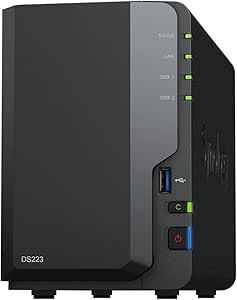 | Best Overall for Family Backups and Versatile Home Use | Bays: 2 | Drives Included: No (diskless) | Warranty: 2 years | VIEW LATEST PRICE | See Our Full Breakdown |
| UGREEN NASync DXP4800 Plus 4-Bay NAS |  | Best for Power Users and Creative Families with High Storage Needs | Bays: 4 | Max Storage Capacity: 144TB | Network: 10GbE Ethernet | VIEW LATEST PRICE | See Our Full Breakdown |
| BUFFALO TeraStation Essentials 2025 4-Bay Desktop NAS | 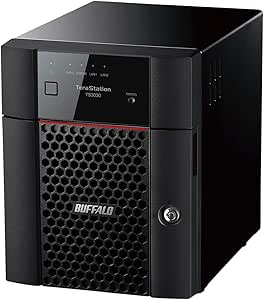 | Best for Reliable, Pre-Configured Storage with High-Speed Networking | Capacity: 24TB (4x6TB) | RAID: Default RAID 5 | Network Speed: 2.5GbE | VIEW LATEST PRICE | See Our Full Breakdown |
| Synology DiskStation DS225+ 2-Bay Diskless NAS |  | Best for Media Streaming and Surveillance with RAID Redundancy | Bays: 2 | CPU: Intel with transcoding | Max Transfer Speed: 282 MB/s | VIEW LATEST PRICE | See Our Full Breakdown |
| Synology 2-Bay DiskStation DS223j (Diskless) |  | Best Budget-Friendly NAS for Basic Family Backup and Monitoring | Drive Bays: 2 | Storage Included: Diskless | Warranty: 2 years | VIEW LATEST PRICE | See Our Full Breakdown |
| Synology DS225+ 2-Bay DiskStation NAS with 8TB Bundle (Intel Celeron J4125, 2GB RAM, Dual Gigabit Ethernet) |  | Best Overall for Family Backups on a Budget | Processor: Intel Celeron J4125 Quad-Core | Memory: 2 GB DDR4, expandable up to 6 GB | Drive Bays: 2 | VIEW LATEST PRICE | See Our Full Breakdown |
| nas with raid for family backup | Warranty |
|---|---|
| Synology 4-Bay DiskStation DS9 | 3 years |
| UGREEN NAS DXP4800 Pro 4-Bay N | — |
| UGREEN NAS DH2300 2-Bay NAS fo | — |
| Synology DS425+ 4-Bay Diskless | 3 years |
| UGREEN NAS DXP4800 GT 4-Bay fo | — |
| Synology DS223 2-Bay Diskless | 2 years |
| UGREEN NASync DXP4800 Plus 4-B | — |
| BUFFALO TeraStation Essentials | 3 years |
| Synology DiskStation DS225+ 2- | 3 years |
| Synology 2-Bay DiskStation DS2 | 2 years |
| Synology DS225+ 2-Bay DiskStat | — |
More Details on Our Top Picks
Synology 4-Bay DiskStation DS925+ (Diskless)
The Synology DS925+ stands out for its reliable performance and comprehensive software ecosystem, making it an excellent choice for families seeking a balanced NAS with RAID support. Its support for drives on the official compatibility list ensures stability, while the dual 2.5GbE ports enhance network speeds and redundancy. Unlike the UGREEN DS2300, which focuses on simplicity, the DS925+ offers more advanced data management, virtualization, and surveillance solutions—beneficial for tech-savvy households. The main tradeoff is that it’s more complex to set up and configure, which might overwhelm beginners. Still, its 3-year hardware warranty and proven Synology software make it a dependable long-term option.
Pros:- Supports drives on official compatibility list for stability
- High sequential read/write speeds up to 522/565 MB/s
- Dual 2.5GbE ports for faster, redundant network connections
- Rich in features like virtualization and surveillance
Cons:- Setup and configuration can be complex for non-technical users
- Higher price point compared to simpler NAS options
Best for: Families wanting a reliable, feature-rich NAS that can serve multiple roles, including media, backups, and surveillance
Not ideal for: Casual users seeking a simple, plug-and-play device or those with limited technical skills
- Supports drives on compatibility list:Yes
- Sequential read/write throughput:up to 522/565 MB/s
- Network ports:Dual 2.5GbE
- Warranty:3 years
Our verdict“This NAS is best suited for families seeking a versatile, high-performance device with broad capabilities.”
UGREEN NAS DXP4800 Pro 4-Bay NAS for IT Professionals, Developers & Power Users
The UGREEN DXP4800 Pro offers exceptional processing power and expandability, making it ideal for tech-savvy families or small businesses that need more than just backups. Its Intel Core i3-1315U processor and up to 96GB RAM support demanding tasks like virtual machines, Docker containers, and AI photo management—far beyond basic family backups. Compared with the Synology DS425+ which is easier to set up, the DXP4800 Pro requires more technical knowledge but provides a much higher level of customization and scalability. It also supports RAID configurations and dual 10GbE ports for blazing-fast transfers—great for large media libraries or multiple simultaneous users. The main tradeoff is its complexity and higher cost, which may be unnecessary for casual users.
Pros:- Powerful Intel Core i3 processor handles multiple demanding tasks
- Supports up to 144TB capacity with multiple RAID options
- Dual 10GbE network ports for rapid data transfer
- Expandable RAM up to 96GB for intensive workloads
Cons:- Drives and RAM upgrades are sold separately, increasing total cost
- Requires advanced setup, not ideal for beginners
Best for: Families with tech expertise or small office environments needing high performance and expandability
Not ideal for: Non-technical users or those looking for a straightforward, budget-friendly backup NAS
- Processor:Intel Core i3-1315U
- Max Capacity:144TB
- Network Ports:10GbE + 2.5GbE
- Expandable RAM:Up to 96GB
Our verdict“This NAS makes the most sense for families or users who need top-tier performance and are comfortable with complex configurations.”
UGREEN NAS DH2300 2-Bay NAS for Beginners & Personal Users with Phone Backup
The UGREEN DH2300 is designed for users new to NAS, offering a straightforward way to store photos, videos, and personal files with basic RAID protection. Its simple 2-bay design and 1GbE port make it accessible for those transitioning from external drives or cloud storage. Unlike the more advanced DS425+ or DXP4800, this model focuses on ease of use, AI photo tagging, and privacy through encryption, making it perfect for families prioritizing security and simplicity. However, it lacks support for Docker, virtual machines, or extensive customization, which limits its flexibility for more demanding users. Drives are sold separately, and wired only setup can be limiting for some.
Pros:- Easy to set up, ideal for users new to NAS
- AI-powered photo organization with face and object tagging
- Strong privacy features including encrypted transfers
Cons:- Drives not included, additional cost needed
- No Wi-Fi support, wired connection only
- Limited to basic backup and security features
Best for: Home users and beginners seeking a simple, secure NAS for personal backups and photo organization
Not ideal for: Power users or families needing virtualization, multi-user access, or extensive media processing
- Bays:2
- Max Capacity:64TB
- Network:1GbE
- Security Features:RAID, two-factor authentication
Our verdict“This NAS is best for beginners who want a simple, secure device for personal storage and photo management.”
Synology DS425+ 4-Bay Diskless NAS Private Cloud Media Server
The Synology DS425+ excels as a media-centric NAS capable of supporting multiple users simultaneously, making it suitable for families with shared media libraries and backup needs. Its speed of 278 MB/s allows smooth streaming and backups, while the support for 10+ users and surveillance cameras adds versatility. Compared with the DS925+ which offers more network flexibility, the DS425+ is optimized for media and multi-user environments, though it requires drives for operation and a potentially more involved setup. The 3-year warranty and Synology’s intuitive DSM software simplify ongoing management, but its price and lack of pre-installed drives can be drawbacks for budget-conscious families.
Pros:- High-speed data transfer at 278 MB/s
- Supports multiple users and simultaneous access
- Comprehensive data protection and backup options
- Supports surveillance with IP camera integration
Cons:- Requires installation of drives (not included)
- Setup may be complex for novices
Best for: Families needing a reliable, multi-user media server with good data protection
Not ideal for: Single-user households or those looking for advanced virtualization features
- Network Speed:278 MB/s
- User Support:10+ users
- Surveillance Support:Supports 30 IP cameras
- Warranty:3 years
Our verdict“This NAS is well-suited for families prioritizing media streaming and multi-user access with security features.”
UGREEN NAS DXP4800 GT 4-Bay for Creators, Tech Enthusiasts and Office Teams
The UGREEN DXP4800 GT is a powerhouse designed for demanding workloads like 4K/8K media editing, backups, and virtual machines, making it ideal for tech-savvy families or creative teams. Powered by AMD Ryzen Embedded R2514 with up to 3.70GHz and expandable RAM to 64GB, it surpasses the DXP4800 Pro in raw processing power. Its dual 10GbE ports and support for multiple SSDs deliver blazing-fast transfers and low-latency access, perfect for large media files. The extensive app ecosystem, including Docker and virtual machines, provides flexibility not found in simpler models like the DH2300. The main tradeoff is the complexity and cost, which could be overkill for casual users or small households with basic backup needs.
Pros:- Powered by AMD Ryzen with up to 3.70GHz for heavy multitasking
- Supports up to 144TB total storage and multiple SSDs for caching
- Dual 10GbE ports for ultra-fast data transfers
- Supports Docker, VMs, and extensive app ecosystem
Cons:- High complexity and learning curve for setup
- Higher price point suitable only for advanced users
Best for: Tech enthusiasts, content creators, or families with high-performance backup and media editing needs
Not ideal for: Families seeking a straightforward, low-cost backup NAS without advanced features
- Processor:AMD Ryzen Embedded R2514
- Max Capacity:up to 144TB
- Network:Dual 10GbE
- RAM:Up to 64GB
Our verdict“This NAS is best for families or users who need top-tier performance and are comfortable with complex configurations.”
Synology DS223 2-Bay Diskless NAS
The Synology DS223 stands out as the best overall choice for families seeking a reliable, easy-to-manage NAS with RAID options. Its ability to automate backups for Macs, PCs, and mobile devices offers a seamless data management experience, rivaling the more advanced Ugreen NASync DXP4800 Plus in features but with simpler setup. The absence of pre-installed drives keeps initial costs low, though this means a separate investment. Its built-in surveillance features expand its role into home security, making it a versatile hub. The main tradeoff is the limited 2-bay design, which restricts storage expansion compared to larger systems, and some may find it less suitable for very high-capacity needs.
Pros:- No subscription fees for file sharing and collaboration
- Automated, multi-destination backup support
- Built-in surveillance features with IP camera support
- Two-year warranty with ongoing updates
Cons:- Drives must be purchased separately, increasing initial setup costs
- Only 2 drive bays limit storage expansion
Best for: Families wanting a straightforward, all-in-one backup and media server with security features
Not ideal for: Power users needing extensive storage or virtualization support, as its limited bays restrict scalability
- Bays:2
- Drives Included:No (diskless)
- Warranty:2 years
Our verdict“This NAS offers a balanced combination of backup, media, and security features for typical family use, with simplicity at its core.”
UGREEN NASync DXP4800 Plus 4-Bay NAS
The UGREEN NASync DXP4800 Plus caters to families with demanding storage and advanced needs, supporting up to 144TB across its four bays. Its support for Docker, virtual machines, and AI-powered photo management sets it apart from simpler NAS options like the Synology DS225+. The inclusion of 10GbE networking and 10Gbps USB ports makes it ideal for fast backups and data transfers, though it’s a wired-only device, which could be limiting for some home setups. The main tradeoff is the absence of included drives, meaning additional investment upfront, and its complexity may overwhelm less tech-savvy users.
Pros:- High storage capacity up to 144TB
- Fast 10GbE network and USB 10Gbps ports for rapid data transfer
- Supports Docker containers and virtual machines for advanced workflows
- AI-powered photo album with automatic organization
Cons:- Hard drives must be purchased separately, adding to initial costs
- Lacks Wi-Fi support, requiring wired connection
Best for: Tech-savvy families or creative professionals requiring extensive storage and virtualization capabilities
Not ideal for: Home users seeking plug-and-play simplicity, due to its advanced features and need for separate drives
- Bays:4
- Max Storage Capacity:144TB
- Network:10GbE Ethernet
- USB Ports:10Gbps
- Compatibility:Windows, macOS, Linux, iOS, Android
- Features:Docker, virtual machines, AI photo management
Our verdict“Ideal for families with high data demands who are comfortable managing a feature-rich NAS environment.”
BUFFALO TeraStation Essentials 2025 4-Bay Desktop NAS
The BUFFALO TeraStation Essentials 2025 combines ease of use with dependable performance, offering four pre-installed 6TB drives in a 24TB total capacity. Its support for RAID 5 provides a good balance between redundancy and capacity, similar to the Synology DS225+, but with a straightforward setup thanks to the included drives. Its 2.5GbE port enables faster local transfers than standard Gigabit networks, making it suitable for household backups and shared media libraries. However, its total usable capacity under default RAID 5 is around 18TB, which might be limiting for larger families or extensive media collections. Its 4-bay design, while expandable, still caps growth potential.
Pros:- Pre-installed hard drives simplify setup
- Supports flexible RAID configurations, default RAID 5 balances redundancy and capacity
- High-speed 2.5GbE port for faster data transfer
- Three-year warranty adds peace of mind
Cons:- Default RAID 5 offers 18TB usable, which may be limiting
- Limited to 4 bays, restricting future expansion
Best for: Families seeking quick, reliable setup with pre-installed drives and decent capacity
Not ideal for: Users needing maximum storage capacity or multi-site cloud integration, as its size and features are more modest
- Capacity:24TB (4x6TB)
- RAID:Default RAID 5
- Network Speed:2.5GbE
- Warranty:3 years
- Made in:Japan
- Compliance:TAA
Our verdict“This NAS suits families prioritizing simplicity and reliable performance without extensive customization.”
Synology DiskStation DS225+ 2-Bay Diskless NAS
The Synology DS225+ offers a compact yet capable solution for families wanting media streaming and surveillance in one device. Its Intel hardware supports 4K transcoding, making it superior to the Synology DS223 in multimedia performance, especially for streaming to multiple devices. The support for up to 30 IP cameras with AI detection adds significant value for home security, but the absence of drives means an additional investment. Its two-bay design limits total storage options and RAID flexibility, making it less ideal for very large media libraries or extensive backups compared to larger NAS systems.
Pros:- Supports 4K media transcoding for smooth streaming
- Multi-layered data protection with RAID and snapshots
- Supports up to 30 IP cameras with AI detection
- Three-year warranty with robust hardware
Cons:- Drives are not included, adding initial cost
- Only 2 bays limit overall storage and RAID options
Best for: Families looking for a combined media server and security hub in a compact form factor
Not ideal for: Users needing large or expandable storage, or who want a ready-to-go system without additional drive costs
- Bays:2
- CPU:Intel with transcoding
- Max Transfer Speed:282 MB/s
- Surveillance Support:Up to 30 IP cameras
- Warranty:3 years
- Best Sellers Rank:#2 in NAS Devices
Our verdict“This NAS delivers a strong multimedia and surveillance combo for families with moderate storage needs, willing to handle additional drive purchase.”
Synology 2-Bay DiskStation DS223j (Diskless)
The Synology DS223j targets families new to NAS solutions, offering core backup, file sharing, and IP camera support at an affordable price. Its diskless design keeps initial costs down, but this means users must buy drives separately. The two-bay configuration limits total storage, making it more suitable for small households or those with moderate data needs. Its software supports automated backups for multiple platforms and remote IP camera monitoring, but it lacks the advanced features and higher throughput of more expensive models like the Synology DS225+. This model is a straightforward choice for entry-level users prioritizing simplicity and cost.
Pros:- Builds a private cloud with full data ownership
- Supports automated backups for multiple device types
- Enables easy file sharing and syncing
- Can monitor and record from IP cameras
Cons:- Does not include hard drives; additional purchase needed
- Limited to two bays, restricting capacity and RAID options
- Less powerful hardware compared to higher-end models
Best for: First-time NAS users needing basic backups, file sharing, and surveillance on a budget
Not ideal for: Families with large media libraries or those requiring extensive storage flexibility
- Drive Bays:2
- Storage Included:Diskless
- Warranty:2 years
Our verdict“Perfect for families starting with basic backups and surveillance, offering affordability and simplicity.”
Synology DS225+ 2-Bay DiskStation NAS with 8TB Bundle (Intel Celeron J4125, 2GB RAM, Dual Gigabit Ethernet)
The Synology DS225+ stands out as the best overall choice for families seeking reliable RAID-based backups without overspending. Its quad-core Intel Celeron J4125 processor and expandable RAM ensure smoother performance than the more basic Synology DS223, especially during frequent backups or multi-user access. The included Seagate IronWolf drives add immediate value, and support for Synology Hybrid RAID offers flexible storage management. While its 2-bay design limits scalability compared to larger NAS models like the Synology DS425+, this tradeoff makes it more approachable and easier to set up. However, it requires an RAM upgrade for optimal performance and lacks built-in remote backup options, meaning users need to configure their own remote access or cloud sync. Overall, this model offers a solid balance of features, expandability, and affordability, making it perfect for families wanting straightforward, reliable backups with room to grow.
Pros:- Expandable RAM up to 6GB for better multitasking
- Supports third-party drives with DSM 7.3
- Includes reliable Seagate IronWolf drives in the bundle
- Advanced data protection with Btrfs snapshot technology
Cons:- Limited to 2 drive bays, restricting large-scale growth
- Requires additional RAM upgrade for optimal performance
- Lacks built-in remote backup or cloud sync features
Best for: Families needing a dependable, cost-effective RAID setup that supports multiple users and easy expansion.
Not ideal for: Power users requiring extensive scalability or media professionals needing large multi-terabyte storage pools.
- Processor:Intel Celeron J4125 Quad-Core
- Memory:2 GB DDR4, expandable up to 6 GB
- Drive Bays:2
- Included Drives:2 x 4TB Seagate IronWolf
- Network Ports:1 x 2.5 GbE, 1 x 1 GbE RJ-45
- Supported RAID:Synology Hybrid RAID (SHR)
Our verdict“This NAS is a smart choice for families seeking a balanced, easy-to-use RAID system with room for future expansion.”
How We Picked
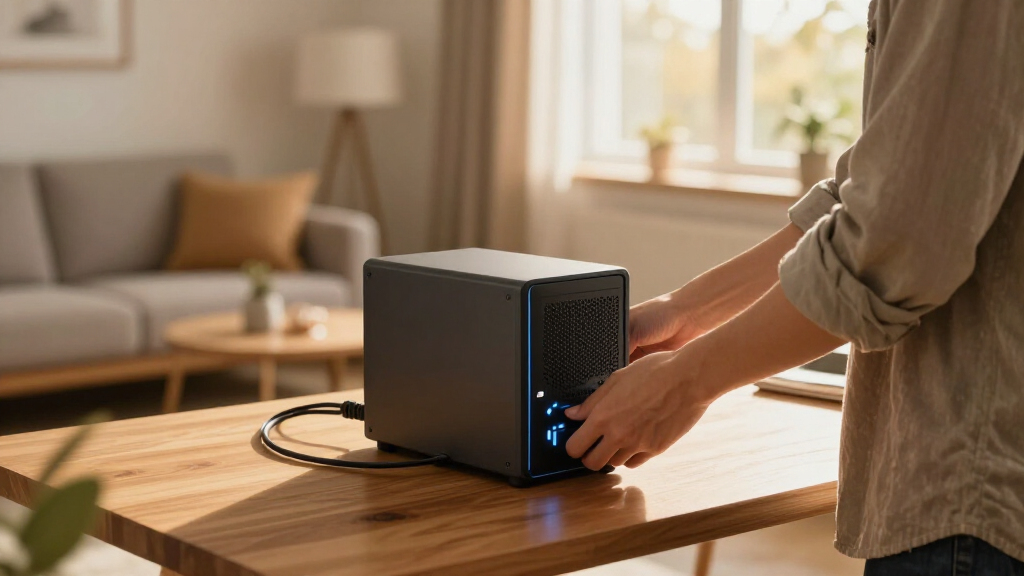
These products were evaluated based on several criteria that matter most for family backups: performance in data transfer speeds, RAID versatility, ease of setup, build quality, and overall value. We prioritized devices with reliable software support, user-friendly interfaces, and flexibility in RAID configurations to protect family data effectively. Cost was also a factor, but not at the expense of essential features. Devices were ranked to highlight a balance of affordability, performance, and usability, ensuring options for different levels of tech experience and backup needs.Factors to Consider When Choosing Best Nas With Raid For Family Backups
Choosing the best NAS with RAID for family backups involves balancing several factors. Beyond raw storage capacity, consider ease of setup, expandability, and how much control you want over data redundancy. The right device should align with your family’s technical comfort, future storage needs, and budget. Here are key factors to keep in mind:RAID Support and Flexibility
Look for NAS devices that support multiple RAID configurations, such as RAID 0, 1, or 5. These options give you flexibility to balance redundancy and performance. For families, RAID 1 is often sufficient for mirroring critical data, but if you anticipate growing storage needs, a 4-bay model supporting RAID 5 or 10 might be better. Avoid models with limited RAID options if you want scalability and data protection, as this can lead to data loss risks in case of drive failure.
Ease of Setup and User Experience
Simpler interfaces and setup processes are vital, especially if you’re not technically inclined. Brands like Synology excel here, providing intuitive apps and guided setup. Consider whether the NAS offers mobile app support for easy backups from phones or tablets. A complicated interface can deter ongoing use and lead to misconfiguration, so prioritize systems known for ease of use for family backups.
Performance and Data Transfer Speeds
Fast data transfer speeds ensure backups are quick and less disruptive. Look for gigabit Ethernet ports at minimum, with some models offering link aggregation for faster network speeds. For households with large media libraries or frequent backups, performance becomes a key factor in selecting a device that won’t bottleneck your network. Keep in mind that real-world speeds depend on your network setup and drives used.
Build Quality and Reliability
Durability and reliable hardware reduce the risk of data loss. Brands with a solid track record, like Synology and Buffalo, tend to offer longer-lasting devices with better warranties. Consider the cooling system and noise levels, especially if the NAS will sit in a shared space. Investing a bit more in build quality can save headaches and data recovery costs later.
Cost and Value Proposition
While higher-priced models often include more features and better performance, it’s important to match the device to your actual needs. For casual family backups, budget options with basic RAID support might suffice. For larger media libraries or multiple users, investing in a more capable model pays off in future-proofing. Avoid paying extra for features you won’t use, but be cautious of models that cut corners on essential features like RAID support or software updates.
Frequently Asked Questions
Can a two-bay NAS handle multiple family backups at once?
Yes, a two-bay NAS can handle backups for a small family, especially if configured with RAID 1 for redundancy. However, its scalability is limited; expanding storage or adding advanced features might require upgrading later. For families with growing storage needs or multiple devices, a four-bay model provides more flexibility and future expansion options. Two-bay systems are best for smaller households or those just starting with backups.
Is RAID 1 enough for protecting family photos and videos?
RAID 1 mirrors data across two drives, offering a good level of protection against drive failure. For family photos and videos, this provides peace of mind, but it does not guard against accidental deletion or corruption. Regular backups to an external device or cloud service are still recommended. RAID 1 is a solid baseline for protecting data but should be part of a broader backup strategy.
Should I choose a NAS with more RAM for family backups?
More RAM generally improves the NAS’s ability to handle multiple tasks simultaneously, like running media servers or apps alongside backups. For family backups alone, 2GB to 4GB of RAM is usually sufficient. If you plan to run additional services or stream media directly from the NAS, opting for higher RAM can provide smoother performance. Consider your future needs when evaluating RAM specifications.
Is it better to buy a diskless NAS or one with pre-installed drives?
Choosing a diskless NAS gives you the flexibility to select drives that match your capacity and speed needs, often at a better price point. It also allows for customizing the RAID setup from the ground up. However, it requires more setup time and some technical knowledge. Pre-installed drives are convenient but may limit upgrade options and often come at a premium. For long-term flexibility, diskless models are usually preferable.
How often should I replace drives in my NAS?
Most drives in NAS units are rated for around 3-5 years of continuous operation, but this varies based on usage and brand. Regularly monitoring drive health through the NAS software is vital. Replacing drives before they fail prevents data loss, especially if using RAID levels that rely on drive redundancy. Setting a routine check schedule and keeping spare drives on hand can help maintain data safety over time.
Conclusion
The best overall choice for most families is the Synology DS925+ because of its balance of performance, user-friendliness, and flexible RAID options. If budget matters most, the UGREEN NAS DH2300 offers reliable protection with simple operation. For those with higher data demands or tech-savvy users, the UGREEN NAS DXP4800 GT delivers advanced features and scalability. Beginners or small households should consider two-bay models like the Synology DS223 for straightforward setup. Larger or more data-intensive families will find four-bay options like the BUFFALO TeraStation a good investment for future growth.
As an affiliate, we earn on qualifying purchases.Fall Picks
fall essentials