For an emergency water plan that combines chemical treatment with dependable filtration, I rank the LifeStraw Peak 3-in-1 Portable Water Filtration Kit as the best overall for its adaptable setup, while Potable Aqua Tablets with PA Plus stand out for a compact chemical-treatment option and P&G Purifier of Water Packets for treating larger amounts of cloudy water. The central tradeoff is speed and simplicity versus the ability to address sediment and different water conditions. Tablets and packets are light to store, but they require correct dosing and contact time; filters provide a physical barrier but need maintenance and may not handle every contaminant. Compare the 13 options below to find the right match for your emergency plan.

Get privacy and security gear delivered free with Prime
- Fast, free delivery on millions of items
- Prime Video, Amazon Music and more included
- Member-only deals all year
Key Takeaways
- The LifeStraw Peak 3-in-1 kit is the most adaptable pick: its kit format gives buyers more ways to collect and filter water than a treatment-only product.
- Potable Aqua with PA Plus differs from standard tablets: the paired bottles add a second step for reducing iodine taste, making it a better fit for people who dislike that aftertaste.
- P&G Purifier of Water packets suit visibly cloudy water: flocculation and disinfection address a different problem from clear-water tablet dosing, but the process is less compact and involves more handling.
- The Aquatabs options are not interchangeable by tablet count: the 49 mg and 397 mg products have different tablet strengths, so buyers must follow the specific label directions rather than assume equal dosing.
- Filters and chemical treatments fill different gaps: Sawyer Mini, LifeStraw, and Waterdrop provide filtration, while tablets and packets offer lightweight treatment; a layered plan can be more useful than relying on one method.
| Sawyer Products Mini Water Filtration System, Blue | 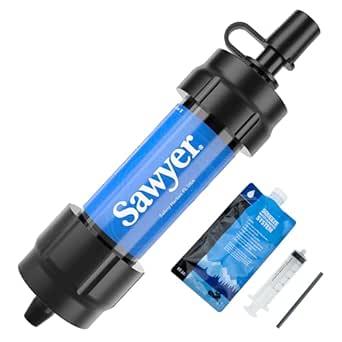 | Best Reusable Filter for Emergency Kits | Filtration: 0.1-micron absolute | Purification method: Hollow fiber membrane | Filter lifespan: Up to 100,000 gallons | VIEW ON AMAZON | See Our Full Breakdown |
| Potable Aqua Water Purification Tablets, Two 50-Count Bottles |  | Best Value for Storing Treatment Doses | Quantity: 2 bottles | Tablets per bottle: 50 | Water treatment capacity: Up to 25 quarts per bottle | VIEW ON AMAZON | See Our Full Breakdown |
| Potable Aqua Water Purification Tablets with PA Plus, 2 Bottles |  | Best Tablet Kit for Iodine Aftertaste | Brand: Potable Aqua | Model number: 304 | Quantity: 2 bottles | VIEW ON AMAZON | See Our Full Breakdown |
| LifeStraw Personal Water Filter for Hiking, Travel, and Emergencies |  | Best Compact Direct-Drinking Filter | Model number: LSPHF038 | Filter capacity: 4,000 liters (1,000 gallons) | Bacteria removal: 99.999999% of waterborne bacteria | VIEW ON AMAZON | See Our Full Breakdown |
| Chlor-Floc Water Purification Tablets, 30 Packets |  | Best for Treating Cloudy Water | Brand: Rothco | Packets: 30 | Water treatment capacity: Up to 8 gallons | VIEW ON AMAZON | See Our Full Breakdown |
| LifeStraw Peak 3-in-1 Portable Water Filtration Kit |  | Best Multi-Use Filter Kit | Purification method: Hollow fiber membrane | Maximum flow rate: 3 liters per minute | Included capacity: 3 L gravity bag; 650 mL squeeze bag | VIEW ON AMAZON | See Our Full Breakdown |
| P&G Purifier of Water Portable Purification Packets, 240 Count |  | Best for Cloudy Emergency Water | Pack count: 240 packets | Purification method: Flocculation and disinfection | Listed capacity: 10 liters | VIEW ON AMAZON | See Our Full Breakdown |
| Aquatabs Water Purification Tablets, 49 mg, 100 Count | 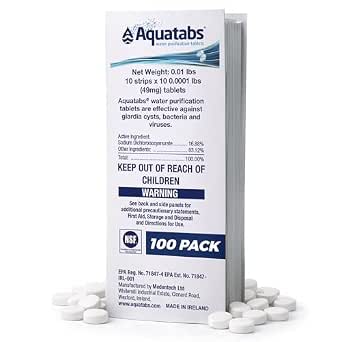 | Best Tablet Supply for Portable Kits | Tablet strength: 49 mg | Count: 100 tablets | Water capacity: 0.75–2 liters per tablet | VIEW ON AMAZON | See Our Full Breakdown |
| Aquatabs Water Purification Tablets, 397 mg, 100 Count |  | Best for Treating Larger Water Volumes | Tablet strength: 397 mg | Quantity: 100 tablets | Water capacity: Up to 4 gallons | VIEW ON AMAZON | See Our Full Breakdown |
| Aquatabs 49 mg Water Purification Tablets, 30 Count |  | Best Compact Backup Pack | Quantity: 30 tablets | Tablet strength: 49 mg | Treatment time: 30 minutes | VIEW ON AMAZON | See Our Full Breakdown |
| ZOXY Water Purification Tablets, 100 Count |  | Best Long-Storage Tablet Option | Count: 100 tablets | Active ingredient: Sodium dichloroisocyanurate | Clear-water capacity: Up to 4 gallons per tablet | VIEW ON AMAZON | See Our Full Breakdown |
| Waterdrop Gravity Water Filter Straw with 1.5-Gallon Water Bag | 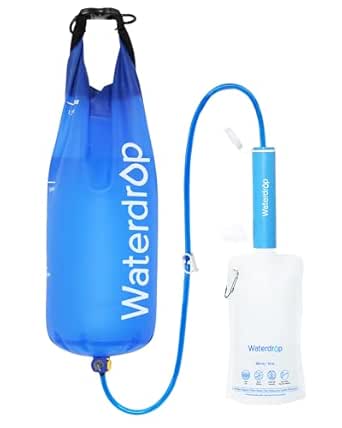 | Best for Gravity-Fed Group Water | Filtration method: Hollow-fiber ultrafiltration membrane | Pore size: 0.1 micron | Water bag capacity: 1.5 gallons | VIEW ON AMAZON | See Our Full Breakdown |
| P&G Purifier of Water Packets, 12 Count |  | Best for Treating Cloudy Water in Measured Batches | Quantity: 12 packets | Purification method: Powdered water treatment | Capacity per packet: Up to 2.5 gallons (10 liters) | VIEW ON AMAZON | See Our Full Breakdown |
| emergency water purification tablets and kit | Purification method |
|---|---|
| Sawyer Products Mini Water Fil | Hollow fiber membrane |
| Potable Aqua Water Purificatio | Iodine |
| Potable Aqua Water Purificatio | — |
| LifeStraw Personal Water Filte | — |
| Chlor-Floc Water Purification | Sedimentation, coagulation, and flocculation |
| LifeStraw Peak 3-in-1 Portable | Hollow fiber membrane |
| P&G Purifier of Water Portable | Flocculation and disinfection |
| Aquatabs Water Purification Ta | — |
| Aquatabs Water Purification Ta | — |
| Aquatabs 49 mg Water Purificat | Halogen-based chemical disinfection |
| ZOXY Water Purification Tablet | — |
| Waterdrop Gravity Water Filter | — |
| P&G Purifier of Water Packets | Powdered water treatment |
More Details on Our Top Picks
Sawyer Products Mini Water Filtration System, Blue
The Sawyer Mini is the strongest fit here for buyers who want a reusable filter rather than a supply of treatment doses. Its 0.1-micron hollow-fiber membrane removes bacteria, protozoa, and microplastics, while multiple connections let you drink through the included straw, squeeze pouch, a compatible bottle, or hydration tubing. Compared with the LifeStraw Personal Water Filter, the Sawyer offers more ways to move filtered water into a container and a much higher stated filter lifespan. That flexibility comes with extra upkeep: the Sawyer includes a cleaning plunger, and users need to follow its cleaning instructions to maintain flow. It also does not replace chemical treatment for every possible contaminant, so it is not a one-step answer to all water hazards. I would choose it for repeated outdoor or emergency use, not for someone who wants a compact, maintenance-free tablet kit.
Pros:- Filters bacteria, protozoa, and microplastics through a 0.1-micron absolute membrane
- Connects to the included pouch, compatible bottles, hydration tubing, or drinking straw
- Rated for up to 100,000 gallons of filtration
- Two-ounce weight suits compact emergency bags and hiking kits
Cons:- Requires cleaning and maintenance to support continued use
- Hydration pack tubing is sold separately
Best for: Hikers and household emergency planners who want a lightweight reusable filter with several drinking and container-filling options
Not ideal for: Buyers who want a no-maintenance treatment method or need a complete filter-and-tubing setup, since hydration pack tubing is not included
- Filtration:0.1-micron absolute
- Purification method:Hollow fiber membrane
- Filter lifespan:Up to 100,000 gallons
- Weight:2 oz (41 g)
- Bacteria removal:99.99999%
- Protozoa removal:99.9999%
- Included accessories:16-ounce reusable squeeze pouch, 7-inch drinking straw, cleaning plunger
Our verdict“Choose the Sawyer Mini if you want a reusable, adaptable filter; choose tablets instead if you prefer simpler storage and treatment without filter upkeep.”
Potable Aqua Water Purification Tablets, Two 50-Count Bottles
For a basic, storable chemical treatment, this two-bottle Potable Aqua supply stands out for its 100-tablet count and clearly stated capacity: up to 25 quarts per bottle. The compact format suits go-bags and travel kits where a filter may be awkward to carry or maintain. Compared with the Potable Aqua kit with PA Plus, this version has no separate taste-neutralizing tablets, so iodine flavor and color may be a bigger obstacle for sensitive users. Treatment takes 35 minutes, which calls for planning rather than drinking immediately after collecting water. The product data specifies effectiveness against Giardia lamblia when used as directed; I would not treat that as coverage for every contaminant or as a substitute for following the label closely. This is a straightforward reserve supply, but not the best pick for anyone unwilling to wait or tolerate iodine treatment.
Pros:- Two bottles provide 100 tablets in a compact format
- Each bottle treats up to 25 quarts
- Effective against Giardia lamblia when used as directed
- Four-year shelf life supports planned emergency storage
Cons:- Requires a 35-minute treatment wait
- Does not include PA Plus tablets to improve iodine taste and color
- Use must follow directions for the stated treatment performance
Best for: Campers, travelers, and emergency-kit builders who want a compact reserve of iodine tablets and can plan around the treatment wait
Not ideal for: People sensitive to iodine taste or color, or anyone who needs treated water immediately rather than waiting 35 minutes
- Quantity:2 bottles
- Tablets per bottle:50
- Water treatment capacity:Up to 25 quarts per bottle
- Purification time:35 minutes
- Purification method:Iodine
- Shelf life:4 years
- Effective against:Giardia lamblia when used as directed
Our verdict“Pick this two-bottle set for a compact iodine reserve, but choose the PA Plus kit if reducing aftertaste matters more than keeping the setup simple.”
Potable Aqua Water Purification Tablets with PA Plus, 2 Bottles
This Potable Aqua kit suits buyers who want chemical treatment but are put off by iodine taste or color. It pairs 50 purification tablets with 50 PA Plus tablets, adding a second step intended to neutralize the iodine aftertaste and color. That makes it more palatable than the two-bottle Potable Aqua set without PA Plus, though it also means more steps and a need to keep the two types of tablets together. The stated targets include bacteria and Giardia lamblia when the kit is used correctly, making it a compact option for travel, camping, and emergency supplies. Unlike the Sawyer Mini, it needs no filter cleaning or compatible bottle connection, but it does not offer reusable filtration and relies on precise use. I would choose it for users who value a better-tasting iodine treatment, not anyone seeking the simplest possible process.
Pros:- Includes 50 purification tablets and 50 PA Plus tablets
- PA Plus tablets help neutralize iodine aftertaste and color
- Effective against bacteria and Giardia lamblia when used correctly
- Compact 2.24-ounce kit works for travel and emergency storage
Cons:- Requires a two-step treatment process
- Effectiveness depends on correct use
- The product data does not state a water capacity or treatment time
Best for: Travelers and emergency planners who want iodine-based water treatment with a separate tablet intended to reduce aftertaste and color
Not ideal for: Users who want a single-step treatment or may struggle to keep purification and PA Plus tablets paired and use them correctly
- Brand:Potable Aqua
- Model number:304
- Quantity:2 bottles
- Included tablets:50 water purification tablets and 50 PA Plus tablets
- Effective against:Bacteria and Giardia lamblia
- Item weight:2.24 ounces
- Manufacturer:Wisconsin Pharmacal
Our verdict“Choose this kit over plain Potable Aqua tablets if iodine aftertaste is a concern and you are comfortable following a two-step process.”
LifeStraw Personal Water Filter for Hiking, Travel, and Emergencies
The LifeStraw is a simple choice for someone who expects to drink directly from a water source and wants to avoid carrying treatment tablets. Its 45-gram body filters bacteria, parasites, and microplastics while reducing sediment and cloudiness, and its stated capacity is up to 4,000 liters with proper use and maintenance. Compared with the Sawyer Mini, it offers a more direct drinking format but fewer supplied ways to connect to bottles or hydration systems; the Sawyer includes a pouch, straw, and cleaning plunger. The LifeStraw’s 1,000-gallon capacity is also much lower than the Sawyer’s stated 100,000-gallon rating. Its design is convenient for personal use, but filling a separate container requires an additional method, and the product data ties capacity to correct maintenance. I would pack it for solo outings, not as the only solution for supplying several people with stored water.
Pros:- Removes waterborne bacteria and parasites, including E. coli, Giardia, and Cryptosporidium
- Filters microplastics down to 1 micron and reduces sediment and cloudiness
- Lightweight at 45 g
- Rated for up to 4,000 liters (1,000 gallons) with proper use and maintenance
Cons:- Direct drinking is the main use; container filling requires a separate method
- Rated capacity is much lower than the Sawyer Mini’s stated lifespan
- Filter capacity depends on proper use and maintenance
Best for: Solo hikers and travelers who want a lightweight filter for drinking directly from streams or lakes
Not ideal for: Groups or emergency planners who need to treat and store water in containers, since this is primarily a direct-drinking filter
- Model number:LSPHF038
- Filter capacity:4,000 liters (1,000 gallons)
- Bacteria removal:99.999999% of waterborne bacteria
- Parasite removal:99.999% of waterborne parasites
- Microplastic filtration:Down to 1 micron
- Dimensions:3.75 × 1.39 × 12 in
- Weight:45 g
Our verdict“Choose the LifeStraw for lightweight, direct personal drinking; choose the Sawyer Mini if you need more connection options and a higher stated filter capacity.”
Chlor-Floc Water Purification Tablets, 30 Packets
Chlor-Floc stands apart from the iodine tablets and membrane filters here because its stated method combines sedimentation, coagulation, and flocculation. That makes it a distinct option for emergency kits where collected water may contain visible particles, rather than a direct-drinking filter like the LifeStraw Personal Water Filter. The 30 packets are compact, but the stated capacity is only up to 8 gallons, so this is better treated as a limited reserve than a household supply. It is intended for individual water supplies, which also makes it less suited to fast, high-volume treatment for groups. The product data lists a two-year shelf life and a maximum supported TDS of 1000 ppm; buyers should follow the package directions and should not assume the flocculation method addresses every possible contaminant. I would choose it for a narrow emergency-kit role, not as a sole long-term water plan.
Pros:- Uses sedimentation, coagulation, and flocculation
- Thirty compact packets are easy to store or carry
- Manual treatment requires no power source
- Supports water with up to 1000 ppm TDS
Cons:- Stated total treatment capacity is limited to up to 8 gallons
- Intended for individual water supplies rather than high-volume group treatment
- Two-year shelf life is shorter than the four-year shelf life listed for plain Potable Aqua tablets
Best for: Campers and emergency-kit builders who want compact packets for treating small individual supplies where sediment and cloudiness are a concern
Not ideal for: Households needing to treat large volumes or groups needing a high-capacity, continuous water supply
- Brand:Rothco
- Packets:30
- Water treatment capacity:Up to 8 gallons
- Purification method:Sedimentation, coagulation, and flocculation
- Maximum supported water TDS:1000 ppm
- Shelf life:2 years
- Power source:Manual
Our verdict“Keep Chlor-Floc as a compact, limited-capacity option for treating cloudy water, not as your primary supply for extended household emergencies.”
LifeStraw Peak 3-in-1 Portable Water Filtration Kit
For emergency freshwater use, this kit offers more ways to collect and filter water than the tablet options here. Its Solo hollow-fiber filter can work as a straw, with the 650 mL squeeze bag, or in a gravity setup using the 3 L bag and hose. That flexibility helps when several people need water or when you want hands-free filtering at camp. The listed flow rate reaches 3 liters per minute, and the kit removes bacteria, parasites, microplastics, silt, and sand. Unlike Aquatabs 49 mg, it does not require a 30-minute chemical treatment wait, but it is a filter rather than a chemical disinfectant. It is designed for untreated freshwater, so I would not choose it for sources that may contain chemical contamination or for users who need virus removal specified.
Pros:- Three modes—straw, squeeze, and gravity—adapt to different collection and drinking situations.
- Filters bacteria, parasites, microplastics, silt, and sand from untreated freshwater.
- Listed flow rate of up to 3 liters per minute can reduce waiting at a shared camp.
- Includes both 650 mL and 3 L bags, plus a hose and backwash syringe.
Cons:- The listing specifies freshwater filtration, not chemical contaminant removal or virus protection.
- Bulkier and heavier than foil-wrapped Aquatabs tablets.
- Requires manual setup and backwashing rather than a simple dose-and-wait routine.
Best for: Campers and emergency planners who want reusable filtration options for freshwater and may need to supply more than one person.
Not ideal for: People preparing for chemically contaminated water or who need a compact, low-maintenance tablet-only kit; this is a 1.5-pound modular setup intended for freshwater.
- Purification method:Hollow fiber membrane
- Maximum flow rate:3 liters per minute
- Included capacity:3 L gravity bag; 650 mL squeeze bag
- Item weight:1.5 pounds
- Dimensions:10.06 × 2.8 × 11.78 inches
- Material:Polypropylene
- Included components:Solo filter, 650 mL squeeze bag, 3 L gravity bag with hose, cap, backwash syringe
- Model number:LSH7GLSPK21
Our verdict“Choose this kit over Aquatabs 49 mg when you want adaptable, reusable filtration for untreated freshwater and can carry the extra gear.”
P&G Purifier of Water Portable Purification Packets, 240 Count
When emergency water is visibly turbid, these packets have a useful advantage over the Aquatabs tablets in this roundup: flocculation and disinfection are intended to clarify water as well as treat it. The listed performance claims are 99.9999% bacteria removal and 99.99% virus removal, making the format relevant for preparedness beyond clear backcountry sources. With 240 packets, this is a bulk reserve rather than a pocket-sized trail supply; the box weighs 3 pounds. The product data lists a 10-liter capacity, though it does not clarify that figure per packet, so buyers should follow the packet instructions for dose and volume. Its stated expiration date is April 2028, which makes stock rotation part of the decision. Compared with Aquatabs, it asks for more handling but is better suited to cloudy source water.
Pros:- Combines flocculation with disinfection to clarify turbid water while treating it.
- Product data lists bacteria and virus removal claims.
- A 240-packet supply can serve as a substantial emergency reserve.
- Packets are portable individually, even though the full box is not especially light.
Cons:- The 3-pound box is less suitable for carrying on long hikes than a small tablet pouch.
- The listed 10-liter capacity is not clearly stated as a per-packet amount in the supplied data.
- Listed expiration date is April 2028, so the supply requires rotation.
Best for: Households and emergency coordinators stocking a larger reserve for situations where collected water may be cloudy or contaminated.
Not ideal for: Ultralight hikers or buyers who want a simple, individually dosed treatment for clear water; the box is heavier and the listed capacity needs careful checking against its instructions.
- Pack count:240 packets
- Purification method:Flocculation and disinfection
- Listed capacity:10 liters
- Bacteria removal:99.9999%
- Virus removal:99.99%
- Weight:3 pounds
- Dimensions:10 × 7 × 5 inches
- Expiration date:April 2028
Our verdict“Pick these packets over Aquatabs when clarifying turbid emergency water matters more than minimizing pack weight.”
Aquatabs Water Purification Tablets, 49 mg, 100 Count
This 100-count Aquatabs pack is a practical middle ground between the 30-count Aquatabs and the 240-packet P&G supply. Its foil-wrapped tablets are easy to divide among household go-bags, travel kits, or hiking packs, while each tablet treats 0.75–2 liters according to the listing. The 30-minute wait is a real constraint during an urgent water shortage, but the treatment claims cover bacteria, viruses, and Giardia cysts. Unlike the P&G packets, these tablets are not described as clarifying turbid water, so sediment-heavy sources call for prefiltration. The listing gives a 900-day shelf life and an April 2027 expiration date; I would check the actual package date before relying on a stored emergency supply. This is a compact choice for clear water, not a complete solution for every source.
Pros:- Individually foil-wrapped doses are easy to distribute across multiple kits.
- Treats 0.75–2 liters per tablet according to the product data.
- Listed reduction claims cover bacteria, viruses, and Giardia cysts.
- Treated water is described as having no unpleasant taste, color, or odor.
Cons:- Requires a 30-minute treatment wait before drinking.
- Sediment-heavy water should be paired with a filter, unlike the P&G packets designed to clarify turbid water.
- The listed expiration date is April 2027, requiring attention to stock rotation.
Best for: Travelers, hikers, and households who want individually wrapped treatment doses for clear water in several small emergency kits.
Not ideal for: People treating visibly muddy water or needing water immediately; these tablets require a 30-minute wait and are not presented as a sediment-removal method.
- Tablet strength:49 mg
- Count:100 tablets
- Water capacity:0.75–2 liters per tablet
- Treatment time:30 minutes
- Bacteria reduction:99.9999%
- Virus reduction:99.99%
- Giardia cyst reduction:99.9%
- Shelf life:900 days
- Expiration date:April 2027
Our verdict“Choose this 100-count pack over the 30-count Aquatabs when you want more individually wrapped doses for clear-water emergency kits.”
Aquatabs Water Purification Tablets, 397 mg, 100 Count
This Aquatabs version is aimed at buyers who need a dose for larger batches: the listing says each tablet treats up to 4 gallons in 30 minutes. That makes it a different proposition from the 49 mg Aquatabs, which are specified for 0.75–2 liters per tablet. For RV storage, group use, or a home emergency kit, fewer dosing steps may be more convenient when treating a large container. The product says it addresses bacteria, viruses, and cysts and leaves no bad taste, color, or odor. However, the supplied details do not give the same organism-specific reduction percentages provided for the 49 mg version, so I would not assume identical dosing guidance across the two. Like those smaller tablets, it does not remove sediment; cloudy water may need a filter first.
Pros:- Listed to treat up to 4 gallons per tablet.
- The 30-minute treatment period is clearly stated.
- Designed for camping, hiking, emergencies, and RV use.
- Treated water is described as having no bad taste, color, or odor.
Cons:- The listing does not provide organism-specific reduction percentages like the 49 mg Aquatabs listing.
- May need a separate filter to address sediment.
- A large-volume dose is less flexible for small personal bottles than the 49 mg tablets.
Best for: RV owners and emergency planners who want tablets described for treating larger water batches with one dose.
Not ideal for: Backpackers needing precise, small-volume doses or anyone treating sediment-heavy water without a separate filter.
- Tablet strength:397 mg
- Quantity:100 tablets
- Water capacity:Up to 4 gallons
- Purification time:30 minutes
- Item weight:0.06 kg
- Dimensions:2.09 × 4.02 × 4.02 inches
- Container type:Bag
- Expiration date:February 2029
Our verdict“Choose this over the 49 mg Aquatabs when your priority is treating a larger stored batch rather than dosing small bottles.”
Aquatabs 49 mg Water Purification Tablets, 30 Count
For a small emergency pouch, the 30-count Aquatabs pack keeps the kit simple: each individually wrapped 49 mg tablet treats 0.75–2 liters, with a 30-minute wait before drinking. It carries the same basic small-dose format as the 100-count Aquatabs, but the lower count makes this a better fit for a personal travel kit or as a backup alongside a filter—not a household reserve. The listing describes halogen-based chemical disinfection and says treated water has no unpleasant taste, color, or odor. It also lists a maximum supported TDS of 1000 ppm, but tablets are not a sediment filter; for heavy debris, the product guidance recommends pairing them with filtration. Compared with the LifeStraw Peak kit, this takes far less room, though it cannot provide the kit’s physical filtration or multiple collection modes.
Pros:- Individually sealed tablets are easy to pack and keep doses separate.
- Each tablet treats 0.75–2 liters according to the listing.
- Treated water is described as having no unpleasant taste, color, or odor.
- Small pack works as a backup beside a reusable filter such as the LifeStraw Peak kit.
Cons:- Thirty tablets provide a smaller reserve than the 100-count Aquatabs pack.
- Requires a 30-minute wait before drinking.
- Does not remove heavy sediment, so some sources require a separate filter.
Best for: Solo travelers and hikers who need a compact backup treatment supply for clear water in a small kit.
Not ideal for: Families or emergency planners seeking many treatment doses, or users relying on visibly sediment-heavy water without a separate filter.
- Quantity:30 tablets
- Tablet strength:49 mg
- Treatment time:30 minutes
- Water volume per tablet:0.75–2 liters
- Purification method:Halogen-based chemical disinfection
- Maximum supported TDS:1000 ppm
- Capacity:60 quarts
- Warranty:3 years
- Expiration date:March 2027
Our verdict“Pick this compact pack over the 100-count Aquatabs when you need a small backup for clear water, not a larger household supply.”
ZOXY Water Purification Tablets, 100 Count
For an emergency kit where compact storage and a stated five-year shelf life matter, ZOXY is a straightforward tablet choice. Each tablet treats up to four gallons of clear water, but the stated capacity falls to 1.5 gallons for cloudy water, so the water’s clarity affects how much you can treat. Compared with Potable Aqua Water Purification Tablets, ZOXY’s product data gives a particularly generous clear-water capacity per tablet; that does not make it a substitute for filtration or a solution for every contaminant. Treatment takes 30 minutes to one hour, and ZOXY states that it does not treat Cryptosporidium. I’d choose it for lightweight backup supplies, not as the only water-safety method for uncertain sources. The bottle is small, though the listed 100-tablet count makes careful dosage and water-clarity checks part of using it well.
Pros:- Small bottle is suited to compact emergency and outdoor kits
- One tablet treats up to four gallons of clear water
- Stated shelf life of up to five years
- No powered equipment is needed
Cons:- Does not treat Cryptosporidium
- Treatment can take up to one hour
- Capacity per tablet drops for cloudy water, requiring attention to dosage
Best for: Hikers and emergency-kit planners who want a small tablet supply with a stated storage life of up to five years and can treat water in measured batches.
Not ideal for: People relying on water that may contain Cryptosporidium, or anyone who needs immediate drinking water without waiting for treatment.
- Count:100 tablets
- Active ingredient:Sodium dichloroisocyanurate
- Clear-water capacity:Up to 4 gallons per tablet
- Cloudy-water capacity:Up to 1.5 gallons per tablet
- Treatment time:30 minutes to 1 hour
- Stated shelf life:Up to 5 years
- Container:8-ounce bottle
- Model:ZXY-WP100
Our verdict“Choose ZOXY for compact, long-stored tablet backup when its organism limitation and treatment wait fit your water plan.”
Waterdrop Gravity Water Filter Straw with 1.5-Gallon Water Bag
This Waterdrop kit suits a campsite or household emergency station where batch filtering and reusable equipment are more useful than a pocket-sized backup. Its 1.5-gallon bag feeds a 0.1-micron hollow-fiber filter by gravity, and the stated maximum flow rate is 700 ml per minute. That setup can serve several people without requiring each person to drink through an individual straw, unlike the LifeStraw Personal Water Filter. The filter is backwashable and rated for up to 1,400 gallons, which supports repeated use, but the description only specifies reductions for particulates, sediment, chlorine, taste, and odor; it does not establish removal of every possible contaminant. It also needs a bag to collect and hang water, making it less minimal than tablets such as ZOXY. I’d favor it for gravity-fed convenience, while pairing it with a source-specific treatment plan where needed.
Pros:- 1.5-gallon bag supports batch water collection
- Backwashable filter is designed for repeated use
- Rated filter capacity of up to 1,400 gallons
- Gravity-fed operation requires no electricity
Cons:- The listed contaminant reductions do not cover every possible water hazard
- Bag and gravity setup take more space and handling than tablets
- Maximum stated flow rate is 700 ml per minute
Best for: Campers and emergency planners who want a reusable, non-electric filter that can process water into a shared container for several people.
Not ideal for: Ultralight hikers seeking the smallest possible setup, or buyers who need a product description that confirms treatment for contaminants beyond those listed.
- Filtration method:Hollow-fiber ultrafiltration membrane
- Pore size:0.1 micron
- Water bag capacity:1.5 gallons
- Maximum flow rate:700 ml per minute
- Power:Non-electric
- Item weight:4.64 ounces
- Included components:Filter straw, 1.5-gallon gravity-fed water bag, 16-ounce water pouch
- Model:WD-FSBUL
Our verdict“Pick Waterdrop for reusable gravity-fed batches at camp or in a home kit, rather than for the smallest emergency carry option.”
P&G Purifier of Water Packets, 12 Count
P&G’s powder packets stand apart from tablets and filter straws by treating a defined batch of up to 2.5 gallons per packet while also helping dirt separate from the water. The stated treatment time is 30 minutes, and the product reports removal of 99.9999% of bacteria and 99.99% of viruses. Compared with ZOXY Water Purification Tablets, these packets specify bacteria and virus removal figures, while ZOXY’s data highlights higher clear-water capacity per tablet and a longer stated shelf life. Compared with the reusable Waterdrop Gravity Water Filter Straw, P&G’s method avoids maintaining a filter but requires mixing powder and waiting for sediment to settle. The 12-packet supply is modest for extended group use, and the listed expiration date is April 2028, so it is less suited to long-term storage than a product with a longer stated shelf life. I’d choose it for batch treatment when water is visibly dirty and settling is acceptable.
Pros:- Each packet treats up to 2.5 gallons (10 liters)
- Stated treatment time is 30 minutes
- Product reports high bacteria and virus removal figures
- Powder treatment helps dirt separate from the water
Cons:- Requires mixing and waiting for dirt to separate
- Only 12 packets are included
- Listed expiration date is April 2028
Best for: Campers and emergency planners who need individually portioned treatment for small batches and can allow time for mixing and dirt separation.
Not ideal for: People building a long-duration emergency reserve, or those who want a simple tablet dose or reusable filter with no powder-mixing step.
- Quantity:12 packets
- Purification method:Powdered water treatment
- Capacity per packet:Up to 2.5 gallons (10 liters)
- Treatment time:30 minutes
- Bacteria removal:99.9999%
- Virus removal:99.99%
- Item weight:16 ounces
- Expiration date:April 2028
Our verdict“Choose these P&G packets for measured batch treatment when dirt separation is useful and the stated expiration date suits your storage schedule.”

How We Picked
I compared these 13 options as emergency supplies, weighing treatment approach, ease of use, portability, and usefulness when water quality is uncertain. I also looked at whether each product is intended for individual drinking, batch treatment, or flexible collection and filtration. Label directions, water clarity requirements, contact time, and maintenance needs matter because a product that is hard to use correctly may be a poor fit when conditions are stressful.
The ranking favors options that offer a practical balance of emergency readiness and versatility, then separates specialized picks by the situations they serve best. A filter does not rank above tablets simply because it is reusable: filters have different limitations and care needs. Likewise, packet quantity alone does not make a chemical treatment better; dosing, water volume, and suitability for cloudy water shape its value. I treat the products as distinct tools, not as interchangeable claims of protection, and buyers should verify current packaging instructions and contaminant limits before relying on any one option.
| emergency water purification tablets and kit | Purification method |
|---|---|
| Sawyer Products Mini Water Fil | Hollow fiber membrane |
| Potable Aqua Water Purificatio | Iodine |
| Potable Aqua Water Purificatio | — |
| LifeStraw Personal Water Filte | — |
| Chlor-Floc Water Purification | Sedimentation, coagulation, and flocculation |
| LifeStraw Peak 3-in-1 Portable | Hollow fiber membrane |
| P&G Purifier of Water Portable | Flocculation and disinfection |
| Aquatabs Water Purification Ta | — |
| Aquatabs Water Purification Ta | — |
| Aquatabs 49 mg Water Purificat | Halogen-based chemical disinfection |
| ZOXY Water Purification Tablet | — |
| Waterdrop Gravity Water Filter | — |
| P&G Purifier of Water Packets | Powdered water treatment |
Factors to Consider When Choosing Emergency Water Purification Tablets And Kit
Choose an emergency water supply around the water you may need to treat, not just the number of tablets or the size of a filter. I would plan for the source, the amount needed at once, the people using it, and the steps required to make water drinkable. These factors can help prevent a common mistake: buying a compact product that does not match the water or the treatment volume your plan depends on.
Match the Treatment Method to the Water Source
Start by asking what kind of water you are likely to encounter: clear municipal water after an outage, rainwater, or visibly turbid water from a surface source. Chemical tablets are generally easiest to dose in clearer water, while flocculant-and-disinfectant packets are designed for a more involved process with cloudy water. A portable filter can reduce particulates, but filtration alone does not mean every virus, chemical, or dissolved contaminant has been removed. Read the exact product label for the organisms and contaminants it addresses, rather than treating “purification” as a universal promise. If the source is unknown, a staged approach—settling or prefiltering when appropriate, then using a treatment method rated for the remaining risk—may be more suitable than relying on one tool.
Check Dose, Water Volume, and Contact Time
Tablet strength and count do not tell the whole story; the label’s dose per volume and required waiting time determine how much usable water a pack provides. The 49 mg and 397 mg Aquatabs products illustrate why buyers should not compare containers by tablet count alone. Keep the instructions with the supply and use a marked container so dosing is not guessed under pressure. Cold water, cloudy water, or other conditions may affect treatment directions, so follow the specific package rather than applying a rule from another brand. If your household may need several gallons quickly, check whether the product’s treatment cycle fits that demand before choosing a small personal-use pack.
Decide Whether You Need Personal or Batch Treatment
A straw-style filter is convenient when one person drinks directly from a source or container, but that format may be awkward for filling bottles for a group. Gravity systems and treatment packets can process water in batches, which can make meal preparation and shared storage easier. Tablets sit between those uses: they are compact and can treat a container, but every batch still needs correct dosing and waiting time. Think through the containers you already own and whether they can be closed, measured, and carried safely. For a family plan, a product that treats water in a repeatable batch may be more useful than the smallest item in the kit.
Account for Taste and User Compliance
A treatment that people refuse to drink is a weak emergency choice, even when its directions are simple. Iodine-based treatment can leave a taste some users dislike, which is why the Potable Aqua option with PA Plus may suit taste-sensitive buyers better than standard Potable Aqua tablets. Taste-treatment steps add supplies and handling, though, so they may not be a priority for someone choosing only for a compact backup. Before an emergency, check whether children or other household members will accept the treated water and whether the process is realistic for them to follow. Do not change a dose or shorten contact time to improve taste; follow the package directions.
Plan for Maintenance, Storage, and Shelf Life
Tablets and packets take little space, but they still need to stay sealed, dry, and within the manufacturer’s stated storage and expiration guidance. Reusable filters avoid repeated chemical dosing but bring their own tasks, such as cleaning, drying, storage, or replacement, depending on the model. A filter that is left wet or allowed to freeze may not be ready when needed, so check its care instructions before storing it in a vehicle or outdoor kit. Keep treatment supplies in a clearly labeled container with dosing directions and a backup method. Rotate consumables on a schedule rather than discovering an expired package during an outage.
Build a Backup Around the Failure Modes
One product can be enough for a narrow use, but an emergency plan should account for what happens if that method is unsuitable or unavailable. A filter can be hard to use if the source is too contaminated for its stated limits; chemical treatment can be inconvenient when large volumes are needed immediately or when its contact time is not practical. Pairing methods can reduce dependence on one process, but carrying duplicates that solve the same problem adds weight without much benefit. Choose complementary tools—for example, a physical filter and a treatment option with different limitations—and learn the sequence before storing them together. Keep safe stored water as the first reserve when possible, since treatment supplies still require a usable source and correct operation.
Frequently Asked Questions
Should I choose water purification tablets or a filter for an emergency kit?
Choose based on the water source and how you plan to use the water. Tablets and packets are lightweight and treat water in a container, but they require correct dosing and waiting time. Filters can provide water on demand and reduce particles, while their contaminant coverage varies by model and they need care. For uncertain sources or group use, a filter plus a separately rated treatment method can provide a more flexible plan than either alone. Check each product’s label for its specific limits before deciding.
Can I use purification tablets on cloudy water?
Do not assume every tablet works equally well in visibly cloudy water. Particles can interfere with treatment, and product instructions may call for clearer water or additional preparation. Some packet products combine flocculation with disinfection, making them a different choice from ordinary tablets, but their directions still need to be followed exactly. If the water is muddy, follow the product label for settling, filtering, or other preparation steps before treatment. When the source or appearance falls outside the stated instructions, choose another supply source if possible.
Are the 49 mg and 397 mg Aquatabs versions dosed the same way?
No—do not infer the dose from the tablet count or assume the two strengths are interchangeable. The required amount depends on the exact product directions and the volume of water being treated. Confirm the label on the package you own, since directions for one strength may not apply to the other. Keep the original packaging or a legible copy of its instructions with the tablets. If the label is missing or unreadable, do not guess at a dose.
Do Potable Aqua tablets with PA Plus replace the need to wait after treatment?
No. PA Plus is included as a second step associated with reducing iodine taste; it does not mean you can skip the treatment directions or required waiting period. Follow the order, dose, water volume, and timing printed on the specific package. Adding a taste treatment too early or using it in place of disinfection can leave water untreated. If taste is a concern, use the full process as directed rather than shortening the treatment step.
What should I buy if I need to treat water for several people at once?
Look for a method suited to batch treatment, and compare its per-batch capacity and process time with your household’s likely needs. Single-person straw filters can be handy for direct drinking but may be less convenient when you need to fill several containers. Packets or tablets can treat water in a vessel, though repeated batches require accurate measuring and waiting. Also plan for clean storage containers so treated water does not become contaminated again. For a group, keep a second method or stored water available in case the main process is slow or unsuitable.
Conclusion
For the broadest mix of emergency flexibility, I would start with the LifeStraw Peak 3-in-1 kit as the best overall choice; buyers who want a compact chemical option should compare it with Potable Aqua with PA Plus, while P&G Purifier of Water packets are a stronger match for a process designed around cloudy water. For value, choose among the treatment products by matching tablet strength, package quantity, and label dosing to the amount you expect to treat—not by count alone. Beginners may find a clearly labeled, single-purpose treatment easier to manage than a multi-step setup, while taste-sensitive users may prefer the Potable Aqua PA Plus pairing. For personal drinking, consider a straw filter; for shared batches, look at packets or a gravity-style system. My final recommendation is to choose one primary method that fits your likely water source, then add a compatible backup and practice the directions before an emergency.