A DIY home security system starter kit should cover the entry points that matter without forcing you into a setup or subscription you do not want. My best overall pick is the Ring Alarm 14-Piece Wireless Home Security System for its larger starting sensor set and flexible expansion; the SimpliSafe 8-Piece Wireless Home Security System is a strong alternative for shoppers who want a simpler, established alarm setup, while the eufy 6-Piece Professional System stands out for local storage and a no-monthly-fee approach. The main tradeoffs are coverage versus simplicity, app-based self-monitoring versus paid professional monitoring, and lower upfront complexity versus room to expand. Smaller kits may leave doors or windows unprotected, while large kits can add sensors you do not need. Read on for how these 15 options compare and which kind of home each suits best.

Get privacy and security gear delivered free with Prime
- Fast, free delivery on millions of items
- Prime Video, Amazon Music and more included
- Member-only deals all year
Key Takeaways
- Ring Alarm 14-Piece is the strongest all-around starting point in this lineup when a larger initial sensor count matters more than keeping the setup minimal.
- Ring Alarm 8-Piece and SimpliSafe 8-Piece are more manageable entry kits, but buyers should map their doors and windows before assuming either covers the whole home.
- eufy’s local storage, battery backup, and 4G features make it the clearest fit for shoppers seeking more independence from recurring monitoring fees, though its bundle is more involved than a basic alarm kit.
- Several 15-, 16-, 21-, and 24-piece kits promise broad sensor coverage; piece count alone does not show whether the included mix matches a home’s entry points or whether every component fits the intended setup.
- Cove and ADT Blu bring recognizable monitoring-oriented options, while the Wi-Fi-focused kits may suit budget-conscious DIY setups but call for closer checks on connectivity, app support, and backup behavior.
| Cove 6-Piece DIY Home Security System with 3 Months of Monitoring |  | Best for a Monitoring Trial | Included components: Keypad control panel, 3 door/window sensors, 1 motion sensor, 1 key fob | Connectivity: Wireless | Control methods: App, push button, remote | VIEW ON AMAZON | See Our Full Breakdown |
| Ring Alarm 14-Piece Wireless Home Security System |  | Best for Broad Home Coverage | Included components: 1 base station, 2 keypads, 8 contact sensors, 2 motion detectors, 1 range extender | Connectivity: Ethernet, Wi-Fi, Z-Wave, Bluetooth | Base station power: 100–240V, 50/60Hz; AC adapter included | VIEW ON AMAZON | See Our Full Breakdown |
| SimpliSafe 8-Piece Wireless Home Security System | 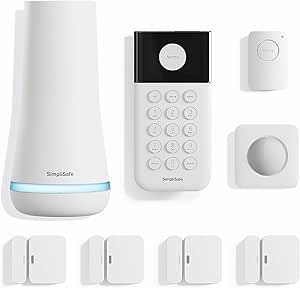 | Best for Flexible Professional Monitoring | Included sensors: 4 entry sensors and 1 motion sensor | Other included components: Base station, keypad, panic button | Connectivity: Wireless | VIEW ON AMAZON | See Our Full Breakdown |
| ADT Blu DIY Wireless Home Security System Starter Kit |  | Best for Visible Deterrence | Included components: 1 base hub, 3 door/window sensors, 1 pet-friendly motion sensor, 1 yard sign, 4 window stickers | Connectivity: Wireless with cellular backup; accessories use Bluetooth | Power: Corded electric base; battery-powered accessories | VIEW ON AMAZON | See Our Full Breakdown |
| tolviviov 8-Piece WiFi Home Security Alarm System |  | Best Subscription-Free Starter | Kit contents: 1 alarm siren station, 5 door and window sensors, 2 remote controls | WiFi: 2.4 GHz only; does not support 5 GHz | Expansion capacity: Up to 20 sensors and 5 remote controls/keypads | VIEW ON AMAZON | See Our Full Breakdown |
| Arlo Home Security System Bundle with 2K Video Doorbell |  | Best for Video-First Coverage | Included components: Keypad Sensor Hub, two 8-in-1 sensors, 2K Video Doorbell | Sensor functions: Motion, open/close, water leaks, freezing temperatures, smoke/CO alarm sounds, tilt, ambient light changes | Doorbell video: 2K | VIEW ON AMAZON | See Our Full Breakdown |
| eufy 6-Piece Professional System with HomeBase S1 |  | Best for Outage Resilience | Pieces included: 6 | Hub: HomeBase Professional S1 | Camera: SoloCam S340 outdoor camera | VIEW ON AMAZON | See Our Full Breakdown |
| Ring Alarm 8-Piece Kit (2nd Gen) Home Security System |  | Best for Small Homes and Simple Entry Coverage | Included components: Base station, keypad, 4 contact sensors, motion detector, range extender | Recommended home size: 1–2 bedrooms | Base station backup battery: Rechargeable, 24-hour backup | VIEW ON AMAZON | See Our Full Breakdown |
| Tolviviov 15-Piece WiFi Home Security System |  | Best for High Sensor Count Without Monthly Fees | Model: DP-W2 | Included components: WiFi base station, keypad, 1 motion sensor, 10 door sensors, 2 remote controls | Connectivity: 2.4 GHz Wi-Fi | VIEW ON AMAZON | See Our Full Breakdown |
| Hapippofa Gen 2 Wireless Home Security System, 16-Piece DIY Alarm Kit |  | Best for Accessory-Rich DIY Setup | Kit contents: Touchscreen hub, 6 door/window sensors, 3 PIR motion detectors, 2 remote controls, 2 RFID key fobs, 1 SOS button, 1 wired siren | Connectivity: 2.4 GHz Wi-Fi; optional 4G with compatible SIM card | App: Smart Life | VIEW ON AMAZON | See Our Full Breakdown |
| Wireless WiFi Home Security Alarm System Kit with 120 dB Siren |  | Best for Simple, Expandable Entry Coverage | Included components: 1 alarm hub, 4 door and window sensors, 1 remote control | Siren volume: 120 dB | Wi-Fi: 2.4 GHz; 5 GHz not supported | VIEW ON AMAZON | See Our Full Breakdown |
| Honeywell Home Smart Home Security Starter Kit |  | Best for Camera-Based Monitoring | Included components: Camera base station, 2 door/window access sensors, remote key fob | Video resolution: 1080p HD | Video features: Night vision and motion detection | VIEW ON AMAZON | See Our Full Breakdown |
| PGST Wireless Home Alarm System, 24-Piece DIY Kit |  | Best for Wi-Fi and Cellular Options | Included components: Alarm host, door sensors, motion detectors, 2 remote controls, 2 RFID cards, alarm siren | Connectivity: 2.4 GHz Wi-Fi or GSM/4G | Compatible apps: Smart Life, Tuya | VIEW ON AMAZON | See Our Full Breakdown |
| RenseCum 24-Piece Home Security Alarm System with 4.3-Inch Touchscreen |  | Best for On-Panel Controls | Model: A107F | Piece count: 24 | Screen size: 4.3 inches | VIEW ON AMAZON | See Our Full Breakdown |
| Wireless WiFi Home Alarm System Kit, 21 Pieces |  | Best for Backup Power | Kit size: 21 pieces | Door/window sensors: 6 | Battery backup: Up to 48 hours | VIEW ON AMAZON | See Our Full Breakdown |
| diy home security system starter kit | Connectivity | Installation | Included components |
|---|---|---|---|
| Cove 6-Piece DIY Home Security | Wireless | Self-adhesive | Keypad control panel, 3 door/window sensors, 1 motion sensor, 1 key fob |
| Ring Alarm 14-Piece Wireless H | Ethernet, Wi-Fi, Z-Wave, Bluetooth | Wall mount or place on a flat surface | 1 base station, 2 keypads, 8 contact sensors, 2 motion detectors, 1 range extender |
| SimpliSafe 8-Piece Wireless Ho | Wireless | — | — |
| ADT Blu DIY Wireless Home Secu | Wireless with cellular backup; accessories use Bluetooth | Self-adhesive strips or optional screw mounts; motion sensor wall mount | 1 base hub, 3 door/window sensors, 1 pet-friendly motion sensor, 1 yard sign, 4 window stickers |
| tolviviov 8-Piece WiFi Home Se | — | Self-adhesive; DIY setup without tools | — |
| Arlo Home Security System Bund | Wired | DIY; self-adhesive sensors; doorbell can be wired or wire-free | Keypad Sensor Hub, two 8-in-1 sensors, 2K Video Doorbell |
| eufy 6-Piece Professional Syst | 4G cellular backup | — | — |
| Ring Alarm 8-Piece Kit | — | — | Base station, keypad, 4 contact sensors, motion detector, range extender |
| Tolviviov 15-Piece WiFi Home S | 2.4 GHz Wi-Fi | DIY | WiFi base station, keypad, 1 motion sensor, 10 door sensors, 2 remote controls |
| Hapippofa Gen 2 Wireless Home | 2.4 GHz Wi-Fi; optional 4G with compatible SIM card | DIY, screw-in assembly | — |
| Wireless WiFi Home Security Al | — | Self-adhesive; no wiring required | 1 alarm hub, 4 door and window sensors, 1 remote control |
| Honeywell Home Smart Home Secu | Wireless | — | Camera base station, 2 door/window access sensors, remote key fob |
| PGST Wireless Home Alarm Syste | 2.4 GHz Wi-Fi or GSM/4G | Screw-in | Alarm host, door sensors, motion detectors, 2 remote controls, 2 RFID cards, alarm siren |
| RenseCum 24-Piece Home Securit | Wireless; GSM/4G and Wi-Fi listed in title; offline operation also described | Self-adhesive | — |
| Wireless WiFi Home Alarm Syste | — | Drilled hub mounting required | — |
More Details on Our Top Picks
Cove 6-Piece DIY Home Security System with 3 Months of Monitoring
Cove’s clearest advantage is the included three months of professional monitoring, giving buyers a chance to try a monitored setup before deciding whether to keep paying for the service. The kit pairs three entry sensors with a motion sensor, keypad, and key fob, so it covers basic doors, windows, and a central room without wiring or a technician. Setup runs through the Cove app, while the 150-foot maximum range gives the wireless components room to communicate across many homes. Compared with the tolviviov 8-Piece, Cove is the more monitoring-oriented choice, while tolviviov emphasizes no subscription fee. The tradeoff is that Cove’s monitoring requires a paid plan after the trial, and its optional indoor camera also needs a supported subscription. Choose it for a guided start with monitoring, not for a permanently fee-free setup.
Pros:- Three months of professional monitoring are included.
- Wireless, self-adhesive installation avoids wiring and technician visits.
- Includes three entry sensors, a motion sensor, keypad, and key fob.
- App controls and alerts support remote system management.
Cons:- Continued professional monitoring requires a paid plan.
- The optional indoor camera requires a supported subscription.
- The included sensor count may be limiting for larger homes.
Best for: Homeowners who want to try professional monitoring and need a small, app-guided starter kit for a few doors and windows.
Not ideal for: Buyers who want ongoing professional monitoring without a paid plan or who need a camera that works without a supported subscription.
- Included components:Keypad control panel, 3 door/window sensors, 1 motion sensor, 1 key fob
- Connectivity:Wireless
- Control methods:App, push button, remote
- Maximum range:150 feet
- Installation:Self-adhesive
- Power source:Battery powered
- Monitoring included:3 months of professional monitoring
Our verdict“Pick Cove if you want an app-guided DIY kit with a trial of professional monitoring, and skip it if recurring service fees are a deal-breaker.”
Ring Alarm 14-Piece Wireless Home Security System
Ring’s 14-piece kit is the strongest fit here for covering many rooms and entry points from the start: it includes eight contact sensors, two motion detectors, two keypads, a base station, and a range extender. That larger sensor allotment makes it a more complete starter option for a two- to four-bedroom home than Cove’s six-piece kit or ADT Blu’s smaller sensor set. Two keypads also give household members another way to arm and disarm the system without relying on the app. Ring adds Alexa voice control and several connection options, while a rechargeable base-station backup can provide up to 24 hours of power. The tradeoff is subscription dependence: professional monitoring and some features require a plan, and cellular backup also requires a subscription. I’d choose Ring for wider coverage and Alexa integration, but not if avoiding ongoing service costs matters more than sensor count.
Pros:- Eight contact sensors and two motion detectors provide broad initial coverage.
- Two keypads allow convenient control from more than one location.
- Works with Alexa voice control and the Ring app.
- Base station has rechargeable backup power rated for up to 24 hours.
Cons:- Professional monitoring and some features require a subscription.
- Cellular backup requires a subscription.
- The larger component count may be more than a small home needs.
Best for: Households in a two- to four-bedroom home that want multiple entry sensors, two keypads, and Alexa control in one kit.
Not ideal for: Buyers seeking cellular backup or professional monitoring without a subscription, or those who need a minimal starter set.
- Included components:1 base station, 2 keypads, 8 contact sensors, 2 motion detectors, 1 range extender
- Connectivity:Ethernet, Wi-Fi, Z-Wave, Bluetooth
- Base station power:100–240V, 50/60Hz; AC adapter included
- Battery backup:Rechargeable, up to 24 hours
- Installation:Wall mount or place on a flat surface
- Base station dimensions:6.65 × 6.65 × 1.46 inches
- Warranty:1-year limited warranty
Our verdict“Choose Ring for a larger home that needs extensive sensor coverage and two keypads, provided subscription-dependent features fit your plan.”
SimpliSafe 8-Piece Wireless Home Security System
SimpliSafe earns its place for pairing a straightforward wireless kit with optional professional monitoring that has no long-term contract. Four entry sensors, a motion sensor, keypad, base station, and panic button provide a balanced starting mix; the panic button is a useful distinction from the Cove and tolviviov kits, which don’t list one. Alexa and Google Assistant support add familiar control options, and the base station has up to 24 hours of battery life. Compared with Ring’s 14-piece system, SimpliSafe is a simpler, smaller package rather than a whole-home coverage bundle. That keeps the setup more focused, but buyers with many doors and windows may need extra sensors. Monitoring still requires a subscription, and the product information gives conflicting siren-volume figures, so I wouldn’t choose it based on the siren specification alone.
Pros:- Includes four entry sensors, a motion sensor, keypad, and panic button.
- Wireless setup requires no wiring or drilling.
- Optional 24/7 professional monitoring has no long-term contract.
- Compatible with Alexa and Google Assistant.
Cons:- Professional monitoring features require a subscription.
- System and monitoring service are supported only in the United States.
- The listed siren volume conflicts between the description and specifications.
Best for: Renters or homeowners who want a modest wireless starter kit and the option of professional monitoring without a long-term contract.
Not ideal for: Buyers outside the United States, anyone seeking included professional monitoring, or households that need many entry sensors out of the box.
- Included sensors:4 entry sensors and 1 motion sensor
- Other included components:Base station, keypad, panic button
- Connectivity:Wireless
- Voice control:Amazon Alexa and Google Assistant
- Motion sensor range:35 feet
- Motion sensor field of view:90 degrees
- Base station battery life:Up to 24 hours
- Warranty:1-year limited manufacturer warranty
Our verdict“Pick SimpliSafe if you want a balanced wireless starter kit with contract-free optional monitoring, but check coverage needs before choosing its smaller sensor bundle over Ring.”
ADT Blu DIY Wireless Home Security System Starter Kit
ADT Blu includes more visible deterrence pieces than the other kits in this batch: a yard sign and four window stickers come alongside three door/window sensors and a pet-friendly motion sensor. That makes it a practical choice for buyers who want to mark a home as protected as well as receive phone alerts through the ADT+ app. Installation can use adhesive strips or optional screw mounts, giving it more mounting flexibility than Cove’s self-adhesive-only setup. Compared with the larger Ring bundle, ADT Blu provides fewer sensors and is better suited to a smaller coverage plan than a multi-room buildout. The hub needs corded power, though the kit lists a 24-hour battery average, and monitoring requires a paid plan after the 30-day free period. Its 90-day limited equipment warranty is also shorter than SimpliSafe’s one-year warranty.
Pros:- Includes three door/window sensors and a pet-friendly motion sensor.
- Yard sign and four window stickers add visible deterrence.
- Setup supports adhesive strips or optional screw mounts.
- Phone alerts and system control are available through the ADT+ app.
Cons:- Monitoring requires a paid subscription after the 30-day free period.
- The base hub requires corded power.
- The included sensor count is modest compared with Ring’s 14-piece kit.
- Eligible equipment parts have a 90-day limited warranty.
Best for: Homeowners who want a compact DIY kit with a yard sign, window stickers, pet-friendly motion sensing, and ADT+ app alerts.
Not ideal for: Buyers who need broad coverage from one package, want a hub that runs without corded power, or prefer a longer equipment warranty.
- Included components:1 base hub, 3 door/window sensors, 1 pet-friendly motion sensor, 1 yard sign, 4 window stickers
- Connectivity:Wireless with cellular backup; accessories use Bluetooth
- Power:Corded electric base; battery-powered accessories
- Battery average life:24 hours
- Installation:Self-adhesive strips or optional screw mounts; motion sensor wall mount
- Compatible devices:Apple iOS 17.0 or later; Android 12 or later; laptop, personal computer, tablet
- Warranty:90-day limited warranty on eligible equipment parts
Our verdict“Choose ADT Blu if visible deterrence and pet-friendly motion sensing matter more than extensive sensor coverage or a longer equipment warranty.”
tolviviov 8-Piece WiFi Home Security Alarm System
tolviviov is the most direct choice in this group for buyers who want app alerts without a subscription fee. Its kit provides five door and window sensors plus two remote controls, giving it more entry sensors than Cove’s six-piece bundle and more hands-on remotes than a phone-only setup. Away, Disarm, and Home modes make the basic alarm functions easy to understand, while expansion supports up to 20 sensors and five remotes or keypads. Compared with SimpliSafe, tolviviov avoids a required subscription for its stated setup, but it doesn’t offer the same listed option for professional monitoring. Its main constraints are network and power: it only works with 2.4 GHz WiFi, the alarm station needs an AC adapter, and backup power lasts up to eight hours—less than the 24-hour backup listed for Ring and SimpliSafe.
Pros:- Five door and window sensors are included with two remote controls.
- No subscription fee is listed for the system.
- Supports expansion up to 20 sensors and five remotes or keypads.
- Self-adhesive DIY setup requires no tools.
Cons:- Supports 2.4 GHz WiFi only, not 5 GHz.
- Alarm station must remain connected to an AC adapter during normal use.
- Emergency backup battery lasts up to eight hours.
- No professional monitoring option is listed.
Best for: Budget-conscious DIY users who want several entry sensors, physical remotes, app alerts, and no subscription fee for the listed system.
Not ideal for: Households with only 5 GHz WiFi, buyers who need more than eight hours of backup power, or anyone seeking professional monitoring.
- Kit contents:1 alarm siren station, 5 door and window sensors, 2 remote controls
- WiFi:2.4 GHz only; does not support 5 GHz
- Expansion capacity:Up to 20 sensors and 5 remote controls/keypads
- Backup battery:Up to 8 hours
- Control methods:App, remote, voice
- Maximum range:100 meters
- Installation:Self-adhesive; DIY setup without tools
- Power:5 volts; AC adapter required for alarm station
Our verdict“Choose tolviviov if you want a subscription-free, expandable alarm with several entry sensors and remotes, as long as 2.4 GHz WiFi and limited backup time suit your home.”
Arlo Home Security System Bundle with 2K Video Doorbell
I’d choose this bundle when the front door is as important as entry sensors. Its 2K video doorbell has a 180° viewing angle and night vision, while the hub and two wire-free sensors add motion alerts and cover doors, windows, leaks, temperature changes, and other conditions. That wider range of sensor functions gives it more environmental coverage than the Ring Alarm 8-Piece Kit, which focuses on contact and motion sensors rather than a bundled video doorbell. The tradeoff is that Arlo’s advanced functions can depend on a paid Secure plan or extra Arlo devices, so the kit’s capabilities may exceed what works out of the box. It also includes professional monitoring only as a 30-day trial. I’d shortlist it for buyers who want doorbell video and flexible sensor placement, not a subscription-free setup.
Pros:- Combines a keypad sensor hub, two multifunction wire-free sensors, and a video doorbell.
- 2K doorbell video, night vision, and a 180° viewing angle support a broad view of the entry.
- Sensors can detect more than entry, including leaks, freezing temperatures, and smoke or CO alarm sounds.
- No contract is required, and monitoring can be canceled after the trial.
Cons:- Many advanced features require a paid Arlo Secure plan.
- Some functions depend on additional Arlo products sold separately.
- Professional monitoring is offered as a 30-day trial rather than an ongoing included service.
Best for: DIY buyers who want a video doorbell alongside entry and environmental sensors, and are comfortable checking which features require an Arlo Secure plan.
Not ideal for: Households seeking a system with broad included functionality and monitoring that does not depend on a paid plan or additional devices.
- Included components:Keypad Sensor Hub, two 8-in-1 sensors, 2K Video Doorbell
- Sensor functions:Motion, open/close, water leaks, freezing temperatures, smoke/CO alarm sounds, tilt, ambient light changes
- Doorbell video:2K
- Doorbell viewing angle:180°
- Installation:DIY; self-adhesive sensors; doorbell can be wired or wire-free
- Connectivity:Wired
- Controls:App and push button
- Monitoring:30-day professional monitoring trial; no contract required
Our verdict“Choose Arlo if a 2K doorbell and wide-ranging sensors matter more than keeping every feature available without a paid plan.”
eufy 6-Piece Professional System with HomeBase S1
For a starter kit that prioritizes staying online during disruptions, I’d put the eufy bundle ahead of simpler alarm-focused kits. It pairs the HomeBase S1 with an outdoor SoloCam S340, keypad, and three entry sensors; 4G backup and a built-in battery rated for 24 hours add a fallback when home power or internet drops. Its 32 GB of local storage, expandable up to 16 TB, also avoids a monthly storage fee. That makes it a different proposition from the Ring Alarm 8-Piece Kit, whose listed setup centers on an alarm hub and sensors rather than a bundled outdoor camera and large expandable local-storage option. The limits are meaningful: cellular service needs a separate data plan, battery backup is finite, and the system is tied to eufy devices. I’d pick it for camera coverage and local recording, not brand-agnostic expansion.
Pros:- Includes an outdoor SoloCam S340, keypad, hub, and three door/window sensors.
- 4G connectivity and a built-in 24-hour battery provide backup during outages.
- 32 GB of local storage can be expanded up to 16 TB, with no monthly fee listed.
- Wall or corner mounting and app control support a straightforward DIY setup.
Cons:- 4G backup requires a separate data plan.
- Battery backup lasts about 24 hours without external power.
- Full functionality is limited to devices in the eufy ecosystem.
Best for: Homeowners who want a bundled outdoor camera, local video storage, and backup connectivity during short power or internet outages.
Not ideal for: Buyers who want to avoid a cellular data plan, need backup power beyond about 24 hours, or plan to mix devices across brands.
- Pieces included:6
- Hub:HomeBase Professional S1
- Camera:SoloCam S340 outdoor camera
- Entry sensors:3 door/window sensors
- Connectivity:4G cellular backup
- Battery backup:24 hours
- Local storage:32 GB built in, expandable up to 16 TB
- Monthly fee:None
Our verdict“Choose eufy if outage backup and expandable local camera storage are higher priorities than cross-brand compatibility or avoiding cellular service costs.”
Ring Alarm 8-Piece Kit (2nd Gen) Home Security System
I’d rank this Ring kit as a practical starting point for a smaller home where the main job is covering doors and a central area. The box includes four contact sensors, a motion detector, keypad, base station, and range extender, a more entry-focused layout than the Arlo Home Security System Bundle, which trades some contact-sensor quantity for a video doorbell and multifunction sensors. Ring’s three security modes and app notifications keep day-to-day operation straightforward, while the base station has a rechargeable 24-hour backup battery. The kit is recommended for one- to two-bedroom homes, so buyers with more doors or a larger footprint may need to add sensors. Professional monitoring, cellular backup, and Alexa voice control depend on compatible subscriptions. I’d choose it for a familiar alarm-and-app setup, but not if bundled video or subscription-free monitoring is the priority.
Pros:- Includes four contact sensors, a motion detector, keypad, base station, and range extender.
- App notifications help users keep track of alerts remotely.
- Home, Away, and Disarmed modes offer simple everyday control.
- Base station includes a rechargeable 24-hour backup battery.
Cons:- Professional monitoring and several connected features require a paid subscription.
- Additional sensors and accessories are sold separately.
- The included sensor count and recommended home size may not suit larger layouts.
Best for: People in one- or two-bedroom homes who want a conventional alarm kit with several contact sensors and app notifications.
Not ideal for: Larger homes that need more sensors out of the box, or buyers who want professional monitoring and advanced connected features without a paid subscription.
- Included components:Base station, keypad, 4 contact sensors, motion detector, range extender
- Recommended home size:1–2 bedrooms
- Base station backup battery:Rechargeable, 24-hour backup
- Base station connectivity:Ethernet, Wi-Fi, Z-Wave, Bluetooth for setup
- Security modes:Disarmed, Away, Home
- Keypad power:AC adapter and rechargeable battery
- Base station dimensions:6.65 × 6.65 × 1.46 in
- Warranty:1-year limited warranty
Our verdict“Choose the Ring kit for straightforward entry coverage in a small home, but plan on add-ons or a subscription if your coverage needs grow.”
Tolviviov 15-Piece WiFi Home Security System
The standout here is coverage quantity: this kit supplies 10 door sensors, one motion sensor, a keypad, and two remote controls, making it a stronger fit for homes with many entry points than the Ring Alarm 8-Piece Kit. App alerts, Alexa compatibility, and a 120 dB siren add useful control and a loud local alarm, while the system supports expansion up to 20 sensors. There is no monthly fee listed, which keeps the basic setup simpler than options whose advanced services depend on subscriptions. The tradeoffs are its 2.4 GHz Wi-Fi requirement—it does not support 5 GHz—and an 8-hour backup battery, shorter than the 24-hour backup listed for Ring and eufy. I’d consider it for entry-heavy homes that want many sensors without a recurring fee, provided the Wi-Fi and DIY setup suit the household.
Pros:- Includes 10 door sensors, one motion sensor, a keypad, and two remote controls.
- No monthly subscription fee is listed.
- Supports app alerts and Alexa voice control.
- Expandable to 20 sensors and 5 remotes or keypads, with a 120 dB siren.
Cons:- Works only with 2.4 GHz Wi-Fi and does not support 5 GHz.
- Backup battery is rated for 8 hours, shorter than the 24-hour backups listed for Ring and eufy.
- Requires DIY installation and setup.
Best for: DIY households with many doors or windows that want a high included sensor count, app alerts, and no monthly fee.
Not ideal for: Buyers whose home network relies on 5 GHz Wi-Fi or who need longer backup operation during an outage.
- Model:DP-W2
- Included components:WiFi base station, keypad, 1 motion sensor, 10 door sensors, 2 remote controls
- Connectivity:2.4 GHz Wi-Fi
- Siren volume:120 dB
- Backup battery:8 hours
- Expansion capacity:Up to 20 sensors and 5 remotes or keypads
- Maximum range:100 feet
- Power source:Battery powered
- Installation:DIY
Our verdict“Choose Tolviviov if your priority is covering many entry points without a monthly fee and your network supports 2.4 GHz Wi-Fi.”
Hapippofa Gen 2 Wireless Home Security System, 16-Piece DIY Alarm Kit
Hapippofa is the most accessory-heavy alarm kit in this group: its touchscreen hub comes with six door/window sensors, three PIR motion detectors, two remotes, two RFID key fobs, an SOS button, and a wired siren. That makes it better suited to buyers who want several ways to arm or trigger an alarm than the Ring Alarm 8-Piece Kit, which offers a more compact sensor-and-keypad package. Pre-paired accessories and Smart Life app alerts are intended to simplify setup, and no monthly subscription is required. The compromises are the 2.4 GHz Wi-Fi limit and separate SIM and plan costs for optional 4G calling and SMS. The siren volume is also inconsistent in the listing: the description says 120 dB, while the specifications say 100 dB. I’d choose it for included controls and sensors, not for dependable cellular service or clear sound-level expectations.
Pros:- Includes six door/window sensors, three motion detectors, two remotes, two RFID key fobs, an SOS button, and a wired siren.
- Pre-paired wireless accessories can reduce setup steps.
- Touchscreen controls and Smart Life app alerts provide local and remote control.
- No monthly subscription is required.
Cons:- Optional 4G calling and SMS require a separately purchased SIM card and plan.
- Does not support 5 GHz Wi-Fi.
- Siren volume is inconsistent in the listing: 120 dB in the description and 100 dB in the specifications.
Best for: DIY users who want a large assortment of entry sensors, motion detectors, key fobs, remotes, and an SOS button in one kit.
Not ideal for: Buyers who need built-in cellular service, rely on 5 GHz Wi-Fi, or want a clearly stated siren output before choosing.
- Kit contents:Touchscreen hub, 6 door/window sensors, 3 PIR motion detectors, 2 remote controls, 2 RFID key fobs, 1 SOS button, 1 wired siren
- Connectivity:2.4 GHz Wi-Fi; optional 4G with compatible SIM card
- App:Smart Life
- Sensor types:Magnetic door/window contact, passive infrared, RFID, wireless RF
- Maximum range:100 feet
- Alarm volume:100 dB in specifications; 120 dB in description
- Power source:Battery powered
- Connector:USB Type-C
- Installation:DIY, screw-in assembly
Our verdict“Choose Hapippofa if you want numerous included alarm controls and sensors, but skip it if cellular backup or consistent siren specifications are priorities.”
Wireless WiFi Home Security Alarm System Kit with 120 dB Siren
For a straightforward starter setup, this kit pairs four entry sensors with a remote that has a one-touch SOS button, so buyers can arm the system or signal for help without opening an app. The 120 dB siren and Smart Life notifications offer basic deterrence and alerts, while Alexa and Google Home support add convenient control. Compared with the Wireless WiFi Home Alarm System Kit, 21 Pieces, this one is lighter on included hardware and avoids a drilled hub mount, but it provides less specified coverage and backup detail. Its capacity for up to 100 accessories leaves room to add sensors later. The tradeoffs are a 2.4 GHz-only Wi-Fi connection and the likelihood of buying extra sensors for larger homes; it is a self-monitored alarm kit, not a camera-based system.
Pros:- Includes four door and window sensors plus a remote with a one-touch SOS button
- Sends Smart Life app alerts when sensors are triggered
- Supports Alexa and Google Home voice control
- Can expand to support up to 100 accessories
Cons:- Connects to 2.4 GHz Wi-Fi only; 5 GHz is not supported
- Larger homes may need extra sensors to cover more entry points
- The listed kit provides alarm and app alerts, but no camera for visual verification
Best for: Renters or homeowners who want an adhesive-installed starter alarm with four entry sensors, a physical SOS remote, and room to expand.
Not ideal for: Buyers whose router uses only 5 GHz Wi-Fi, or households that need broad coverage from the box without purchasing additional sensors.
- Included components:1 alarm hub, 4 door and window sensors, 1 remote control
- Siren volume:120 dB
- Wi-Fi:2.4 GHz; 5 GHz not supported
- Wireless sensor frequency:433 MHz
- Maximum accessories:100
- Smart home compatibility:Alexa, Google Home
- Installation:Self-adhesive; no wiring required
- Warranty:2-year replacement warranty
Our verdict“Choose this kit for expandable, adhesive-installed entry monitoring with an SOS remote, but skip it if you need 5 GHz support or extensive included coverage.”
Honeywell Home Smart Home Security Starter Kit
The Honeywell kit stands apart from the sensor-and-siren-focused options here by including a camera base station with 1080p video, night vision, and motion detection. That gives app alerts more context than the Wireless WiFi Home Security Alarm System Kit with 120 dB Siren, which relies on sensor triggers and an audible alarm rather than video. Built-in Alexa, a key fob, and two access sensors make this a relatively approachable DIY package for someone who wants voice control and a view of activity at the base station. It can also be expanded with optional outdoor sensors, though those are not in the box. The major drawback changes the buying decision: the product data says support ends after October 31, 2024, so I would not choose it for a new system that needs dependable ongoing service.
Pros:- Camera base station records 1080p video with night vision
- Motion detection can provide visual context for alerts
- Built-in Alexa offers voice control and smart home integration
- DIY setup and optional outdoor sensor expansion are described
Cons:- Product information states that devices lose support after October 31, 2024
- Only two door/window sensors are included
- Outdoor sensors must be purchased separately
Best for: A buyer seeking a compact DIY kit with a camera base station and voice control who has confirmed that the system’s current support status meets their needs.
Not ideal for: Anyone setting up a new long-term security system who needs continued product support, or who wants outdoor sensors included from the start.
- Included components:Camera base station, 2 door/window access sensors, remote key fob
- Video resolution:1080p HD
- Video features:Night vision and motion detection
- Connectivity:Wireless
- Control:App, built-in Alexa, voice control
- Power source:Corded electric
- Dimensions:7.3 × 3.6 × 3.6 inches
- Weight:1.2 pounds
Our verdict“Its camera-led approach is appealing on paper, but I would skip this kit for a new installation unless Honeywell support availability is confirmed.”
PGST Wireless Home Alarm System, 24-Piece DIY Kit
PGST is the more connectivity-flexible pick in this batch: it can connect through 2.4 GHz Wi-Fi or a 4G SIM, giving buyers a cellular route if they want an alternative to Wi-Fi for system communication. Its 24-piece package includes door/window sensors, motion detectors, two remotes, two RFID cards, and an alarm siren, making it more ready for multi-point coverage than the four-sensor Wireless WiFi Home Security Alarm System Kit with 120 dB Siren. The listed 120 dB alarm, Smart Life or Tuya app control, and Alexa compatibility add familiar ways to receive or manage alerts. However, cellular connectivity requires a 4G SIM, and the product data does not specify whether SIM service has an ongoing fee. Screw-in installation also asks more of the installer than adhesive-mounted alternatives. This is a better fit for buyers comfortable configuring a more involved alarm setup.
Pros:- Offers 2.4 GHz Wi-Fi or GSM/4G connectivity
- 24-piece kit includes door/window sensors, motion detectors, remotes, and RFID cards
- Works with Smart Life or Tuya apps and Alexa
- Supports up to 99 sensors and lists a maximum range of 100 meters
Cons:- 4G connectivity requires a SIM card, and SIM service terms are not specified
- Wi-Fi is limited to 2.4 GHz
- Screw-in installation is less renter-friendly than self-adhesive systems
Best for: Homeowners who want a larger sensor-and-motion-detector package and the option to connect through Wi-Fi or a 4G SIM.
Not ideal for: Renters avoiding screw-in installation, or buyers who want cellular connectivity without sourcing and checking the service terms for a SIM.
- Included components:Alarm host, door sensors, motion detectors, 2 remote controls, 2 RFID cards, alarm siren
- Connectivity:2.4 GHz Wi-Fi or GSM/4G
- Compatible apps:Smart Life, Tuya
- Voice assistant:Alexa
- Alarm volume:120 dB
- Maximum sensor capacity:99 sensors
- Maximum range:100 meters
- Installation:Screw-in
Our verdict“Pick PGST for a larger DIY sensor package with a 4G option, provided you are comfortable with screw-in mounting and arranging a SIM.”
RenseCum 24-Piece Home Security Alarm System with 4.3-Inch Touchscreen
RenseCum’s main distinction is its 4.3-inch touchscreen, which gives users a local control point instead of relying only on a phone app or remote. That may suit a household that wants to operate an alarm at the hub; the PGST 24-Piece DIY Kit, by contrast, is described with remotes and RFID cards and offers clearer Wi-Fi-or-4G connection details. RenseCum is listed as a 24-piece system with app controls, a siren, and self-adhesive installation, so it appears aimed at broad DIY entry coverage without drilling. Its strongest limitation is not a small feature gap but uncertainty: the description says it can operate offline without Wi-Fi, while the title also lists GSM/4G and Wi-Fi. I would verify how alerts and remote access work in each mode before relying on it as a primary system.
Pros:- Includes a 4.3-inch touchscreen for local system control
- 24-piece format is intended to cover multiple entry points
- Self-adhesive installation avoids drilling
- Lists app controls, a siren, and no monthly fee
Cons:- Connectivity details conflict between offline operation and GSM/4G plus Wi-Fi
- The supplied product data does not detail the individual pieces in the 24-piece kit
- Alert and remote-control behavior across connection modes is unclear
Best for: Buyers who want a touchscreen-operated alarm panel and adhesive installation, and can confirm the connectivity behavior before purchase.
Not ideal for: Anyone who needs clearly documented cellular or offline alert behavior, or wants detailed sensor counts and system specifications before choosing.
- Model:A107F
- Piece count:24
- Screen size:4.3 inches
- Connectivity:Wireless; GSM/4G and Wi-Fi listed in title; offline operation also described
- Controls:App and touchscreen
- Installation:Self-adhesive
- Monthly fee:None
- Compatible devices:Smartphone, tablet, personal computer
Our verdict“Consider RenseCum only if a touchscreen and adhesive mounting are priorities and the seller confirms how its offline, Wi-Fi, and cellular modes work.”
Wireless WiFi Home Alarm System Kit, 21 Pieces
This 21-piece kit is the strongest fit here for buyers who want more included sensors and a defined plan for short power interruptions: its hub has up to 48 hours of battery backup, and it includes six door/window sensors, motion detection, remotes, and a 120 dB siren. Compared with the smaller Wireless WiFi Home Security Alarm System Kit with 120 dB Siren, it offers more listed hardware and backup time, but it takes more work to mount because the hub requires drilling. App alerts, Alexa, and Smart Life/Tuya support cover common control needs, and the product states that no subscription or SIM card is required. The key constraints are a 2.4 GHz-only Wi-Fi connection and a 110-degree motion detector with a specified 12-meter range; buyers should plan sensor placement around those limits rather than assume full-home coverage from one detector.
Pros:- Hub battery backup is listed for up to 48 hours
- Includes six door/window sensors, motion detection, and remote controls
- No subscription or SIM card is required, according to the description
- Supports app alerts and Alexa voice control
Cons:- Hub requires drilled mounting, which can be unsuitable for renters
- Connects to 2.4 GHz Wi-Fi only
- The listed motion detector covers a 110-degree angle and up to 12 meters, so placement matters
Best for: Homeowners who want a larger starter package with six entry sensors, motion detection, and backup power without a subscription or SIM.
Not ideal for: Renters who cannot drill into walls, or households whose Wi-Fi setup does not support 2.4 GHz.
- Kit size:21 pieces
- Door/window sensors:6
- Battery backup:Up to 48 hours
- Sensor battery life:Up to 2 years
- Wi-Fi:2.4 GHz only
- Motion detection:110-degree angle; 12-meter range
- Siren volume:120 dB
- Installation:Drilled hub mounting required
Our verdict“Choose this kit for a larger sensor bundle and specified backup power if drilling is acceptable and your home has 2.4 GHz Wi-Fi.”

How We Picked
I ranked these kits by how well a typical buyer can build a useful DIY security setup from the included equipment. The main criteria were starter coverage and expandability, setup and app usability, available monitoring choices, connectivity and backup provisions, and how clearly the system’s ongoing requirements are described. I gave extra weight to options that offer a practical route from basic intrusion alerts to broader home coverage without making the initial setup unnecessarily complicated.
The order reflects different kinds of value, not a claim that one kit suits every home. Ring’s 14-piece kit leads for its relatively broad starting sensor set, while SimpliSafe and Ring’s 8-piece kit are easier entry points for smaller layouts. Eufy earns a distinct place for local storage and backup-oriented features; monitoring-focused and larger-count kits follow when their benefits depend more on a buyer’s specific service preferences, device mix, or willingness to verify compatibility and support details before purchase.
Factors to Consider When Choosing Diy Home Security System Starter Kit
Before choosing a kit, I would start with the home’s layout and the way you expect to respond to alerts. A strong match is not always the kit with the most pieces: it is the one whose sensors cover likely entry points, whose monitoring approach you will actually use, and whose connectivity fits your home.
Map Entry Points Before Comparing Piece Counts
Count exterior doors, accessible windows, and any detached or unusually exposed access points before deciding how many sensors you need. A kit’s advertised piece total can include a keypad, hub, siren, or other equipment, so it may not translate directly into the number of protected openings. Sketch a basic floor plan and assign each sensor to a specific location; that reveals whether a starter bundle leaves a gap. Also check whether extra sensors are compatible and readily available from the same system maker. Buying a larger kit is useful when its sensor mix matches your layout, but a high count is not a substitute for a coverage plan.
Choose Your Alert and Monitoring Plan First
Self-monitoring means you receive alerts and decide what to do, while professional monitoring routes alarms through a service that may contact you or emergency responders under its terms. Neither approach is automatically right for every household: someone who is often away may value response support, while a person who wants to avoid recurring service costs may prefer local alerts and self-management. Check which features work without a paid plan, including app notifications, cellular backup, video access, and emergency dispatch. Do not assume a trial or bundled monitoring period represents the system’s permanent operating model. Make the decision based on the ongoing service you are willing to maintain, not only the kit’s included hardware.
Check What Happens During Internet or Power Loss
Wi-Fi-only alerts may be less useful if the router loses power or the home internet connection drops. Look for clear details about battery backup in the hub, cellular or 4G backup, and which functions remain active during an outage. A battery backup can keep the control unit running for a time, but it does not necessarily preserve every camera, router, or connected device. Cellular backup may depend on a plan or service availability, so verify its requirements before treating it as a reliable fallback. If your area has frequent outages, prioritize a documented backup path over a long list of app features. For a stable connection and modest needs, a simpler Wi-Fi setup may be enough.
Separate Alarm Coverage from Video Surveillance
Door and window sensors, motion detectors, and sirens serve a different purpose from cameras and video doorbells. An alarm system can alert you to an opened entry point without recording who approached, while video can help identify activity but adds power, placement, privacy, and storage questions. Decide whether your main concern is intrusion detection, visual verification, or both before paying for a bundle that mixes them. For cameras, check where footage is stored, how long it remains available, and whether viewing or recording requires a subscription. Indoor camera placement also deserves a privacy plan, especially in shared living spaces. Pairing one targeted camera with a well-planned alarm can be more useful than buying devices that overlap without covering new risks.
Plan Expansion and Compatibility Before You Buy
A starter kit is the beginning of a system, so confirm the maker supports the additional sensors and devices you might add later. Product families may use different hubs, wireless protocols, or generations that are not interchangeable even when the brand name matches. If you already own smart-home equipment, verify compatibility by device and feature rather than assuming a general integration label means every function works. Expansion can make a small kit a sensible first step, but it can also raise costs and complicate an otherwise simple setup. Check whether the system can be armed in useful modes, such as protecting perimeter doors while people are home. Prioritize a clear upgrade path only if you expect to use it; otherwise, a self-contained kit may be easier to manage.
Match Installation Demands to Your Home
DIY installation usually avoids a scheduled installer, but the effort still varies with the number of sensors, hub placement, app setup, and any camera mounting. Renters may favor adhesive-mounted components and equipment that can move to a new home, while owners can consider more permanent placements. Before buying, check whether the system relies on a touchscreen, keypad, or phone for everyday arming and disarming, since household members may have different preferences. Also review battery types and replacement guidance; many wireless sensors need periodic attention even when the hub is mains-powered. A larger kit can reduce later purchases but takes more time to place and test. Choose the simplest arrangement that covers your real entry points and fits everyone who will use it.
Frequently Asked Questions
Can I use a DIY alarm system without paying for professional monitoring?
Some systems support self-monitoring, but the features available without a plan vary by brand and device. Check whether you still receive app alerts and can arm or disarm the system remotely without a subscription. Video recording, cellular backup, and response services may have separate requirements even when basic intrusion alerts remain available. Compare the ongoing service terms for the exact kit rather than relying on a general claim that it is subscription-free. If avoiding recurring fees is your main goal, favor a system that clearly describes local storage and offline or self-managed functions.
Is a 24-piece kit automatically better for a larger home?
No: the piece count may include the hub, keypad, siren, remotes, and other components rather than 24 separate sensors. A larger home may need more sensors, but layout, access points, and sensor range matter as much as the advertised total. Check the included item list and work out how many doors and windows you can actually cover. Also confirm that the system supports additional compatible sensors if you need to expand later. A smaller kit with the right sensor mix can be a better fit than a bigger bundle filled with components you will not use.
What should I do if my home Wi-Fi or power goes out?
Look for a hub with battery backup and verify how long its core alarm functions remain available. If you want alerts to continue when broadband is down, confirm whether the system offers cellular backup and whether that feature requires a service plan. Remember that a backed-up hub cannot keep every network-dependent camera or router working without power. For homes with unreliable service, prioritize documented outage behavior over smart-home integrations. Test the backup setup after installation so you know which alerts and controls remain active.
Should I choose a kit with cameras or buy an alarm-only starter kit?
Choose based on whether you need visual verification as well as intrusion alerts. Door and window sensors can report an opening without providing video, while cameras may show who approached or entered but introduce storage, privacy, and power considerations. Check whether footage is stored locally or in the cloud and whether recording requires a subscription. A video doorbell may cover the front entrance but will not replace sensors on other doors and windows. If you are unsure, start with alarm coverage for the access points you care about most and add targeted cameras later.
How do I know whether a starter kit will work for a rental?
Review how each component attaches and whether installation calls for drilling, wiring, or permanent changes. Wireless kits are often easier to move, but adhesive sensors still need suitable surfaces and careful removal to avoid damage. Check that the system can be relocated and set up again without losing essential components or service access. Ask your landlord about any limits on door hardware, cameras, or visible exterior devices before installing them. A compact kit with renter-friendly mounting options may be more practical than a large bundle that takes time and effort to reinstall after a move.
Conclusion
For most buyers who want broad starter coverage, I recommend the Ring Alarm 14-Piece as the best overall choice in this group. The Ring Alarm 8-Piece is the best value-style fit for a smaller home or a buyer building coverage in stages, while eufy’s 6-Piece Professional System is my best premium pick for shoppers who prioritize local storage and backup features over the simplest possible setup. Beginners who want a more contained alarm kit should compare the SimpliSafe 8-Piece with the smaller Ring kit, choosing based on the monitoring and device ecosystem they prefer. For buyers who want monitoring-oriented options, Cove or ADT Blu merit a closer look; for extensive sensor counts, consider the larger Tolviviov, Hapippofa, PGST, RenseCum, or 21-piece Wi-Fi kits only after checking their exact contents, support, and backup behavior. The best choice is the system that covers your actual entry points and matches how you want to manage alerts.