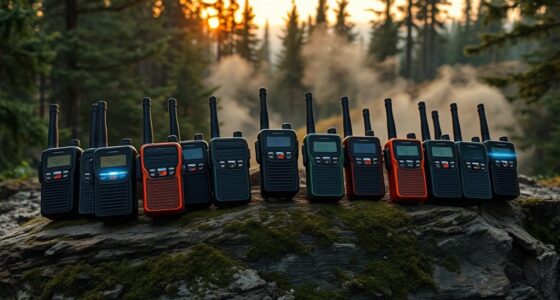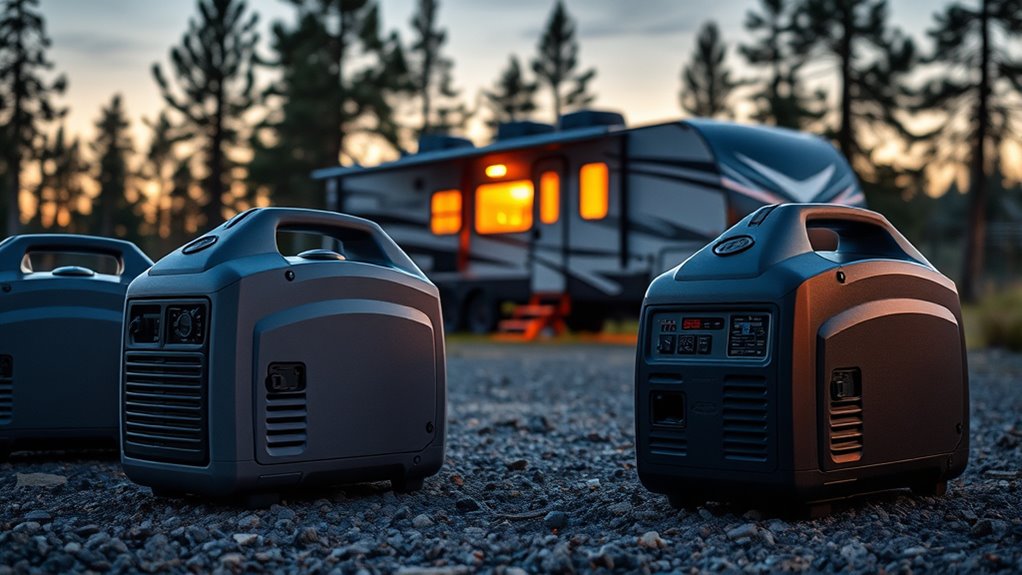

For portable generator for RV emergency power, my best overall pick is the Oxseryn 4400-Watt Gas Inverter Generator, which offers a practical balance of RV-ready output and portability. The Jackery Explorer 1000 v2 is a quieter battery alternative for essential devices, while the Jackery HomePower 3600 Plus suits buyers who need much more stored power. The central tradeoff is fuel-powered runtime and higher output versus battery units’ quiet operation and limited stored energy. Small power stations are easier to carry but may not run larger RV loads for long, and a large generator can be cumbersome and noisy at a campsite. Read on for how all 12 options compare and which one fits your emergency plan.

Get privacy and security gear delivered free with Prime
- Fast, free delivery on millions of items
- Prime Video, Amazon Music and more included
- Member-only deals all year
Complete the kit


Key Takeaways
- The Oxseryn 4400-watt inverter generator leads for practical RV backup: it offers more generator-style output than the compact battery stations without jumping to the size and capacity of the DuroMax XP13000HX.
- The lineup divides into two different kinds of backup: gas and dual-fuel generators can keep supplying power while fuel is available, while battery stations are quiet but limited by stored watt-hours and recharge access.
- The Jackery Explorer 1000 v2 is a more useful middle ground than the 256–292Wh units: its 1070Wh capacity and 1500W output better suit multiple essential devices, though it still cannot match fuel-generator runtime.
- Solar bundles change the recharge plan, not the power ceiling: the Jackery Explorer 300 and 1000 v2 bundles and the ZeroKor add panels, but panel output depends on sunlight and does not make a small station suitable for every RV appliance.
- Very large output is not automatically the best RV choice: the DuroMax XP13000HX is aimed at extensive backup needs, while the 300W-class stations make more sense for light loads and buyers who value quiet, compact power.
| Oxseryn 4400-Watt Gas Inverter Generator |  | Best Overall Gas Inverter | Fuel type: Gasoline | Starting wattage: 4,400 watts | Running wattage: 3,400 watts | VIEW ON AMAZON | See Our Full Breakdown |
| Jackery Explorer 300 Portable Power Station, 292Wh |  | Best Compact Backup for Essentials | Battery capacity: 292Wh | Battery chemistry: LiFePO4 | Peak surge: 600W | VIEW ON AMAZON | See Our Full Breakdown |
| BROWEY 1600W Portable Power Station with Built-In Solar Panel, 1024Wh LiFePO4 Battery |  | Best Mid-Size Solar-Ready Station | Battery capacity: 1,024Wh | Battery type: LiFePO4 | Output: 1,600W; 3,200W peak | VIEW ON AMAZON | See Our Full Breakdown |
| Jackery HomePower 3600 Plus Portable Power Station, 3584Wh, 3600W |  | Best Premium High-Capacity Battery Backup | Battery capacity: 3,584Wh | AC output: 3,600W | Parallel output: 7,200W | VIEW ON AMAZON | See Our Full Breakdown |
| DuroMax XP13000HX 13,000-Watt Dual Fuel Portable Generator |  | Best for RV and Home Emergency Backup | Fuel type: Gasoline and propane | Starting wattage: 13,000 watts | Running wattage: 13,000 watts | VIEW ON AMAZON | See Our Full Breakdown |
| Dyness 300W Portable Power Station, 256Wh LiFePO4 Battery |  | Best Compact LiFePO4 Backup | Battery capacity: 256Wh | Battery chemistry: LiFePO4 | Continuous output: 300W | VIEW ON AMAZON | See Our Full Breakdown |
| Oxseryn 4400-Watt Gasoline Inverter Generator |  | Best for Higher-Load RV Backup | Fuel type: Gasoline | Peak wattage: 4,400 watts | Running wattage: 3,400 watts | VIEW ON AMAZON | See Our Full Breakdown |
| ZeroKor 300W Portable Power Station with 60W Solar Panel |  | Best Small Solar-Ready Kit | Maximum power output: 300W | Solar panel: 60W monocrystalline; 20.5% conversion efficiency | AC outlets: 2; 300W maximum | VIEW ON AMAZON | See Our Full Breakdown |
| Jackery Explorer 300 Portable Power Station with 40W Solar Panel |  | Best for Portable Device Charging | Battery capacity: 292Wh | Battery chemistry: LiFePO4 | Peak surge output: 600W | VIEW ON AMAZON | See Our Full Breakdown |
| Jackery Explorer 1000 v2 Portable Power Station, 1070Wh, 1500W |  | Best Premium Battery Backup | Battery capacity: 1,070Wh | Battery type: LFP | Output wattage: 1,500W | VIEW ON AMAZON | See Our Full Breakdown |
| Jackery Solar Generator 1000 v2 with 200W Solar Panel |  | Best RV Emergency Pick with Included Solar | Battery capacity: 1,070Wh | Battery type: LFP | AC output: 1,500W | VIEW ON AMAZON | See Our Full Breakdown |
| LIBRIDS 640Wh Portable Power Station, 600W Output |  | Best for Essential Loads and UPS Backup | Battery capacity: 640Wh | Battery chemistry: LiFePO₄ | Battery cycle life: 4,000+ cycles | VIEW ON AMAZON | See Our Full Breakdown |
| portable generator for rv emergency power | Weight | Battery capacity |
|---|---|---|
| Oxseryn 4400-Watt Gas Inverter | 57 pounds | — |
| Jackery Explorer 300 Portable | 7.1 pounds listed; 7.5 pounds in description | 292Wh |
| BROWEY 1600W Portable Power St | 26 pounds | 1,024Wh |
| Jackery HomePower 3600 Plus Po | 77.2 pounds | 3,584Wh |
| DuroMax XP13000HX 13,000-Watt | 245 pounds | — |
| Dyness 300W Portable Power Sta | — | 256Wh |
| Oxseryn 4400-Watt Gasoline Inv | 56 pounds | — |
| ZeroKor 300W Portable Power St | — | — |
| Jackery Explorer 300 Portable | 12.9 pounds | 292Wh |
| Jackery Explorer 1000 v2 Porta | 23.8 pounds | 1,070Wh |
| Jackery Solar Generator 1000 v | 23.8 lbs | 1,070Wh |
| LIBRIDS 640Wh Portable Power S | — | 640Wh |
More Details on Our Top Picks
Oxseryn 4400-Watt Gas Inverter Generator
For RV emergency power that needs to run more than small electronics, I would start with the Oxseryn OXOG10. Its 3,400 running watts and dedicated 30A RV outlet make it a closer fit for an RV connection than the smaller battery stations here, including the BROWEY 1600W. Gas also lets you replenish power by refueling rather than waiting for a battery recharge. The tradeoff is the noise and fuel handling associated with a combustion generator, and its 2-gallon tank supports up to 14 hours only at a light 25% load. At 57 pounds, it is much easier to move than the 245-pound DuroMax, but it still takes more effort to lift than a compact power station. I’d choose it for substantial RV loads when fuel is available.
Pros:- 3,400 running watts provide more capacity for RV loads than the compact battery stations in this lineup.
- Dedicated 30A RV outlet simplifies connection to compatible RV equipment.
- Up to 14 hours of runtime at 25% load can cover an extended period between refills at light demand.
- ECO mode, overload protection, and low-oil shutdown add useful operating safeguards.
Cons:- The 2-gallon fuel tank means runtime depends on load and requires fuel management.
- At 57 pounds, it is less convenient to lift and carry than a small power station.
- Gasoline operation is not suitable for indoor use and may be too disruptive for noise-sensitive campsites.
Best for: RV owners who need a 30A connection and enough generator output for larger emergency loads, and who can store and handle gasoline.
Not ideal for: Campers who need quiet power, indoor-safe operation, or a lightweight unit they can carry easily; it runs on gasoline and weighs 57 pounds.
- Fuel type:Gasoline
- Starting wattage:4,400 watts
- Running wattage:3,400 watts
- Outlets:2 × 120V AC, 1 × 30A RV, 1 × 12V DC
- Fuel tank capacity:2 gallons
- Runtime:Up to 14 hours at 25% load
- Weight:57 pounds
- Dimensions:19.4 × 15.2 × 19.2 inches
- Warranty:1 year
Our verdict“Choose the Oxseryn if you need a portable gas generator with a 30A RV outlet and more sustained output than a small battery station can provide.”
Jackery Explorer 300 Portable Power Station, 292Wh
The Jackery Explorer 300 is the easiest pick here to carry for a brief outage or a small RV setup: it weighs about 7.1–7.5 pounds and provides AC, USB, and car-port outputs for several devices. That makes it more convenient for phones, lights, and small electronics than the 26-pound BROWEY 1600W, but its 300W rated output and 292Wh capacity put it in a different class from the Oxseryn gas generator. It is not a substitute for powering higher-demand RV equipment or running appliances for long periods. The LiFePO4 battery is rated for over 4,000 cycles to 70% capacity, while solar charging gives you another recharge option if you buy a panel separately. I’d treat it as a compact essentials station, not a full RV power source.
Pros:- About 7.1–7.5 pounds, making it far easier to carry than the BROWEY or gas generators.
- Two AC outlets plus USB and car-port connections support several small devices.
- LiFePO4 battery is rated for over 4,000 cycles to 70% capacity.
- Supports AC, car, and solar charging for flexible replenishment options.
Cons:- 292Wh capacity and 300W rated output limit it to modest loads and shorter backup periods.
- Solar panel is not included, adding a separate item to buy for solar charging.
- Listed weight and dimensions conflict, making exact size and carrying expectations less certain.
Best for: Solo campers and RV owners who want a lightweight backup for phones, lights, and other modest electronics during short outages.
Not ideal for: Buyers who need to power an RV air conditioner, high-wattage appliances, or several devices for extended periods; its capacity and rated output are limited.
- Battery capacity:292Wh
- Battery chemistry:LiFePO4
- Peak surge:600W
- AC outlets:2
- Other ports:100W USB-C PD, 2 USB-A, 120W car port
- Weight:7.1 pounds listed; 7.5 pounds in description
- Solar charging:About 80% in 2.8 hours with a 100W panel; panel not included
Our verdict“Pick the Explorer 300 for portable backup of small electronics, but choose a larger station or generator for substantial RV loads.”
BROWEY 1600W Portable Power Station with Built-In Solar Panel, 1024Wh LiFePO4 Battery
The BROWEY sits between the pocketable Explorer 300 and the much larger Jackery HomePower 3600 Plus: its 1,024Wh battery and 1,600W pure sine wave output offer a more substantial battery backup without moving into a 77-pound unit. For RV emergency use, that capacity can keep a broader set of devices running than the Explorer 300, while its 26-pound weight is still manageable for some owners. The built-in 40W solar panel is convenient for topping up when the station is exposed to sunlight, but it is a modest charging source rather than a fast refill method. AC, car, and solar charging options add flexibility, and eight ports include 100W USB-C PD. Unlike the Oxseryn, it has no fuel-powered runtime; its usefulness depends on stored charge and access to recharging.
Pros:- 1,024Wh capacity offers substantially more stored energy than the Explorer 300.
- 1,600W pure sine wave output supports a wider range of devices than compact 300W stations.
- Built-in 40W solar panel provides a small amount of onboard solar charging capability.
- Eight ports and outlets include 100W USB-C PD, with AC, car, and solar charging options.
Cons:- The built-in 40W panel is limited for recharging a 1,024Wh battery quickly.
- At 26 pounds, it is considerably heavier than the Explorer 300.
- Unlike the Oxseryn gas generator, it cannot keep supplying power by refueling once its battery is depleted.
Best for: RV owners who want a mid-capacity battery station for electronics and moderate loads, with several ways to recharge away from a wall outlet.
Not ideal for: Buyers seeking a light carry-in unit, long-duration high-wattage backup, or quick solar refills from the built-in panel alone.
- Battery capacity:1,024Wh
- Battery type:LiFePO4
- Output:1,600W; 3,200W peak
- Built-in solar panel:40W
- USB-C output:100W PD
- Ports and outlets:8
- Weight:26 pounds
- Dimensions:13.3 × 17.1 × 5.5 inches
- Charging options:AC adapter, USB-C PD, car outlet, solar
Our verdict“Choose the BROWEY if you want more battery capacity than a compact station offers and can accept slow built-in solar charging.”
Jackery HomePower 3600 Plus Portable Power Station, 3584Wh, 3600W
If battery power is the priority, the Jackery HomePower 3600 Plus offers the largest stated capacity in this group: 3,584Wh paired with 3,600W output. That gives it far more stored energy than the BROWEY 1600W, and its expansion options can take capacity to 21kWh per unit. Multiple charging methods—including hybrid AC+DC, solar, and a gas generator—make it more adaptable than a station that depends on one charging route. The cost of that capacity in practical terms is size and weight: at 77.2 pounds, it is not an easy unit to lift into an RV, though wheels and a telescopic handle help on level ground. With only two listed outlets, I would check connection needs carefully before choosing it over the Oxseryn’s broader outlet panel.
Pros:- 3,584Wh capacity and 3,600W output provide much more battery backup than the BROWEY.
- Expandable capacity supports longer backup plans, up to 21kWh per unit.
- AC, solar, gas generator, and hybrid charging offer several replenishment routes.
- Wheels and a telescopic handle make moving its 77.2-pound body easier across suitable surfaces.
Cons:- At 77.2 pounds, it is difficult to lift into an RV or move over uneven ground.
- Only two outlets are listed, so buyers should check whether the available connections fit their setup.
- Solar panels are sold separately.
Best for: RV owners who need substantial stored battery power, want expandable backup capacity, and can roll rather than routinely lift the unit.
Not ideal for: Buyers who need a lightweight carry-in station, multiple listed outlets, or a compact solution for limited RV storage.
- Battery capacity:3,584Wh
- AC output:3,600W
- Parallel output:7,200W
- Expandable capacity:Up to 21kWh per unit
- Charging options:Hybrid AC+DC, AC, solar, gas generator
- Recharge time:2 hours hybrid AC+DC; 2.5 hours AC or gas generator; 4 hours solar
- Weight:77.2 pounds
- Outlets:2
- Warranty:5 years
Our verdict“Choose the HomePower 3600 Plus for high-capacity, expandable battery backup when its weight and outlet count suit your RV setup.”
DuroMax XP13000HX 13,000-Watt Dual Fuel Portable Generator
The DuroMax XP13000HX is the high-output choice for buyers whose emergency plan extends beyond an RV: its stated 13,000 watts, dual-fuel operation, and transfer-switch-ready 50A outlet make it more suited to large residential loads than the Oxseryn 4400-Watt inverter generator. Gasoline and propane give owners a choice of fuel, while electric start reduces the effort of getting it running. That scale brings a serious portability penalty: at 245 pounds, this is a heavy generator to position, store, or take on a trip, despite the portable label. The listed runtime is up to 17 hours, but the supplied data does not specify the load for that figure. I’d select it for stationary emergency backup that can also serve an RV, not for a compact campsite setup.
Pros:- Stated 13,000-watt output makes it a much higher-capacity option than the Oxseryn 4400-Watt inverter generator.
- Dual-fuel operation allows use of gasoline or propane.
- Electric start avoids relying on a pull-start procedure.
- Transfer-switch-ready 50A outlet supports a broader home-backup role.
Cons:- At 245 pounds, moving and loading it for RV travel is difficult.
- Its 30 × 29 × 26-inch dimensions demand substantial storage space.
- The listed 17-hour runtime does not specify the load, so it is hard to compare directly with runtime figures stated at a particular load.
Best for: Owners preparing for both RV emergencies and substantial home backup who have suitable space, fuel storage, and help moving a heavy generator.
Not ideal for: RV travelers who need a generator they can routinely lift, store in a small compartment, or move without assistance.
- Fuel type:Gasoline and propane
- Starting wattage:13,000 watts
- Running wattage:13,000 watts
- Engine:500cc 4-stroke OHV
- Starting system:Electric start
- Voltage:240 volts
- Runtime:Up to 17 hours; load not specified
- Weight:245 pounds
- Dimensions:30 × 29 × 26 inches
Our verdict“Choose the DuroMax when high-output home backup matters as much as RV use and you can accommodate its weight and size.”
Dyness 300W Portable Power Station, 256Wh LiFePO4 Battery
The Dyness 300W is a compact pick for RV travelers who need to keep phones, lights, and other small electronics running during an outage, rather than power major appliances. Its 256Wh LiFePO4 battery and several output types offer more flexibility for device charging than a basic power bank, while AC, solar, and car recharging let you top it up in different settings. Compared with the Jackery Explorer 300, it has less listed battery capacity and lacks an included solar panel, but its dimensions make it easy to tuck into a crowded RV. The main limit is its 300W continuous output: it is not suited to high-draw appliances, and solar recharging requires a separately compatible panel.
Pros:- LiFePO4 battery chemistry is designed for a long cycle life.
- AC, USB, DC, and car outputs support a range of small devices.
- Can recharge from a wall outlet, car charger, or compatible solar panel.
- Compact 9.3 × 5 × 6.8-inch footprint suits tight RV storage.
Cons:- The 300W continuous output rules out many household appliances.
- No solar panel is included.
- Battery capacity is lower than the Jackery Explorer 300’s listed 292Wh.
Best for: RV travelers seeking a small LiFePO4 station for phones, lights, and other low-wattage essentials.
Not ideal for: RV owners who need to run a refrigerator, coffee maker, or several high-draw devices, since continuous output is limited to 300W.
- Battery capacity:256Wh
- Battery chemistry:LiFePO4
- Continuous output:300W
- Peak output:600W
- AC outlet:1 pure sine wave outlet, 110V
- Other outputs:USB-C, USB-A, 2 DC outputs, 1 car outlet
- Recharging options:AC wall outlet, compatible solar panel, car charger, or dual input
- Dimensions:9.3 × 5 × 6.8 inches
- Warranty:2 years
Our verdict“Choose the Dyness for compact, low-wattage RV backup with LiFePO4 chemistry, but skip it if you need appliance-level power.”
Oxseryn 4400-Watt Gasoline Inverter Generator
For an RV emergency that calls for more than charging small devices, the Oxseryn EDOG10 offers 3,400 running watts and a dedicated RV port. That makes it a different class of backup from the battery stations here: it can support substantially higher loads than the 300W Dyness or ZeroKor, though it depends on gasoline rather than stored battery power. The 2-gallon tank is listed for up to 14 hours at 25% load in ECO mode, a useful runtime figure for lighter demand, but heavier use can mean more frequent refueling. At 56 pounds, it is portable for a gas generator, yet less convenient to move and store than the battery options. Its noise rating is also under 72 dBA at 23 feet, which may still be noticeable at a quiet campsite.
Pros:- 3,400 running watts provide far more output than the 300W battery stations in this roundup.
- Dedicated RV port joins two 120V AC outlets and a 12V DC outlet.
- ECO-mode runtime is listed at up to 14 hours at 25% load.
- At 56 pounds, it is lighter than many higher-output gas generators.
Cons:- The 2-gallon tank may require refueling during extended or higher-load use.
- Noise under 72 dBA at 23 feet may disturb quiet campsites.
- Gasoline operation is less convenient than the battery-based Jackery Explorer 1000 v2 for quick, low-load backup.
Best for: RV owners who want a gasoline-powered backup with an RV outlet and enough running wattage for larger loads than compact power stations can handle.
Not ideal for: Campers seeking quiet, emissions-free indoor backup or a lightweight, maintenance-free power source.
- Fuel type:Gasoline
- Peak wattage:4,400 watts
- Running wattage:3,400 watts
- Voltage:120 volts
- Outlets:2 × 120V AC, 1 × 12V DC, 1 × RV port
- Fuel tank capacity:2 gallons
- Runtime:Up to 14 hours at 25% load with ECO mode
- Weight:56 pounds
- Warranty:1 year
Our verdict“Pick the Oxseryn when RV emergency power needs exceed small-device charging and you can accommodate gasoline, generator noise, and refueling.”
ZeroKor 300W Portable Power Station with 60W Solar Panel
The ZeroKor 300W is the most ready-to-go small solar kit in this group: it includes a 60W monocrystalline panel, unlike the Dyness, which needs a separately purchased compatible panel. That can help maintain power for modest device loads when an RV has access to suitable sunlight, though a panel of this size is not a fast refill source for extended use. Its two AC outlets and several USB and DC outputs give it practical flexibility for lights and personal electronics. Like the Dyness, the 300W maximum output excludes high-draw appliances, so the Oxseryn is a better fit when an RV needs substantially more power. The panel junction box is not waterproof, and the battery needs periodic charging and careful storage, adding upkeep that simpler plug-in use avoids.
Pros:- Includes a 60W monocrystalline solar panel and supports AC and car recharging.
- Two AC outlets plus USB and DC outputs support multiple small devices.
- Built-in MPPT supports solar input from 13V to 23V.
- Flashlight includes reading and SOS modes.
Cons:- 300W maximum output cannot run higher-powered appliances such as coffee makers or hair dryers.
- The solar panel junction box is not waterproof.
- Battery requires periodic charging and storage around 60%–80% capacity.
Best for: Campers who want a compact station with a solar panel included for topping up small devices during sunny trips.
Not ideal for: RV owners who need to run high-wattage appliances or depend on fast solar recharging in changeable weather.
- Maximum power output:300W
- Solar panel:60W monocrystalline; 20.5% conversion efficiency
- AC outlets:2; 300W maximum
- DC output:9V–12.6V, 10A maximum
- USB ports:3 USB ports and 1 quick-charge USB port
- Recharging options:AC outlet, 12V car port, or 13V–23V solar input with built-in MPPT
- Safety features:Short-circuit, over-current, over-voltage, overload, and overheating protection
- Included accessories:AC adapter, cigarette lighter adapter, 12V car charging cable, 60W solar panel kit, and 2 user manuals
Our verdict“Choose the ZeroKor for a small, included-panel setup that supports device charging, not for running RV appliances or rapid solar recovery.”
Jackery Explorer 300 Portable Power Station with 40W Solar Panel
The Jackery Explorer 300 offers a useful middle ground for RV travelers who want more battery capacity than the Dyness 256Wh without stepping up to a much larger station. Its 292Wh LiFePO4 battery, 300W rated output, and included 40W panel suit phones, lights, and other modest loads; the panel can help extend a trip between wall charges, though its output is modest for restoring the battery quickly. A 100W USB-C PD port and multiple other connections make charging several devices easier than relying on a single AC outlet. The tradeoff is clear beside the Jackery Explorer 1000 v2: this model is far easier to carry at 12.9 pounds, but its capacity and output are not in the same league for appliance backup. The listed weight is 12.9 pounds, despite a product description that calls it 7.5 pounds.
Pros:- 292Wh LiFePO4 battery is rated for over 4,000 cycles to 70% capacity.
- Includes a 40W solar panel and charging accessories.
- 100W USB-C PD port can serve compatible higher-power USB-C devices.
- 12.9-pound listed weight and integrated handle aid portability.
Cons:- 300W rated output limits it to smaller loads, unlike the Jackery Explorer 1000 v2.
- Included 40W panel is slower for solar charging than a higher-wattage panel.
- The stated weight conflicts with the product description, which calls it 7.5 pounds.
Best for: RV travelers who prioritize a portable station for phones, laptops, lights, and modest emergency loads, with a small solar panel included.
Not ideal for: Buyers who need to run larger RV appliances or want a panel capable of faster solar recharging.
- Battery capacity:292Wh
- Battery chemistry:LiFePO4
- Peak surge output:600W
- Charge cycles:Over 4,000 cycles to 70% capacity
- Ports:2 AC outlets, 1 100W USB-C PD port, 2 USB-A ports, 1 120W car port
- Included solar panel:40W
- Weight:12.9 pounds
- Warranty:3+2 years
Our verdict“Choose the Explorer 300 for portable, small-load RV backup with an included panel, but step up to the Explorer 1000 v2 for higher output and capacity.”
Jackery Explorer 1000 v2 Portable Power Station, 1070Wh, 1500W
Among the battery-powered picks here, the Jackery Explorer 1000 v2 is the strongest choice for RV emergencies that may involve more than phones and lights. Its 1,070Wh capacity, 1,500W output, and 3,000W surge rating give it much more room for compatible appliances than the 300W Dyness, ZeroKor, or Explorer 300. That extra capability comes with a larger, heavier unit at 23.8 pounds, though it remains easier to handle than a gasoline generator such as the Oxseryn. Emergency charging can reach a full charge in one hour, but only when enabled in the app; the default charge time is 1.7 hours. Solar is optional and limited to Jackery panels, so buyers who want an included solar kit should compare it with the Explorer 300 bundle instead.
Pros:- 1,070Wh capacity and 1,500W output serve larger loads than the 300W stations in this roundup.
- 3,000W surge peak supports compatible equipment with higher startup demand.
- LFP battery is rated to retain over 70% capacity after 4,000 charge cycles.
- Three pure sine wave AC outlets and several USB/DC ports support multiple devices.
Cons:- Solar panel is not included and solar compatibility is limited to Jackery panels.
- One-hour full charging requires emergency mode in the app; default charging takes 1.7 hours.
- At 23.8 pounds, it is heavier than the Explorer 300.
Best for: RV owners seeking substantial battery-based emergency power for multiple devices and compatible appliances, without relying on a gasoline generator.
Not ideal for: Buyers who need an included solar panel, broad third-party solar compatibility, or power for loads above its 1,500W output.
- Battery capacity:1,070Wh
- Battery type:LFP
- Output wattage:1,500W
- Surge peak:3,000W
- Weight:23.8 pounds
- AC outlets:3 pure sine wave outlets
- USB and DC ports:2 USB-C ports, 1 USB-A port, and 1 DC car port
- Full charge time:1 hour with emergency charging enabled; 1.7 hours by default
- Solar compatibility:Jackery solar panels only; panel not included
Our verdict“Choose the Explorer 1000 v2 for higher-capacity battery backup and appliance flexibility, provided its app-dependent fast charging and Jackery-only solar support suit your setup.”
Jackery Solar Generator 1000 v2 with 200W Solar Panel
For RV owners who want meaningful battery capacity without moving to a large power station, this bundle pairs a 1,070Wh LFP battery with 1,500W AC output and a 200W solar panel. It can support a wider range of small appliances than the LIBRIDS 640Wh, 600W model, while its 23.8-pound station remains easier to carry than the much larger Jackery HomePower 3600 Plus. The three AC outlets and USB ports give several devices charging options, and app control provides access to charging modes. The tradeoff is that high-draw RV appliances may exceed its output or drain the battery quickly. Its one-hour full charge depends on enabling emergency charging in the app, and the station and panel ship separately, so the bundle may not arrive together.
Pros:- 1,070Wh capacity and 1,500W AC output provide more headroom than the LIBRIDS 640Wh, 600W station
- Included 200W solar panel offers a way to recharge away from shore power
- LFP battery is rated for over 4,000 charge cycles
- Three AC outlets, USB ports, and app-controlled charging modes support varied emergency needs
Cons:- High-draw appliances may exceed the 1,500W output, and extended use can deplete the battery
- The one-hour full-charge claim requires emergency charging to be enabled in the app
- The power station and solar panel ship separately
Best for: RV travelers seeking a portable battery for lights, electronics, and selected small appliances, with solar charging available when parked
Not ideal for: RV owners who need to run high-wattage appliances for long periods or want a gas generator for extended power without sunlight
- Battery capacity:1,070Wh
- Battery type:LFP
- AC output:1,500W
- Surge peak:3,000W
- Included solar panel:200W
- Weight:23.8 lbs
- AC outlets:3
- USB-C ports:2
Our verdict“Choose this bundle if you want a portable, solar-ready battery with more RV emergency power headroom than a 600W station, but not whole-campsite or extended high-load power.”
LIBRIDS 640Wh Portable Power Station, 600W Output
The LIBRIDS is a better fit for essential RV loads than for appliance-heavy backup. Its 640Wh LiFePO₄ battery and 600W running output suit phones, lights, and other modest-demand devices, while a 10ms UPS switchover can help keep connected equipment powered through an outage. Four AC outlets and a total of eight output ports make it easier to connect several devices than the Jackery Solar Generator 1000 v2, which has three AC outlets, though the Jackery offers substantially more capacity and output for demanding use. LIBRIDS also lists a roughly 1.5-hour AC recharge and a 5-year warranty. Its limits are clear: 600W rules out many higher-draw appliances, and the metal enclosure must stay dry. This is a compact backup option, not a replacement for shore power or a fuel generator.
Pros:- 10ms UPS switchover helps maintain power to connected essential devices during an outage
- LiFePO₄ battery is rated for more than 4,000 cycles
- Four AC outlets and additional ports support up to eight devices
- AC charging takes about 1.5 hours
Cons:- 600W running output is too limited for many higher-power RV appliances
- 640Wh capacity provides less runtime than the Jackery Solar Generator 1000 v2
- Must be kept dry and protected from rain and moisture
Best for: RV owners who want backup for phones, lighting, and other low-wattage essentials, especially those who value UPS support for connected equipment
Not ideal for: Travelers who need to run high-power appliances, sustain loads for long periods, or use the unit where it may be exposed to rain or moisture
- Battery capacity:640Wh
- Battery chemistry:LiFePO₄
- Battery cycle life:4,000+ cycles
- Running output:600W
- Surge output:1,200W
- AC outlets:4
- Total output ports:8
- UPS switchover:10ms
- AC charging time:About 1.5 hours
Our verdict“Pick the LIBRIDS for compact backup of essential, low-wattage devices and UPS support, but choose the higher-output Jackery if your RV needs more appliance headroom.”

How We Picked
I ranked these options around the needs of an RV owner facing an outage: usable output, stored energy or fuel-based runtime, portability, noise considerations, recharge flexibility, and how clearly each model fits a realistic emergency role. I gave more weight to products that can support a useful range of RV essentials than to a high headline wattage alone. Battery capacity matters alongside output: a station may run a device but still run short if the outage lasts, while a fuel generator needs safe outdoor operation and a fuel supply.
The ranking separates products by their intended jobs rather than treating every power source as interchangeable. The Oxseryn 4400W inverter generator ranks ahead for balanced RV backup; the Jackery Explorer 1000 v2 and HomePower 3600 Plus lead among battery options at different capacity levels. Smaller stations rank lower for whole-RV emergencies but can be sensible for phones, lights, and other modest loads. The DuroMax XP13000HX offers far more output, yet its scale may be unnecessary for many RV owners. Where product names identify bundled panels or similar models, I distinguish the bundle from the underlying power station rather than treating solar accessories as extra battery capacity.
Factors to Consider When Choosing Portable Generator For Rv Emergency Power
Before choosing, I would define the emergency you want to cover: a short outage affecting communications and lights is a different problem from running an air conditioner or powering several appliances overnight. That distinction helps prevent paying for excess output—or buying a compact station that cannot meet the actual load.
Start With the Loads You Need to Keep Running
List the devices you would use during an outage and check both their running watts and any startup surge. Compressors and some motor-driven appliances can demand a brief burst above their normal draw, so a generator’s peak figure should not be mistaken for its continuous capability. Add the loads you may run at the same time, then decide which ones can take turns. Many RV buyers can preserve comfort and safety by prioritizing refrigeration, lighting, communications, and medical equipment rather than trying to power everything. If air conditioning is part of the plan, verify its startup requirements and the generator’s continuous output before buying. This simple load plan can rule out small power stations early and prevent oversizing for appliances you do not need during an emergency.
Match Power Source to Outage Length and Campsite Rules
A fuel generator can keep producing electricity while it has fuel, but it brings engine noise, exhaust, fuel storage, and maintenance into the plan. A battery station runs quietly and avoids exhaust at the point of use, which can be better for a crowded campground or overnight essentials. Its limit is stored energy: once depleted, it needs a suitable charging source and time to recover. Check campground rules before relying on an engine generator, since permitted hours and operating limits vary. For longer outages, consider how you will obtain and store fuel or recharge a battery, not just how much power it can deliver when full. A hybrid plan—battery power for quiet hours and a fuel generator for recharging or heavier loads—can be more workable than expecting one device to handle every situation.
Read Watt-Hours and Watts as Different Limits
Watts describe how much power a unit can supply at once, while watt-hours describe how much energy a battery stores. A station with a high output rating may start a demanding device but still run it for a limited time if its capacity is modest. Conversely, a large-capacity battery may store plenty of energy yet be unable to start a load that exceeds its output limit. Estimate runtime by dividing usable battery capacity by the combined watt draw, allowing for conversion losses and the fact that real consumption changes. Avoid planning around a theoretical maximum as though every watt-hour will reach your appliances. For fuel generators, runtime depends on load and fuel availability, so check manufacturer guidance for expected operation at the loads you actually plan to use.
Treat Solar Panels as a Recharge Aid, Not Guaranteed Backup
A bundled solar panel can give a battery station another way to recharge, but its rated output is not a promise of steady power throughout the day. Shade, clouds, panel angle, season, and limited daylight can all cut energy collection. Small panels paired with compact stations may suit topping up communication devices or extending light use, but they are less suited to quickly replenishing a large battery. Check whether the station accepts the panel’s input and whether the bundle includes the cables or adapters required. If a storm or tree cover is likely during the emergency, plan another charging route rather than relying on solar alone. Buyers should compare panel input limits and expected recharge time as carefully as the panel’s headline wattage.
Check RV Connection and Electrical Compatibility
Before buying, confirm how the unit will connect to your RV: a standard outlet, a suitable adapter, or a transfer-switch arrangement may be required depending on the generator and the RV’s electrical system. Never assume that a receptacle shape proves a unit can safely power every RV circuit. Follow the generator and RV manufacturers’ instructions, use properly rated cords, and avoid unsafe backfeeding into a building or vehicle system. Also check whether the generator’s output matches the RV’s voltage and amperage needs. If you expect to power hardwired circuits, ask a qualified electrician or RV technician about a safe installation. A straightforward connection plan matters most during an outage, when improvising with mismatched cords can create hazards.
Balance Portability Against Capability and Maintenance
A unit that is easy to lift and store is more likely to be ready when an emergency happens, but smaller size often means less output, less stored energy, or both. Large fuel generators can support heavier loads yet take more room and may require help to position. Battery stations avoid engine upkeep but still need periodic charging and sensible storage; fuel generators need the maintenance and fuel checks described by their manufacturer. Think through where the unit will live, how it will be secured, and whether you can move it to a safe operating location. Paying more for a larger model makes sense only if its extra capacity supports loads you have identified. For occasional light backup, compactness and simple handling may be more valuable than maximum output.
Frequently Asked Questions
Can a 300W-class power station run my RV air conditioner?
Do not assume it can. RV air conditioners usually draw far more power than a 300W-class station can supply, and their startup surge can be higher than their running draw. Check the air conditioner’s electrical label and startup requirements against the station’s continuous and surge ratings. The small units in this roundup are better matched to modest electronics and lighting than major RV appliances. If cooling is a must-have, compare a higher-output generator with the RV’s exact requirements and connection method.
Should I choose a gas generator or a battery power station for an overnight outage?
That depends on the loads, campsite rules, and whether you can tolerate engine noise. A battery station is usually the quieter fit for overnight essentials such as lights, phones, and selected small devices, but its runtime is limited by capacity. A fuel generator may support larger loads for longer when fuel is available, though it cannot be operated inside an RV or enclosed area because of exhaust hazards. Some owners use a battery station overnight and run a generator outdoors during permitted hours to recharge it. Check local rules and each device’s operating instructions before settling on a plan.
Is the Jackery Explorer 300 enough for emergency RV backup?
It can be useful for a narrow backup plan centered on small electronics, but its 292Wh capacity and limited output make it a poor stand-in for a full RV generator. Decide which devices matter most and estimate their combined draw and hours of use. The bundled-panel version adds a recharge option, though solar conditions affect how quickly energy returns. If you need to support several essentials for longer periods, a larger station such as the Explorer 1000 v2 offers more stored energy and output. Neither model should be assumed to run high-demand appliances without checking their ratings.
Does buying a solar bundle mean I can keep the station powered through a long outage?
No; a panel provides a charging route, not unlimited power. The energy it collects varies with sunlight, panel placement, weather, and the station’s accepted solar input. During an outage, your devices may consume energy faster than the panel can replace it, especially with high-draw appliances. Compare the panel’s output and the station’s charging specifications, then plan for cloudy periods or limited daylight. A fuel generator, vehicle charging option, or reduced load may be needed as a backup plan.
Is the DuroMax XP13000HX a sensible choice for a typical RV emergency kit?
It may be more generator than many RV owners need if the goal is only to keep lights, phones, and a few essentials running. Its 13,000-watt rating is aimed at much larger backup loads than the compact stations or the 4400W Oxseryn inverter generator. That extra capacity can make sense when you have a defined plan for multiple heavy loads or broader property backup, but it brings greater size and handling demands. Check its fuel plan, outdoor placement requirements, RV connection method, and applicable campground restrictions before choosing it. For a more portable RV-centered setup, a smaller generator may be easier to store and manage.
Conclusion
For most RV owners seeking a balance of generator-style output and manageable scale, I recommend the Oxseryn 4400-Watt Gas Inverter Generator as best overall. My best value choice for quiet, modest-load backup is the LIBRIDS 640Wh Portable Power Station, while the Jackery HomePower 3600 Plus is my best premium battery pick for buyers who need much more stored energy. Beginners with a simple phone-and-light plan may prefer the Jackery Explorer 300 for its compact battery format, but should skip it if they expect to run major appliances. For broad, high-load backup, the DuroMax XP13000HX is the specific-needs option; for quiet essentials, compare the Jackery Explorer 1000 v2 and solar bundle. I would choose only after matching the unit’s output, runtime or recharge plan, and connection method to the loads I actually need during an emergency.