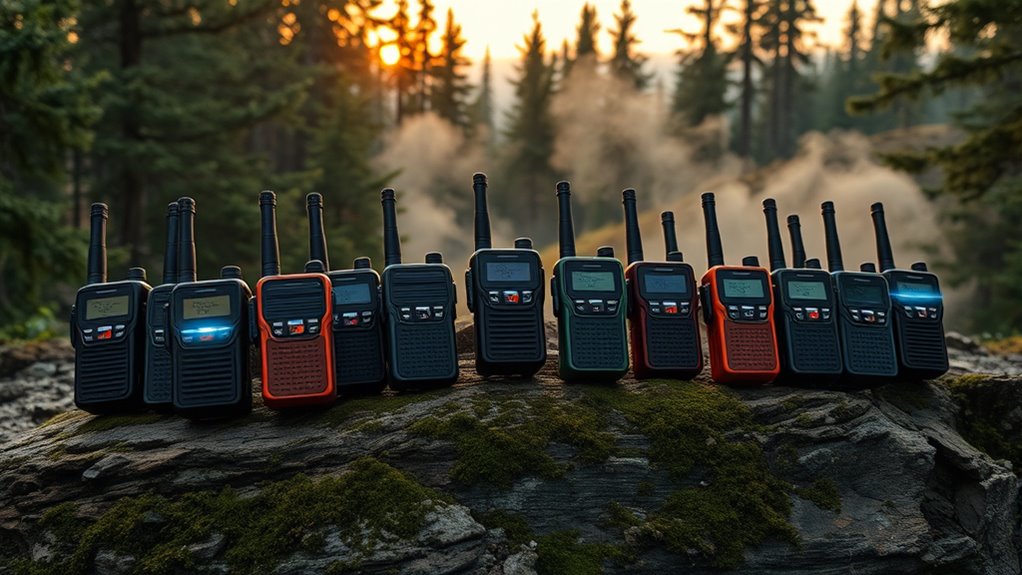

When selecting an emergency radio with solar charging and flashlight, the Peakeep NOAA Emergency Weather Radio stands out as the best overall pick due to its balanced feature set and modern USB-C connectivity. For those prioritizing raw power, the PRUNUS J-369 offers an exceptional 11,100 mWh battery, while the Kaito KA500 remains a favorite for its classic reliability and multiple charging modes. The main tradeoff in this category is between bulk and battery capacity; larger units hold more power but sacrifice portability. Continue reading to see how these models compare on signal clarity, charging speed, and build quality.

Get privacy and security gear delivered free with Prime
- Fast, free delivery on millions of items
- Prime Video, Amazon Music and more included
- Member-only deals all year
Key Takeaways
- Battery capacity is the primary differentiator, with top-tier models offering over 10,000 mWh, while budget options rarely exceed 2,000 mWh.
- USB-C charging has become a standard expectation in newer models, replacing older micro-USB ports for faster and more universal power delivery.
- Solar charging speeds vary wildly; some panels are functional for maintenance charging, while others are too small to significantly recharge the battery in a reasonable time.
- NOAA Weather Alert functionality is present in nearly all recommended models, but signal reception quality depends heavily on antenna design and placement.
- Flashlight brightness is often overstated in marketing; most integrated LEDs are suitable for close-range visibility rather than long-distance signaling.
| Kaito KA500 Emergency Weather Radio |  | Best Overall for Long-Term Preparedness | Radio Bands: AM, FM, Shortwave, NOAA Weather | Power Sources: Solar, Hand Crank, 3 AA Batteries, USB | Dimensions: 8.3 x 2.3 x 5.3 inches | VIEW ON AMAZON | See Our Full Breakdown |
| Raynic 12,000mAh Emergency Weather Radio |  | Best Battery Capacity | Battery Capacity: 12,000mAh | Radio Bands: AM, FM, NOAA Weather | Flashlight Power: 5W | VIEW ON AMAZON | See Our Full Breakdown |
| Peakeep NOAA Emergency Weather Radio |  | Best All-Rounder for Home Kits | Radio Bands: AM, FM, NOAA Weather | Battery Runtime: Up to 65 hours standby | Charging Ports: USB-C, 3.5mm Headphone | VIEW ON AMAZON | See Our Full Breakdown |
| PRUNUS J-369 Emergency Weather Radio |  | Best Value with Power Bank | Battery Capacity: 3,000 mAh | Radio Bands: NOAA, AM, FM | Power Options: Li-Ion, AA, Solar, Hand Crank, Micro USB | VIEW ON AMAZON | See Our Full Breakdown |
| iRonsnow Solar Emergency Hand Crank Weather Radio |  | Best Compact for Everyday Carry | Battery Capacity: 2,000 mAh | Dimensions: 5 x 1.8 x 2.4 inches | Weight: 7.84 ounces | VIEW ON AMAZON | See Our Full Breakdown |
| Eoxsmile Emergency Weather Radio with NOAA Alert, Solar Hand Crank, AM/FM/Shortwave, 5000mAh Battery, Flashlight, and USB Charger |  | Best for Extended Power Outages | Battery Capacity: 5000mAh | Power Sources: Solar, Hand Crank, USB-C, AAA Batteries | Radio Bands: AM, FM, Shortwave, 7 NOAA Channels | VIEW ON AMAZON | See Our Full Breakdown |
| QAUYYW Solar Hand Crank Emergency Radio, 20000mAh AM FM NOAA Weather Radio |  | Best Massive Battery Capacity | Battery Capacity: 20000mAh (74,000mWh) | Power Sources: Solar, Hand Crank, USB-C | Radio Bands: AM, FM, NOAA, SW | VIEW ON AMAZON | See Our Full Breakdown |
| FosPower NOAA Emergency Weather Radio A1 7400mWh Solar Hand Crank (Orange) |  | Best for Reliability and Warranty | Battery Capacity: 7400mWh (2000mAh) | Power Sources: Solar, Hand Crank, AAA Batteries | Radio Bands: AM, FM, NOAA Weather | VIEW ON AMAZON | See Our Full Breakdown |
| Raynic NOAA Weather Radio with Solar Hand Crank, AM/FM/SW, Flashlight, and Cell Phone Charger |  | Best Feature-Rich All-Rounder | Battery Capacity: 5000mAh | Power Sources: Solar, Hand Crank, AC, USB, AAA | Radio Bands: AM, FM, SW, NOAA | VIEW ON AMAZON | See Our Full Breakdown |
| RunningSnail Hand Crank Emergency Radio with Flashlight (NOAA/AM/FM) |  | Best Budget Compact Option | Battery Capacity: 2000mAh | Power Sources: Hand Crank, Solar, Battery | Radio Bands: AM, FM, NOAA | VIEW ON AMAZON | See Our Full Breakdown |
| emergency radio with solar charging and flashlight | Radio Bands | Power Sources | Battery Capacity | Dimensions |
|---|---|---|---|---|
| Kaito KA500 Emergency Weather | AM, FM, Shortwave, NOAA Weather | Solar, Hand Crank, 3 AA Batteries, USB | — | 8.3 x 2.3 x 5.3 inches |
| Raynic 12,000mAh Emergency Wea | AM, FM, NOAA Weather | Solar, Hand Crank, AAA Battery | 12,000mAh | — |
| Peakeep NOAA Emergency Weather | AM, FM, NOAA Weather | Solar, Hand Crank, USB-C, AC | — | — |
| PRUNUS J-369 Emergency Weather | NOAA, AM, FM | — | 3,000 mAh | 3.7 × 1.7 × 6.1 inches |
| iRonsnow Solar Emergency Hand | AM, FM, NOAA Weather | — | 2,000 mAh | 5 x 1.8 x 2.4 inches |
| Eoxsmile Emergency Weather Rad | AM, FM, Shortwave, 7 NOAA Channels | Solar, Hand Crank, USB-C, AAA Batteries | 5000mAh | 6.77" x 3.7" x 2.91" |
| QAUYYW Solar Hand Crank Emerge | AM, FM, NOAA, SW | Solar, Hand Crank, USB-C | 20000mAh (74,000mWh) | — |
| FosPower NOAA Emergency Weathe | AM, FM, NOAA Weather | Solar, Hand Crank, AAA Batteries | 7400mWh (2000mAh) | — |
| Raynic NOAA Weather Radio with | AM, FM, SW, NOAA | Solar, Hand Crank, AC, USB, AAA | 5000mAh | — |
| RunningSnail Hand Crank Emerge | AM, FM, NOAA | Hand Crank, Solar, Battery | 2000mAh | 5" x 1.8" x 2.4" |
More Details on Our Top Picks
Kaito KA500 Emergency Weather Radio
The Kaito KA500 stands out in this lineup for its shortwave radio capability, a feature many competitors like the Peakeep lack. This allows for international communication and broader emergency information access beyond local NOAA channels. Its water-resistant ABS enclosure provides durability that feels more robust than the plastic shells of the iRonsnow or PRUNUS models. While it lacks a built-in high-capacity battery, relying instead on three AA batteries or external charging, this design choice means you can swap batteries instantly without waiting for a solar charge. The USB output is sufficient for emergency phone top-ups, though slower than dedicated power banks. It is the most versatile tool for those who want a true multi-band receiver rather than just a local weather alert device.
Pros:- Includes shortwave bands for broader emergency communication
- Water-resistant ABS build withstands harsh conditions
- Swappable AA batteries offer instant power restoration
- Proven track record with a long-standing reputation
Cons:- Batteries and power adapter are sold separately
- Larger form factor makes it less pocketable
- USB charging speed is slower than modern power banks
Best for: Preppers who value shortwave listening and prefer the reliability of swappable AA batteries over integrated lithium cells.
Not ideal for: Users who want a compact, all-in-one device with a large built-in battery and do not need shortwave reception.
- Radio Bands:AM, FM, Shortwave, NOAA Weather
- Power Sources:Solar, Hand Crank, 3 AA Batteries, USB
- Dimensions:8.3 x 2.3 x 5.3 inches
- Water Resistance:Water Resistant
- Antenna Length:14.5 inches
- USB Output:5V
- Display:LED
Our verdict“Choose this if you want a durable, multi-band receiver with the flexibility of replaceable batteries.”
Raynic 12,000mAh Emergency Weather Radio
With a massive 12,000mAh battery, the Raynic dwarfs the iRonsnow and PRUNUS models in pure power storage. This capacity allows for multiple full phone charges, making it a viable backup power station for small devices. The 5W flashlight is significantly brighter than the basic LEDs found on the Kaito KA500, providing better visibility in dark environments. However, the trade-off is weight and bulk; this is not a pocketable device. While it offers water resistance, the rating is unspecified, so it may not survive a heavy downpour as well as dedicated outdoor gear. The 120dB SOS siren is loud and effective, but the reliance on AAA batteries as a backup source feels less robust than the AA setup on the Kaito.
Pros:- 12,000mAh battery supports multiple phone charges
- Bright 5W flashlight outperforms smaller competitors
- Dual USB and USB-C outputs for versatile charging
- Loud 120dB SOS siren for emergency signaling
Cons:- Heavy and bulky compared to compact alternatives
- Water resistance rating is not explicitly defined
- AAA battery backup is less common than AA
Best for: Campers and families who need a high-capacity power bank combined with a radio and want maximum phone charging utility.
Not ideal for: Hikers or users needing a lightweight, pocket-sized device for everyday carry.
- Battery Capacity:12,000mAh
- Radio Bands:AM, FM, NOAA Weather
- Flashlight Power:5W
- Charging Outputs:USB and USB-C
- Speaker Output:3W
- Power Sources:Solar, Hand Crank, AAA Battery
- Enclosure Material:ABS Plastic
Our verdict“This is the top pick if your primary need is charging devices and you don’t mind the extra weight.”
Peakeep NOAA Emergency Weather Radio
The Peakeep offers a balanced feature set with USB-C charging, a modern convenience that the PRUNUS J-369 lacks with its older Micro-USB port. Its 65-hour standby time suggests efficient power management, though the non-removable battery is a significant long-term concern; once the lithium cell degrades, the unit may become useless unless repaired. The 120dB siren matches the Raynic in volume, ensuring you can be heard in chaotic scenarios. While it charges phones to about 70-90%, it falls short of the Raynic’s multiple-charge capability. It serves as a solid middle-ground option for those who want modern connectivity without the bulk of the high-capacity models.
Pros:- USB-C port aligns with modern smartphone cables
- High 120dB siren for effective emergency signaling
- Compact form factor fits easily in grab-and-go bags
- Includes both flashlight and reading lamp modes
Cons:- Non-removable battery limits lifespan
- Phone charging capacity is limited compared to high-mAh rivals
- Requires nonstandard batteries for certain functions
Best for: Home emergency kit users who prefer USB-C compatibility and want a compact device with decent battery life.
Not ideal for: Users who plan to keep the radio for 5+ years, as the non-removable battery may fail before the electronics do.
- Radio Bands:AM, FM, NOAA Weather
- Battery Runtime:Up to 65 hours standby
- Charging Ports:USB-C, 3.5mm Headphone
- SOS Siren Volume:120dB
- Antenna Length:11.5 inches
- Power Sources:Solar, Hand Crank, USB-C, AC
- Phone Charging:Recharges approx. 70-90%
Our verdict“A solid, modern-feeling choice for home kits, provided you accept the limitation of a sealed battery.”
PRUNUS J-369 Emergency Weather Radio
The PRUNUS J-369 differentiates itself with a dedicated 3,000 mAh power bank function, separate from its main radio battery. This is a clever design that protects the radio’s operational power while still offering phone charging, unlike the Peakeep which draws from the same cell. However, the use of Micro-USB for charging feels dated compared to the USB-C on the Peakeep and Raynic. It lacks the water resistance of the Kaito KA500, making it less suitable for outdoor survival scenarios. The inclusion of AA battery backup is a plus, but the requirement to supply your own batteries adds a small friction point. It is a pragmatic choice for budget-conscious buyers who prioritize phone charging utility over ruggedness.
Pros:- Dedicated 3,000 mAh power bank function
- Supports AA battery backup for extended runtime
- Includes both flashlight and reading lamp
- Cost-effective for the feature set provided
Cons:- Older Micro-USB charging port
- Not water resistant for outdoor use
- AA batteries not included for backup mode
Best for: Budget-focused buyers who want a dedicated power bank feature and don’t mind using Micro-USB cables.
Not ideal for: Outdoor enthusiasts who need water resistance and modern USB-C connectivity.
- Battery Capacity:3,000 mAh
- Radio Bands:NOAA, AM, FM
- Power Options:Li-Ion, AA, Solar, Hand Crank, Micro USB
- Dimensions:3.7 × 1.7 × 6.1 inches
- Water Resistance:None
- Connectivity:Micro USB 2.0
- Additional Features:Power Bank, Reading Lamp
Our verdict“The best value pick if you want a built-in power bank and can overlook the outdated charging port.”
iRonsnow Solar Emergency Hand Crank Weather Radio
At just 7.84 ounces and 5 inches long, the iRonsnow is the most portable option here, easily fitting in a jacket pocket where the Raynic or Kaito would be cumbersome. The 2,000mAh battery is modest, sufficient for radio use but not for charging modern smartphones multiple times. It features a battery level indicator, a helpful UX detail missing on the PRUNUS. The USB-C charging is a welcome modern touch, though the flashlight is basic compared to the 5W beam on the Raynic. It is best viewed as a personal survival tool rather than a household hub. The two-year exchange warranty provides some peace of mind for its small size and lower price point.
Pros:- Extremely lightweight and pocketable design
- USB-C charging for modern cable compatibility
- Clear battery level indicator for status checks
- Includes a helpful two-year exchange warranty
Cons:- Small 2,000mAh battery limits phone charging
- Flashlight is dim compared to larger models
- Flashlight version may vary by shipment
Best for: Hikers, commuters, and preppers who need a lightweight, pocketable radio for personal emergency communication.
Not ideal for: Families or groups who need to charge multiple devices or require high-brightness lighting.
- Battery Capacity:2,000 mAh
- Dimensions:5 x 1.8 x 2.4 inches
- Weight:7.84 ounces
- Radio Bands:AM, FM, NOAA Weather
- Flashlight:1W LED with 3 levels
- Recharge Methods:USB-C, Solar, Hand Crank
- Warranty:Two-year exchange
Our verdict“Ideal for those who prioritize portability and pocketability over raw power and brightness.”
Eoxsmile Emergency Weather Radio with NOAA Alert, Solar Hand Crank, AM/FM/Shortwave, 5000mAh Battery, Flashlight, and USB Charger
This model stands out for its 5000mAh battery capacity, which is significantly larger than the RunningSnail option. That extra power means you can keep your phone charged for days, not just hours, making it a serious lifeline during prolonged grid failures. The inclusion of shortwave bands adds a layer of redundancy that most competitors lack, allowing you to pick up international news if local stations go dark.
However, the tradeoff is bulk and weight. At nearly 1.5 pounds, it is far less portable than the FosPower A1. If you plan to hike with it, the size will feel cumbersome. The 3W flashlight is bright enough for signaling but lacks the focused beam of dedicated tactical lights. It is best kept in a stationary emergency kit rather than a pocket.
Pros:- Large 5000mAh battery supports multiple device charges
- Includes shortwave bands for global news access
- Bright 3W flashlight and 2.5W reading lamp
- Four power sources including USB-C and AAA backup
Cons:- Bulky and heavy for portable carry
- AC adapter and AAA batteries sold separately
- Analog tuning can be fiddly for precise station selection
Best for: Preppers and families who need maximum battery reserve and shortwave redundancy for long-term outages.
Not ideal for: Hikers and minimalists who prioritize lightweight, pocketable gear over battery capacity.
- Battery Capacity:5000mAh
- Power Sources:Solar, Hand Crank, USB-C, AAA Batteries
- Radio Bands:AM, FM, Shortwave, 7 NOAA Channels
- Flashlight Power:3W LED
- Weight:14.88 ounces
- Dimensions:6.77″ x 3.7″ x 2.91″
- Connectivity:USB Output, 3.5mm Headphone Jack
Our verdict“Choose this if you need a stationary command center with enough power to keep devices alive for days.”
QAUYYW Solar Hand Crank Emergency Radio, 20000mAh AM FM NOAA Weather Radio
The QAUYYW commands attention with its 20000mAh battery, dwarfing the Eoxsmile‘s 5000mAh cell. This massive capacity translates to up to 35 hours of radio play or enough juice to charge a smartphone multiple times. For buyers who want a single device that doubles as a robust power bank, this is the clear winner.
Yet, this power comes with a significant caveat: NOAA alerts require manual tuning. Unlike digital radios that wake themselves, you must keep this unit on and tuned to a local weather station to receive warnings. Compared to the Peakeep model, which often features more automated alert features, the QAUYYW demands more user vigilance. It is a powerful tool, but only if you remember to leave it on.
Pros:- Huge 20000mAh battery lasts up to 35 hours
- IPX6 waterproof rating handles heavy rain
- USB-C charging is faster than micro-USB alternatives
- 52cm extended antenna improves signal reach
Cons:- NOAA alerts require the radio to be powered on and tuned
- Large battery adds weight compared to compact models
- Brand is less established than competitors like FosPower
Best for: Users who need a high-capacity power bank that also functions as a radio, and don’t mind manual monitoring for alerts.
Not ideal for: Those who want automatic, hands-free NOAA alerts while sleeping or away from the device.
- Battery Capacity:20000mAh (74,000mWh)
- Power Sources:Solar, Hand Crank, USB-C
- Radio Bands:AM, FM, NOAA, SW
- Water Resistance:IPX6
- Weight:10.88 ounces
- Antenna Length:52 cm
- Warranty:12 Months
Our verdict“Buy this if your primary need is charging devices during an outage, and you can tolerate manual alert monitoring.”
FosPower NOAA Emergency Weather Radio A1 7400mWh Solar Hand Crank (Orange)
The FosPower A1 earns its spot through proven longevity and a Limited Lifetime Warranty, a rarity in this category. While its 7400mWh (2000mAh) battery is smaller than the Eoxsmile‘s, it strikes a better balance between weight and utility. The unit is compact enough to fit in a car glovebox or a small emergency bag, making it more versatile for daily carry than bulkier options.
Compared to the Raynic, the FosPower lacks shortwave bands, limiting its reach to local and national broadcasts. However, its build quality feels more refined, with a secure crank mechanism that doesn’t rattle. The 1W flashlight is modest but sufficient for close-range tasks. If you value a product that lasts years over one with massive specs, this is the prudent choice.
Pros:- Limited Lifetime Warranty offers peace of mind
- Compact size fits easily in gloveboxes or bags
- Three power sources ensure redundancy
- SOS alarm feature is loud and distinct
Cons:- Smaller battery capacity (2000mAh) limits charging cycles
- No shortwave band reception
- Flashlight is dimmer (1W) than high-power models
Best for: Buyers who prioritize long-term durability and warranty support over maximum battery capacity.
Not ideal for: Preppers who require shortwave bands for international communication or massive phone charging capability.
- Battery Capacity:7400mWh (2000mAh)
- Power Sources:Solar, Hand Crank, AAA Batteries
- Radio Bands:AM, FM, NOAA Weather
- Flashlight Power:1W LED
- Warranty:Limited Lifetime
- Water Resistance:Water Resistant
- Connectivity:USB Power Bank Output
Our verdict“Select this if you want a dependable, warranty-backed radio that fits easily into a grab-and-go kit.”
Raynic NOAA Weather Radio with Solar Hand Crank, AM/FM/SW, Flashlight, and Cell Phone Charger
The Raynic distinguishes itself with five power sources, including AC wall charging, which the FosPower lacks. This makes it easier to keep topped off before a storm hits. The inclusion of a compass and carabiner adds tangible outdoor utility, turning it into a genuine survival tool rather than just a radio.
However, the IPX3 water resistance rating is lower than the QAUYYW‘s IPX6. You cannot submerge this unit, and heavy rain requires caution. While the 5000mAh battery matches the Eoxsmile, the Raynic’s analog tuning feels slightly less precise than digital alternatives. It is a jack-of-all-trades that excels in convenience but requires respect for its environmental limits.
Pros:- Five power sources including AC wall charging
- Includes compass, carabiner, and lanyard
- 5000mAh battery supports device charging
- Shortwave band capability for broader reception
Cons:- IPX3 rating offers only splash protection
- Analog tuning can be imprecise
- NOAA alerts require manual station tuning
Best for: Campers and hikers who want AC charging convenience and integrated survival tools like a compass.
Not ideal for: People living in areas with frequent heavy storms or flooding who need higher waterproof ratings.
- Battery Capacity:5000mAh
- Power Sources:Solar, Hand Crank, AC, USB, AAA
- Radio Bands:AM, FM, SW, NOAA
- Water Resistance:IPX3
- Weight:16 ounces
- Included Accessories:Compass, Carabiner, Lanyard
- Display:LCD
Our verdict“Ideal for outdoor enthusiasts who want a multi-tool radio that can also charge via a wall outlet.”
RunningSnail Hand Crank Emergency Radio with Flashlight (NOAA/AM/FM)
The RunningSnail is the smallest and lightest option in this lineup, weighing just 0.5 lbs. This makes it easier to pocket than the Raynic or Eoxsmile. Its USB-C port is a modern convenience that many older models still lack, allowing you to use standard phone cables for charging.
The tradeoff for this compactness is a smaller 2000mAh battery and a plastic enclosure that feels less rugged than the FosPower. The 1W flashlight is functional but dim, suitable only for finding keys in a dark room, not for signaling over distances. It is a solid entry-level choice for those who need a basic backup radio without breaking the bank or taking up space.
Pros:- Extremely compact and lightweight (0.5 lbs)
- Modern USB-C charging port
- Affordable entry point for emergency radios
- Retractable antenna saves space
Cons:- Plastic build feels fragile compared to rubberized models
- Small 2000mAh battery limits usage time
- Water resistance is only ‘repellent’, not waterproof
Best for: Students, renters, or anyone needing a cheap, lightweight backup radio for a desk or nightstand.
Not ideal for: Serious preppers or outdoor adventurers who need rugged durability and high-power output.
- Battery Capacity:2000mAh
- Power Sources:Hand Crank, Solar, Battery
- Radio Bands:AM, FM, NOAA
- Flashlight Power:1W LED
- Weight:0.5 lbs
- Dimensions:5″ x 1.8″ x 2.4″
- Connectivity:USB-C
Our verdict“A practical, low-cost backup for indoor use where space and budget are the primary constraints.”

How We Picked
I evaluated these devices based on their ability to function independently of grid power. The core criteria were battery capacity (measured in mWh), charging versatility (solar, crank, USB), and radio reception quality across NOAA, AM, and FM bands. I also assessed the practicality of the integrated flashlight, looking at beam distance and battery drain impact.
Ranking logic prioritized reliability and ease of use in high-stress situations. Models with intuitive interfaces and robust build quality ranked higher than those with complex menus or fragile components. I gave preference to units with USB-C ports, as they offer better long-term compatibility than legacy connectors. Devices that failed to demonstrate clear signal separation between bands were filtered out, as clarity is non-negotiable in an emergency.
| emergency radio with solar charging and flashlight | Water Resistance |
|---|---|
| Kaito KA500 Emergency Weather | Water Resistant |
| Raynic 12,000mAh Emergency Wea | — |
| Peakeep NOAA Emergency Weather | — |
| PRUNUS J-369 Emergency Weather | None |
| iRonsnow Solar Emergency Hand | — |
| Eoxsmile Emergency Weather Rad | — |
| QAUYYW Solar Hand Crank Emerge | IPX6 |
| FosPower NOAA Emergency Weathe | Water Resistant |
| Raynic NOAA Weather Radio with | IPX3 |
| RunningSnail Hand Crank Emerge | — |
Factors to Consider When Choosing Emergency Radio With Solar Charging And Flashlight
Choosing the right emergency radio involves balancing physical size with functional capability. Beyond the basic requirement of solar and crank charging, several technical specifications determine whether a device will actually serve you when the grid fails.Battery Capacity and Power Output
When comparing units, look at the mWh rating rather than just milliamp-hours (mAh), as mWh accounts for voltage and gives a true measure of stored energy. A device with 5,000 mWh might last only a few hours on full power, whereas a 12,000 mWh unit could run for days at moderate volume. Pay attention to whether the battery can charge other devices; some radios act as power banks, which is useful but drains the radio’s own reserve. If you plan to use the radio for more than 48 hours without external power, aim for at least 8,000 mWh. Remember that older battery chemistry degrades faster, so a newer model with lithium-polymer cells often outperforms an older lithium-ion unit with a higher nominal spec.
Solar Charging Efficiency and Real-World Expectations
Manufacturers often advertise solar charging, but the physical size of the panel limits its input rate. A small 2-inch panel may take days to fully recharge a large battery, making it better suited for trickle charging during storage rather than active emergency use. I recommend viewing solar as a maintenance feature that keeps the battery topped up while the device is stored in a window, not a primary charging method during a crisis. If rapid recharge is your priority, rely on the hand crank or USB input. Check if the panel is integrated or detachable; integrated panels are more durable but less efficient if you cannot position the entire unit in direct sunlight.
NOAA Band Reception and Alert Systems
Not all NOAA radios perform equally, especially in rural or mountainous areas. Look for models with a telescoping antenna rather than a fixed internal one, as adjustable length allows for better signal tuning. The S.A.M.E. (Specific Area Message Encoding) feature is critical because it filters alerts to your specific county, preventing alarm fatigue from irrelevant nearby events. Some budget models lack S.A.M.E. coding, meaning they will alert for any weather event within the broader broadcast region. Verify that the device supports the latest NOAA weather radio frequencies, as older units may miss newer digital data streams used for detailed storm tracking.
Charging Port Types and Cable Management
The shift toward USB-C is significant for emergency preparedness because it reduces the number of cable types you need to store. Older micro-USB ports are becoming harder to source and are more prone to connector wear. If a radio includes built-in charging cables, test them for flexibility; rigid cables can break at the housing junction. A dedicated input port is preferable to using a cable stored inside the device, as it allows you to use your own high-quality, replaceable cables. Consider whether the radio supports pass-through charging, which lets you use the radio while it is plugged into a power bank or wall outlet.
Durability and Environmental Resistance
An emergency radio must survive being dropped, exposed to rain, or stored in humid conditions. Check for an IP rating or at least a claim of water resistance, though many affordable models are only splash-resistant. Rubberized casing helps with grip and shock absorption, which is valuable if you need to operate the device with wet or gloved hands. Avoid models with complex, protruding buttons that can snag on gear or break easily. A simple, sealed design is often more reliable than a feature-rich unit with delicate interface elements. Storage temperature ranges also matter; some batteries degrade if stored in extremely hot attics or freezing cars.
Frequently Asked Questions
How long does it actually take to charge an emergency radio via solar power?
In practical terms, solar charging is slow and depends heavily on direct sunlight intensity. A typical integrated solar panel on these devices generates between 0.5W and 1.5W under ideal midday sun. This means fully recharging a 5,000 mWh battery could take 10 to 20 hours of continuous, direct sunlight. I do not recommend relying on solar as your primary charging method during an active emergency. Instead, use it to maintain battery levels during long-term storage or to extend runtime slightly when no other power source is available. Always have a hand crank or USB backup plan.
Is a hand crank generator reliable for charging a large battery?
The hand crank is a reliable last-resort option, but it requires significant physical effort. Cranking for one minute typically provides 30 to 60 minutes of radio playback at low volume. For a large 10,000 mWh battery, fully charging via crank is physically exhausting and often impractical. The mechanism is designed to provide enough power for a brief emergency broadcast check or to keep the device alive for an hour or two. I suggest using the crank only to gain enough power to send a text or make a short call if you have a connected device, rather than attempting a full recharge.
Do I need a radio with a built-in power bank feature?
A built-in power bank feature is highly beneficial if you intend to charge a smartphone, as phones are often the primary communication tool in modern emergencies. However, this feature drains the radio’s battery rapidly; charging a standard smartphone from 0% to 100% can deplete a mid-sized emergency radio’s entire reserve. If you choose a model with this capability, ensure it has a high mWh capacity (over 8,000 mWh) so you retain enough power for the radio itself. If your priority is long-term radio operation for information gathering, you might skip the power bank feature to save on weight and cost, or choose a dedicated power bank for your phone instead.
What is the difference between NOAA Weather Alert and standard weather radio?
The key difference is the S.A.M.E. (Specific Area Message Encoding) technology found in Alert-capable models. A standard weather radio will sound an alarm for any weather event broadcast in its reception range, which could include storms in neighboring counties that do not affect you. An Alert-capable radio allows you to program your specific county code, so it remains silent unless a warning is issued for your exact location. This prevents unnecessary wake-ups and ensures you pay attention when the alarm actually sounds. For serious preparedness, I strongly recommend a model with S.A.M.E. coding to avoid alarm fatigue.
Can I store an emergency radio in a car or attic without damaging it?
Extreme temperatures are the enemy of battery longevity and electronic components. Lithium-based batteries degrade faster in high heat and lose capacity in extreme cold. I advise against storing these devices in a hot attic or a car dashboard exposed to direct summer sun. Instead, keep them in a climate-controlled interior space, such as a closet inside your home. If you must store them in a vehicle, place them in the trunk where temperatures are slightly more stable, and check the device every few months to ensure the battery has not swelled or leaked. Regular cycling of the battery also helps maintain its health.
Conclusion
Selecting the right emergency radio with solar charging and flashlight depends on your specific preparedness goals. For most users, the Peakeep NOAA Emergency Weather Radio offers the best balance of modern connectivity, reliable NOAA alerts, and compact size, making it the Best Overall choice. If you need maximum runtime and are willing to carry extra weight, the PRUNUS J-369 is the Best Premium option due to its massive 11,100 mWh battery. For those on a tighter budget, the iRonsnow Solar Emergency Hand Crank Weather Radio serves as the Best Value, providing essential features without the premium price tag. Beginners should start with the Kaito KA500 for its Best for Beginners intuitive design and proven track record. Ultimately, the best radio is one you know how to use; prioritize ease of operation and reliable signal reception over flashy extras.