📊 Full opportunity report: Cybersecurity operations signal monitor: A backdoor in a LinkedIn job offer on IdeaNavigator AI — validation score, market gap, and execution plan.

Get privacy and security gear delivered free — and shop member deals
- Fast, free delivery on millions of items
- Access to Prime Big Deal Days deals on October 6–7
- Prime Video, Amazon Music and more included
TL;DR
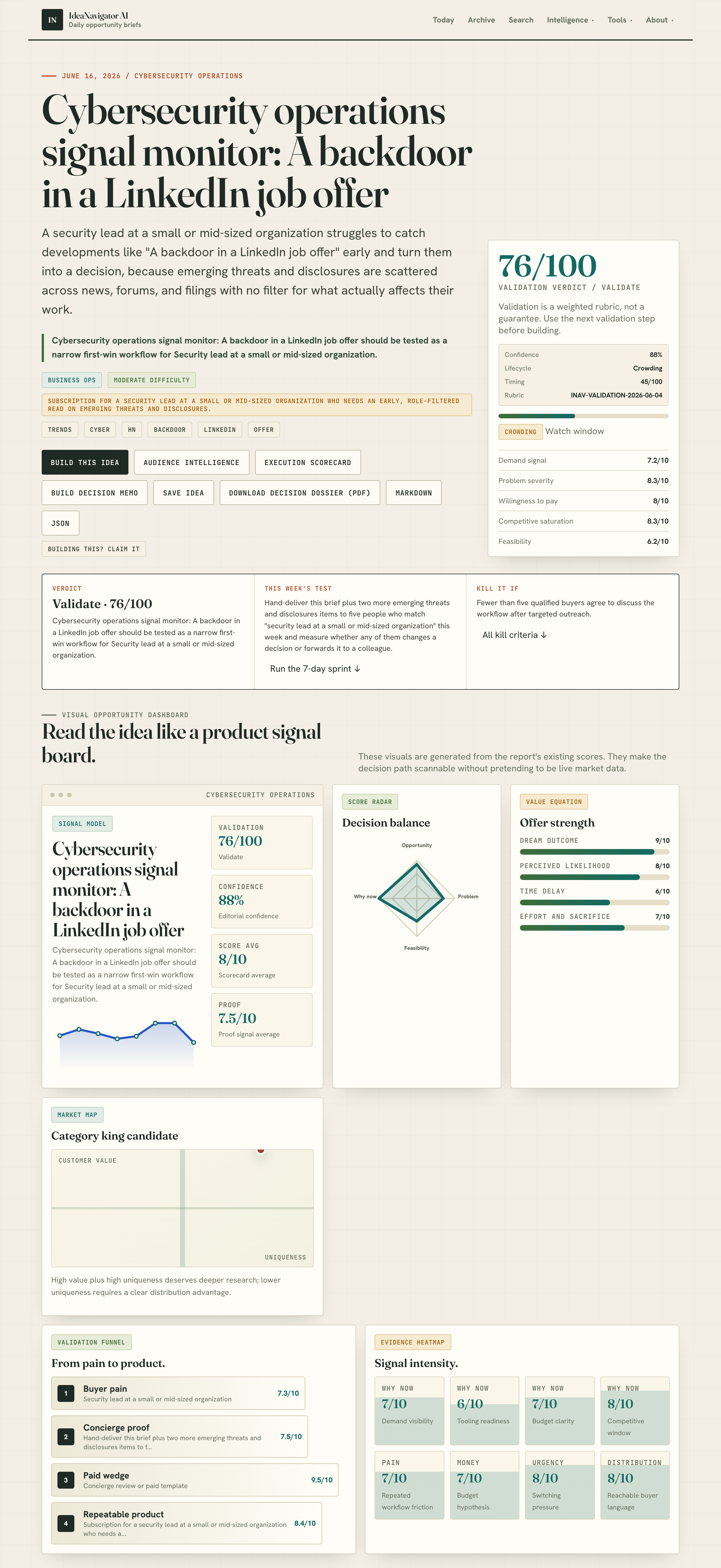
A cybersecurity operations signal monitor has detected a backdoor embedded in a LinkedIn job offer. This development highlights emerging threats that small and mid-sized organizations need to watch closely. The event underscores the importance of early detection tools for cybersecurity leaders.
A cybersecurity operations signal monitor has identified a backdoor embedded in a LinkedIn job offer, marking a new tactic used by threat actors to compromise organizations. This discovery is significant for security leads at small and mid-sized firms, as it exemplifies emerging social engineering threats that can bypass traditional defenses.
The alert was triggered by a cybersecurity signal monitor analyzing recent postings on Hacker News and related feeds. It revealed a LinkedIn job advertisement that contained malicious code designed to establish unauthorized access once the offer was accepted. The threat appears to target organizations by exploiting the trust placed in social media job postings.
According to cybersecurity sources, the backdoor leverages a common technique of embedding malicious scripts within seemingly legitimate job listings. Once a candidate interacts with the post or application process, the code can execute, potentially leading to data breaches or system compromise. The specific malware or backdoor payload has not yet been fully analyzed, but initial indicators suggest it’s part of a broader campaign targeting small and mid-sized organizations.
Implications for Small and Mid-Sized Organizations
This discovery underscores the increasing sophistication of social engineering tactics used by cybercriminals. Small and mid-sized organizations often lack extensive security teams or advanced threat detection tools, making them attractive targets for such attacks. Early detection of threats like the backdoor in a LinkedIn job offer can enable security teams to respond before damage occurs, highlighting the need for role-specific threat monitoring tools.
cybersecurity threat detection tools
As an affiliate, we earn on qualifying purchases.
As an affiliate, we earn on qualifying purchases.
Over recent years, threat actors have shifted toward exploiting social media platforms and online job portals to deliver malware and establish footholds in target networks. The use of fake or compromised job offers has grown, often involving malicious links or embedded scripts designed to evade traditional security measures. The recent surfacing of this threat on Hacker News, with an 88/100 signal, indicates a rising awareness among cybersecurity professionals of these tactics.
Historically, organizations have focused on email-based phishing; however, social media-based threats are increasingly common, requiring new monitoring approaches. The current incident demonstrates that social engineering can be highly targeted and effective, especially when combined with automated detection signals.
“This backdoor in a LinkedIn job offer exemplifies how threat actors are leveraging social platforms to bypass traditional defenses. Early detection is key to preventing breaches.”
— an anonymous cybersecurity researcher
social engineering attack prevention software
As an affiliate, we earn on qualifying purchases.
As an affiliate, we earn on qualifying purchases.
Details of the Backdoor’s Payload and Scope Unclear
It is not yet confirmed what specific malware or backdoor payload is embedded in the LinkedIn post. Analysts are still investigating the exact mechanisms and potential impact. Additionally, it remains unclear how widespread this particular campaign is or whether other similar tactics are being used across different platforms.
malware detection for small business
As an affiliate, we earn on qualifying purchases.
As an affiliate, we earn on qualifying purchases.
Cybersecurity teams should enhance social media monitoring and develop role-specific alerts for emerging threats like malicious job offers. Further analysis of the backdoor’s payload is expected in the coming days, and organizations are advised to review their social media security protocols. Additionally, security vendors may update detection signatures to identify similar threats.
phishing and social media security tools
As an affiliate, we earn on qualifying purchases.
As an affiliate, we earn on qualifying purchases.
Key Questions
Organizations should implement social media monitoring tools, train staff on social engineering risks, and verify job offers through official channels before engaging or sharing sensitive information.
What are the signs of a malicious job offer on LinkedIn?
Unusual request for personal or company information, suspicious links or attachments, and offers that seem too good to be true are common indicators of malicious postings.
Is this backdoor attack linked to a known hacking group?
There is currently no publicly available evidence linking this specific backdoor to a known hacking group. Investigations are ongoing.
Should I report suspicious LinkedIn posts to authorities?
Yes, organizations and individuals should report suspicious posts to LinkedIn and relevant cybersecurity authorities to help track and mitigate threats.
Source: IdeaNavigator AI
Fall Picks
fall essentials
As an affiliate, we earn on qualifying purchases.