Wireless camera jammer detectors vary widely: some combine camera-lens scanning, RF alerts, and GPS-tracker checks, while others focus on one signal type. My best overall pick is the 6-in-1 AI Hidden Camera Detector with RF GPS Tracker and LED Screen for its broad feature mix; the 9-in-1 detector stands out for buyers seeking more detection modes, and the Wi-Fi Jammer Detector is the more focused choice for RF-related checks. The main tradeoff is breadth versus simplicity: multi-function devices can cover more scenarios but may take longer to interpret, while focused tools are easier to use for a narrower task. No consumer detector can promise discovery of every hidden camera or jammer. Read on for the full comparison and guidance on choosing a tool that matches your needs.

Get privacy and security gear delivered free with Prime
- Fast, free delivery on millions of items
- Prime Video, Amazon Music and more included
- Member-only deals all year
Key Takeaways
- Broad coverage led the ranking: the 6-in-1 AI model combines camera, RF, and GPS-related functions, giving it a more balanced role than devices centered on a single task.
- More modes do not automatically mean better detection: the 9-in-1 and 10-in-1 options offer broader feature claims, but buyers should value clear controls and useful alerts over a high mode count.
- Focused RF tools serve a different purpose: the Wi-Fi Jammer Detector is a specialist option, not a substitute for a device that also checks camera lenses or magnetic trackers.
- Portability and alert style separate the compact picks: the pen-style Nilcozy and alarm-equipped portable models suit different handling preferences, though compact designs may trade away display space or control clarity.
- Product names alone do not establish capability: the listed devices span different detection methods, and none should be treated as proof that a space is free of cameras, trackers, or interference.
| 6-in-1 AI Hidden Camera Detector with RF GPS Tracker and LED Screen |  | Best for Broad RF Coverage | Detection modes: Camera, infrared, wireless signal, magnetic, Guard, SOS alarm | Frequency range: 1 MHz–6.5 GHz | Weight: 31 g | VIEW LATEST PRICE | See Our Full Breakdown |
| Portable Hidden Camera, Wireless Signal, and GPS Tracker Detector with Alarm |  | Best for Long Battery Life | Detection modes: Wireless RF, infrared lens, magnetic field, silent detection, alarm | Battery life: Up to 25 hours | Power source: Battery-powered | VIEW LATEST PRICE | See Our Full Breakdown |
| Qyzue Hidden Camera and GPS Tracker Detector |  | Best for Adjustable RF Searching | Model: Q-T002 | Detection methods: RF signal, infrared lens, magnetic | RF sensitivity: Five levels; starts at highest sensitivity | VIEW LATEST PRICE | See Our Full Breakdown |
| 4-in-1 Hidden Camera, GPS Tracker, and Bug Detector |  | Best for Longer Inspections | Model: T17 | Detection methods: Infrared laser lens scanning, RF signal detection, magnetic field detection | Frequency range: 1 MHz–6.5 GHz | VIEW LATEST PRICE | See Our Full Breakdown |
| YOPELL Rechargeable Hidden Camera Detector with Vibration Alarm and LED Flashlight |  | Best for Camera-Lens Checks | Model: Y2-1 | Detection methods: Infrared scanning and lens reflection detection | Scan angle: 180° | VIEW LATEST PRICE | See Our Full Breakdown |
| JMDHKK K68+ Hidden Camera, Bug, and Magnetic Tracker Detector |  | Best for Travel with Passive Signal Observation | Brand: JMDHKK | Model: K-68 | Manufacturer part number: K68 | VIEW LATEST PRICE | See Our Full Breakdown |
| 9-in-1 Hidden Camera, RF, and GPS Detector |  | Best for Multi-Method Scanning | Detection functions: Hidden camera, RF signal, magnetic GPS tracker, audio bug, infrared lens, laser scanning, electromagnetic interference filtering, SOS alarm, and motion detection | Sensitivity levels: 6 | Alarm types: Vibration, buzzer, and strobe | VIEW LATEST PRICE | See Our Full Breakdown |
| JMDHKK M8000 Hidden Camera and Bug Detector |  | Best for Intermittent-Signal Analysis | Model: M8000 | Dimensions: 3.9 × 2.05 × 0.83 inches | Weight: 7.68 ounces | VIEW LATEST PRICE | See Our Full Breakdown |
| Nilcozy 10-in-1 Anti-Spy Detector, Pen Style |  | Best for Simple Pocket Carry | Brand: Nilcozy | Model number: 6in1 | Manufacturer part number: 003 | VIEW LATEST PRICE | See Our Full Breakdown |
| JAXTIN G9 Pro Hidden Camera and Bug Detector |  | Best Compact Multi-Method Pick | Model: G9 Pro | Detection methods: Signal, infrared, strong magnetic, and laser detection | Detects: Hidden cameras, GPS trackers, listening devices, and microphones | VIEW LATEST PRICE | See Our Full Breakdown |
| Wi-Fi Jammer Detector |  | Best for Network-Based Jammer Alerts | Connectivity: Ethernet | Power: USB, 5 V DC | Alert types: Push notification and email | VIEW LATEST PRICE | See Our Full Breakdown |
| Calpol Portable Hidden Camera and RF Signal Detector |  | Best for Adjustable Portable Scans | Brand and model: Calpol S500 | Detection frequency range: 1 MHz–6.5 GHz | Stated detection range: 5 cm–15 m | VIEW LATEST PRICE | See Our Full Breakdown |
| VigilEye 6-in-1 Hidden Camera and GPS Tracker Detector, Black |  | Best for Broad Device Coverage | Brand and color: VigilEye, black | Detection types: Hidden cameras, Wi-Fi bugs and signals, GPS trackers, magnetic fields, Bluetooth devices | Frequency range: 1 MHz–10 GHz | VIEW LATEST PRICE | See Our Full Breakdown |
| SEVENPARK Hidden Camera Detector T01 |  | Best for Simple Indoor Checks | Brand and model: SEVENPARK T01 | Detection categories: Hidden cameras, GPS trackers, bugs, and RF wireless signals | Sensitivity levels: 5 | VIEW LATEST PRICE | See Our Full Breakdown |
| Musoumars Hidden Camera and GPS Tracker Detector |  | Best for Basic Multi-Mode Alerts | Brand and model: Musoumars TC009 | Detection types: Infrared, wireless signals, vibrations, hidden cameras, monitoring devices, GPS trackers | Sensitivity levels: 4 | VIEW LATEST PRICE | See Our Full Breakdown |
More Details on Our Top Picks
6-in-1 AI Hidden Camera Detector with RF GPS Tracker and LED Screen
For buyers focused on wireless signals as well as camera lenses, this detector has one of the clearest stated coverage claims in this group: 1 MHz–6.5 GHz. Its LED screen turns signal strength into low, medium, and high indicators, which can help narrow a search without relying only on an alarm. Compared with the YOPELL Y2-1, which concentrates on infrared and lens-reflection checks, this model is better suited to scanning for RF-emitting devices and magnetic trackers too. The tradeoff is that broad frequency coverage does not identify a signal’s source, and nearby electronics may complicate a search. Its 200mAh battery is modest, so extended inspections may call for recharging. Treat it as a detector, not a jammer detector that can identify or stop interference.
Pros:- States a broad 1 MHz–6.5 GHz detection range.
- LED signal-strength indicators offer a visual aid when narrowing down an RF source.
- Combines wireless, infrared, and magnetic detection modes.
- Compact 31 g body with USB-C charging and selectable sound or vibration alerts.
Cons:- The 200mAh battery may need frequent charging during extended use.
- Infrared checks require a dark environment.
- Detects potential devices but does not capture recordings or identify a jammer by itself.
Best for: Travelers and office users who want one compact device for RF, magnetic, and camera-lens checks and value a stated frequency range.
Not ideal for: People planning long inspection sessions between charges, or anyone expecting the device to identify or block a wireless jammer.
- Detection modes:Camera, infrared, wireless signal, magnetic, Guard, SOS alarm
- Frequency range:1 MHz–6.5 GHz
- Weight:31 g
- Dimensions:113 × 26 × 13 mm
- Battery:200mAh rechargeable lithium
- Charging port:USB Type-C
- Alert modes:Mute, sound, vibration, vibration + sound
Our verdict“Choose this for a lightweight multi-method detector with a clearly stated RF range, but not for long sessions or confirmed jammer identification.”
Portable Hidden Camera, Wireless Signal, and GPS Tracker Detector with Alarm
Frequent travelers who want a detector ready for repeated checks may favor this model’s stated up to 25 hours of battery life. It combines adjustable-sensitivity wireless scanning with infrared lens and magnetic detection, while its silent mode is useful when an audible alert would draw attention. Compared with the rechargeable 6-in-1 model, this one emphasizes runtime and a pocket-size, battery-powered format rather than a displayed signal-strength scale or a published frequency range. That missing frequency detail makes it harder to judge what wireless signals it can detect, a notable limitation for anyone specifically investigating possible jamming. The extendable antenna supports scanning, but the listing gives no detection distance. Infrared lens checks also call for a completely dark room, so this is a practical portable option rather than a precision instrument.
Pros:- Lists up to 25 hours of battery life.
- Combines wireless RF, infrared lens, and magnetic-field detection.
- Adjustable sensitivity and an extendable antenna support wireless scanning.
- Silent detection mode allows discreet checks.
Cons:- The listing does not specify supported signal frequencies or detection distances.
- Infrared lens scanning is described for use in a completely dark room.
- Battery type and replacement or charging details are not provided.
Best for: Travelers and mobile workers who want a pocket-size detector for occasional room and luggage checks, with long stated battery runtime and discreet alerts.
Not ideal for: Buyers who need confirmed frequency coverage, a stated detection range, or a tool specifically validated to detect wireless jamming.
- Detection modes:Wireless RF, infrared lens, magnetic field, silent detection, alarm
- Battery life:Up to 25 hours
- Power source:Battery-powered
- Weight:27.22 g
- Connectivity:Wi-Fi listed
- Antenna:Built-in AM antenna; extendable antenna described
- Use:Indoor and outdoor
Our verdict“Pick this for portable checks and long stated runtime, but choose a detector with published frequency coverage if jammer detection is the main goal.”
Qyzue Hidden Camera and GPS Tracker Detector
The Qyzue stands out for giving users five RF sensitivity levels, so a search can start highly sensitive and then be narrowed when nearby electronics create distractions. Its display reports the active mode and signal strength, making it a more guided RF option than the portable detector with alarm, whose listing does not state supported frequencies or provide a signal display. It also adds infrared lens inspection and magnetic detection for a broader privacy sweep. The limits matter: routers and other electronics can trigger alerts, and wired cameras may not transmit an RF signal at all. Detection distance depends on the source and surroundings, so the display should be treated as a search aid rather than proof of a jammer or hidden device. A flashlight, personal alarm, and rechargeable USB-C design round out the travel-friendly package.
Pros:- Five RF sensitivity levels allow the search to be adjusted around nearby electronics.
- Display indicates the active mode and RF signal strength.
- Combines RF, infrared lens, and magnetic detection.
- Rechargeable USB-C design includes a flashlight and personal alarm.
Cons:- Nearby routers and electronics can trigger RF alerts.
- Wired cameras may not emit a detectable RF signal.
- No frequency range or fixed detection distance is specified.
Best for: Travelers or renters who want hands-on control over RF sensitivity and a display that helps them interpret signal changes during a room check.
Not ideal for: Users who need guaranteed detection of wired cameras, a published RF frequency range, or a device that distinguishes a jammer from ordinary electronics.
- Model:Q-T002
- Detection methods:RF signal, infrared lens, magnetic
- RF sensitivity:Five levels; starts at highest sensitivity
- Power source:Rechargeable battery
- Charging port:USB Type-C
- Special features:Display, flashlight, personal alarm
- Included items:Charging cable, user manual, lanyard
- Manufacturer warranty:2 years
Our verdict“Choose the Qyzue for adjustable, display-guided RF searches, while keeping in mind that signal alerts are not proof of a jammer.”
4-in-1 Hidden Camera, GPS Tracker, and Bug Detector
For a longer sweep without frequent charging, this model lists up to 24 hours of operation, though actual runtime varies by mode. Its stated 1 MHz–6.5 GHz range makes its RF coverage easier to judge than the Qyzue’s, which lists adjustable sensitivity but no frequency range. Five sensitivity levels and an external antenna give users some control over scanning, while infrared lens and magnetic detection add checks beyond RF. A vibration-triggered alarm can also serve as a simple alert for a bag or door handle. The listing includes an unusual claim of 1080p AVI video capture, but the described detection methods do not explain how that capability works, so I would not choose it as a camera or recording device. As with any broad-range detector, it can flag signals without proving they are a jammer.
Pros:- States RF coverage from 1 MHz to 6.5 GHz.
- Five sensitivity levels and an external antenna provide scanning adjustments.
- Combines RF, infrared lens scanning, and magnetic detection.
- Lists up to 24 hours of battery life and includes a flashlight.
Cons:- Battery runtime varies by operating mode.
- The claimed 1080p video capture is not explained alongside the detection features.
- RF detection is limited to the stated 1 MHz–6.5 GHz range and does not identify a signal source.
Best for: People who want a rechargeable, multi-method detector for extended room or travel checks and value a stated RF range plus adjustable sensitivity.
Not ideal for: Buyers seeking a clearly documented video recorder, fixed all-mode battery runtime, or confirmed identification of wireless jammers.
- Model:T17
- Detection methods:Infrared laser lens scanning, RF signal detection, magnetic field detection
- Frequency range:1 MHz–6.5 GHz
- Sensitivity levels:5
- Battery life:Up to 24 hours, varies by mode
- Power source:Rechargeable battery
- Video claim:1080p resolution, AVI format listed
- Included items:Charging cable, instruction manual
Our verdict“This is a strong fit for longer multi-method sweeps with stated RF coverage, but its recording claim and variable runtime need careful interpretation.”
YOPELL Rechargeable Hidden Camera Detector with Vibration Alarm and LED Flashlight
The YOPELL takes a different approach from the RF-focused options: it centers on infrared scanning and lens reflection detection, with a 180° scan angle for sweeping a room horizontally. That makes it a more focused pick for visually checking camera lenses than the 6-in-1 AI detector, which also lists RF and magnetic modes. The tradeoff is direct: YOPELL’s supplied specifications do not describe RF signal scanning, so it is a poor match for someone whose main concern is detecting a wireless jammer or transmitter. Its flashlight and vibration alarm add practical utility for travel and entry checks, while USB-C charging avoids disposable batteries. The listing claims up to 30 days of standby, but gives no battery capacity or charging time; standby should not be confused with continuous scanning runtime. It is best treated as a lens-checking tool, not a general RF detector.
Pros:- Infrared scanning and lens-reflection detection target camera-lens checks.
- 180° scan angle supports horizontal room sweeps.
- Includes an LED flashlight and vibration, visual, and audio alarms.
- Rechargeable USB-C battery with up to 30 days of stated standby time.
Cons:- The listed detection methods do not include RF scanning, limiting its use for jammer checks.
- Battery capacity and charging time are not specified.
- Infrared lens checks may require controlled lighting conditions.
Best for: Hotel guests and travelers who primarily want a handheld tool for visual lens-reflection checks and occasional entry or tampering alerts.
Not ideal for: Buyers focused on wireless jammer detection, RF signal scanning, or long continuous inspection sessions with a documented battery capacity.
- Model:Y2-1
- Detection methods:Infrared scanning and lens reflection detection
- Scan angle:180°
- Modes:4 modes, including constant light and high-frequency flashing
- Alarm type:Vibration, visual, and audio
- Battery and charging:Rechargeable, USB-C
- Standby time:Up to 30 days
- Dimensions:3.98 × 0.59 × 1.61 inches
Our verdict“Choose YOPELL for camera-lens sweeps and travel alerts, not for detecting wireless jammers or RF transmitters.”
JMDHKK K68+ Hidden Camera, Bug, and Magnetic Tracker Detector
The K68+ suits travelers who want one compact device for checking for hidden cameras, listening devices, and magnetic trackers. Its passive signal observation is a point of difference: it is described as monitoring signals that may transmit at longer intervals, rather than relying only on an obvious, continuous signal. Compared with the JAXTIN G9 Pro, the K68+ has less clearly defined detection methods and no stated battery-life figure, so it is harder to plan longer sweeps. Its 8.8-ounce weight is also heavier than the G9 Pro’s under-30-gram design, though it remains positioned as portable. I’d choose it for broad checks in hotel rooms, cars, or offices, but the missing frequency and range details make it a less transparent choice for buyers who need to know exactly what signals it covers.
Pros:- Covers hidden cameras, listening devices, and magnetic trackers.
- Passive signal observation is described as covering transmissions at longer intervals.
- Portable format is intended for use in hotels, cars, offices, and homes.
- Includes a two-year warranty.
Cons:- No detection range or supported signal frequencies are provided.
- Battery life and charging details are not specified.
- At 8.8 ounces, it is heavier than the pocket-sized JAXTIN G9 Pro.
Best for: Travelers who want a portable device that combines wireless-signal observation with magnetic tracker checks.
Not ideal for: Buyers who need published detection frequencies, a stated detection range, or dependable battery-runtime information before a trip.
- Brand:JMDHKK
- Model:K-68
- Manufacturer part number:K68
- Weight:8.8 ounces
- Detection coverage:Hidden cameras, listening devices, magnetic trackers, and unusual wireless signals
- Signal approach:Passive signal observation, including transmissions at longer intervals
- Warranty:2 years
Our verdict“Choose the K68+ for travel checks that include magnetic trackers and intermittent signals, provided you can accept sparse technical and battery details.”
9-in-1 Hidden Camera, RF, and GPS Detector
This detector stands out for combining RF, magnetic, infrared, and laser scanning with adjustable sensitivity, making it the broadest-described tool in this group for checking different kinds of potential surveillance devices. Its six sensitivity levels let users adjust how responsive the device is, while vibration, buzzer, and strobe alerts give more ways to notice a warning than the audio-only JMDHKK M8000. The tradeoff is that the listing does not specify the RF bands it detects, so the wide feature list does not tell buyers which transmissions may be missed. Battery life is stated at up to eight hours of scanning, but continuous, lengthy checks may still call for a recharge. I’d favor it over the simpler Nilcozy pen-style detector for buyers who want several scanning approaches in one device, not just wireless-signal detection.
Pros:- Combines RF, magnetic, infrared, and laser detection methods.
- Six sensitivity levels allow adjustment for different scanning conditions.
- Vibration, buzzer, and strobe alerts offer alternatives to sound alone.
- A 2,000 mAh battery is rated for up to eight hours of scanning and 50 days on standby.
Cons:- Supported RF frequency ranges are not specified.
- Eight hours of scanning may not cover extended checks without recharging.
- The feature set may be more involved than needed for buyers seeking a basic RF scanner.
Best for: Privacy-conscious travelers or property managers who want multiple scanning methods and adjustable, discreet alert options.
Not ideal for: Buyers who need confirmed RF frequency coverage or plan scanning sessions that exceed the stated eight-hour runtime.
- Detection functions:Hidden camera, RF signal, magnetic GPS tracker, audio bug, infrared lens, laser scanning, electromagnetic interference filtering, SOS alarm, and motion detection
- Sensitivity levels:6
- Alarm types:Vibration, buzzer, and strobe
- Battery capacity:2,000 mAh
- Battery life:Up to 8 hours scanning; up to 50 days standby
- Charging time:About 1 hour
- Material:ABS
- Drop resistance:Tested to withstand a 1-meter drop
- Use:Indoor and outdoor
Our verdict“Pick this model if you want varied scanning methods and alert choices, but not if exact RF coverage is a requirement.”
JMDHKK M8000 Hidden Camera and Bug Detector
The M8000 is aimed at buyers concerned about devices that transmit only occasionally: its AI smart signal analysis is described as identifying intermittent transmissions, a useful distinction from the Nilcozy 10-in-1, whose description focuses on scanning wireless signals without specifying intermittent-signal analysis. It also combines optical sensing and magnetic-field detection, giving it a broader stated scope than a basic RF-only detector. That breadth comes with practical compromises. The M8000 uses audio-only alerts, which may be easy to miss in a noisy room, and its app and Wi-Fi connectivity may add setup steps that the push-button Nilcozy avoids. The 400 mAh battery capacity is listed, but runtime is not, leaving trip planning uncertain. I’d shortlist it for signal analysis features, while buyers who value simple operation or quiet alerts may prefer the 9-in-1 detector.
Pros:- AI smart signal analysis is described as identifying intermittent transmissions.
- Combines optical sensing, magnetic-field detection, and wireless-device detection.
- Compact dimensions and a 7.68-ounce weight support travel use.
- Warranty includes one-year replacement and two-year repair coverage.
Cons:- Audio-only alerts may be difficult to notice in noisy settings or may be too conspicuous.
- App and Wi-Fi connectivity may require smartphone setup.
- The 400 mAh battery capacity is listed, but battery runtime is not.
Best for: Buyers who want a travel detector described as analyzing intermittent transmissions alongside optical and magnetic checks.
Not ideal for: People who want alerts they can notice silently, or who prefer a standalone device without app or Wi-Fi reliance.
- Model:M8000
- Dimensions:3.9 × 2.05 × 0.83 inches
- Weight:7.68 ounces
- Battery capacity:400 mAh
- Detection features:Optical sensors, magnetic-field detection, and wireless listening-device detection
- Signal analysis:AI smart signal analysis for intermittent transmissions
- Alert type:Audio only
- Connectivity and control:Wi-Fi connectivity; app control
- Warranty:1-year replacement and 2-year repair
Our verdict“Choose the M8000 for its stated intermittent-signal analysis, but favor the 9-in-1 detector if you want vibration or visual alerts.”
Nilcozy 10-in-1 Anti-Spy Detector, Pen Style
The Nilcozy’s main appeal is its pen-style, pocket-friendly design and one-button operation. For someone who wants a straightforward wireless-signal sweep without learning a multi-mode interface, it is a simpler proposition than the 9-in-1 detector, which adds sensitivity settings and several alert types. That simplicity narrows its usefulness: the description centers on RF detection, so it may not identify devices that are inactive or do not emit a detectable signal. It also omits supported frequencies and battery runtime, making it difficult to judge coverage or plan a longer inspection. The advertised “10-in-1” title is not backed by a detailed list of ten functions in the supplied data. I’d treat it as a compact, basic signal-checking option rather than a substitute for the JAXTIN G9 Pro’s stated infrared, magnetic, and laser methods.
Pros:- Pen-style design is intended for pocket carry.
- One-button operation keeps use straightforward.
- Scans for wireless signals associated with cameras and listening devices.
- Built-in rechargeable battery avoids disposable cells.
Cons:- Wireless-signal focus may miss devices that are not transmitting.
- Supported detection frequencies and battery runtime are not provided.
- The supplied description does not detail the functions behind the “10-in-1” name.
Best for: Travelers who want a pocketable, rechargeable RF detector with a simple push-button control.
Not ideal for: Buyers who need confirmed frequency coverage, a stated runtime, or detection methods for non-transmitting devices.
- Brand:Nilcozy
- Model number:6in1
- Manufacturer part number:003
- Design:Portable pen-style
- Dimensions:4.72 × 2.76 × 1.57 inches
- Control method:Push button
- Connectivity technology:RF
- Power:Built-in rechargeable battery
Our verdict“Pick the Nilcozy for simple, compact RF checks, but choose a multi-method model like the JAXTIN G9 Pro for broader detection approaches.”
JAXTIN G9 Pro Hidden Camera and Bug Detector
At under 30 grams, the G9 Pro is the easiest pick here for buyers who want a detector that can stay in a pocket or travel kit without much bulk. It pairs that light build with signal, infrared, magnetic, and laser detection, so it offers broader stated methods than the RF-focused Nilcozy pen-style detector. Its sound, vibration, and LED alerts also provide more flexibility than the M8000’s audio-only warning. The headline up-to-72-hour battery life is appealing, though the listing does not say how that figure changes with continuous scanning or alert use. Nor does it specify detection range or supported signal bands, a gap shared by several products in this roundup. I’d rank it ahead of heavier travel options for portability, but the 9-in-1 detector gives more detail about sensitivity adjustment and scanning time.
Pros:- Weighs less than 30 grams for easy pocket carry.
- Combines signal, infrared, magnetic, and laser detection.
- Sound, vibration, and LED alerts offer several ways to notice a warning.
- Advertised battery life is up to 72 hours, with Type-C charging in about 60 minutes.
Cons:- Supported signal bands and detection range are not specified.
- The listing does not clarify how the 72-hour figure relates to active scanning.
- The listed connectivity and waterproof fields do not clearly establish those capabilities.
Best for: Frequent travelers who prioritize very low weight, multiple detection methods, and alerts they can hear, feel, or see.
Not ideal for: Buyers who need published RF bands, detection range, or a clearly defined battery runtime under active scanning.
- Model:G9 Pro
- Detection methods:Signal, infrared, strong magnetic, and laser detection
- Detects:Hidden cameras, GPS trackers, listening devices, and microphones
- Alerts:Sound, vibration, and LED
- Weight:Less than 30 g
- Battery life:Up to 72 hours
- Charging:Type-C; approximately 60 minutes
- Controls:Button control
- Use:Indoor and outdoor
Our verdict“Choose the G9 Pro if low carry weight and varied detection methods matter more than published coverage details.”
Wi-Fi Jammer Detector
This is the most focused pick here for someone concerned specifically about Wi-Fi jamming, rather than a general-purpose sweep for cameras or trackers. Its Ethernet connection supports push notifications and email alerts, so it can notify a home or business network owner without requiring the detector to be carried around. Compared with the portable Calpol S500, it trades broad, handheld scanning modes for a fixed monitoring role and remote alerts. That makes it a better fit for watching a known network, but not for checking a hotel room or vehicle. Its stated range is 100 feet, though alerts are described as triggering with significant disruption, so it may not flag every weak or intermittent signal. Buyers also need an Ethernet connection and USB power at the installation point.
Pros:- Push notifications and email provide remote alerts.
- Focused design targets Wi-Fi jamming rather than general surveillance checks.
- Compact dimensions support discreet mounting near a network setup.
- Ethernet and MicroUSB cables plus a USB adapter are included.
Cons:- Requires an Ethernet connection, limiting where it can be installed.
- Alerts are described as responding to significant disruption, so weaker interference may go unreported.
Best for: Home or small-business network owners who want remote alerts when significant Wi-Fi interference is detected.
Not ideal for: Travelers seeking a handheld sweep for hidden cameras, GPS trackers, or wireless devices, or buyers without Ethernet at the monitoring location.
- Connectivity:Ethernet
- Power:USB, 5 V DC
- Alert types:Push notification and email
- Maximum range:100 feet
- Dimensions:4.7 x 1.4 x 1.1 inches
- Model:WFJDv2.5
- Included components:Detector, 6 ft Ethernet cable, 6 ft MicroUSB cable, quick start pamphlet, US 110 V AC USB adapter
Our verdict“Choose this for stationary Wi-Fi jammer monitoring and remote alerts, not for portable camera or tracker detection.”
Calpol Portable Hidden Camera and RF Signal Detector
The Calpol S500 is a compact choice for buyers who want several scan modes and the ability to tune sensitivity as they move between rooms. Its stated 1 MHz–6.5 GHz range and signal, camera, full-band, and infrared modes make it more adaptable for travel checks than the Ethernet-dependent Wi-Fi Jammer Detector. Six sensitivity levels give users a way to adjust scans to different settings, although they also mean the results depend on choosing an appropriate level. The stated detection distance spans 5 cm to 15 m, but actual performance can vary by setting and target. At just 34 g, it is easier to carry than the broader-featured VigilEye 6-in-1, though VigilEye also lists GPS and Bluetooth detection. Battery life and charging details are not provided, which makes planning longer trips harder.
Pros:- Four scan modes cover signal, camera, full-band, and infrared checks.
- Six sensitivity levels allow adjustment for different environments.
- Lightweight 34 g design is easy to carry in a pocket.
- Wide stated frequency range covers 1 MHz–6.5 GHz.
Cons:- Battery life and charging details are not specified.
- The stated detection distance varies with settings and sensitivity.
- Does not list the GPS and Bluetooth detection features specified for VigilEye.
Best for: Frequent travelers who want a lightweight handheld scanner with selectable camera, signal, full-band, and infrared modes.
Not ideal for: Buyers who need documented battery runtime or a detector explicitly listing GPS tracker and Bluetooth detection.
- Brand and model:Calpol S500
- Detection frequency range:1 MHz–6.5 GHz
- Stated detection range:5 cm–15 m
- Scanning speed:Up to 2,000 scans per second
- Sensitivity levels:6
- Dimensions:3.18 × 0.76 × 0.56 in (28.5 × 16 × 112 mm)
- Weight:34 g
- Detection modes:Signal, camera, full-band, and infrared
Our verdict“Pick the Calpol for lightweight, adjustable room checks; choose VigilEye instead if GPS and Bluetooth detection matter more.”
VigilEye 6-in-1 Hidden Camera and GPS Tracker Detector, Black
VigilEye earns its place for buyers who want one handheld unit to check for more than wireless camera signals. It lists detection for hidden cameras, Wi-Fi signals, GPS trackers, magnetic fields, and Bluetooth devices, with a 1 MHz–10 GHz scan range. Compared with the Calpol S500, VigilEye adds explicit GPS and Bluetooth coverage and includes a flexible probe and gain antenna for tight spaces; the tradeoff is a less pocket-simple approach and a wider set of targets to interpret. Visual, vibration, and adjustable audio alerts offer options for quiet or hands-free checks. Its stated distance ranges from 2 inches to 50 feet depending on the threat, so that large figure is not a universal detection radius. The listing also gives inconsistent warranty durations, so buyers should confirm coverage before relying on it.
Pros:- Lists several detection targets, including GPS trackers, magnetic fields, and Bluetooth devices.
- 1 MHz–10 GHz stated frequency range is broader than the Calpol S500’s listed range.
- Flexible probe and gain antenna can help reach tight spaces.
- Flashing LEDs, vibration, and adjustable audio provide multiple alert options.
Cons:- The stated 2-inch to 50-foot detection distance varies by threat and should not be treated as a consistent range.
- Warranty information is inconsistent between the product details and description.
- Its broad detection scope may be more involved than needed for buyers focused only on Wi-Fi jamming.
Best for: Privacy-conscious travelers or vehicle owners who want a single detector covering wireless signals, cameras, magnetic trackers, and Bluetooth devices.
Not ideal for: Buyers seeking a simple Wi-Fi-only monitor or a clearly documented detection distance and consistent warranty terms.
- Brand and color:VigilEye, black
- Detection types:Hidden cameras, Wi-Fi bugs and signals, GPS trackers, magnetic fields, Bluetooth devices
- Frequency range:1 MHz–10 GHz
- Scan rate:Up to 2,000 scans per second
- Stated detection distance:2 inches–50 feet, depending on the threat
- Alerts:Flashing LEDs, vibration, adjustable audio
- Included features:Flexible probe and gain antenna
- Warranty:1 year in product details; listing description gives conflicting information
Our verdict“Choose VigilEye for the broadest listed mix of wireless and magnetic checks, provided you accept variable range claims and clarify warranty coverage.”
SEVENPARK Hidden Camera Detector T01
The SEVENPARK T01 is a straightforward indoor option for people who want a portable scan across cameras, trackers, bugs, and RF signals without the more detailed targeting tools listed for VigilEye. Its five sensitivity levels offer some control as the environment changes, while its compact body and included charging cable suit occasional checks in offices or rooms. Compared with the Calpol S500, the T01 claims a broader mix of device categories but gives no frequency range or detection distance, leaving less information for judging what it can reliably find. It is also specified for indoor use, so it is a weaker match for vehicle sweeps or outdoor checks. The plastic enclosure and battery-powered operation may be less appealing to buyers prioritizing rugged construction or clearly stated runtime.
Pros:- Combines listed camera, GPS tracker, bug, and RF signal detection.
- Five sensitivity levels allow some adjustment between environments.
- Lightweight portable design is suited to carrying between indoor locations.
- Charging cable and user manual are included.
Cons:- Product details do not provide a frequency range or detection distance.
- Indoor-use specification limits its fit for vehicle and outdoor checks.
- Plastic construction may be less durable than a more robust housing, and battery runtime is unspecified.
Best for: Office workers and hotel guests who want a simple, portable indoor check with adjustable sensitivity.
Not ideal for: Vehicle owners, outdoor users, or technically minded buyers who need a stated frequency range, detection distance, or rugged housing.
- Brand and model:SEVENPARK T01
- Detection categories:Hidden cameras, GPS trackers, bugs, and RF wireless signals
- Sensitivity levels:5
- Power source:Battery powered
- Connectivity:Wireless, Wi-Fi, cellular
- Dimensions:5.09 x 3.13 x 0.95 inches
- Weight:8 g
- Usage:Indoor
- Included items:Hidden camera detector, charging cable, user manual
Our verdict“Choose the T01 for basic indoor sweeps with adjustable sensitivity, but favor Calpol or VigilEye if published scan specifications matter to you.”
Musoumars Hidden Camera and GPS Tracker Detector
Musoumars takes a less specialized approach than the Ethernet-connected Wi-Fi Jammer Detector: it combines wireless and infrared scanning with vibration, camera, monitoring-device, and GPS tracker detection, then adds door-open and earthquake alarm functions. That mix may appeal to someone who wants one small device for varied household alerts, but it is not a dedicated network jammer monitor. Three modes and four sensitivity levels offer basic adjustment, while one-button controls keep operation simple. Compared with the Calpol S500, the listing gives fewer technical details: it provides no detection frequency range or scan distance, making performance harder to judge. The listed dimensions are only 1 x 1 x 1 inch and may not reflect the actual device size. I would treat the extra alarm functions as secondary rather than a substitute for a dedicated sensor.
Pros:- Lists wireless, infrared, vibration, camera, monitoring-device, and GPS tracker detection.
- Three modes and four sensitivity levels provide basic scan adjustments.
- One-button controls may suit users who prefer simple operation.
- Adds door-open and earthquake alarm functions beyond scanning.
Cons:- No specific detection distance or frequency range is provided.
- Listed 1 x 1 x 1 inch dimensions may not represent the actual product size.
- Door and earthquake alarms broaden its role but do not establish its effectiveness as a dedicated jammer detector.
Best for: Households wanting a simple multi-function alert device for basic wireless, infrared, and door-related checks.
Not ideal for: Buyers who need a dedicated Wi-Fi jammer detector, a stated detection range, or verified device dimensions and technical coverage.
- Brand and model:Musoumars TC009
- Detection types:Infrared, wireless signals, vibrations, hidden cameras, monitoring devices, GPS trackers
- Sensitivity levels:4
- Modes:3
- Controls:Push button
- Power source:Battery
- Mount type:Door mount
- Listed dimensions:1 x 1 x 1 inches; listing notes these may not reflect actual size
Our verdict“Pick Musoumars for simple multi-purpose household alerts, not when dependable, documented Wi-Fi jammer detection is your main goal.”
How We Picked
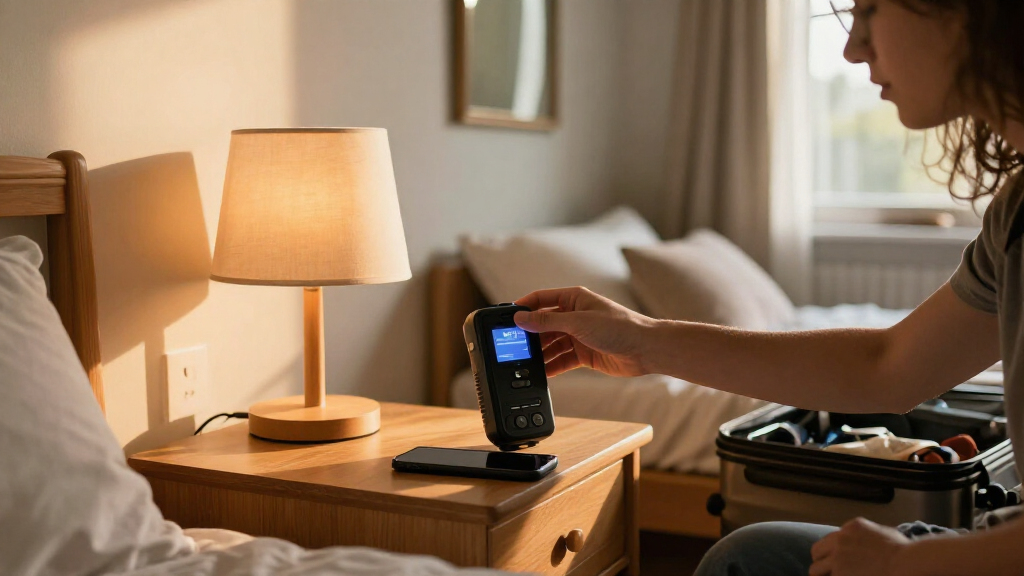
I ranked the 15 options by how well their stated functions match the real jobs implied by wireless camera jammer detectors: checking for camera lenses, identifying relevant radio-frequency activity, and looking for GPS or magnetic trackers where those functions are claimed. I also weighed ease of operation, alert readability, portability, and the usefulness of a device’s feature mix. A product with several detection modes could rank well for versatility, but mode count alone did not earn a higher position; unclear controls or a narrow use case can make a simpler tool a better fit.
The lineup includes models with different stated capabilities, including dedicated RF options, multi-function handheld devices, and a pen-style detector. Since product titles do not establish detection range, accuracy, or performance against every signal type, I avoid treating those claims as guaranteed results. The ranking favors balanced coverage and practical usability, then gives specialist and compact designs distinct roles. Buyers should check the current listing and manual for supported bands, operating steps, and limitations before choosing.
Factors to Consider When Choosing Wireless Camera Jammer Detectors
Before choosing among these wireless camera jammer detectors, decide what problem you are trying to identify. A lens finder, an RF signal detector, and a GPS tracker finder use different methods, so a multi-function label does not mean every device can detect every threat. These broader checks can help you avoid buying the wrong kind of tool or relying on a detector beyond its capabilities.
Match the Detection Method to the Concern
Start by separating the things you want to check: a camera lens, an active wireless transmission, a GPS tracker, or possible radio interference. Lens-reflection scanning works differently from RF monitoring, and neither should be assumed to replace the other. A signal detector may alert to radio activity without identifying whether it comes from a camera, a router, or another nearby device. A camera lens scanner can help locate reflective optics, but it does not establish that a device is transmitting. Choose a multi-function model when you genuinely need several checks; otherwise, a focused detector may be easier to use and interpret. Read the product instructions for the exact methods supported rather than relying on the word “anti-spy.”
Understand What an RF Alert Can—and Cannot—Tell You
Radio-frequency detection can be useful for noticing active transmissions, but alerts are not automatic proof of a hidden camera or jammer. Everyday electronics, wireless networks, and nearby devices can create signal activity that a detector may register. Some devices transmit intermittently or use bands and methods outside a detector’s supported range. Before a check, learn how the tool indicates signal strength and whether it can help distinguish changing signal levels as you move. If you need to investigate suspected interference, a consumer detector is a screening aid, not a definitive measurement instrument. For persistent or consequential concerns, seek qualified technical help rather than relying on one alert.
Choose Simplicity or Feature Breadth Deliberately
More detection modes can reduce the need to carry separate tools, but they also add controls and operating steps. This matters when you need to perform a methodical check in an unfamiliar room or explain the results to someone else. A clear display, distinct alert patterns, and a readable manual may be more useful than an impressive mode count. Before buying, check whether the device requires switching modes manually and whether its alerts are visual, audible, or vibration-based. Beginners often benefit from a simpler interface, while experienced users may prefer wider coverage if they are prepared to interpret separate readings. Avoid assuming that “6-in-1,” “9-in-1,” or “10-in-1” describes a consistent set of functions across brands.
Plan for the Space and the Check You Will Perform
A tool that fits a suitcase or pocket is convenient, but portability does not determine how thoroughly you can inspect a room. Furniture, walls, signal sources, and the layout of a space can affect how a search proceeds. For a small hotel room, a compact device may be practical; a larger home or workplace may call for a more deliberate, repeatable process and several detection methods. Think about whether you will need to hold the detector steadily, read a screen, or respond to an alarm while moving. Also check charging arrangements and operating time in the product documentation, especially if you expect to use it away from an outlet. Select for your actual setting, not just the smallest body or longest feature list.
Check Limitations, Documentation, and Support
Product titles and feature counts do not tell you the supported frequency range, detection distance, or conditions that affect results. Look for a manual that explains setup, sensitivity controls, alert meanings, and known limitations before relying on a device. If those details are absent or vague, treat that as a reason for caution rather than filling in the gaps with assumptions. Confirm whether the model is rechargeable or uses replaceable batteries and whether any needed accessories are included. A device with clear instructions can be easier to use responsibly than a nominally broader detector with little guidance. Keep expectations realistic: no handheld consumer tool can certify that a room is free from all surveillance or interference.
Frequently Asked Questions
Can one detector find hidden cameras, GPS trackers, and wireless jammers?
Some devices in this lineup combine several functions, but that does not mean they detect every camera, tracker, or jammer. Camera-lens scanning, RF monitoring, and magnetic tracker checks rely on different methods and have different limits. A multi-function tool may be a convenient first screening device, but you still need to use each mode as instructed and interpret its alerts carefully. Check the manual for the exact functions and supported signal ranges rather than assuming all threats are covered. For a serious concern, consider specialist assistance instead of treating a single device as a guarantee.
Does an RF alert prove that a jammer or hidden camera is present?
No. RF detectors can respond to ordinary wireless activity from phones, routers, and other nearby electronics, so an alert identifies signal activity rather than its source. A jammer-related concern may also require technical measurement beyond a consumer detector’s display. Move methodically, note whether the alert changes with distance or location, and consult the instructions for how sensitivity and signal strength are shown. Avoid disabling equipment or accusing someone based only on an alert. If interference is persistent or affects safety-critical communications, contact a qualified professional or the relevant service provider.
Should I choose a multi-function model or a dedicated Wi-Fi jammer detector?
Choose based on the task you need to perform most often. A multi-function model may suit someone who wants camera-lens, RF, and tracker checks in one device, while a dedicated RF option may be simpler for a narrower signal-related concern. The tradeoff is that broader devices can require more mode changes and interpretation, whereas a focused detector may not help with lenses or trackers. Confirm what “Wi-Fi” means in the product’s documentation, including supported bands and whether it detects activity or identifies a source. Do not assume a dedicated label means it can detect every type of jammer.
Are these detectors reliable for checking a hotel room or rental?
They can support a basic screening process, but they cannot certify that a room is free of surveillance devices. Results depend on the detection method, the device’s supported range, the room layout, and nearby electronics. Use visual inspection alongside any detector, follow the manual, and take time to check likely placements rather than relying on a quick sweep. A false alert or a quiet reading should not be treated as definitive evidence either way. If you find a suspected device, avoid disturbing it and consider contacting the property manager or appropriate authorities.
What should I prioritize if I am new to using a detector?
Prioritize clear instructions, understandable alerts, and a manageable number of operating modes. A device that explains what each beep, light, or vibration means is easier to use than one with many features but little guidance. Read the manual before a real check and practice interpreting the controls in a setting with familiar electronics. Keep notes about where alerts occur so you can separate repeatable signals from background activity. If the instructions do not explain the device’s limits, choose a better-documented option or seek help rather than treating uncertain results as conclusive.
Conclusion
For most buyers, I would start with the 6-in-1 AI Hidden Camera Detector with RF GPS Tracker and LED Screen as the best overall choice in this lineup because its stated combination of camera, RF, and GPS-related checks offers balanced coverage. The best value is the 4-in-1 Hidden Camera, GPS Tracker, and Bug Detector for shoppers who want a simpler multi-function approach without prioritizing the largest mode count. For a best premium-style feature set, consider the 9-in-1 Hidden Camera, RF, and GPS Detector, while checking its documentation closely; the name alone does not confirm superior performance. Beginners may prefer the Portable Hidden Camera, Wireless Signal, and GPS Tracker Detector with Alarm if its alert style and instructions suit them. For a focused signal-related need, the Wi-Fi Jammer Detector has the clearest specialist role, while the pen-style Nilcozy is the compact pick. Whichever you choose, treat it as a screening aid, not a guarantee that a space is free of cameras, trackers, or interference.