Many builders overlook essential security measures like proper fencing, securing materials, and managing access properly. They often skip regular site inspections, adequate lighting, and clear signage, leaving vulnerabilities that thieves and vandals can exploit. By neglecting these simple but critical steps, you risk costly thefts, project delays, and safety hazards. Focusing on extensive security planning early can save you thousands—learn more about how to keep your construction site secure.
Key Takeaways
- Builders often neglect comprehensive risk assessments that identify vulnerabilities early in the construction process.
- Many skip integrating security measures into the project timeline, leading to gaps in protection.
- Proper access controls and visitor management are frequently overlooked, increasing theft and vandalism risks.
- Site lighting and surveillance systems are sometimes installed inadequately or not maintained regularly.
- Routine security checks, staff training, and ongoing audits are often deprioritized, weakening overall site security.

Tenax Agricultural Fencing – Durable, High Visibility, Lightweight – 4 Ft x 100 Ft – Plastic
- Durable Construction: Made from high-quality plastic for longevity
- High Visibility Color: Bright orange for easy visibility and safety
- Easy to Install: Lightweight and flexible for quick setup
As an affiliate, we earn on qualifying purchases.
As an affiliate, we earn on qualifying purchases.
Why Construction Site Security Is Critical (and How It Can Save You Thousands)
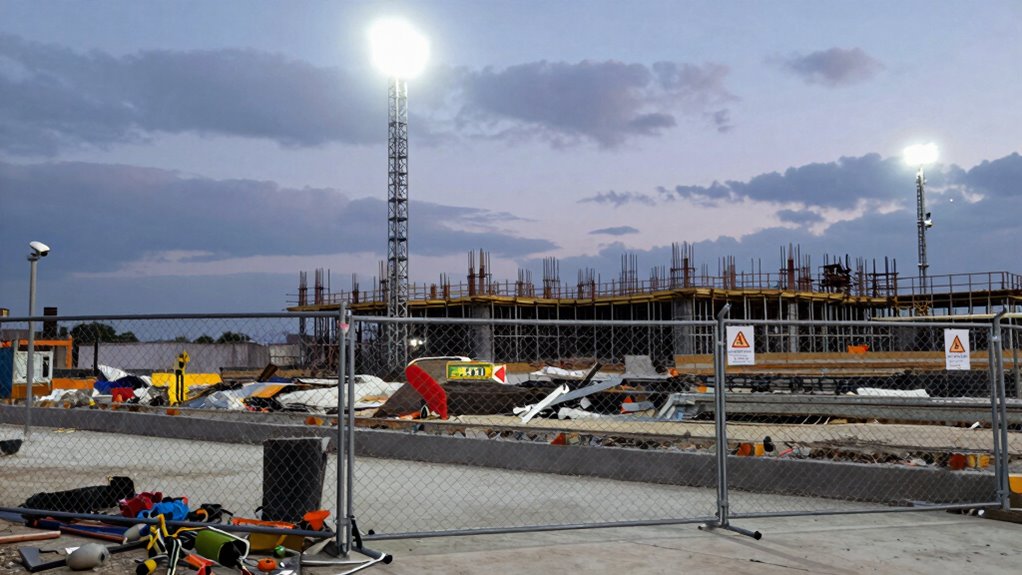
Have you ever considered how a single security lapse can lead to costly delays and damage on your construction site? Securing your site perimeter is crucial to prevent theft, vandalism, and unauthorized entry. When the perimeter isn’t properly protected, you risk losing valuable materials and facing project delays. Effective stakeholder coordination ensures everyone understands security protocols, keeps unauthorized individuals out, and maintains a safe environment. Investing in robust site security isn’t just about protecting assets; it saves you thousands by avoiding theft-related costs and project downtime. Additionally, implementing security technology such as surveillance cameras and motion detectors can significantly enhance your site’s security posture. Plus, a secure perimeter demonstrates professionalism, reassuring clients and partners. Without proper security measures, you leave your project vulnerable to disruptions. Prioritizing site security helps keep your construction on schedule, within budget, and protected from preventable setbacks. Incorporating site access control systems can streamline entry processes and further reduce security risks. Employing security planning as part of your overall construction strategy ensures comprehensive coverage and minimizes vulnerabilities. Understanding the importance of security protocols can help you develop effective procedures that deter potential threats. Implementing outdoor kitchen and pizza oven safety measures can also enhance overall site security and usability.

LIWAN 4G LTE Cellular Security Cameras Wireless Outdoor, 2K Off-Grid Cam
- 2-Pack with Solar Panels: Includes 2 cameras and 2 solar panels
- Easy Setup with Free Trial: 7-day free data plan for testing
- Cellular Connectivity Only: Operates without WiFi, US only
As an affiliate, we earn on qualifying purchases.
As an affiliate, we earn on qualifying purchases.
Installing Fencing and Barriers to Protect Your Construction Site
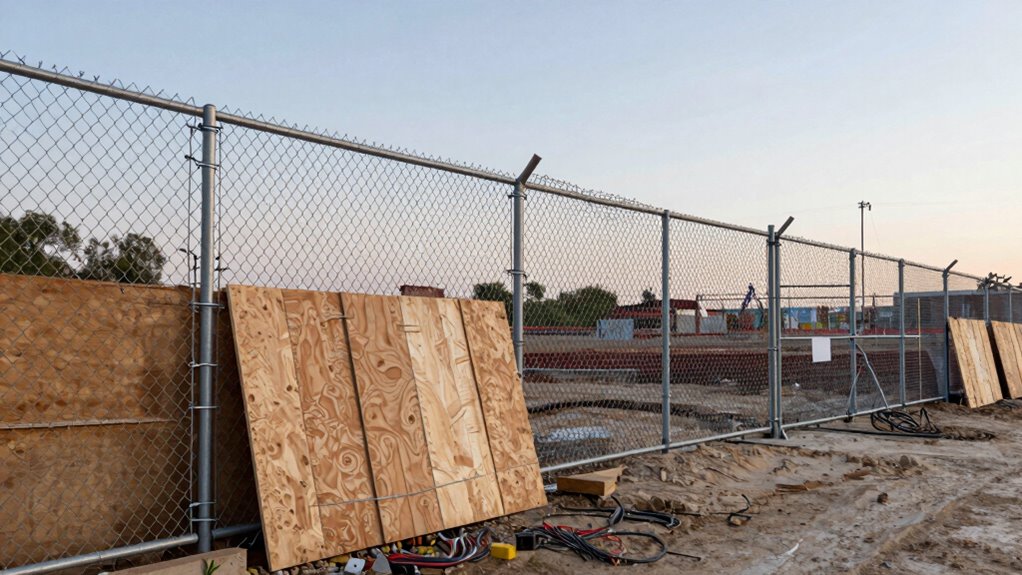
Installing sturdy fencing and barriers around your construction site is one of the most effective ways to prevent unauthorized access and protect your assets. Proper perimeter security guarantees that only authorized personnel enter, reducing theft and accidents. Use fencing barriers that are durable and high enough to deter climbing. Consider adding signage to warn intruders and guide workers. Regularly inspect and maintain barriers to ensure they stay intact. Avoid gaps or weak points in your fencing, as these can compromise your security. Remember, well-installed fencing creates a clear boundary, discouraging trespassers and safeguarding your project. Prioritize perimeter security by choosing the right fencing materials and barriers that suit your site’s specific needs. Youngster Choice highlights how effective fencing is a critical step in all-encompassing construction site security. Incorporating security barriers that are resistant to weather and vandalism can further enhance your site’s protection. Additionally, selecting weather-resistant fencing materials ensures your security measures remain effective despite environmental challenges. Emphasizing the importance of perimeter security can help prevent costly breaches and ensure a safer construction process. To maximize effectiveness, consider integrating security technology such as cameras or sensors to monitor your fencing area continuously.

Crowd Control Warehouse – CCW Series WMB-230 Fixed Wall Mount Retractable Belt Barrier – 30 Foot Belt, Yellow"Caution – DO NOT Enter" Yellow ABS Case
- Variety of belt colors and messages: Multiple options available
- Durable yellow ABS case: Protects the barrier
- Safe belt retraction system: Prevents snapback injuries
As an affiliate, we earn on qualifying purchases.
As an affiliate, we earn on qualifying purchases.
Securing Materials and Equipment: Simple Strategies Builders Overlook
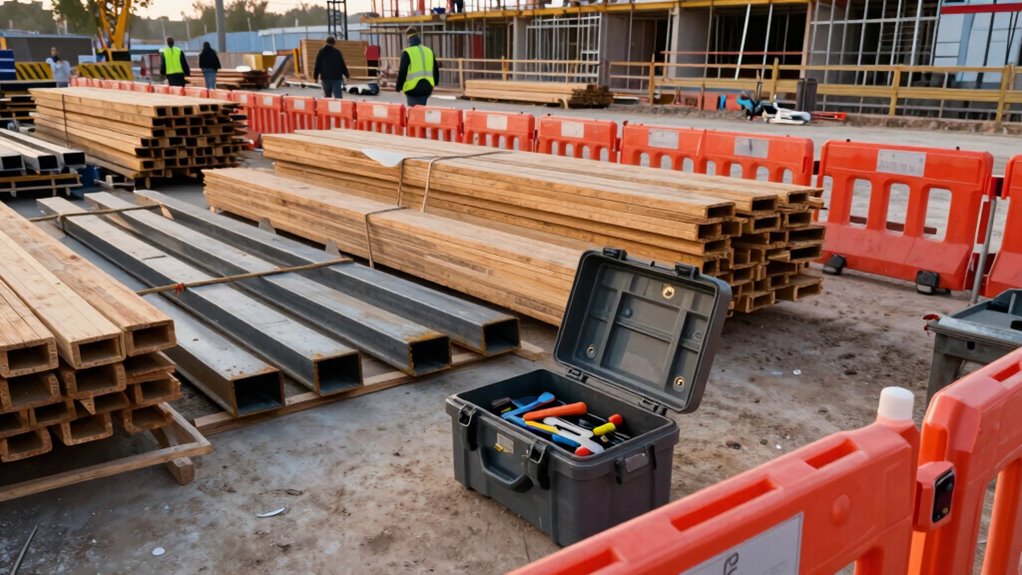
You might overlook simple steps like proper storage practices to protect your materials and equipment from theft or damage. Securing your tools and supplies effectively safeguards against loss and delays on-site. Implementing access controls ensures only authorized personnel can enter sensitive areas, boosting overall site security. Additionally, understanding the weight of equipment can assist in planning for safe transportation and installation. Proper piercing care and hygiene also plays a role in maintaining the integrity of your tools and materials, preventing contamination or damage. Regularly monitoring your site and implementing security protocols can further deter theft and vandalism. Being aware of the market volatility in construction materials can help you anticipate price fluctuations and budget accordingly. Incorporating site surveillance systems can serve as an effective deterrent to unauthorized access and theft.
Proper Material Storage Practices
Proper storage of materials and equipment is essential to prevent theft, damage, and safety hazards on construction sites. Effective material organization helps you keep track of inventory and reduces waste. Using sturdy storage containers protects materials from weather and vandalism. Ensure heavy or valuable items are stored in secure, clearly labeled areas to minimize confusion. Keep walkways clear to prevent accidents and maintain site safety. Regularly inspect storage areas for signs of tampering or deterioration, and implement a system to monitor access. Consider locking storage containers for high-value items and designating specific zones for different material types. Incorporating AI-powered security systems can further enhance site protection by providing real-time monitoring and alerts. Additionally, maintaining consistent storage protocols ensures ongoing security and efficiency. Proper storage practices streamline workflow, reduce theft risk, and protect your investment. Staying organized isn’t just good practice—it’s a critical security measure and proper material handling is vital for overall site safety.
Securing Equipment Against Theft
Effective security measures go beyond organized storage; they’re essential for preventing theft of equipment and materials on construction sites. Installing sturdy chain link fencing creates a physical barrier, deterring unauthorized access. Adding clear security signage warns potential intruders that the site is monitored and protected. Regularly inspecting fencing and signage guarantees they remain effective. Implementing security technology, such as surveillance cameras and alarm systems, can further enhance site protection and provide real-time monitoring. Consider these strategies:
| Security Step | Purpose | Implementation Tip |
|---|---|---|
| Chain link fencing | Prevent unauthorized entry | Use high-quality, tamper-proof materials |
| Security signage | Deter theft and inform trespassers | Place signs at visible points |
| Locking mechanisms | Secure equipment and materials | Use heavy-duty locks and padlocks |
A focus on period design can also enhance the overall security aesthetic, blending safety with timeless style.
Implementing Access Controls
Implementing access controls is a crucial yet often overlooked step in securing construction sites. Proper access control prevents unauthorized entry and protects materials and equipment. Credential management is key—you need a system to track who enters and exits, ensuring only authorized personnel access sensitive areas. Without it, theft or vandalism becomes easier. Consider these simple strategies:
- Use key cards or biometric systems for credential management
- Limit access to critical zones to essential workers
- Regularly update and revoke outdated credentials
- Maintain a log of all entries and exits
- Train staff on access control procedures
- Understanding security system integration can enhance overall site protection.

4pcs Danger Construction Site Sign 14×10 inch – Plastic
- Optimal Size: 14×10 inches for visibility
- High Visibility: Bright text on contrasting background
- Durable Material: Weather-resistant PVC construction
As an affiliate, we earn on qualifying purchases.
As an affiliate, we earn on qualifying purchases.
Managing Access: Sign-In Procedures and Visitor Control

Effective sign-in protocols are essential to keep unauthorized individuals out and track who’s on-site. Implementing visitor management strategies helps you control access and maintain security. You are trained on data up to October 2023. Additionally, maintaining access control systems and regularly updating sign-in procedures can help identify and prevent potential vulnerabilities, ensuring a safer construction environment. Proper visitor verification processes further enhance site security by confirming each visitor’s purpose and credentials.
Sign-In Protocols Importance
Managing access through strict sign-in protocols is essential for maintaining construction site security. Proper visitor sign-in ensures you track everyone on-site, reducing theft, vandalism, and safety risks. Implementing effective access control helps you verify identities and limit unauthorized entry. Without these procedures, your site becomes vulnerable to security breaches.
Consider these key points:
- Requiring all visitors to sign in upon arrival
- Using identification badges for visitors
- Maintaining an accurate log of entry and exit times
- Restricting access to sensitive areas
- Training staff to enforce sign-in policies
Visitor Management Strategies
Building on the importance of sign-in protocols, it’s crucial to establish thorough visitor management strategies that control access and enhance site security. You should implement clear procedures for visitor sign-in, ensuring every guest is documented and issued identification badges. Access control measures, like designated entry points and security personnel, help prevent unauthorized individuals from entering the site. Use a visitor management system to track arrivals and departures, making it easier to monitor who is on-site at any given time. Train staff to enforce these protocols consistently, and restrict access to sensitive areas. By actively managing visitors, you minimize risks, reduce theft or vandalism, and create a safer construction environment for everyone involved. Proper visitor management is a vital layer of your overall security plan.
Lighting Your Construction Site for Maximum Security
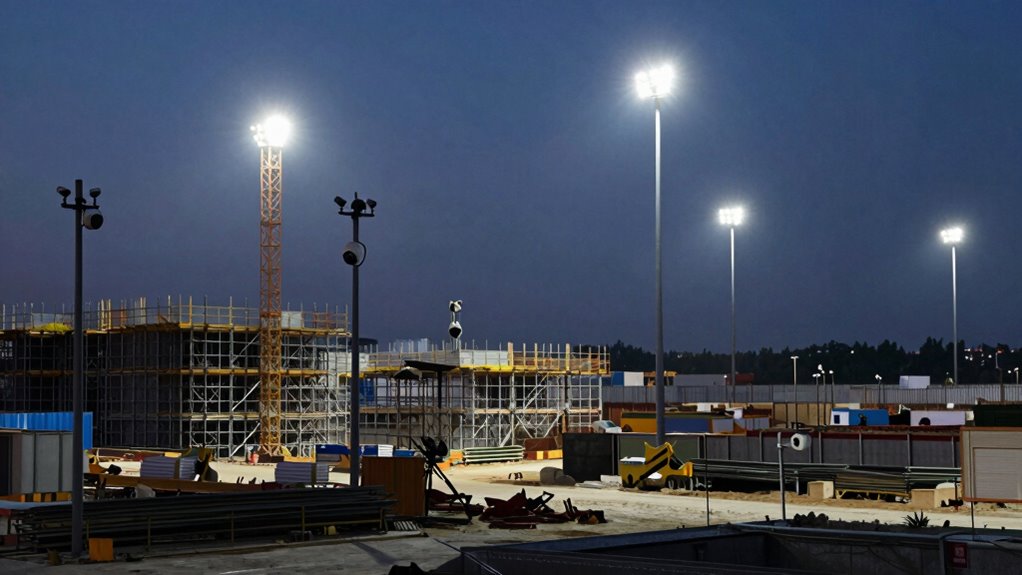
Proper lighting is essential to keeping your construction site secure after hours. Effective lighting techniques can deter intruders and illuminate blind spots, making unauthorized access more difficult. Developing clear illumination schedules ensures lights are on during vulnerable times, creating a consistent security presence. Use bright, energy-efficient fixtures to cover all entry points and critical areas. Motion-activated lights can surprise intruders and conserve energy. Regularly inspect and maintain lighting systems to prevent outages. Consider the placement of lights to eliminate shadows and dark corners. Incorporate timers or smart lighting controls to automate schedules. Remember, well-planned lighting not only enhances safety but also discourages theft and vandalism. Proper lighting strategies turn your site into a less attractive target for criminals.
Using Surveillance Cameras to Deter Theft and Vandalism

Strategically placing surveillance cameras guarantees you cover all vulnerable areas of your site. Monitoring footage and setting up alerts help you respond quickly to suspicious activity. Clear signage can also act as a deterrent, making potential thieves think twice before targeting your site.
Camera Placement Strategies
Effective camera placement is crucial for maximizing the deterrent power of your surveillance system. Proper positioning ensures ideal camera angles and thorough camera coverage, reducing blind spots where theft or vandalism can occur. To achieve this, consider placing cameras high enough to prevent tampering, facing entry points, and covering dark or secluded areas. Ensure overlapping fields of view for better coverage and easier identification of intruders. Avoid placing cameras where glare or weather conditions could obscure the lens. Regularly evaluate and adjust camera angles for maximum security. Remember, strategic placement not only captures clear footage but also discourages potential offenders who see they are being watched. With thoughtful positioning, your surveillance system becomes a powerful deterrent tool for construction site security.
Monitoring and Alerts
Have you set up your surveillance system to actively oversee your construction site? Effective monitoring involves more than just cameras; it requires real-time oversight through remote monitoring. With remote access, you can keep an eye on your site from anywhere, ensuring immediate response to suspicious activity. Pair your cameras with alarm systems that trigger alerts when movement or unauthorized access occurs. These alerts notify you instantly, allowing quick action to deter theft or vandalism before damage happens. Regularly test your alarm systems and review footage to ensure everything functions properly. Automated alerts help you stay proactive, reducing downtime and loss. By integrating remote monitoring and alarm systems into your security plan, you create a vigilant environment that discourages intruders and protects your investment.
Signage and Deterrence
Did you know that clear signage combined with visible surveillance cameras can considerably reduce theft and vandalism on your construction site? Proper security signage with deterrent messaging sends a strong visual warning to potential intruders, making them think twice before acting. When you strategically place signs indicating surveillance and security measures, it enhances the perceived risk of getting caught. Visible cameras reinforce this message, creating an effective deterrent. Consider these points to maximize impact:
- Use bold, easily readable security signage
- Incorporate warning messages about surveillance
- Position cameras in high-visibility areas
- Regularly update signage to stay relevant
- Combine signage with lighting for added effect
Together, these measures help protect your site, save costs, and ensure a smoother construction process.
Signage and Communication: Strengthening Your Security Measures
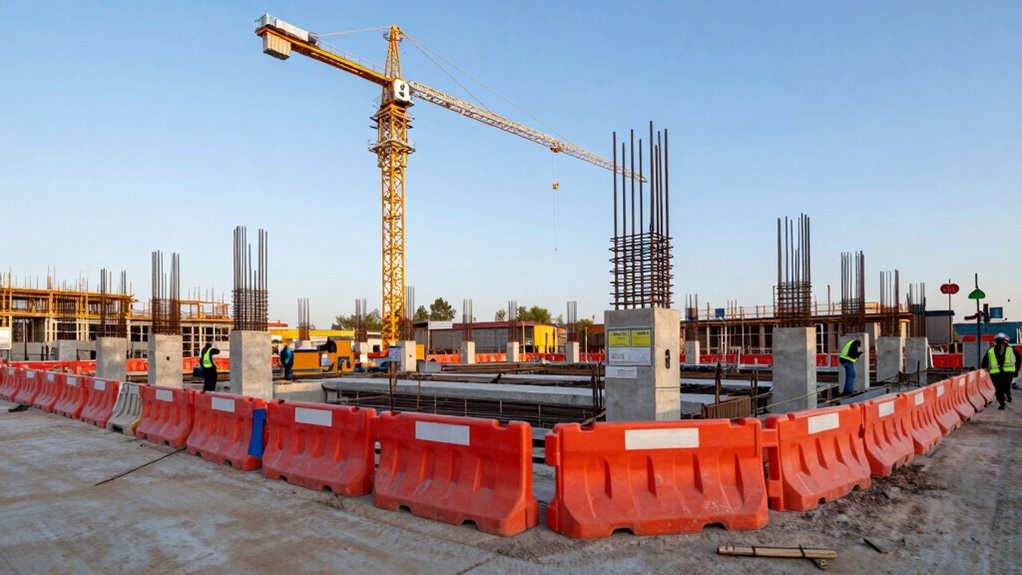
Clear signage and open communication are essential for maintaining security on construction sites. Visual communication, like clear signs indicating restricted areas or safety protocols, helps prevent unauthorized access and accidents. Emergency signage is critical for guiding workers and visitors swiftly during crises, reducing confusion and chaos. Make sure signs are visible, well-lit, and strategically placed at key points around the site. Additionally, establish open lines of communication among your team, using radios or alert systems to report suspicious activity or safety concerns immediately. Consistent, clear messaging reinforces security procedures and ensures everyone understands their roles. When signage and communication are prioritized, you create a safer environment, minimize risks, and discourage intruders from exploiting gaps in your security measures.
Regular Security Checks to Prevent Losses and Vandalism

Regular security checks are essential for catching vulnerabilities before they lead to losses or vandalism. Conducting frequent site vandalism inspections and security audits helps identify weak points early. These checks can expose unlocked gates, missing signage, or broken surveillance systems that invite trouble. Regular patrols and inspections not only deter potential vandals but also guarantee that security measures stay effective. You should:
Regular security checks identify vulnerabilities early, preventing vandalism and ensuring effective site protection.
- Verify all entry points are secure
- Check alarm systems and cameras are functioning
- Look for signs of forced entry or tampering
- Ensure proper lighting is in place
- Review access logs for suspicious activity
How to Incorporate Security Planning Into Your Construction Timeline
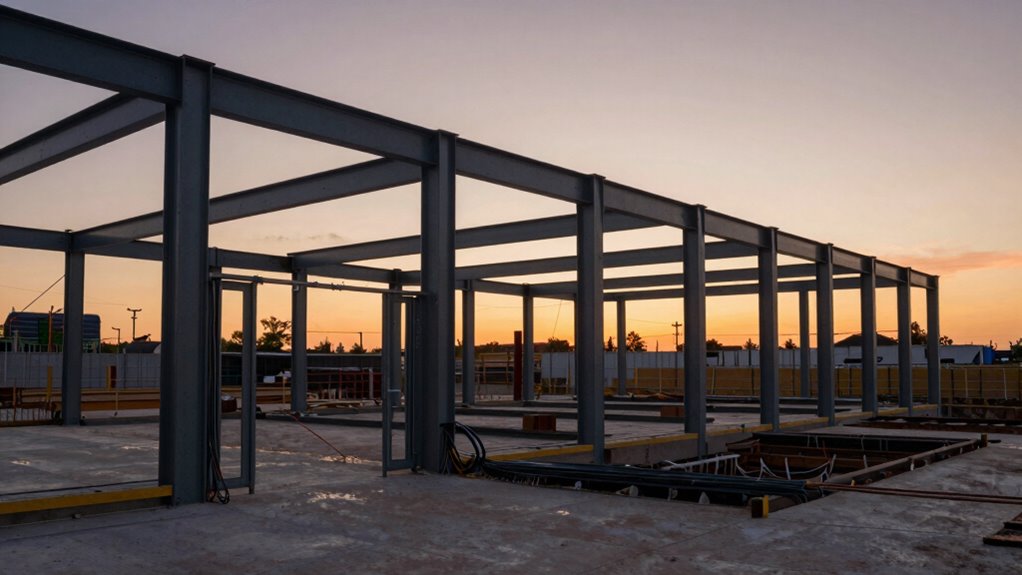
Integrating security planning into your construction timeline is essential to ensuring safety measures are effective from the outset. Begin with a thorough risk assessment to identify vulnerabilities early, allowing you to address potential threats proactively. Incorporate security integration into each phase of construction, from site setup to finishing touches. This means scheduling security measures like surveillance, access controls, and lighting at appropriate stages, ensuring they align with project milestones. By embedding security planning into your timeline, you prevent costly delays and reduce risks of theft or vandalism. Regularly revisit your risk assessment as the project progresses, adjusting security measures as needed. This proactive approach keeps safety front and center and ensures security becomes an integral part of your construction process.
Best Practices for Implementing Construction Security Measures
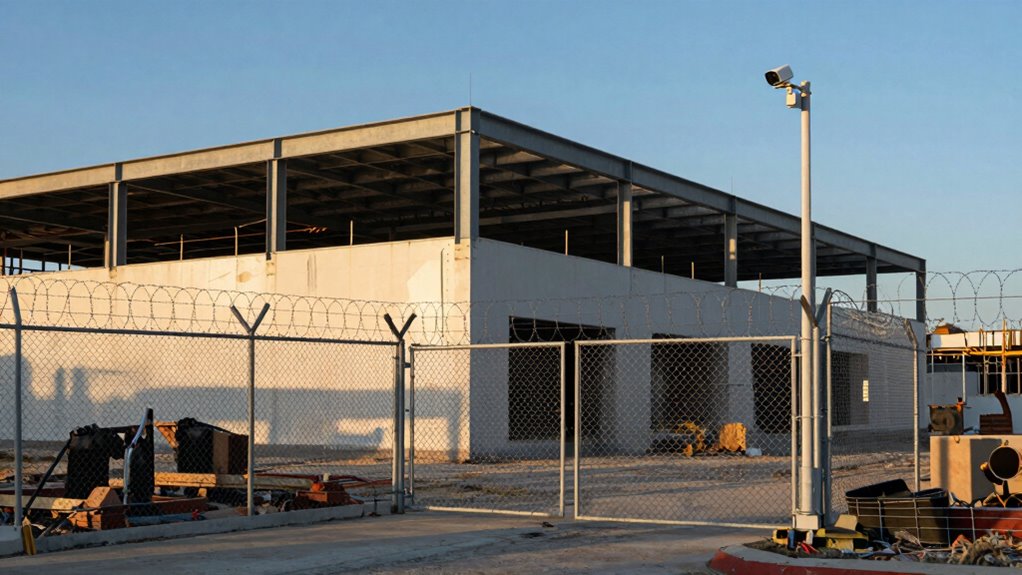
Implementing effective construction security measures requires a strategic approach that combines technology, personnel, and procedures. You should prioritize training security personnel to recognize threats and enforce clear emergency protocols. Regularly update your security plans to address evolving risks and ensure all staff are familiar with these procedures. Use technology such as surveillance cameras and access controls to monitor the site continuously. Establish a communication system for quick response during incidents. Conduct routine security audits to identify vulnerabilities. Remember, a well-trained security team and solid emergency protocols are essential to preventing theft, vandalism, and accidents.
Effective construction security blends technology, trained personnel, and clear procedures to prevent theft and accidents.
- Assign dedicated security personnel on-site
- Implement strict access controls and visitor logs
- Develop clear emergency response procedures
- Use surveillance technology effectively
- Conduct regular security drills
Frequently Asked Questions
What Are Common Security Risks Builders Often Overlook During Construction?
You often overlook securing the site perimeter and implementing emergency preparedness plans during construction. Failing to properly fence or monitor the site invites theft and vandalism. Additionally, neglecting emergency protocols can delay response times and increase risks if accidents happen. You should prioritize installing reliable barriers and creating clear emergency procedures to protect workers and assets, ensuring a safer, more secure construction environment from start to finish.
How Can Technology Enhance Security Beyond Cameras and Fencing?
Think of technology as your modern-day shield. You can boost security by installing smart alarm systems that alert you instantly to breaches. Drone surveillance offers a bird’s-eye view, covering large areas quickly and efficiently. These tools work together to create a proactive security approach, ensuring you stay ahead of potential threats. Embrace these innovations to protect your construction site better and prevent costly setbacks.
What Are Cost-Effective Security Solutions for Small-Scale Projects?
You can implement affordable options like motion-activated lighting and simple fencing to deter intruders. DIY measures such as securing entry points and installing affordable alarm systems also work well. These solutions are budget-friendly and easy to manage, making them perfect for small-scale projects. By focusing on strategic placement of lights and barriers, you improve security without overspending, giving you peace of mind while keeping costs low.
How Should Security Protocols Adapt During Different Construction Phases?
During different construction phases, you should adapt your security protocols by tightening access control during early stages, monitoring entry points, and verifying credentials. As work progresses, enhance emergency planning by establishing clear evacuation routes, training staff, and updating safety procedures. By shifting focus from securing perimeters to managing internal risks, you guarantee safety throughout, keeping unauthorized access out and preparedness high, no matter which phase you’re in.
What Training Should Staff Receive to Improve Site Security Awareness?
You should train your staff in construction safety and site access protocols to boost security awareness. Focus on recognizing unauthorized personnel, proper use of access controls, and reporting suspicious activity. Regularly update training to cover evolving risks, and emphasize the importance of securing site access points. This proactive approach helps prevent theft, vandalism, and accidents, ensuring a safer, more secure construction environment for everyone involved.
Conclusion
Think of your construction site as a fortress—you hold the keys to its security. By skipping essential measures, you risk opening the gate to theft and vandalism. But with vigilant planning and proactive steps, you become the guardian of your project’s future. Remember, every fence, light, and sign is a brick in your fortress, symbolizing your commitment. Guard it well, and your construction’s success will stand tall, unbreakable against the storms of loss.