
As drones become more common overhead, detecting their presence in your neighborhood is vital for privacy and security. You can use radar, RF scanners, acoustic sensors, and visual cameras to spot drones effectively. However, challenges like range limitations, environmental interference, and legal restrictions exist. Integrating these systems into your home security offers better protection, while future advancements promise even smarter solutions. Stay with us to explore how you can better safeguard your airspace today.

Get privacy and security gear delivered free — and shop member deals
- Fast, free delivery on millions of items
- Access to Prime Big Deal Days deals on October 6–7
- Prime Video, Amazon Music and more included
Key Takeaways
- Advanced detection systems combining radar, RF, acoustics, and optical sensors enhance drone identification and tracking in residential areas.
- Effective coverage and range depend on environmental factors, obstacles, and sensor calibration for minimizing false alarms.
- Integrating drone detection with existing home security improves proactive privacy protection and threat mitigation.
- Regulatory and privacy considerations require balanced deployment of detection technologies and adherence to evolving laws.
- Future trends include AI-powered detection, countermeasures, and autonomous drones for enhanced aerial security management.
As an affiliate, we earn on qualifying purchases.
The Rise of Drones in Residential Settings
Have you noticed drones becoming more common in your neighborhood? Drone hobbyists are increasingly taking to the skies, using their devices for aerial photography and capturing stunning views from above. This surge in drone activity means more residents are flying drones for fun, photography, or videography, making the skies busier than ever. As drones grow in popularity, they’re transforming how people see their surroundings, offering unique perspectives and creative opportunities. Additionally, the rise of drones emphasizes the importance of understanding drone detection systems to ensure safety and privacy. However, this rise also brings some challenges, like managing drone traffic and ensuring safety. With more people owning and operating drones, your neighborhood is experiencing a new level of aerial presence. It’s clear that drones are no longer just a hobby—they’re becoming a common part of residential life.
As an affiliate, we earn on qualifying purchases.
Privacy and Security Concerns in Neighborhoods
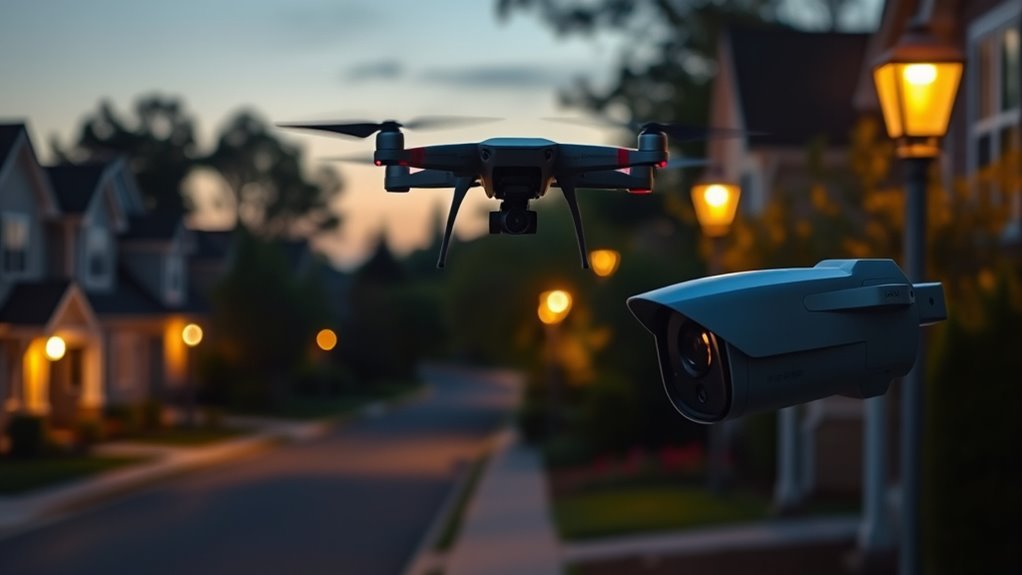
As drone activity increases in neighborhoods, concerns about privacy and security become more prominent. You might worry about how drone surveillance could invade your neighborhood privacy or lead to unauthorized recordings. Here are key issues to contemplate:
- Intrusion on personal spaces: Drones flying close to homes can capture private moments without permission.
- Data misuse: Collected footage might be misused or fall into the wrong hands, risking your security.
- Lack of regulation: Without clear rules, drones can operate unchecked, heightening privacy risks for residents.
These concerns highlight the need for effective drone detection and regulation to protect your neighborhood from unwarranted surveillance and safeguard your privacy and security.
acoustic drone detection sensors
As an affiliate, we earn on qualifying purchases.
As an affiliate, we earn on qualifying purchases.
Types of Drone Detection Technologies

Various drone detection technologies are available to help neighborhoods identify and respond to unauthorized drone activity. Counter drone technology includes radar systems, radio frequency (RF) scanners, and acoustic sensors that detect drone signals and movements. Drone detection sensors, such as optical cameras and infrared detectors, visually monitor the skies for drones. Radar-based systems provide long-range detection, while RF scanners track communication between drones and their controllers. Acoustic sensors pick up characteristic sounds of drone propellers. Some advanced systems combine multiple detection methods for higher accuracy. By understanding these technologies, you can choose the right tools to safeguard your neighborhood, ensuring quick identification of unauthorized drones and enabling timely security responses. Legal guidelines also influence the deployment and use of drone detection systems within residential areas to ensure compliance with local regulations.
As an affiliate, we earn on qualifying purchases.
Challenges in Implementing Effective Detection Systems
Implementing effective drone detection systems in residential areas presents several significant challenges. First, sensor calibration is vital; inaccurate calibration can lead to false alarms or missed detections. Second, signal interference from nearby electronic devices or structures can disrupt detection accuracy, making it harder to identify drones reliably. Third, environmental factors like weather conditions, trees, and buildings can block or weaken signals, further complicating detection efforts. You must guarantee sensors are properly calibrated and resilient against interference, which requires ongoing maintenance and testing. Additionally, deploying systems that adapt to changing environmental conditions is essential to maintain accuracy. Overcoming these challenges demands careful planning, regular calibration, and choosing technologies capable of handling signal disruptions effectively. Incorporating diverse sensor designs can enhance detection capabilities and reduce false positives.
Legal and Ethical Considerations
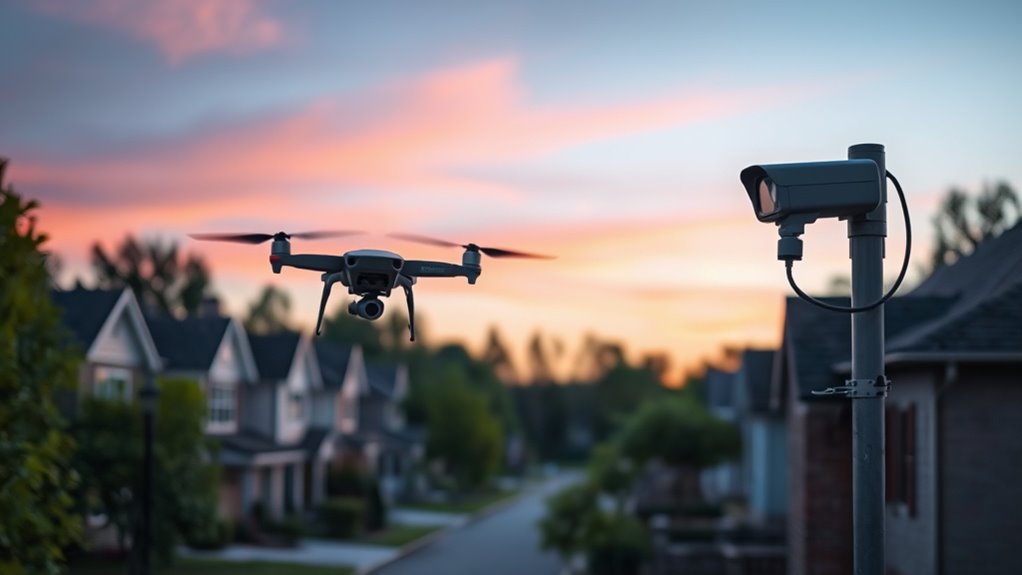
When implementing drone detection systems, you need to contemplate privacy rights and how they might be affected. You also have to navigate complex regulatory requirements to stay compliant. Balancing security and respecting individual freedoms is essential in this process. Considering the best anime movies can also help in understanding diverse perspectives and storytelling approaches that emphasize ethical considerations.
Privacy Rights and Drones
As drones become more common in residential areas, concerns about privacy rights grow more urgent. You need to understand how privacy invasion and surveillance concerns impact communities. Here are three key points to contemplate:
- Unwanted Surveillance: Drones can capture images or videos of your private property without permission, raising privacy invasion issues.
- Legal Boundaries: Laws about drone use vary, but many restrict surveillance over private property to protect residents’ privacy rights.
- Ethical Dilemmas: Balancing security benefits with respecting individual privacy is complex, and misuse can lead to trust issues within neighborhoods. Additionally, implementing wall organization systems can help create visual boundaries that reinforce privacy in residential settings.
Being aware of these issues helps you advocate for responsible drone use and supports the development of guidelines that respect residents’ privacy while maintaining safety.
Regulatory Compliance Challenges
Managing the legal and ethical landscape of drone use in residential areas presents significant compliance challenges. You’ll encounter licensing hurdles that require adherence to strict regulations, which can vary by region. Ensuring your drone operations meet all local, state, and federal compliance standards is essential to avoid penalties. These standards often specify restrictions on altitude, flight zones, and data collection, making it complex to develop effective drone detection systems that stay within legal bounds. Balancing security needs with legal obligations demands thorough understanding of current laws and ongoing updates. Failure to comply can lead to legal action, fines, or privacy violations. Staying informed about evolving regulations and obtaining proper licenses helps you steer through these challenges while maintaining ethical standards for resident safety and privacy. Additionally, understanding safety standards for drones and detection equipment is crucial to prevent accidents and ensure responsible operation.
Current Solutions and Their Effectiveness

You’ll want to understand the different detection technology types available and how well they cover your area, including their range limits. It’s also important to contemplate how reliable and accurate these solutions are in real-world conditions. Evaluating these factors helps determine which options are most effective for residential drone detection. Additionally, detection system performance can vary based on environmental factors and installation quality, impacting overall security effectiveness.
Detection Technology Types
What detection technologies are currently available to identify drones in residential areas, and how effective are they? Several options exist, each with strengths and limitations.
- Radar systems: These use detection algorithms to track drone movement and are effective at identifying small and fast-moving targets.
- Radio Frequency (RF) sensors: They detect signals between drones and their controllers, providing real-time alerts.
- Optical sensors: Cameras combined with detection algorithms analyze visual data to spot drones visually.
While counter drone sensors are advancing, no single technology offers perfect coverage. Combining radar, RF, and optical sensors improves detection accuracy, making these systems more reliable for residential security.
Coverage and Range Limits
While various detection technologies have advanced, their effectiveness often depends on their coverage and range limits. Signal interference from Wi-Fi, Bluetooth, or other devices can reduce detection distance. Obstacle limitations, like walls or trees, block or weaken signals, shrinking effective coverage. Most solutions work well in open spaces but struggle indoors or around dense structures. Additionally, understanding angel numbers and their meanings can provide insights into emerging opportunities and the importance of timing when deploying security measures.
Reliability and Accuracy
Current drone detection solutions vary in reliability and accuracy, often performing well under ideal conditions but facing challenges in complex environments. Factors like sensor calibration impact detection precision, and improper calibration can lead to false alarms. To improve effectiveness, consider these key points:
- Regular sensor calibration ensures accurate readings and reduces false alarms.
- Multi-sensor integration enhances detection reliability in cluttered areas.
- Advanced algorithms help distinguish between actual drones and environmental noise.
While current solutions work well outdoors with clear conditions, obstacles and interference can affect accuracy indoors or densely populated zones. Overall, continuous calibration and system upgrades are essential to maintain high reliability and minimize false alarms, ensuring you’re better protected against unauthorized drone activity.
Integrating Detection Systems Into Home Security
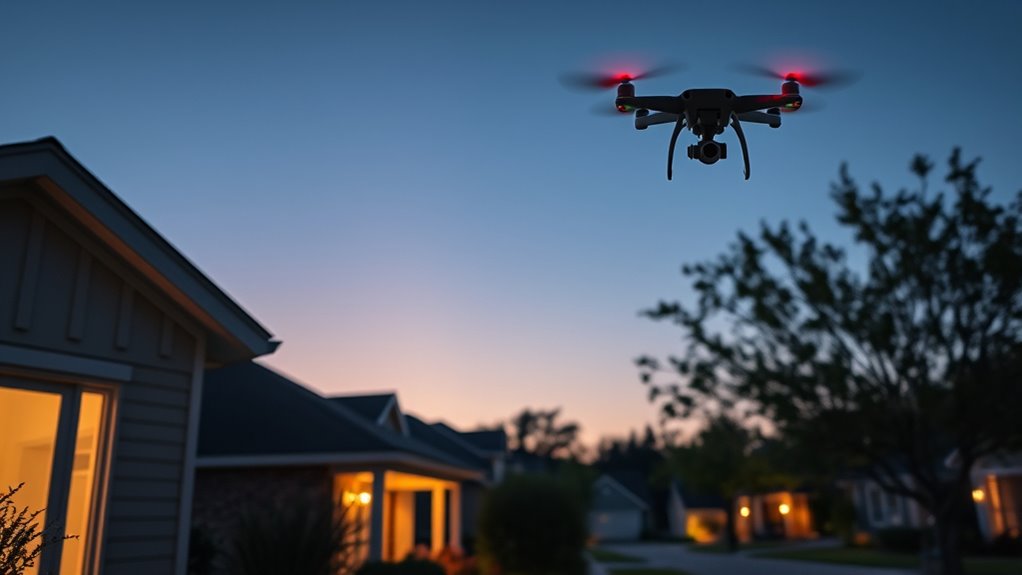
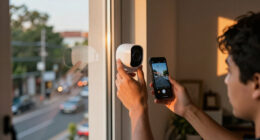
Integrating drone detection systems into home security offers a proactive way to monitor your property from unwanted aerial intrusions. By combining sensors and software, you can identify drones early, ensuring your privacy and safety. Keep in mind drone regulation and privacy legislation, which influence how detection systems operate legally. Proper integration allows seamless alerts and control, enhancing your security setup. Understanding home security best practices ensures that your system remains effective and compliant with legal standards.
Future Trends in Residential Drone Security
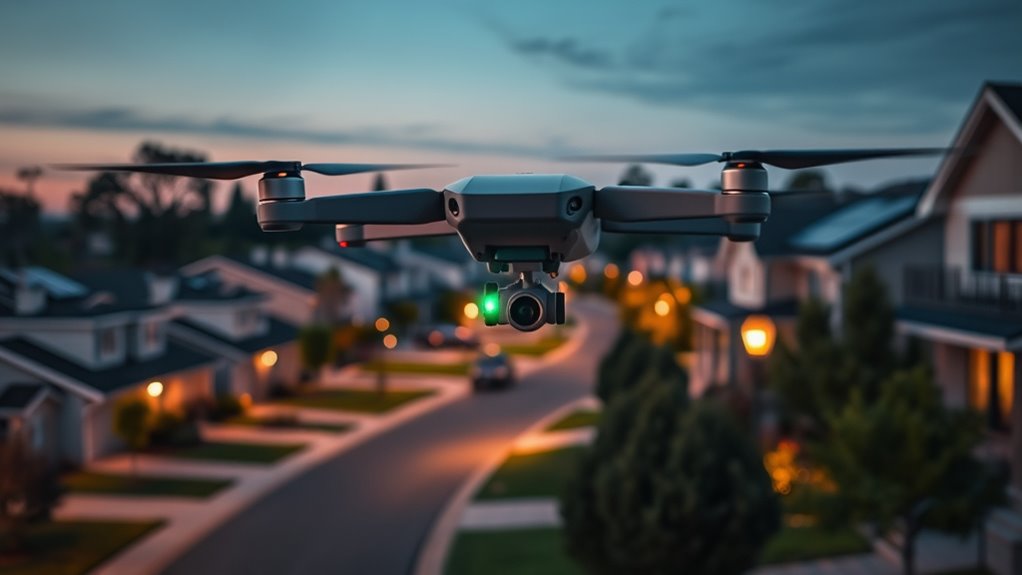
Advancements in drone detection technology are shaping how residential security systems will evolve in the coming years. You can expect smarter solutions that adapt to emerging threats like autonomous flight and drone swarms. Here are key future trends:
- AI-Powered Detection: Enhanced algorithms will identify and classify drones faster, even in complex environments.
- Countermeasure Integration: Systems will include non-invasive jamming or interception methods to neutralize unauthorized drones.
- Autonomous Response: Drones will autonomously patrol and respond to detected threats, preventing intrusion before it happens.
- Holistic Digital Security: Incorporating digital literacy principles can help homeowners understand and manage emerging aerial security risks effectively.
These innovations will make residential drone security more proactive, resilient, and capable of handling sophisticated aerial threats. Staying ahead means embracing these evolving technologies now.
Practical Tips for Homeowners to Stay Protected

Are you taking the right steps to protect your home from unauthorized drones? To stay ahead, consider installing drone detection systems that alert you to nearby craft, addressing privacy concerns. Additionally, drone jamming devices can disrupt unauthorized transmissions, but use them cautiously to avoid legal issues. Here’s a quick overview:
| Action | Benefit | Caution |
|---|---|---|
| Install detection systems | Early alerts, privacy protection | Ensure legal compliance |
| Use drone jamming | Disrupt unwanted drone signals | Avoid interference with legal drones |
| Stay informed of laws | Know your rights and limits | Respect privacy and regulations |
These steps help safeguard your privacy while respecting legal boundaries.
Frequently Asked Questions
How Much Does Residential Drone Detection Typically Cost?
When you ask about the cost of residential drone detection, you’re looking at a key part of the security upgrade. The price ranges vary based on system complexity and features, but generally, a basic setup might cost between $2,000 and $10,000. Conducting a thorough cost analysis helps you find the right balance between budget and protection, ensuring you get effective drone detection without overspending.
Can Drone Detection Systems Interfere With Other Home Electronics?
You might wonder if drone detection systems could cause interference concerns or electronic disruption at home. Most modern systems are designed to operate within safety standards, minimizing risks to your other electronics. However, some lower-quality devices could potentially interfere with Wi-Fi or Bluetooth signals. To avoid problems, choose reputable systems with good reviews, and guarantee proper installation. This way, you protect your electronics while enhancing your security.
Are There Any Government Incentives for Installing Drone Security?
Imagine you’re considering installing drone security and wonder if government incentives exist. You’ll find that some government grants and security incentives are available to encourage residential safety upgrades, including drone detection systems. For example, local agencies might offer grants to homeowners who install advanced security tech. These programs aim to boost community safety and can notably offset costs, making it easier for you to protect your property with cutting-edge drone detection.
How Quickly Can Detection Systems Identify a Drone Threat?
Detection systems typically react within seconds, providing quick detection speed to identify drone threats promptly. Your reaction time depends on the system’s sensitivity and technology, but advanced sensors can alert you almost instantly. This rapid detection allows you to respond swiftly, whether by deploying countermeasures or notifying authorities. Overall, these systems are designed to minimize delay, ensuring that you stay ahead of potential drone threats with minimal response time.
What Are the Best Practices for Notifying Neighbors About Drone Security?
You should prioritize clear community awareness and privacy communication when notifying neighbors about drone security. Keep neighbors informed through regular updates, community meetings, or emails, explaining how detection systems protect everyone’s privacy. Be transparent about the purpose and limits of drone detection, addressing any concerns. This approach builds trust, encourages cooperation, and guarantees everyone feels secure and well-informed about the new security measures.
Conclusion
As drones invade your neighborhood, you can’t afford to stay clueless—these flying gadgets could be spying on your every move or releasing chaos at any moment! By understanding the threat and adopting the right detection tools, you hold the power to defend your home like a fortress. Don’t wait until it’s too late—become your own security superhero and stay ahead of the drone invasion before they take over your peace of mind!
Halloween Picks
halloween
As an affiliate, we earn on qualifying purchases.