Thieves target storage units by exploiting security weaknesses like unlocked doors, poorly lit areas, or damaged locks. They may pry open or force entry through unsecured points or bypass outdated security systems. Sharing access codes or ignoring security audits also increases risks. To prevent theft, make sure your facility has sturdy locks, cameras, and controlled access, and regularly maintain security measures. Keep your unit protected with these tips and discover more ways to secure your belongings effectively.
Key Takeaways
- Thieves exploit security weaknesses like unsecured doors, poor lighting, and outdated locks to access storage units.
- Criminals often bypass locks or security systems using tools such as bolt cutters or by picking electronic locks.
- Lack of surveillance, blind spots, and minimal patrols increase opportunities for theft in storage facilities.
- Sharing access codes or keys with unauthorized persons creates vulnerabilities for potential break-ins.
- Regular security assessments, upgraded locks, surveillance cameras, and proper lighting are essential to prevent theft.
storage unit lock with key
As an affiliate, we earn on qualifying purchases.
As an affiliate, we earn on qualifying purchases.
What Are Common Ways Thieves Target Storage Units?
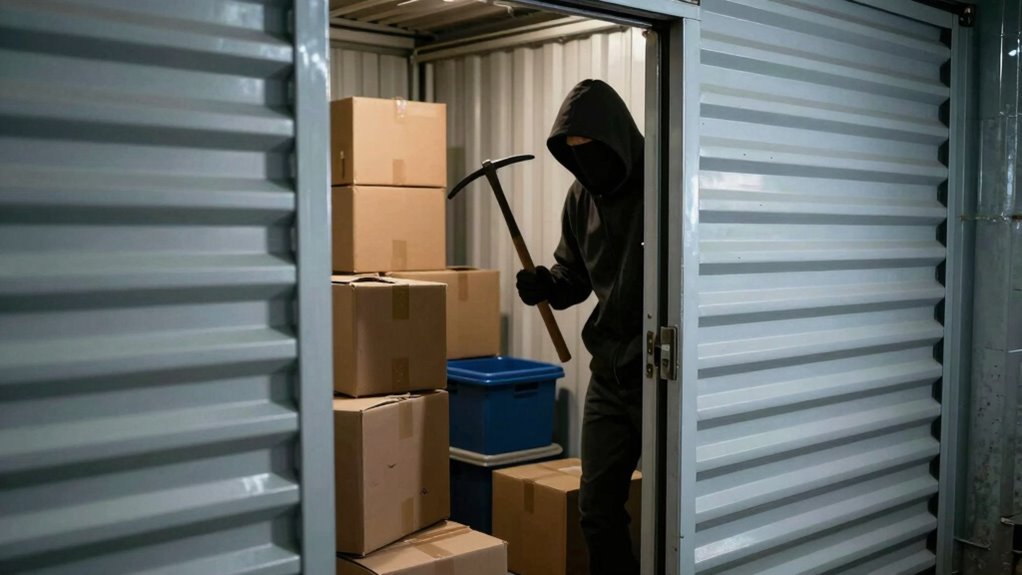
Thieves often target storage units by exploiting common security weaknesses and opportunities for quick access. Many people believe storage units are heavily secured, but storage myths can lead to complacency. They might assume locks are unbreakable or that security cameras prevent theft, yet theft statistics reveal many break-ins happen despite these measures. Thieves look for easy entry points, such as unsecured doors or poorly lit areas, where they can quickly access valuables without attracting attention. They often target units with visible signs of neglect or outdated security systems. Additionally, thieves are increasingly aware of advanced security technology, making it essential for owners to stay informed about current safety measures. In some cases, thieves exploit security system vulnerabilities to bypass alarms or surveillance. Understanding these tactics helps you recognize how thieves operate and why it’s vital to implement effective security measures. Proper security planning can significantly reduce the risk of theft and ensure your belongings remain safe. Staying updated on security technology can help you adapt your strategies to new threats. Don’t fall for myths—be proactive in protecting your stored belongings from potential theft.
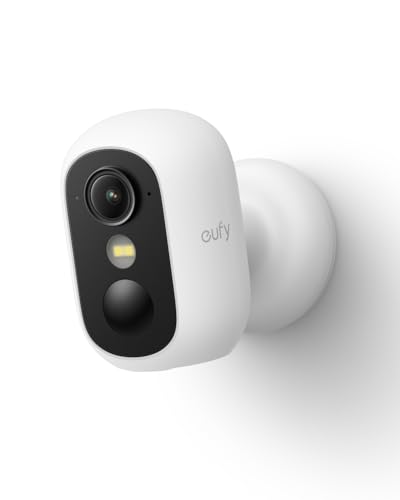
eufy Security eufyCam C35, Wireless Security Camera, Outdoor and Indoor, Magnetic Mount, Color Night Vision, Local Storage, No Monthly Fee, IP67, Supports Solar Panel, White
Magnetic & Screw-free Mounting: Enjoy effortless installation in seconds. The powerful magnetic base snaps onto any metal surface…
As an affiliate, we earn on qualifying purchases.
As an affiliate, we earn on qualifying purchases.
How Do Break-Ins and Forced Entries Happen?
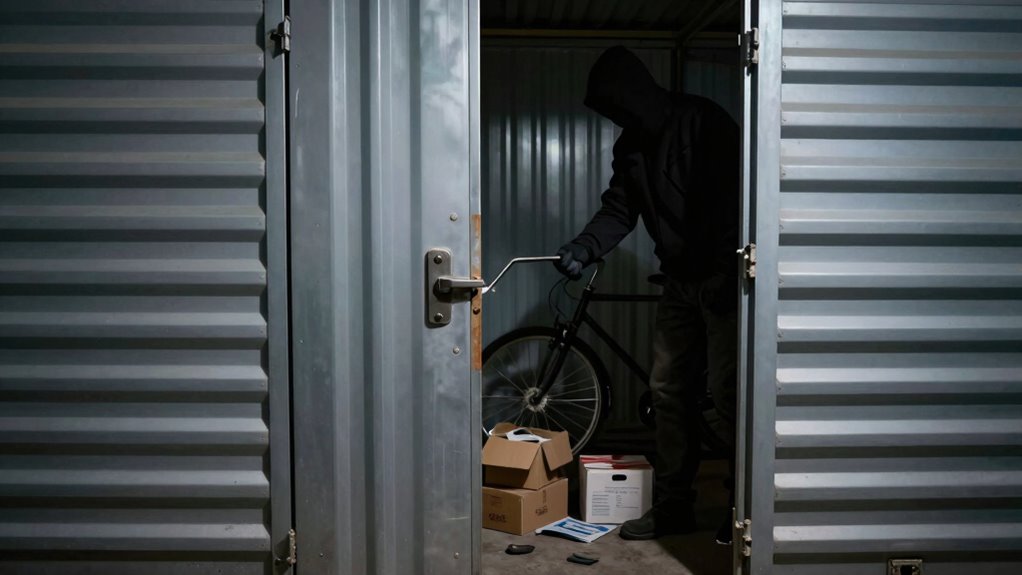
Despite the belief that strong locks and cameras deter all intruders, determined burglars often find ways to force their way into storage units. They exploit access point vulnerabilities to gain entry. Here are common methods:
Even strong locks can’t stop determined burglars who exploit access point vulnerabilities to break in.
- Forcing open locks: Using bolt cutters or crowbars to break locks.
- Exploiting weak doors: Prying open or kicking in poorly secured doors.
- Manipulating locks: Picking or bypassing electronic or mechanical locks.
- Access point weaknesses: Entering through unsecured or damaged entry points.
- Targeting vulnerable infrastructure: Taking advantage of outdated or improperly maintained security systems. Regular maintenance and access point security upgrades are essential to prevent these breaches. Ensuring that doors and access points are robust and well-maintained can significantly reduce the likelihood of forced entry, especially when combined with security system enhancements. Additionally, understanding the methods used by intruders can help in developing more effective security measures. Implementing comprehensive security measures that include physical barriers and surveillance can further deter attempts at forced entry.

Tuffenough Solar Outdoor Lights 2500LM 210 LED Security Lights with Remote Control,3 Heads Motion Sensor Lights, IP65 Waterproof,270° Wide Angle Flood Wall Lights with 3 Modes(2 Packs)
【Remote Control & 3 Lighting Modes】:Each solar motion sensor light is equipped with wireless remote control.You can choose…
As an affiliate, we earn on qualifying purchases.
As an affiliate, we earn on qualifying purchases.
Where Are Storage Facilities Most Vulnerable to Theft?
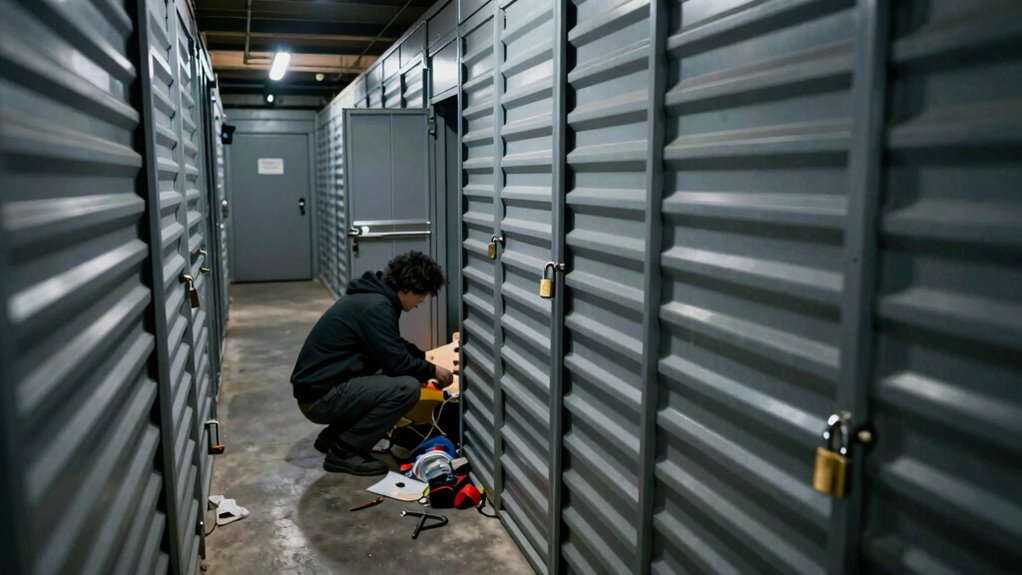
Where are storage facilities most vulnerable to theft? The answer lies in common storage facility weaknesses that thieves exploit. Theft hotspots often include poorly secured entry points, such as reveal gates or inadequate fencing, making it easy for burglars to gain access. Areas with minimal surveillance, like blind spots or poorly lit corners, also attract criminals looking for covert opportunities. Additionally, unsecured or easily breakable locks on units create opportunities for forced entry. High-traffic zones where multiple renters or visitors pass through can become targets if security measures are lax. Recognizing security vulnerabilities and addressing them proactively helps you identify potential theft hotspots and emphasizes the importance of strengthening security in these areas to protect your stored belongings effectively. Moreover, understanding how precious metal investments are stored securely can provide insights into safeguarding valuable assets from theft. Conducting regular security audits can further uncover overlooked vulnerabilities and improve overall protection.

Master Lock Magnum Heavy Duty Outdoor Padlock with Key, Weather Resistant Body and Cut Safe Shackle Make Lock Perfect for Fences, Gates, Sheds, M115XKADLF, Black
Outdoor lock; Heavy duty padlock with key is best used for outdoor storage and fences, self-storage units &…
As an affiliate, we earn on qualifying purchases.
As an affiliate, we earn on qualifying purchases.
Can Employees or Renters Be a Security Risk?
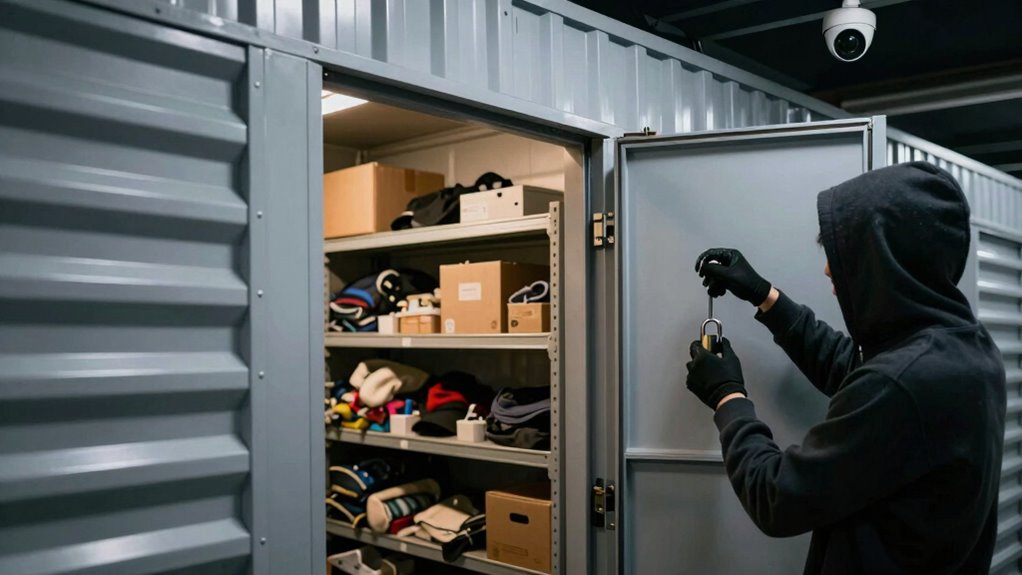
Employees and renters can pose significant security risks when their actions or access aren’t properly monitored. Employee misconduct and renter negligence are common issues that can lead to theft or damage. To minimize these risks, consider these key points:
Unmonitored employees and renters can increase theft and damage risks. Proper oversight is essential.
- Unsupervised Access: Allowing employees or renters unrestricted entry increases the chance of theft or misconduct.
- Lack of Background Checks: Hiring staff without thorough background screening can lead to dishonest behavior.
- Poor Record-Keeping: Not tracking access logs makes it easier for insiders to commit theft unnoticed.
- Negligent Behavior: Renters forgetting to lock units or employees neglecting security protocols can create vulnerabilities.
- Implementing digital security measures such as surveillance cameras and access controls can further reduce the risk of insider threats.
Being vigilant about who has access and implementing strict policies helps prevent security breaches caused by personnel or renters.
What Should You Look for When Choosing a Secure Storage Facility?
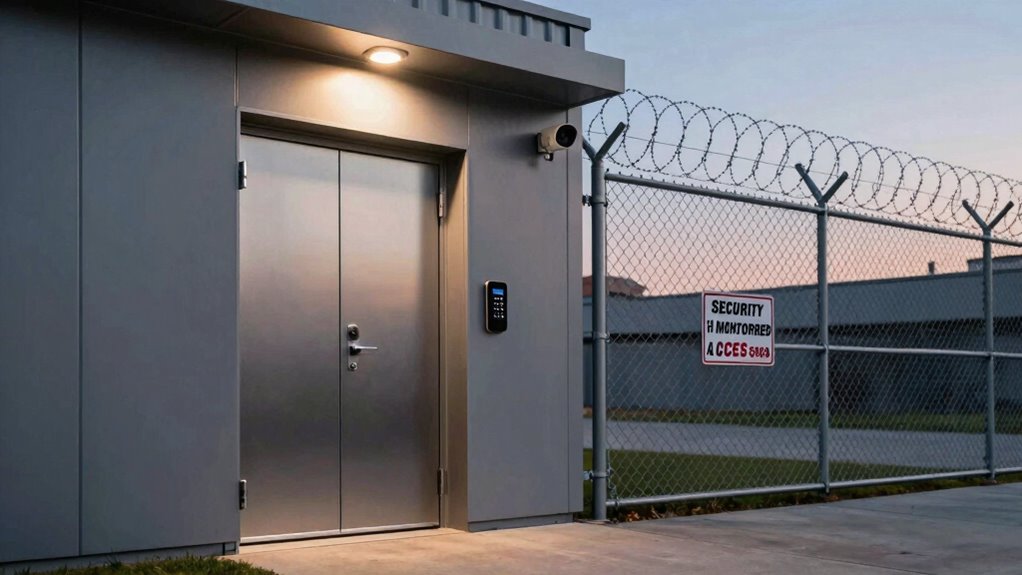
Choosing a secure storage facility requires careful evaluation of its security features and overall reliability. Look for facility features like sturdy fencing, surveillance cameras, well-lit areas, and controlled access points. These elements act as deterrents and help prevent unauthorized entry. Additionally, consider the insurance options offered; a facility that provides coverage or allows you to obtain your own insurance adds an extra layer of protection for your stored items. Verify if the facility has on-site staff or security personnel, as their presence can enhance safety. Check reviews and ask about the facility’s security protocols to ensure they prioritize safeguarding your belongings. Implementing vetted security measures such as wave and wind considerations can further enhance protection against environmental threats. Incorporating smart security technology like remote monitoring or automated alerts can also help you keep track of your stored items in real-time. Conducting security assessments of storage options enables you to identify potential vulnerabilities and choose the most trustworthy facility. Additionally, assessing security vulnerabilities through thorough inspections helps in making informed decisions. Performing comprehensive security audits regularly ensures that the facility maintains its security standards over time. Making informed choices based on these factors helps you select a facility that’s both secure and trustworthy.
How Can You Effectively Secure Your Storage Unit?

Once you’ve selected a secure storage facility, taking additional steps to protect your belongings can make a significant difference. Implementing strong security protocols boosts theft prevention and keeps your items safe. Consider these four effective measures:
- Use high-quality locks on your unit, such as disc or cylinder locks.
- Request regular security patrols and well-lit areas from the facility.
- Avoid sharing your access code or key with others.
- Keep an inventory of your belongings and photograph valuables.
- Proper lock selection based on material and security features can greatly enhance your unit’s protection. Additionally, understanding Free Floating concepts can help you identify vulnerabilities in your security setup. Recognizing potential security blind spots is crucial for comprehensive protection, especially by analyzing how vulnerable points can be exploited by intruders. Conducting regular security audits can also help you stay ahead of potential threats.
What Are the Best Ways to Use Locks, Cameras, and Alarms?
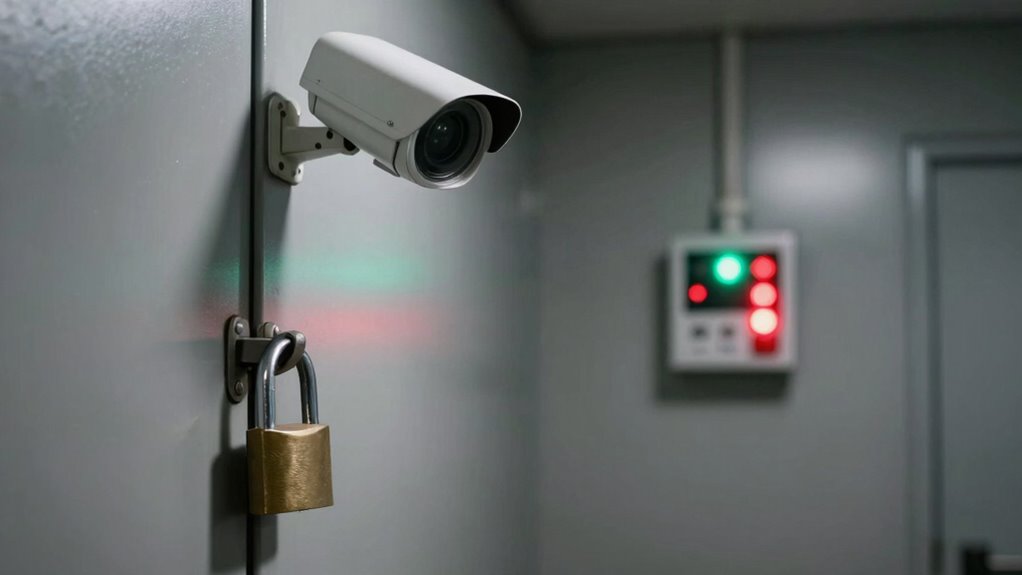
To keep your storage unit secure, you need to select strong locks that are difficult to pick. Installing cameras in strategic spots helps you monitor activity and deter intruders, while reliable alarms alert you immediately to any unauthorized entry. Combining these methods creates a robust security system that protects your belongings effectively. Additionally, educating yourself about common security risks can help you anticipate and prevent potential thefts.
Choosing Strong Locks
Strong locks are essential for protecting your storage unit, but simply installing a lock isn’t enough. To maximize security, choose the right lock types and keep them in good condition. Consider these tips:
- Select high-security locks, like disc or cylinder locks, which are more resistant to tampering.
- Avoid cheap padlocks; invest in weather-resistant, hardened steel options.
- Regularly perform lock maintenance—lubricate moving parts and check for rust or damage.
- Use multiple locking mechanisms or reinforced lock boxes for added security.
Installing Strategic Cameras
Strategic camera placement is essential for maximizing your storage unit’s security, as it allows you to monitor key entry points and vulnerable areas effectively. You should focus on surveillance camera placement that covers all access points, including doors and windows, ensuring no blind spots. Position cameras high enough to prevent tampering but still capture clear images. Incorporate motion detection systems to alert you instantly to any movement outside normal hours, deterring potential thieves. Place cameras at angles that provide clear views of valuable items inside, while avoiding obstructions. Regularly check camera feeds to verify functionality and footage quality. Combining well-placed surveillance cameras with motion detection systems creates a formidable barrier, making it harder for thieves to go unnoticed and increasing your chances of catching them in the act.
Setting Reliable Alarms
Combining well-placed cameras with robust locks and alarms creates a layered defense that deters intruders and alerts you to unauthorized entry. To set reliable alarms, consider these key steps:
- Choose alarms with motion detection and remote monitoring for real-time alerts.
- Regularly test and maintain your alarm system to ensure it’s working properly.
- Integrate fire safety features, like smoke detectors, to protect your stored items and enable quick responses.
- Use climate control alarms to monitor temperature and humidity, preventing damage from mold or heat.
Properly configured alarms not only prevent theft but also help maintain a safe environment by detecting fire hazards and controlling climate conditions, ensuring your storage unit stays secure and your belongings stay protected.
How Do You Maintain Security Over Time?
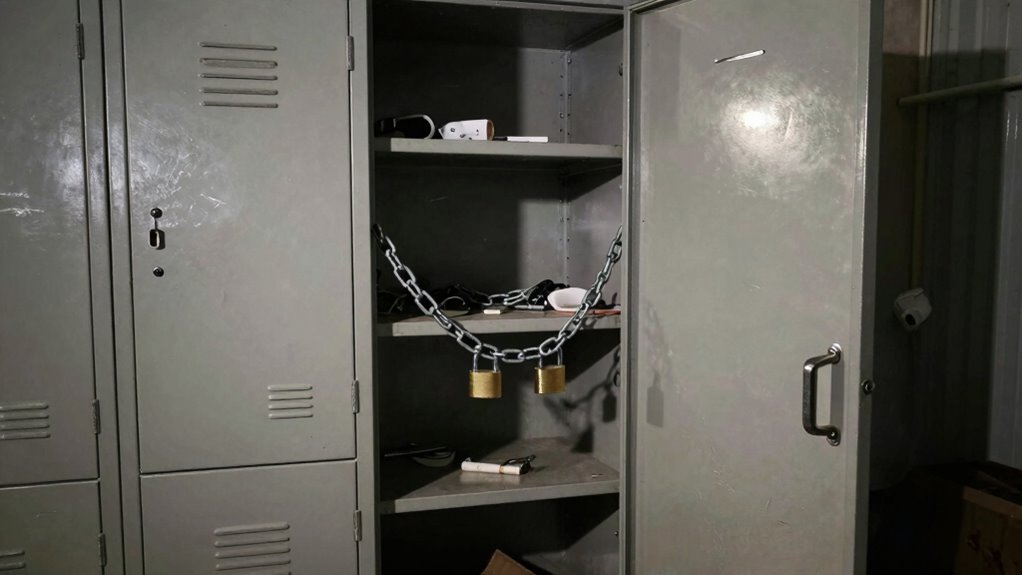
To keep your storage unit secure, you need to regularly check your locks to guarantee they haven’t been tampered with. Updating your security measures, like adding new cameras or alarms, helps stay ahead of potential threats. Consistently maintaining these practices will keep your belongings protected over time.
Regular Lock Checks
Regular lock checks are essential to make certain your storage unit remains secure over time. By performing routine inspections, you ensure your lock maintenance stays effective and vulnerabilities are caught early. To keep security tight, focus on these key steps:
- Inspect the lock for rust or damage that could weaken its integrity.
- Test the lock’s functionality to ensure it opens and closes smoothly.
- Verify the lock’s placement remains secure and hasn’t been tampered with.
- Document each security audit to track any issues or patterns over time.
Updated Security Measures
Maintaining your storage unit’s security over time requires implementing updated measures that adapt to evolving threats. Regularly review and enhance your access control systems, such as upgrading locks or adding biometric access. Employ security staff to monitor the premises, ensuring unauthorized individuals are kept out. Consistent updates keep your security robust and responsive. Consider this emotional impact:
| Security Level | Feelings of Safety |
|---|---|
| Basic Locks | Slight reassurance, still vulnerable |
| Electronic Access | Confidence, convenience |
| Security Staff | Peace of mind, active protection |
| Advanced Systems | Complete confidence, secure environment |
| Continuous Updates | Trust in ongoing safety, peace of mind |
Staying proactive with these measures helps prevent theft and keeps you secure over time.
What Should You Do If Your Storage Unit Is Broken Into?

If you discover that your storage unit has been broken into, it’s essential to act quickly and methodically. First, avoid touching anything to preserve evidence. Then, follow these steps:
- Notify the facility management immediately to report the break-in and review security footage, if available.
- File a police report to document the theft and assist in investigations.
- Check your insurance options—many storage myths suggest coverage isn’t worth it, but policies often protect your belongings.
- Document everything with photos and a detailed list of missing items for insurance claims and police reports.
Staying calm and proactive helps protect your rights and increases the chance of recovery.
Frequently Asked Questions
What Are Some Signs That My Storage Unit Has Been Tampered With?
You’ll notice signs like a storage unit alarm going off unexpectedly, or you see suspicious activity around your unit, such as new scratches or dents. Also, check for missing or tampered locks, or if your access code no longer works. These are clear indicators that someone has tried to tamper with or break into your unit. Stay vigilant, and report any suspicious activity immediately to prevent theft.
How Often Should Security Measures Be Reviewed or Upgraded?
You should review your security measures at least every six months and after any suspicious activity. Conduct regular security audits to identify vulnerabilities, and stay proactive with technology upgrades to enhance protection. Updating locks, surveillance systems, and access controls guarantees your storage unit remains secure. By consistently reassessing and improving your security, you reduce theft risks and keep your belongings safe.
Are There Specific Items That Attract More Theft in Storage Units?
Valuable electronics and high-value jewelry often attract thieves, especially if left unattended. For example, a storage unit owner once lost expensive gadgets and jewelry because they left them in easily accessible boxes. Thieves target such items due to their resale value, making it essential for you to secure these valuables with alarms, locks, and surveillance. Regularly reviewing security measures helps prevent theft of these high-attract items.
Can Insurance Cover Damages or Losses From Theft?
Yes, your insurance coverage can often include theft claims for damages or losses from theft in your storage unit. You should review your policy carefully to understand what’s covered, as some plans may exclude certain items. If theft occurs, file a theft claim promptly with your insurer. Keep detailed inventories and photos of your stored items to support your insurance claim and expedite the process.
What Legal Steps Should I Take After a Storage Theft Occurs?
You should file a police report immediately, as nearly 70% of theft cases are resolved through law enforcement. Then, seek legal consultation to understand your rights and next steps. Reporting the theft officially creates a record that can help with insurance claims and legal actions. Act quickly, document all stolen items, and cooperate fully with authorities to maximize your chances of recovery.
Conclusion
Think of your storage unit as a treasure chest—you want it to stay safe from thieves. By understanding how break-ins happen and taking proactive steps, you can lock out trouble and keep your belongings secure. Regularly check your security measures, stay vigilant, and choose a facility that prioritizes safety. With these habits, you’ll keep your valuables protected like a fortress guarding its gold, ensuring peace of mind whenever you visit.