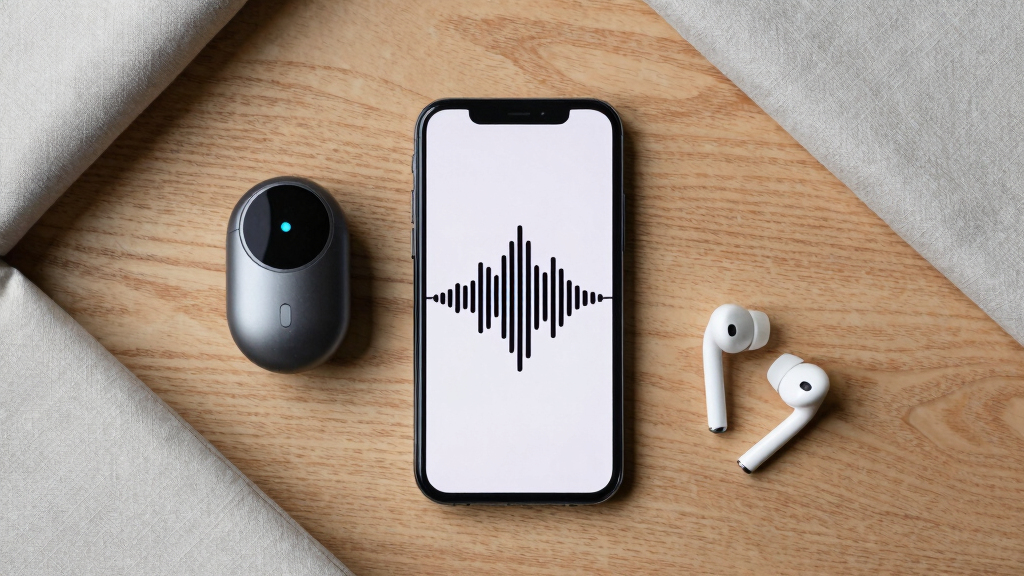

TL;DR
AI voice fraud can now imitate individuals and carry out thefts in as little as three seconds. This rapid development surpasses existing security defenses, posing new risks for financial and personal security. The phenomenon highlights the need for urgent technological and regulatory responses.
Recent developments in artificial intelligence have enabled voice fraud schemes that can imitate a person’s voice and execute thefts in just three seconds. This rapid impersonation and theft capability is challenging existing security defenses and has already led to significant financial losses, according to cybersecurity experts and law enforcement sources. The speed and realism of these AI voice scams make them a pressing threat to individuals and organizations alike.
Cybersecurity firms and law enforcement officials have confirmed that AI-driven voice synthesis technology can now generate convincing voice replicas in less than three seconds. These voice clones are used in scams where fraudsters impersonate trusted contacts or executives to manipulate victims into transferring funds or revealing sensitive information. The technology leverages advanced neural networks and deep learning models, allowing for rapid, real-time voice mimicking with minimal input data.
Multiple reports indicate that these scams have already resulted in millions of dollars in losses globally. Unlike traditional phishing or fraud attempts that rely on lengthy deception, these AI voice scams operate swiftly, reducing the window for detection or intervention. Experts warn that current security measures, including multi-factor authentication and voice verification, are insufficient against such rapid impersonation.
Implications for Financial Security and Consumer Protection
This development underscores a significant escalation in fraud tactics, making it increasingly difficult for individuals and institutions to defend against impersonation scams. The ability to execute thefts in just three seconds means that traditional security layers, which often rely on voice or behavioral verification, may no longer be effective. As AI voice fraud becomes more sophisticated, there is an urgent need for new detection methods, regulatory oversight, and public awareness to prevent financial losses and protect personal identities.
voice biometric authentication device
As an affiliate, we earn on qualifying purchases.
As an affiliate, we earn on qualifying purchases.
Rapid Advancements in AI Voice Synthesis Technology
Over the past two years, AI voice synthesis has evolved rapidly, moving from basic text-to-speech systems to highly realistic voice cloning capable of mimicking individual voices with minimal audio samples. Industry reports suggest that these tools are now accessible to malicious actors, often through dark web channels. Law enforcement agencies have issued warnings about the increasing prevalence of AI-based scams, especially as the technology becomes more affordable and easier to deploy.
Previous scams typically required lengthy setups, such as obtaining voice recordings or conducting social engineering over extended periods. The current breakthrough allows fraudsters to perform impersonation and theft within seconds, drastically reducing operational time and increasing success rates.
“Law enforcement is seeing a surge in cases where victims are targeted with AI-generated voices, often resulting in significant financial loss before any intervention can occur.”
— Detective John Smith, cybercrime unit
As an affiliate, we earn on qualifying purchases.
Unclear How Widely This Technology Is Being Used
While reports confirm that AI voice scams can execute thefts in under three seconds, it is not yet clear how widespread this practice has become or how many victims have been affected globally. Details about the specific methods used by scammers and the extent of their operations remain under investigation. Additionally, the full capabilities and limitations of current AI voice synthesis tools are still being studied by researchers.
multi-factor authentication security token
As an affiliate, we earn on qualifying purchases.
As an affiliate, we earn on qualifying purchases.
Future Measures to Counter AI Voice Fraud
Experts anticipate that next steps will include developing more advanced detection algorithms capable of identifying AI-generated voices in real-time. Regulatory agencies are also considering new guidelines to address the risks posed by synthetic voice technology. Law enforcement agencies are increasing efforts to trace and shut down illegal AI voice synthesis services. Public awareness campaigns are expected to emphasize caution when receiving unexpected voice calls requesting sensitive information or transfers.
voice verification security system
As an affiliate, we earn on qualifying purchases.
As an affiliate, we earn on qualifying purchases.
Key Questions
How can I protect myself from AI voice scams?
Be cautious of unsolicited voice calls, especially those requesting confidential information or money. Verify identities through multiple channels, and be skeptical of urgent requests. Use multi-factor authentication and avoid sharing sensitive data over the phone.
Are current security systems effective against AI voice fraud?
Most current systems, including voice verification and biometric authentication, are not fully equipped to detect highly realistic AI-generated voices. Experts recommend combining multiple security measures and staying informed about emerging threats.
Is AI voice synthesis technology accessible to the public?
Yes, advanced voice cloning tools are increasingly available, often through online platforms, and can be used maliciously. This accessibility raises concerns about widespread misuse by fraudsters.
What legal actions are being taken against AI voice fraud?
Law enforcement agencies are beginning to develop regulations and legal frameworks to combat the misuse of AI voice synthesis, but specific laws are still in development in many jurisdictions.
Source: hn


![Paged Out #9 [Pdf]](https://security-zone.info/wp-content/uploads/2026/07/paged-out-9-pdf-featured-560x300.jpg)