To securely share temporary codes with your house guests, use encrypted messaging apps like Signal or WhatsApp for sharing the codes, avoiding unprotected channels like SMS or email. Generate unique, random codes for each guest and set expiration dates or time limits. Educate your guests on keeping the codes confidential and never sharing them verbally. Regularly update codes after each use and monitor access activity. Continuing helps you understand more effective ways to protect your home and guests.
Key Takeaways
- Use encrypted messaging apps like Signal or WhatsApp to share codes securely.
- Assign unique, randomized codes for each guest and set expiration dates to limit access.
- Avoid verbal or unsecured channels; always share codes through encrypted platforms.
- Educate guests on safeguarding codes and avoiding sharing or writing them in visible areas.
- Regularly review and revoke codes after use or upon guest departure to maintain security.
encrypted messaging app for home access codes
As an affiliate, we earn on qualifying purchases.
As an affiliate, we earn on qualifying purchases.
Choose a Secure Method of Communication
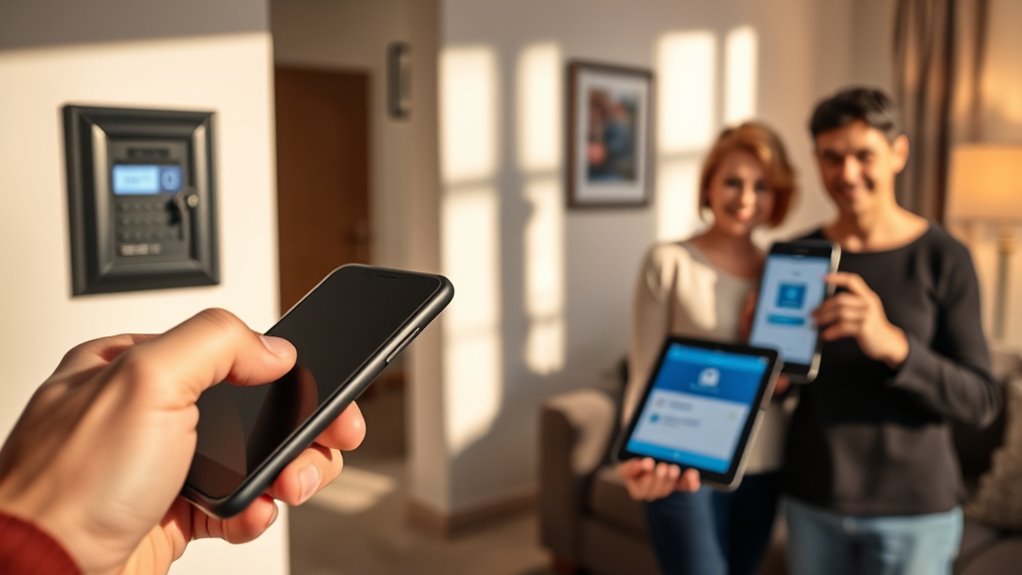
To guarantee your temporary codes stay confidential, you need to choose a secure method of communication. Encrypted messaging apps, like Signal or WhatsApp, provide end-to-end encryption, ensuring only you and your guest can see the messages. This prevents third parties from intercepting sensitive information. Alternatively, a secure voice call can also protect your codes; using apps with strong voice call security encrypts your conversation, making it difficult for anyone to eavesdrop. Avoid standard SMS or unsecured email, as these methods lack proper encryption and leave your codes vulnerable. By selecting encrypted messaging or secure voice calls, you considerably reduce the risk of unauthorized access, keeping your temporary codes private and ensuring your guest’s access remains controlled and confidential. Using proper encryption methods enhances overall security and safeguards sensitive data.
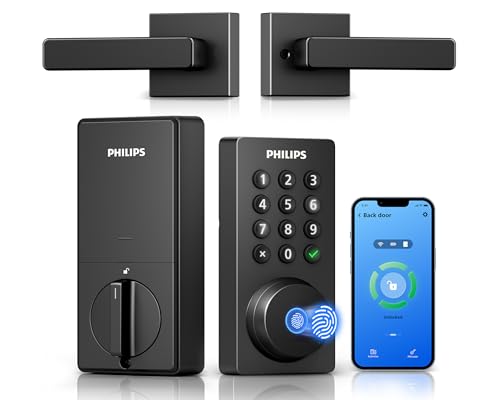
Philips WiFi Keypad Door Lock with Handle, Built-in WiFi, APP Remote Control, Voice & Fingerprint Unlock, Smart Locks for Front Door with Auto Lock, Digital Front Door Lock Set, Keyless Entry Deadbolt
Connect to 2.4GHz WiFi, No Hub Needed:Connect your Philips 4200 Series Wifi Door Lock Deadbolt directly to your…
As an affiliate, we earn on qualifying purchases.
As an affiliate, we earn on qualifying purchases.
Use Unique, Randomized Codes for Each Guest
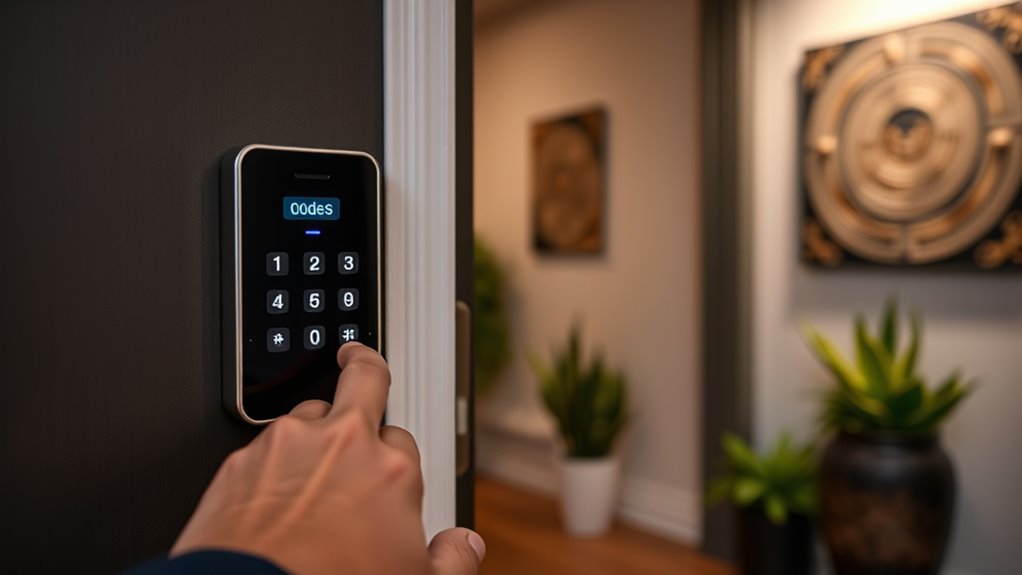
Using unique, randomized codes for each guest adds an extra layer of security to your sharing process. By assigning distinct codes, you prevent unauthorized access if one code becomes compromised. This approach simplifies code management and ensures that each guest’s access remains isolated. To visualize, here’s an example:
| Guest Name | Access Code | Purpose |
|---|---|---|
| Alice | 3f9k8L2m | Short-term visit |
| Bob | X7j9Qp4z | Housekeeping |
| Carol | N2k5T9xw | Extended stay |
Using separate codes minimizes security risks and makes it easier to revoke access individually. Remember, fresh, randomized codes are your best tool for maintaining guest access security. Additionally, understanding security best practices can further help protect your home network and shared resources.

Evanshow Fingerprint Door Lock Biometric Door Knob with Keypad Keyless Entry, 5-in-1 Door Locks for Bedrooms(Fingerprint/App/Code/Key/IC Card), Home Hotel Office Apartment Black
5-IN-1 Smart Lock: Fingerprint + Password + 2 Mechanical Keys + IC Card+ Tuya App Control; Our biometric…
As an affiliate, we earn on qualifying purchases.
As an affiliate, we earn on qualifying purchases.
Set Expiration Dates for Temporary Access

Setting expiration dates for temporary access guarantees that guests can only enter within a designated timeframe, reducing the risk of unauthorized continued entry. By configuring time-limited access, you make certain that code revocation occurs automatically once the expiration time passes, preventing lingering guest access. This not only safeguards your home but also provides peace of mind, knowing that your door codes won’t remain active indefinitely. Most smart lock systems allow you to set specific start and end times for each guest’s code, giving you control over their access window. Remember to verify that your system supports automatic code revocation or expiration features, so you don’t have to manually deactivate codes later. This proactive approach keeps your home secure and limits guest access to only when it’s needed.
Philips WiFi Keypad Door Lock with Handle, Built-in WiFi, APP Remote Control, Voice & Fingerprint Unlock, Smart Locks for Front Door with Auto Lock, Digital Front Door Lock Set, Keyless Entry Deadbolt
Connect to 2.4GHz WiFi, No Hub Needed:Connect your Philips 4200 Series Wifi Door Lock Deadbolt directly to your…
As an affiliate, we earn on qualifying purchases.
As an affiliate, we earn on qualifying purchases.
Avoid Sharing Codes Verbally or Over Unsecured Channels

Sharing temporary access codes securely is essential to maintaining control over who enters your home. When you share codes verbally or via unsecured channels, you risk exposing sensitive information, compromising guest privacy, and reducing code complexity. Instead, use encrypted messaging apps or secure platforms designed for sharing sensitive data. Avoid simple codes, as they’re easier for others to guess or share unintentionally. Consider creating unique, complex codes for each guest to enhance security. Utilizing paint sprayer tips can also serve as a reminder to choose secure methods when sharing sensitive information.
Enable Two-Factor Authentication When Possible
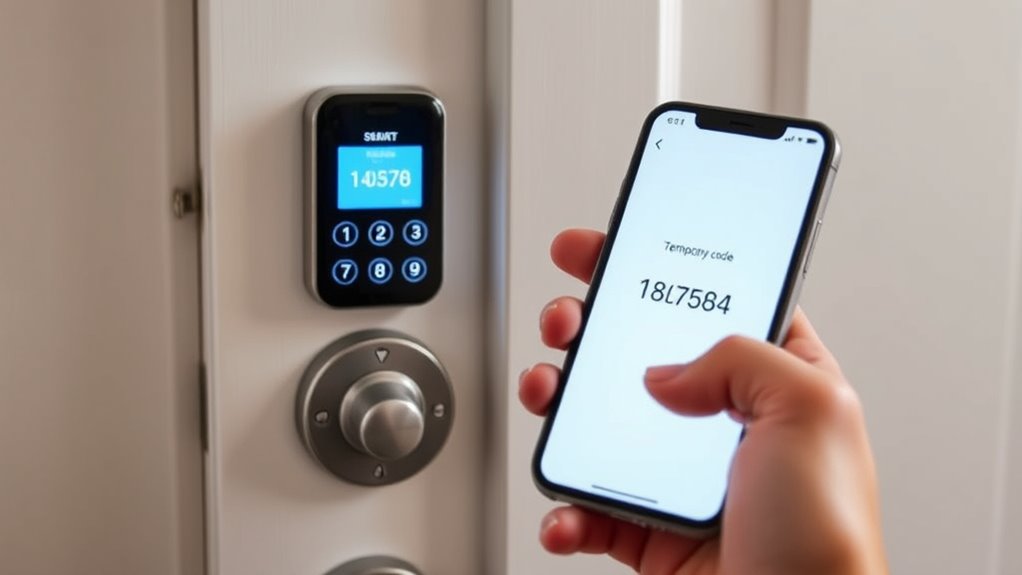
Enabling two-factor authentication adds an extra layer of security when sharing temporary codes. You can use authentication apps or enable SMS verification to guarantee only you access your accounts. This simple step helps protect your information even if your codes are intercepted. Additionally, consider using anti-aging effects from products like eye patches to maintain a fresh appearance during your interactions.
Use Auth Apps
Have you considered how using authentication apps can markedly enhance your account security? These apps generate time-sensitive codes that serve as a second layer of protection, making it harder for hackers to access your accounts. Unlike biometric authentication or hardware tokens, auth apps are often free and easy to set up on your smartphone. They eliminate reliance on SMS codes, which can be intercepted or delayed, especially when sharing temporary codes with house guests. By enabling two-factor authentication through an app, you add a robust barrier against unauthorized access. This method ensures that even if someone obtains your password, they still need the dynamic code from your app to log in, greatly strengthening your overall security. Additionally, understanding AI Security helps you stay aware of potential vulnerabilities and best practices for safeguarding your digital life.
Enable SMS Verification
Activating SMS verification adds an essential layer of security to your accounts by requiring a code sent to your phone each time you log in. This two-factor authentication helps protect your accounts even if your password management fails or passwords are compromised. When you enable SMS verification, you ensure that access requires not just your password but a unique code sent via text. This method works well alongside biometric verification, providing multiple security barriers. It’s especially useful when sharing temporary codes with house guests, as it prevents unauthorized access if someone else gains hold of your login details. Always keep your phone secure, and consider enabling SMS verification on critical accounts to enhance overall security and reduce the risk of unauthorized entry. Additionally, Kia Tuning techniques can improve vehicle security features, making your car less vulnerable to theft or tampering.
Regularly Update or Change Codes After Use

To keep your temporary codes secure, it’s essential to update or change them regularly after each use. This practice helps protect guest privacy by preventing unauthorized access if a code is compromised. When you update codes frequently, you reduce the risk of someone guessing or reusing old codes, especially if you’ve used simple or predictable combinations. Aim for high code complexity—using a mix of numbers, letters, and symbols—to make it harder for anyone to crack. Changing codes after each guest ensures that only current visitors have access, minimizing potential security breaches. Regular updates also give you peace of mind, knowing your property stays protected even if a code is inadvertently shared. Implementing this simple step greatly enhances your overall security strategy. Incorporating security best practices such as these further strengthens your access control measures.
Limit Access Permissions and Set Restrictions

To keep your shared codes secure, you should assign unique codes for each recipient. Setting time limits guarantees access expires after a certain period, reducing risks. By applying these restrictions, you control who can access your resources and for how long. Implementing smart security features can further enhance control over shared access.
Assign Unique Codes
When assigning unique codes for temporary access, it’s essential to limit permissions and set restrictions to prevent misuse. Consider your guest behavior and think about what areas they truly need to access. Creating simple, predictable codes can lead to security risks, so opt for complex combinations that are difficult to guess. Assigning unique codes ensures each guest’s access is isolated, making it easier to revoke or modify permissions if needed. Avoid reusing codes or giving out master access unless absolutely necessary. By tailoring codes to specific guests and restricting their functionality, you reduce the chances of accidental or intentional misuse. Remember, the goal is to provide enough access to be helpful while maintaining control over your home’s security.
Set Time Limits
Setting time limits on temporary access is essential for maintaining security and control. By restricting how long guests can use their access codes, you reduce the risk of unauthorized entry. Use access code complexity by creating unique, difficult-to-guess codes that expire after a set time. Many smart lock systems allow you to set specific start and end times for each code, ensuring guests only have access during their stay. Additionally, consider guest authentication methods like two-factor verification or temporary PINs, which can automatically deactivate once the time limit expires. Setting clear restrictions helps prevent accidental or malicious misuse of your home’s security. Regularly review and update these time limits to keep your property protected while providing your guests a seamless experience. Incorporating vetted security features can further enhance control and peace of mind.
Educate Guests on Security Best Practices
Educating guests on security best practices is essential to prevent unauthorized access and protect sensitive information. When you inform your guests about guest security, you help ensure they understand the importance of safeguarding the temporary code. Emphasize the need for responsible code management, such as not sharing the code with others or writing it down in visible places. Encourage guests to avoid using easily guessable codes and remind them to secure their devices and accounts. Clear communication about these practices reduces the risk of accidental breaches. By setting expectations upfront, you create a culture of security awareness that benefits everyone. Proper guest education minimizes vulnerabilities and makes it less likely that unauthorized persons will access your home or personal data. Additionally, applying home decor principles, such as organizing shared spaces and using aesthetic yet discreet storage solutions, can help reinforce a secure environment.
Monitor and Audit Access Activity Periodically

Monitoring and auditing access activity regularly helps guarantee that your security measures remain effective over time. By reviewing access logs, you can identify unusual or unauthorized user activity early, preventing potential breaches. Regular audits help ensure that temporary codes are used appropriately and that no one gains access beyond their authorized period.
To stay on top of security, consider:
- Checking access logs for suspicious activity
- Tracking user activity during each access period
- Noting any failed login or entry attempts
- Removing or disabling codes when no longer needed
This ongoing review process helps you respond quickly to any anomalies, maintaining control over your home’s security and ensuring your guests’ access remains safe and temporary.
Frequently Asked Questions
How Can I Ensure Guests Don’t Share Codes With Others?
To guarantee your guests don’t share codes with others, focus on maintaining guest privacy and strict access control. You can set temporary, unique codes that expire after a certain time or after use. Communicate clearly that sharing is prohibited, and consider using smart locks with activity logs to monitor access. This way, you keep control over who enters your home and protect your privacy effectively.
What Should I Do if a Code Is Compromised?
Did you know that 30% of security breaches involve compromised access codes? If a code is compromised, you should immediately change it and enable code encryption for future use. Conduct guest verification to confirm who has access, and avoid reusing old codes. Regularly updating codes and monitoring entry logs helps prevent unauthorized access, ensuring your home stays secure even when setbacks occur.
Are There Apps That Automate Temporary Code Sharing Securely?
You can use apps that automate digital lock management, making guest authentication methods more secure. These apps generate and send temporary codes, ensuring only authorized guests access your home. They often include features like time-limited codes and real-time access control, reducing the risk of compromised codes. By choosing a trusted app, you simplify sharing secure temporary codes and keep your home protected without manual management.
How Often Should I Change Access Codes for Security?
When it comes to your security, don’t put all your eggs in one basket. You should change access codes regularly—about every few weeks or after a visitor screening—especially if you have frequent guests. Keep an eye on access logs to monitor activity and catch any suspicious entries. Regular updates minimize risks, ensuring your home stays safe and your peace of mind intact.
Can I Restrict Specific Times When Codes Are Valid?
You can set time restrictions and code expiration for your access codes, giving you control over when they’re valid. Many smart lock systems allow you to specify exact times, guaranteeing guests only have access during their stay. This enhances security by limiting unauthorized use outside designated hours. By configuring these features, you make certain your home stays protected, and you don’t have to worry about forgotten or misused codes after guests leave.
Conclusion
By following these steps, you’ll turn your home into an impenetrable fortress—more secure than Fort Knox! No sneaky guest will crack your codes, no matter how clever they are, and you’ll have total control over who gets in and when. Your home will be so protected, even the most mischievous spies will give up trying. With these practices, you’ll sleep soundly knowing your sanctuary is locked tighter than a vault—invincible and unstoppable!