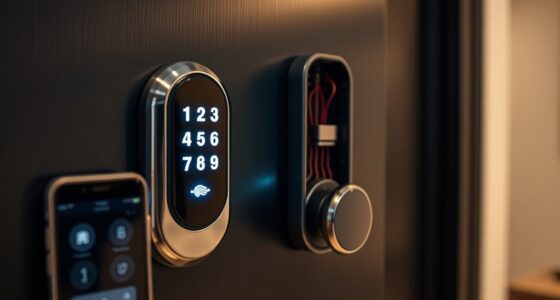

Many popular smart locks have vulnerabilities that let intruders bypass digital security through mechanical means. These flaws often stem from weak materials, exposed internal components, or poor design choices that make forced entry or lock-picking easier. Mechanical keys or manual overrides can be exploited if not properly secured, and internal parts may be manipulated without special tools. Understanding these weaknesses helps you see how physical attack methods work—keep exploring to learn more about protecting your home.
Open a free Amazon Business account
Business pricing, bulk buying and tax-exempt orders.
As an affiliate, we earn on qualifying purchases.
Key Takeaways
- Many smart locks include mechanical backups that can be exploited through lock-picking or forced entry.
- Design flaws and weak materials in internal components enable manipulation without advanced tools.
- External exposure of mechanical parts allows attackers to tamper or insert bypass tools easily.
- Poor integration of mechanical and electronic systems creates vulnerabilities for mechanical bypass methods.
- Insufficient security standards in some models leave internal tumblers and pins susceptible to manipulation.

Smart locks have become popular for their convenience and modern design, but they also come with security risks. One significant concern is the potential for unauthorized physical access through mechanical bypass vulnerabilities. While these devices are often praised for their digital security features, they can still be compromised if their mechanical components are flawed or poorly designed. Understanding these vulnerabilities helps you recognize how someone might circumvent the lock without needing to hack into the digital system.
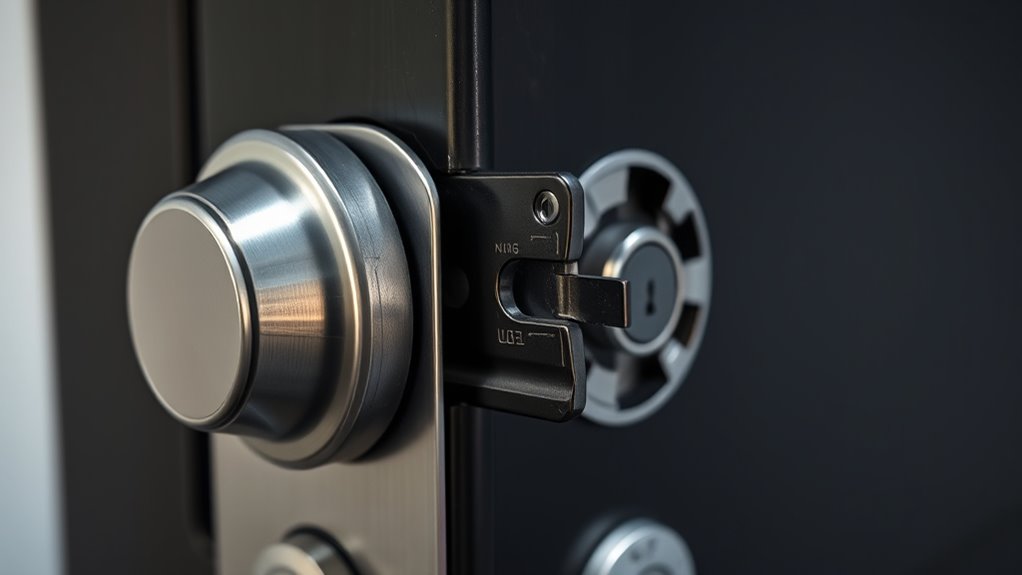
Many smart locks rely on mechanical parts like keys, thumb turns, or manual override functions. If these components aren’t engineered properly, they can be exploited. For example, some locks feature a mechanical key backup intended for emergencies, but if that backup isn’t secured correctly, an intruder might simply pick the lock or manipulate the mechanical parts to gain entry. Mechanical design flaws, such as weak materials or exposed components, make it easier for someone to force open the lock or manipulate its internals. This is especially problematic in locks that don’t integrate well with the electronic parts, leaving gaps or weaknesses that can be exploited through physical means.
Mechanical backup keys and exposed components can be exploited if not properly secured or engineered.
Unauthorized physical access can occur even if the digital security is robust. A thief or intruder might bypass the electronic controls altogether by tampering with the lock’s mechanical elements. For instance, they might use lock-picking tools or apply force to break the lock’s housing. If the lock’s design doesn’t account for such attacks, these methods become straightforward. Mechanical vulnerabilities often stem from the lock’s internal design, such as poorly secured tumblers or pins that can be manipulated without sophisticated tools. These flaws are sometimes overlooked during manufacturing, especially in cheaper models, making them attractive targets for burglars.
Additionally, some smart locks have mechanical parts that are exposed or easily accessible from the outside, giving an intruder an opportunity to tamper with them directly. If the lock’s casing isn’t sturdy enough or if there are gaps around the mechanical components, it’s easier to insert tools or manipulate the lock’s internals. The key takeaway is that a lock’s security isn’t just about digital encryption or app controls; the mechanical design plays a vital role. If it’s flawed or poorly constructed, it becomes a weak point that can be exploited without needing to bypass the digital layer. Furthermore, proper security standards and testing can help identify and mitigate these mechanical vulnerabilities before they are exploited.
smart lock mechanical backup key
As an affiliate, we earn on qualifying purchases.
As an affiliate, we earn on qualifying purchases.
Frequently Asked Questions
Can Mechanical Bypass Methods Be Detected Remotely?
No, mechanical bypass methods can’t be remotely detected. You won’t get remote detection of physical tampering or bypass indicators, since these involve direct manipulation of the lock’s hardware. However, some smart lock systems monitor for suspicious activity or abnormal patterns, which might indirectly alert you to potential bypass attempts. Still, physical bypass methods leave no digital trail, so you need to regularly inspect your lock for visible signs of tampering.
Are There Specific Models More Vulnerable to Bypass Techniques?
Some smart lock models are more vulnerable to bypass techniques because of specific model vulnerabilities and manufacturing flaws. You should check reviews and security reports to identify which models have known weaknesses. Keep in mind that cheaper or older models often lack robust security features, making them easier targets. By choosing locks from reputable manufacturers with a strong security track record, you reduce your risk of falling prey to bypass methods.
How Often Do Manufacturers Issue Security Updates for Bypass Vulnerabilities?
Manufacturers typically issue security updates for bypass vulnerabilities every few months, but it varies depending on the brand. You should check the manufacturer’s update schedule regularly, as some release patches more frequently than others. Staying informed about security patch frequency helps you guarantee your smart lock stays protected. To maximize security, enable automatic updates if available and monitor manufacturer alerts for any critical patches.
What Legal Risks Are Involved in Attempting Mechanical Bypass?
Attempting a mechanical bypass can lead to serious legal risks, like criminal charges and legal liability. For example, if you break into a neighbor’s property using bypass methods, you could face burglary charges. Even if you own the property, unauthorized access may still result in legal consequences. Always consider these risks before trying to bypass security measures—law enforcement takes unauthorized entry very seriously.
Do Insurance Policies Cover Damages From Bypass Attempts?
Your insurance policy might not cover damages caused by bypass attempts, as many exclude intentional or unauthorized actions. You should review your policy’s terms on insurance claims and liability coverage before trying any bypass. If damages occur during a legitimate break-in or under circumstances covered by your policy, your insurer could cover repairs. However, attempting bypasses without approval risks voiding coverage and increasing your liability.
As an affiliate, we earn on qualifying purchases.
Conclusion
So, now that you know about these hidden mechanical bypass vulnerabilities, don’t assume your smart lock is invincible. Hackers could exploit these flaws when you least expect it, leaving your home vulnerable. Stay vigilant, keep your lock updated, and consider backup security measures. Because in the world of smart locks, the real threat isn’t just digital—it’s what you don’t see coming. Are you truly protected, or is your home still at risk?
As an affiliate, we earn on qualifying purchases.
As an affiliate, we earn on qualifying purchases.
Fall Picks
fall essentials
As an affiliate, we earn on qualifying purchases.