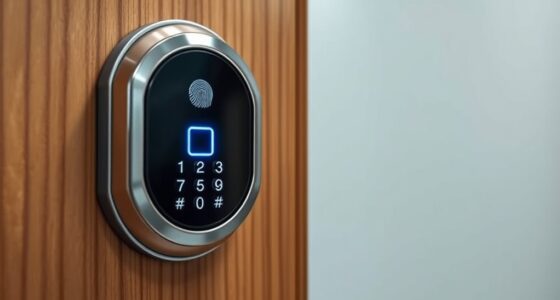

To prevent lockouts from battery failure, you should rely on smart lock safeguards like proactive alerts, which notify you before the batteries die. Regularly check battery levels through your app or control panel, and consider physical indicators like blinking lights or alarms for added awareness. Backup power options, such as portable power banks or spare batteries, give you peace of mind during emergencies. Staying vigilant with these tips means you’ll be prepared—continue to discover more ways to stay secure.
Key Takeaways
- Enable proactive battery level alerts via app or email to notify when power is low before complete failure.
- Use physical indicators like blinking lights or alarms to supplement digital notifications of low batteries.
- Incorporate backup power sources, such as secondary batteries or portable power banks, for emergency unlocking.
- Regularly monitor battery status and familiarize with your lock’s backup features to prevent unexpected lockouts.
- Customize alert thresholds and combine digital alerts with physical cues for comprehensive battery-fail safeguards.

Smart locks rely heavily on batteries to keep your home secure, but when those batteries fail, it can leave you locked out or vulnerable. To prevent this, many smart lock manufacturers incorporate battery-fail safeguards designed to alert you before complete power loss occurs. One of the most effective features is alert notifications, which send you a warning through your smartphone app or via email when the battery level drops below a certain threshold. These alerts give you ample time to replace the batteries, guaranteeing your lock remains operational and your home stays protected. Staying proactive with these notifications means you won’t be caught off guard during critical moments, like late at night or when you’re in a rush.
Smart lock alerts ensure you’re notified before battery failure leaves you vulnerable.
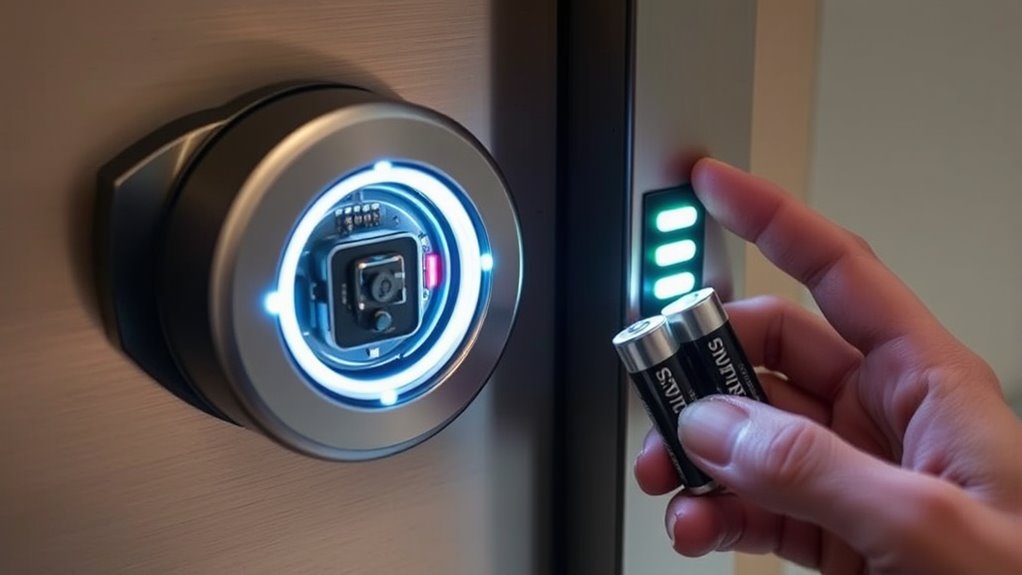
In addition to alert notifications, some smart locks offer a power backup option, providing an extra layer of security. This backup comes in various forms, such as a physical battery compartment or a secondary power source like a portable power bank. When the main batteries run out, these backups kick in, allowing you to unlock your door without hassle. Power backup options are especially useful if you’re away from home and can’t immediately replace batteries. They serve as a fail-safe, giving you peace of mind knowing that your smart lock can endure unforeseen battery failures. Battery management is a crucial aspect of smart lock design, ensuring reliable operation over time.
It’s essential to familiarize yourself with how your specific smart lock manages power backup and alerts. Regularly checking the battery status through the lock’s app or control panel guarantees you stay ahead of potential failures. Many systems also let you customize alert thresholds, so you can receive notifications at the battery level that’s most convenient for you. This proactive approach minimizes the chance of getting locked out unexpectedly.
Moreover, some smart locks come equipped with audible alarms or blinking indicator lights to notify you when batteries are low. These physical cues supplement digital alerts, offering multiple ways to stay informed. If you notice these signs, it’s best to replace the batteries immediately to avoid inconvenience. Remember, relying solely on backup power without paying attention to alert notifications could still put you at risk. Combining power backup options with timely alerts creates a comprehensive safeguard, ensuring continuous security and access.
Frequently Asked Questions
How Long Do Backup Batteries Typically Last in Smart Locks?
Backup batteries in smart locks typically last between 24 to 48 hours, depending on power consumption and battery capacity. If your lock’s power consumption is low, the backup battery can endure longer. To maximize backup duration, select a lock with higher battery capacity and monitor power usage regularly. Always keep fresh backup batteries on hand, and test the backup system periodically to confirm it functions when needed.
Can Smart Locks Be Bypassed During a Battery Failure?
During a battery failure, smart locks can often be bypassed using a power override or battery bypass method. You can connect an external power source, like a portable battery pack, to temporarily power the lock and open it. Some models also include a manual key backup, ensuring you won’t get locked out. Always check your lock’s manual for specific bypass procedures to avoid inconvenience during power or battery issues.
Are There Signs Indicating the Battery Is About to Fail?
Like a warning shot before a storm, your smart lock’s battery indicators and power alerts serve as signals that your battery’s life is waning. You’ll notice dimming LEDs or notifications on your app, alerting you to replace the batteries soon. Ignoring these signs risks lockout, so stay vigilant. Regularly check these indicators, and don’t wait for a complete power failure—prevention keeps your smart lock reliable.
Do All Smart Locks Have Fail-Safe Mechanisms?
Not all smart locks have fail-safe mechanisms, but many do to guarantee battery durability and prevent lockouts. These locks often include power redundancy features, like backup batteries or mechanical key access. You should check your lock’s specifications to see if it offers these safeguards. If it does, you’ll benefit from added security and peace of mind, knowing you won’t get locked out if the main battery fails unexpectedly.
What Maintenance Is Required to Ensure Battery Safety?
Did you know that over 80% of smart lock failures are due to battery issues? To keep your lock safe, regularly perform battery replacement before the power runs out, and monitor battery levels through the app or lock interface. This proactive maintenance ensures your lock stays functional, preventing unexpected lockouts. Checking batteries monthly and replacing them as needed helps maintain peak performance and enhances your home’s security.
Conclusion
By understanding battery-fail safeguards, you protect your smart lock, prevent lockouts, and guarantee peace of mind. You stay prepared with backup options, you stay aware of battery status, and you stay confident in your home’s security. Implementing these safeguards means you avoid inconvenience, you avoid vulnerability, and you avoid frustration. Ultimately, you take control, you maintain safety, and you keep your smart lock reliable—because proactive measures make all the difference in safeguarding your home.