
Frequent updates can keep your device secure and running smoothly, but they often drain your battery faster due to larger downloads and background activities. Waiting to update saves power but can expose your device to security risks. Balancing security needs with battery life means scheduling updates when your device is charged and connected to Wi-Fi, and limiting background processes. Keep exploring to discover effective ways to optimize both device performance and energy use.

Get privacy and security gear delivered free — and shop member deals
- Fast, free delivery on millions of items
- Access to Prime Big Deal Days deals on October 6–7
- Prime Video, Amazon Music and more included
Key Takeaways
- Frequent updates can increase battery drain due to repeated downloads, installations, and background processing.
- Delaying updates may conserve battery but can leave devices vulnerable to security risks.
- Scheduling updates during charging or low-usage periods optimizes power efficiency.
- Larger, more complex updates require more energy, impacting overall battery life.
- Balancing update frequency with device health involves managing background activities and update timing.
As an affiliate, we earn on qualifying purchases.
Should I Update My Device Now or Wait to Save Battery?
When your device prompts you to update, you might wonder whether to do it immediately or wait to conserve battery life. Updating right away can sometimes drain your battery faster, especially if the update is large or requires multiple downloads. On the other hand, delaying updates might leave your device less secure or missing out on new features. If you’re aiming for better battery optimization, consider updating when your device is charged and connected to power. Waiting for a convenient moment allows you to manage your device’s update schedule without risking immediate battery drain. Additionally, understanding your device’s power consumption patterns can help you make more informed decisions about when to perform updates. Keeping track of performance metrics can further guide you to optimal update times. Ultimately, balancing update timing with your device’s power needs helps maintain both performance and longevity. Proper update scheduling is a key part of managing your device’s overall health. Implementing battery management techniques can further extend your device’s usability during critical times. Simple strategies from your trusted guide can help you create a calm, organized home environment even when managing device updates.
As an affiliate, we earn on qualifying purchases.
How Do Firmware and App Updates Affect Battery Life?

Firmware and app updates can substantially impact your device’s battery life, often by optimizing how hardware and software work together. When firmware is updated for better firmware efficiency, it streamlines processes, reducing unnecessary power drain. Similarly, updates improve app compatibility, ensuring apps run smoothly without causing excessive battery use. An optimized firmware minimizes background activity and enhances power management, helping your device last longer. Conversely, poorly optimized updates can introduce inefficiencies, causing apps or hardware components to consume more power. Staying current with updates can improve overall battery performance by resolving bugs and enhancing firmware efficiency. Additionally, some updates may include new features that could temporarily increase power consumption until the device adjusts. Regular updates also incorporate security patches, which can prevent malicious activities that might drain your battery unexpectedly. Moreover, software optimization in updates helps balance performance and power use, ensuring your device maintains battery health over time. Being aware of hardware interactions can further help in understanding how updates influence energy consumption. Keeping your device’s firmware and software up-to-date can also prevent unnecessary power drain caused by outdated code.
power management battery case for smartphones
As an affiliate, we earn on qualifying purchases.
As an affiliate, we earn on qualifying purchases.
What Causes Some Updates to Use More Power Than Others?
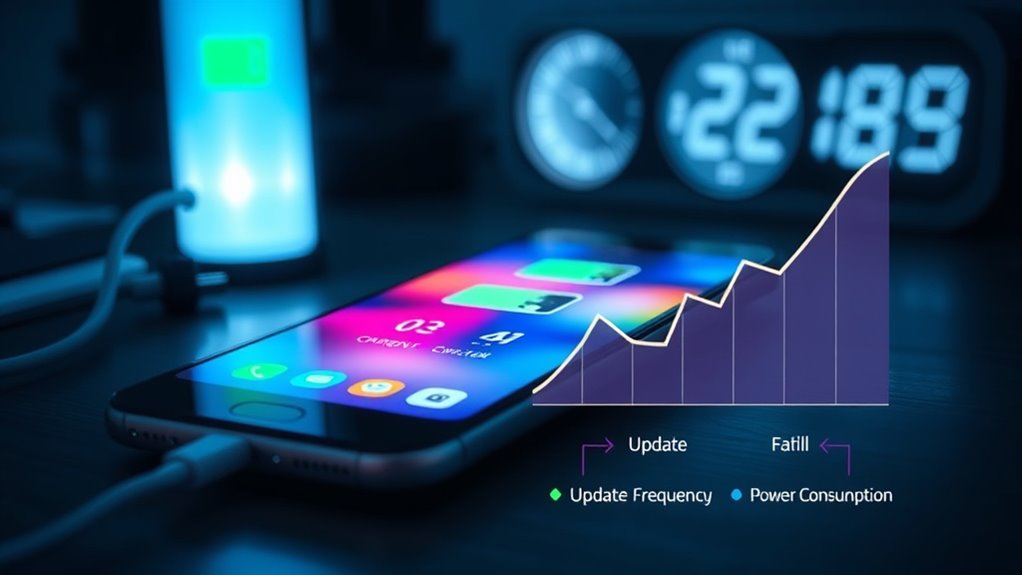
Different updates can drain your battery more because they activate background activities and processes that run without your direct input. Additionally, updates that rely on hardware-intensive features, like high-resolution graphics or sensors, tend to use more power. Understanding these factors helps you see why some updates impact your battery life more than others.
Background Activities and Processes
Background activities and processes can considerably impact how much power an update consumes, even if the update itself is small. When your device runs multiple background processes, it uses extra battery to keep apps up-to-date, sync data, or perform maintenance tasks. These activities often happen without you noticing, but they can cause significant power drain during an update. Efficient battery optimization relies on managing these background processes, preventing unnecessary power usage. If your device allows, disabling or restricting background activities can reduce overall power consumption during updates. Understanding how background activities influence energy use helps you minimize battery drain, especially when updates trigger multiple background tasks simultaneously. Keeping background processes in check is key to balancing update performance with extended battery life. Additionally, some devices offer battery management features that help control background activity more effectively. Being aware of how background processes operate can enable you to make smarter choices about when and how to perform updates for optimal energy efficiency.
Hardware Intensity and Usage
The hardware components your device uses during an update considerably influence how much power it consumes. Hardware considerations, like the processor, graphics unit, and storage type, determine how efficiently updates run. If your device relies on a high-performance CPU or a GPU, these components may draw more power during intensive tasks. Additionally, usage patterns impact power consumption; frequent multitasking or running background processes during updates can increase energy drain. Updates that involve large data transfers, complex graphics, or hardware-intensive features will naturally use more power. Understanding your device’s hardware and how you typically use it helps predict which updates will consume more energy. By managing hardware demands and tailoring usage habits, you can optimize battery life while keeping your device updated effectively.
As an affiliate, we earn on qualifying purchases.
How Background Apps and Processes Increase Battery Drain During Updates?
When your device runs updates, active background apps and processes can considerably increase battery drain without you even realizing it. Background apps often continue to run tasks, sync data, or fetch updates, which adds to your device’s overall power consumption. During updates, these processes may compete for system resources, forcing your device to work harder and consume more energy. This ongoing activity keeps the CPU and other components active longer, draining your battery faster. Additionally, smart appliances connected to your device may also perform background operations that contribute to power usage. By limiting background app activity during updates, you can reduce unnecessary power consumption and help extend your device’s battery life during these critical update periods. Managing background processes effectively can significantly improve battery longevity during these times, especially when performance optimization techniques are employed. Being aware of system resource management can further assist in minimizing unnecessary background activity and conserving battery life.
Does Update Size and Frequency Impact Battery Consumption?
Larger update files and more frequent updates tend to consume more battery power because they require longer download and installation times, keeping your device’s components active for extended periods. When the update size is big, your device works harder to transfer data, which drains the battery faster. Similarly, high update frequency means your device repeatedly wakes up and processes updates, adding to energy consumption. To visualize this, consider the table below:
| Update Size | Update Frequency | Impact on Battery |
|---|---|---|
| Large | Frequent | High |
| Large | Infrequent | Moderate |
| Small | Frequent | Moderate |
| Small | Infrequent | Low |
Reducing update size or frequency can help conserve battery, especially when you’re aiming to extend device usage between charges. Being mindful of update management practices can further optimize energy use and prolong your device’s battery life. Additionally, adjusting software update settings to limit background updates can contribute to energy savings. Recognizing the impact of update frequency on battery life can help users make informed decisions to balance device performance and longevity. Moreover, understanding how update size influences power consumption can assist in planning updates more efficiently. Being aware of update scheduling options allows for better control over when updates are installed, further conserving energy during critical times.
Key Factors That Influence Battery Use During Device Updates
When updating your device, the size of the update can substantially affect battery life, as larger files take more power to download and install. Your network connection also plays a role—using Wi-Fi typically consumes less battery than cellular data. Additionally, active background apps can increase power draw during updates, making it important to close unnecessary programs for ideal battery use. Being aware of essential oils for device health can help you maintain optimal performance and longevity of your device, just as proper technological integration supports efficient device management.
Update Size Impact
Have you ever wondered how the size of a device update affects your battery life? Larger updates increase the download impact, requiring more energy to transfer and process. A bigger update consumes more power during the download and installation phases, which can drain your battery faster. Keep in mind:
- Larger update size means longer download times, increasing battery drain.
- The device’s processor works harder to unpack and install bigger files, using more energy.
- Frequent large updates can cumulatively reduce battery life over time.
Network Connectivity Effects
Network connectivity plays a essential role in determining how much battery your device uses during updates. When your signal strength is weak, your device works harder to maintain a connection, increasing battery drain. High network latency causes longer download times, leading to prolonged energy consumption. Fast, stable connections reduce update time and save power, while poor connectivity extends the process and drains your battery faster. To visualize this, consider the factors below:
| Factor | Effect on Battery Usage |
|---|---|
| Signal strength | Weak signals increase power consumption |
| Network latency | Higher latency prolongs updates |
| Connection type | Wi-Fi generally uses less power than cellular |
| Data transfer rate | Faster rates save battery time |
| Network stability | Stable connections optimize power use |
Improving connectivity minimizes battery drain during updates.
Background App Activity
Background app activity substantially impacts your device’s battery life during updates. When apps run in the background, they consume power through processes like data syncing and notifications. Managing background app activity through background app management helps reduce unnecessary power drain. Additionally, reviewing app permission settings can prevent apps from performing background tasks without your knowledge. You can disable background activity for specific apps or restrict permissions that allow them to update or sync in the background. This not only conserves battery but also improves device performance during updates. Being proactive with background app management ensures your device uses power efficiently, especially when updating, so your battery lasts longer and your updates proceed smoothly.
Tips to Balance Device Security and Battery Life When Updating
Balancing device security and battery life during updates can be challenging, but with some strategic steps, you can protect your data without draining your battery unnecessarily. Start by planning your update scheduling during times when your device is plugged in or has a strong battery charge. This helps maximize battery efficiency and ensures updates don’t occur when power is low. Additionally, enable automatic updates only when connected to Wi-Fi, reducing unnecessary battery drain from mobile data use. Consider postponing non-urgent updates until you’re near a charger or during periods of low device activity. By choosing ideal times and managing update settings carefully, you maintain security without sacrificing battery life, keeping your device protected and running smoothly.
Best Practices to Minimize Battery Drain During Firmware and App Updates
To further reduce battery drain during updates, focus on optimizing how and when your device performs firmware and app installations. Proper update scheduling and effective power management can markedly extend your battery life. Schedule updates during times when your device is plugged in or when battery levels are high, avoiding unnecessary drain during low power. Additionally, consider limiting background processes that may run during updates to conserve energy. Keep your device connected to Wi-Fi to avoid cellular power consumption. Enable automatic updates only when necessary, and disable them during critical low-battery situations. By managing update timing and background activity, you ensure updates happen efficiently without compromising your device’s power.
- Prioritize updates when your device is charged or plugged in
- Limit background processes during update periods
- Use Wi-Fi to reduce cellular power consumption
How to Detect and Manage Battery Usage Related to Updates?
Detecting and managing battery usage related to updates starts with monitoring your device’s power consumption during and after installation. Use built-in battery diagnostics tools to identify any unusual drain caused by recent updates. These tools help you pinpoint apps or processes that consume excessive power, especially those running in the background. To improve power management, close unnecessary applications and disable background activity for updates if possible. Keep an eye on battery health metrics to spot patterns indicating update-related issues. Regularly checking these diagnostics allows you to take proactive steps, such as uninstalling problematic updates or adjusting settings to reduce energy use. Effective monitoring guarantees you maintain excellent battery performance while keeping your device up to date.
When Is It Safe to Delay Updates Without Risking Security?
Knowing when it’s safe to delay updates without risking security depends on understanding the nature of the updates and your device’s usage. Not all updates address critical software vulnerabilities; some are feature improvements or bug fixes. If an update patches known security flaws, delaying it increases your risk. However, if it’s a minor update or scheduled for release soon, postponing temporarily might be acceptable.
Delaying updates is safe if they don’t fix critical security issues or are scheduled soon.
Consider these points:
- Delay updates only when they don’t fix major security vulnerabilities.
- Prioritize update scheduling based on the urgency of security patches.
- Stay informed about the severity of vulnerabilities addressed in upcoming updates.
Balancing update timing helps protect your device while managing battery life efficiently.
Frequently Asked Questions
Can Updating Apps Improve Overall Battery Performance?
Updating your apps can improve overall battery performance by fixing bugs and optimizing app code. When you update, you reduce unnecessary background activity that drains your battery. App optimization ensures apps run efficiently, lowering power consumption. Regular updates also help prevent apps from misbehaving or overusing resources, so your device preserves battery life longer. Keep your apps updated to experience smoother performance and extended battery life.
Do Longer Device Update Sessions Drain the Battery Faster?
Think of your device as a busy city. Longer update sessions are like extended city events that keep the streets crowded. These prolonged updates drain the battery faster because they keep background processes active longer, pushing the hardware to work harder. Proper hardware optimization can help, but extended sessions still consume more power. To save energy, try to limit update times and close unnecessary background processes during updates.
How Do Hardware Differences Affect Update-Related Battery Use?
Hardware differences markedly impact update-related battery use. You’ll notice that devices with better hardware optimization and more efficient chipsets consume less power during updates. Modern chipsets are designed to optimize performance while minimizing energy drain, so if your device has a high-efficiency chipset, it’ll handle updates more smoothly without draining the battery as quickly. Upgrading hardware or choosing devices with optimized chipsets can help you extend battery life during update sessions.
Are There Specific Update Types That Conserve More Battery?
Think of your device like a car—some updates are like quick pit stops, while others are full refuels. You’ll conserve more battery with smaller, targeted updates that focus on essential fixes, aiding battery optimization. To maximize battery life, schedule updates during times when you’re plugged in or when your device’s screen is off. This way, you minimize unnecessary drain and keep your device running smoothly.
Does Using Wi-Fi vs. Mobile Data Impact Update Battery Consumption?
Using Wi-Fi generally improves efficiency and consumes less battery than mobile data when updating your device. Wi-Fi’s stable connection means less power is needed for data transfer, whereas mobile data impacts your battery more due to higher energy use during cellular transmission. If you want to conserve battery life, prefer Wi-Fi for updates. Keep in mind, frequent updates over mobile data can drain your battery faster than when using Wi-Fi.
Conclusion
Balancing battery life with timely updates can be tricky, but it’s worth it for both security and performance. By understanding how updates impact power and following best practices, you can optimize your device’s longevity without risking vulnerabilities. So, next time you consider delaying an update, ask yourself: isn’t your device’s health—and your peace of mind—worth a little extra attention? After all, isn’t staying connected and secure what truly matters?
Fall Picks
fall essentials
As an affiliate, we earn on qualifying purchases.