Biometric locks are generally safer because they use unique physical features like fingerprints or facial recognition, making them hard to duplicate. However, they can be vulnerable to hacking or spoofing if not well-secured. PIN locks are more affordable and simple but may be guessed or compromised through shoulder surfing or data breaches. To get a clear picture of which options offer better security for your needs, you’ll find helpful insights if you continue exploring.
Key Takeaways
- Biometric locks offer quick, contactless access but are vulnerable to spoofing and data breaches, while PINs can be guessed or shared.
- Biometric data is immutable; if compromised, it cannot be changed, unlike PINs which can be reset.
- Combining biometrics with PINs (multi-factor authentication) enhances overall security versus relying solely on one method.
- Environmental factors can affect biometric accuracy, whereas PINs are generally unaffected by external conditions.
- PIN systems are typically more affordable and easier to reset after security breaches compared to biometric systems.

Fingerprint Door Lock, Smart Fingerprint Door Knob with Lock, Biometric Door knob with App Control & Key, Keyless Thumbprint Entry Door Lock for Bedroom, Front Door, Home, Apartment Office-Matte Black
[Secure Your Home with Smart Door Lock] Our upgraded fingerprint door lock offers easy unlocking options using your…
As an affiliate, we earn on qualifying purchases.
As an affiliate, we earn on qualifying purchases.
Understanding the Functionality of Biometric and PIN Locks
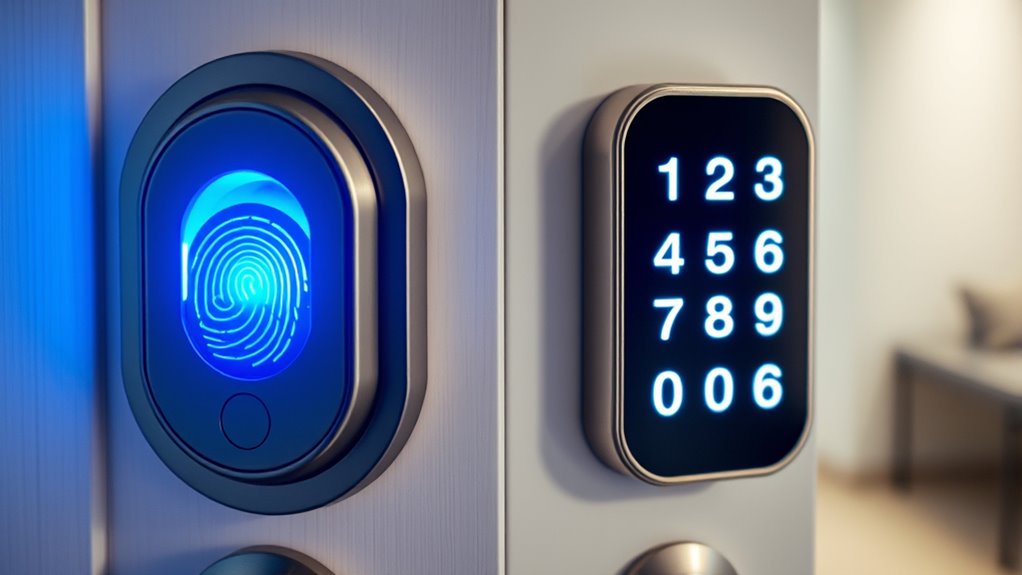
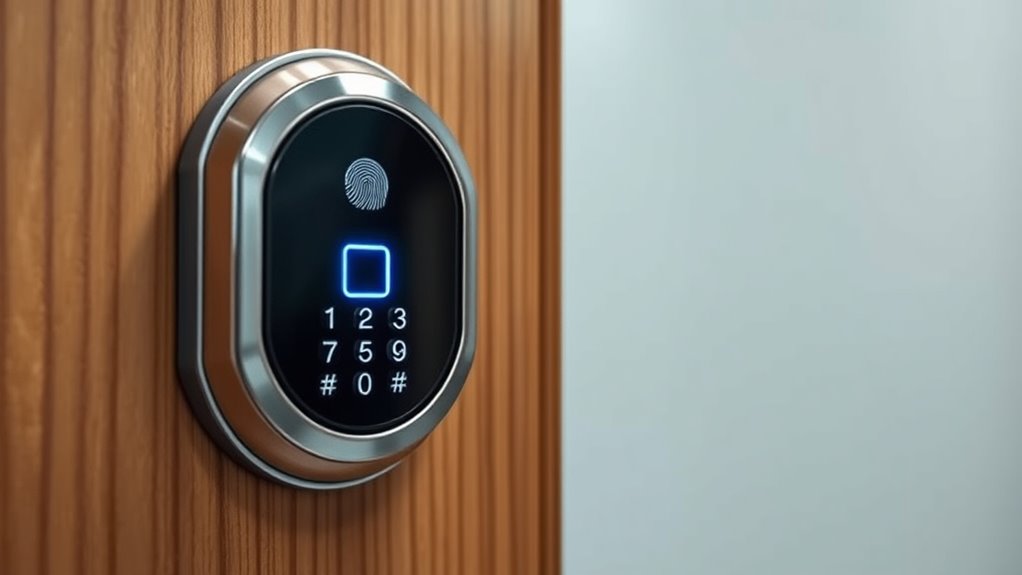
Biometric and PIN locks serve as security measures that protect your property, but they operate in distinctly different ways. With biometric locks, you use your unique physical features like facial recognition or fingerprint scanning to gain access. Facial recognition scans your face, matching it against stored data to verify identity swiftly and seamlessly. Fingerprint scanning reads the ridges and patterns on your fingertip, ensuring only authorized users can *release* the door. PIN locks, on the other hand, require you to remember and enter a numeric code. While PINs are straightforward and don’t rely on physical traits, they can be less secure if someone observes or guesses your code. Understanding these mechanisms helps you choose the right lock to suit your security needs. Additionally, environmental factors such as weather conditions and lighting can influence the effectiveness of biometric systems.

Philips Wi-Fi Door Lock, WiFi Smart Lock Keyless Entry Deadbolt for Front Door, Compatible with Alexa & Google Assistant, Remote Control, Built-in WiFi, APP Fingerprint Passcode Unlock, Auto Locking
𝐅𝐥𝐞𝐱𝐢𝐛𝐥𝐞 𝐖𝐚𝐲𝐬 𝐭𝐨 𝐔𝐧𝐥𝐨𝐜𝐤: Unlock the way you want: app, passcode, fingerprint, physical key, or voice via Alexa/Google…
As an affiliate, we earn on qualifying purchases.
As an affiliate, we earn on qualifying purchases.
Common Security Features and Safeguards
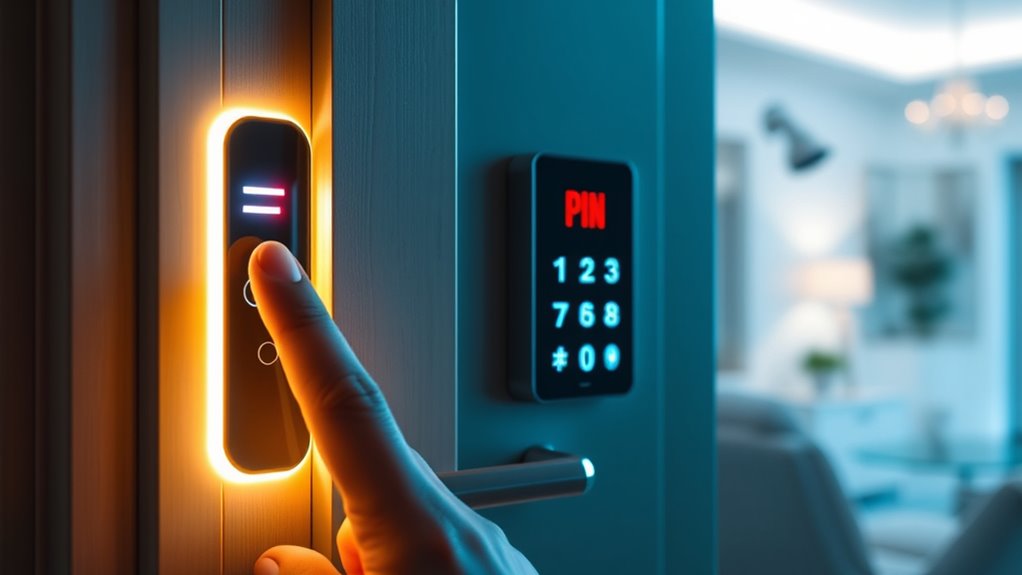
Both biometric and PIN locks incorporate a variety of security features designed to protect your property from unauthorized access. These safeguards enhance access control and strengthen user authentication. Common features include encryption to prevent hacking, multiple user profiles for controlled access, and fail-safe mechanisms that lock out after repeated incorrect attempts. These measures ensure only authorized individuals gain entry while deterring malicious attacks. Additional safeguards may involve time-based access restrictions, audit logs for activity tracking, and alert systems for suspicious activity. A user-friendly interface can also help prevent accidental lockouts and improve overall security management. By combining these features, both lock types aim to provide robust security and peace of mind, making it clear that thoughtful safeguards are integral to effective smart lock systems.

Level Lock Pro – World’s Smallest, Fastest, Innovative Smart Lock – Matter-Over-Thread Deadbolt Plus Apple Home Key – Keyless & Remote Access via Apple, Alexa, Google Home, SmartThings (Satin Nickel)
INVISIBLE BY DESIGN: Advanced smart lock technology is fully hidden inside your door. Level Lock Pro is 62% smaller…
As an affiliate, we earn on qualifying purchases.
As an affiliate, we earn on qualifying purchases.
Potential Vulnerabilities and Exploits
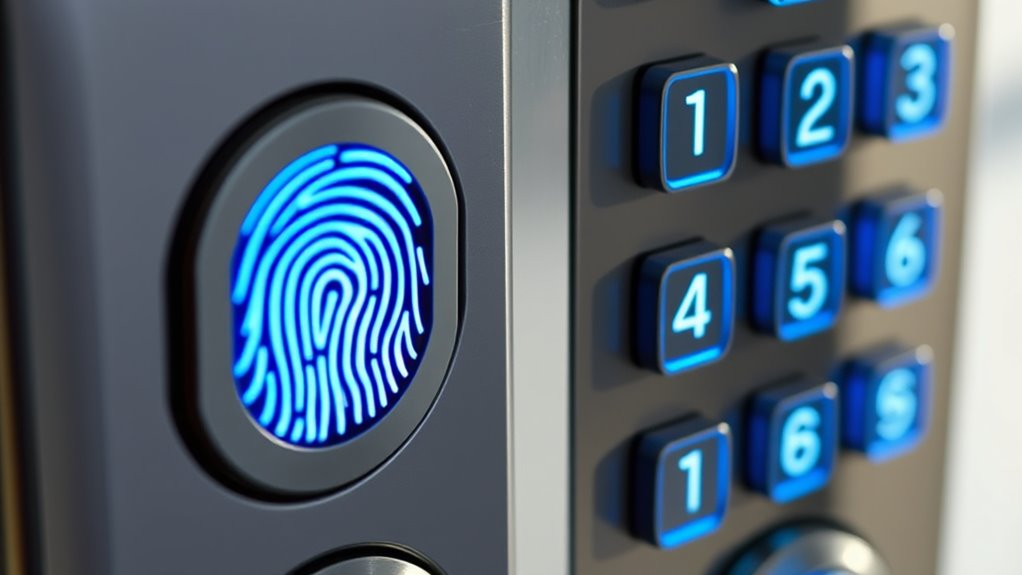
You should be aware that biometric data can be stolen or hacked, leaving your secure information vulnerable. Attackers also use PIN guessing techniques, like brute-force or social engineering, to gain access. Understanding these risks helps you better protect your smart lock systems. Additionally, protective styling options like crochet styles for locs demonstrate the importance of secure and durable customization methods.
Biometric Data Breaches
While biometric data offers a convenient and secure way to access smart locks, it also presents unique vulnerabilities that hackers can exploit. If biometric data is compromised, unlike passwords, it can’t be altered. Hackers may use sophisticated techniques such as spoofing fingerprint scans or facial recognition systems to bypass security. You should also be aware that biometric systems rely on user authentication methods that might be vulnerable if not properly secured. To strengthen security:
- Ensure biometric data is encrypted during storage and transmission
- Regularly update firmware to patch known vulnerabilities
- Combine biometric access with other authentication factors for layered security
- Be aware that biometric system vulnerabilities can arise from inadequate security measures, so choosing reliable technology is crucial.
PIN Guessing Techniques
PIN guessing techniques pose a vital threat to smart locks if not properly protected. Attackers often target weak PINs by trying common combinations or using brute-force methods. Without sufficient password complexity, guessing becomes easier, increasing vulnerability. Implementing lockout policies is essential; after several incorrect attempts, locking the system prevents further guesses and deters attackers. However, some lockouts reset too quickly or are too lenient, giving hackers more chances. To boost security, choose complex PINs that are hard to predict and avoid obvious patterns. Strengthening lockout policies, such as increasing lockout duration or requiring manual resets, further reduces the risk of guessing attacks. Properly configured, these measures make PIN guessing considerably more difficult and protect your smart lock from potential exploits. Additionally, understanding biometric authentication methods can provide an even higher level of security by eliminating PIN guessing vulnerabilities altogether.
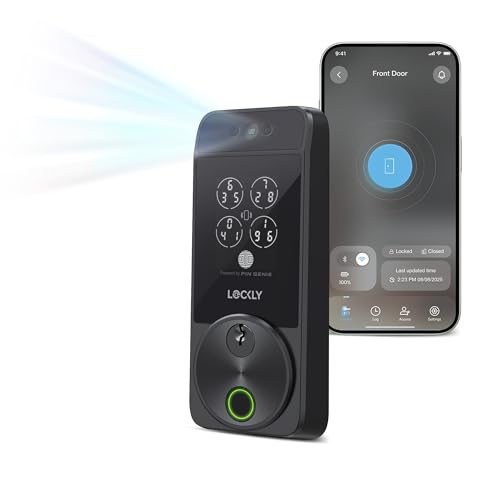
Lockly Visage Zeno Series Smart Lock, Facial Recognition & Fingerprint Keyless Entry Door Lock, Built-in Wi-Fi Deadbolt with Apple Home Key, PIN Genie Keypad, App Remote Control (Matte Black)
Your Face is Your Key: Unlock your smart lock for front door effortlessly with Lockly Visage’s advanced facial…
As an affiliate, we earn on qualifying purchases.
As an affiliate, we earn on qualifying purchases.
Ease of Use and User Convenience
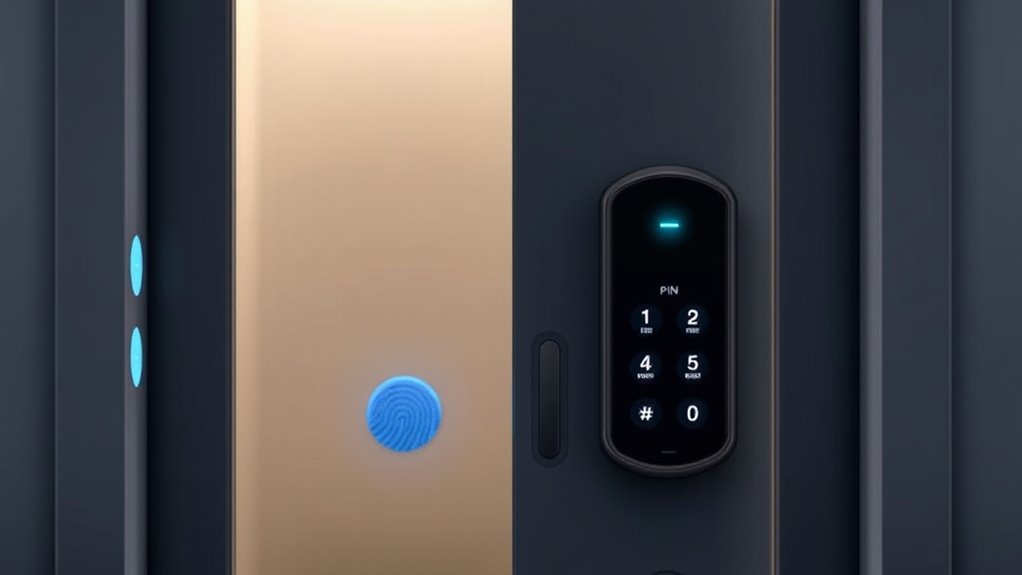
Biometric smart locks often provide a seamless and quick access experience, allowing you to open doors with just a fingerprint or facial scan. This eliminates the need to remember PIN codes or carry keys, making entry effortless. Fingerprint scanning is fast and reliable, especially with high-quality sensors, while voice recognition offers hands-free convenience, enabling you to open your lock simply by speaking. However, some users may find voice commands less practical in noisy environments. Additionally, biometric systems require initial setup and occasional adjustments for ideal performance. Consider these points:
- Fingerprint scanning delivers rapid, intuitive access.
- Voice recognition allows hands-free operation but can be affected by background noise.
- Both methods enhance convenience but may pose challenges in certain situations or environments.
- Color accuracy impacts the overall effectiveness of biometric authentication systems, especially in high-security environments, by ensuring reliable recognition under various lighting conditions.
Cost and Installation Considerations
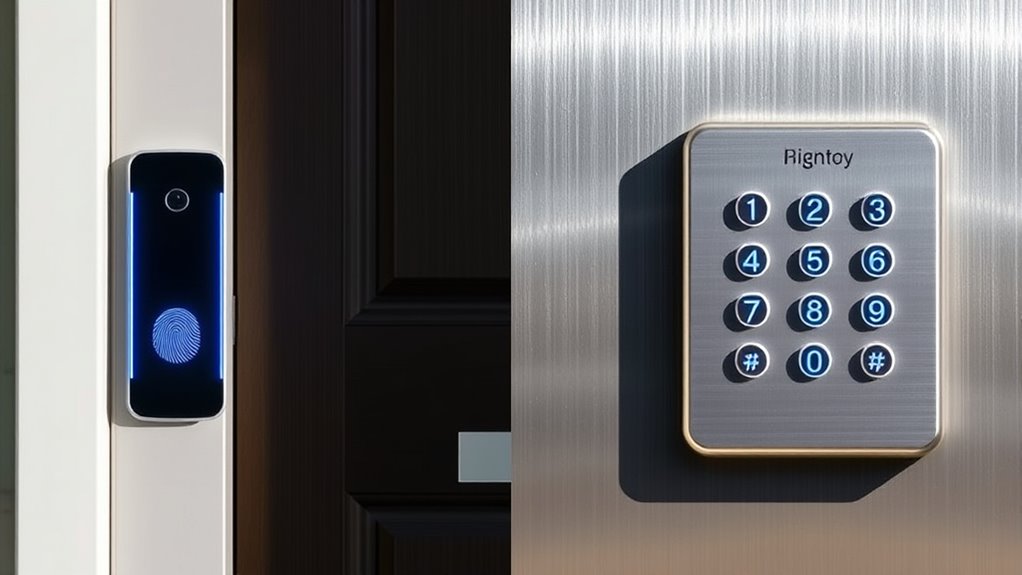
Biometric smart locks tend to have higher upfront costs compared to traditional locks, mainly due to the advanced sensors and technology involved. When conducting a pricing analysis, you’ll notice that biometric systems typically cost more initially, but they may save money over time through reduced key replacement and lockouts. However, installation challenges can add to the overall expense, especially if your door isn’t compatible or if wiring is needed. You might need professional help to install biometric locks properly, which increases costs. In addition, fraud prevention tools such as multi-factor authentication can enhance security but may also influence installation complexity. In contrast, PIN smart locks often cost less upfront and are easier to install, making them a more budget-friendly option for many. Carefully evaluate both the initial investment and the installation requirements to choose the best fit for your security needs.
Real-World Security Performance and Case Studies
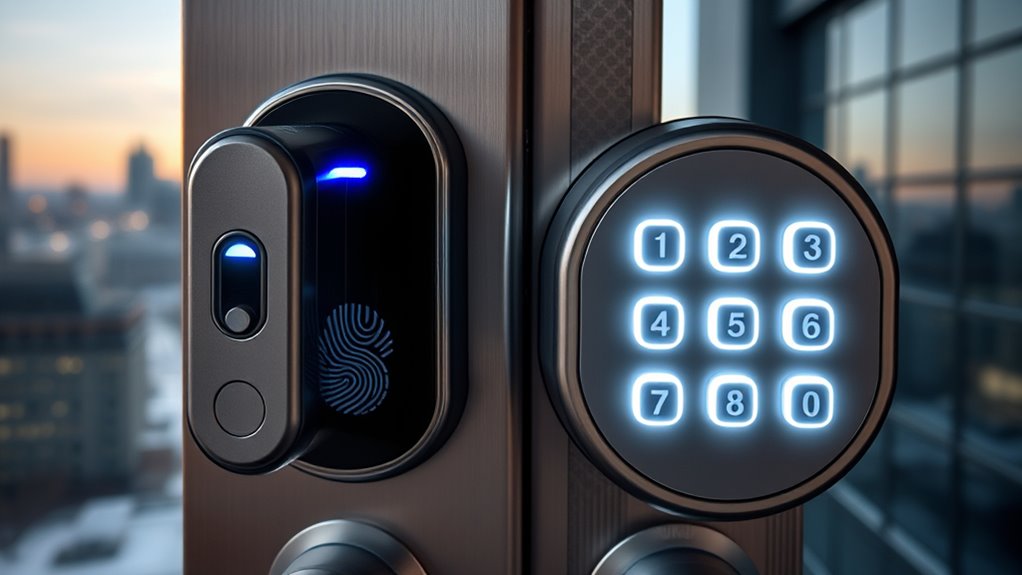
Real-world examples show that biometric systems can be vulnerable to breaches, with incidents of fingerprint and facial recognition hacks making headlines. PIN locks aren’t foolproof either, as failures and guessing attacks sometimes expose weaknesses. Examining notable security breaches helps you understand which technology offers more reliable protection in practice. Additionally, ongoing AI security efforts aim to identify and mitigate emerging vulnerabilities in both biometric and PIN-based systems.
Biometric Breach Incidents
Although biometric smart locks are often praised for their advanced security features, they are not immune to breaches. Incidents have shown that hackers can sometimes bypass biometric systems, exposing vulnerabilities in access control and authentication methods. For example, attackers have used techniques such as fingerprint spoofing or facial recognition deception to gain unauthorized access. In some cases:
- Fake fingerprints produced with lifted prints have fooled fingerprint sensors.
- Deepfake technology has compromised facial recognition systems.
- Data breaches have exposed biometric templates, risking identity theft.
These incidents highlight that biometric security relies heavily on the integrity of the underlying data and authentication methods. Additionally, security vulnerabilities in biometric systems can be exploited if the hardware or software is not properly secured. While convenient, biometric breaches remind you that no system is infallible, and ongoing improvements are essential for safeguarding sensitive access points.
PIN Lock Failures
While PIN codes are often considered straightforward and reliable, they can still fail in real-world scenarios, exposing vulnerabilities that hackers can exploit. For example, mechanical keys are sometimes used as a backup, but they can be lost or duplicated, risking unauthorized access. Power outages can also disable electronic PIN locks, leaving your door insecure if there’s no manual override. In some cases, weak or easily guessable PINs are cracked through simple observation or guessing attacks. Additionally, if the lock’s circuitry malfunctions, it might refuse access even with the correct code. These failures highlight that, despite their convenience, PIN locks aren’t infallible. Understanding these vulnerabilities helps you weigh the risks and consider supplementary security measures to protect your home effectively. Moreover, security features such as biometric options or backup mechanical keys can significantly enhance overall safety.
Notable Security Breaches
Security breaches involving PIN and biometric locks have demonstrated that no system is completely foolproof, with hackers often exploiting overlooked vulnerabilities. In real-world cases, thieves have bypassed biometric systems using techniques like fingerprint lifting or facial spoofing. Similarly, PIN systems aren’t immune; shoulder surfing or keypad smudge attacks can reveal codes. These breaches highlight critical privacy concerns and challenge theft prevention efforts. To strengthen security, consider these factors:
- Biometric spoofing, such as fake fingerprints or masks
- PIN interception through shoulder surfing or camera recording
- Data breaches exposing stored biometric templates or PINs
Understanding these vulnerabilities helps you improve security measures. While no solution guarantees absolute safety, awareness of notable breaches allows for better protection strategies, ultimately balancing privacy concerns and theft prevention.
Frequently Asked Questions
Can Biometric Data Be Hacked or Stolen?
You might wonder if biometric data can be hacked or stolen. While biometric privacy issues exist, it’s generally hard for hackers to steal your fingerprint or face data directly. However, vulnerabilities like biometric spoofing or data breaches can occur. In contrast, PIN code vulnerabilities, such as guessing or hacking, are more common. Always guarantee your device uses secure encryption and updates to minimize risks, regardless of whether you’re using biometric or PIN security.
Are PIN Codes More Resistant to Physical Tampering?
You might wonder if PIN codes are more resistant to physical tampering. Generally, PINs have better tamper resistance because they’re less vulnerable to physical attacks like fingerprint lifting or hacking. However, they can still be physically vulnerable if someone observes you entering the code or forces entry. To improve security, choose complex PINs and consider locks with tamper-resistant features, making unauthorized access more difficult.
How Do Biometric Locks Handle Multiple Users?
Biometric locks handle multiple users through user management systems that store individual biometric data securely. When you set up user authentication, you can add or remove users easily, ensuring only authorized people gain access. This process allows for efficient management of access privileges, making it convenient for households or businesses. You simply enroll each person’s biometric data, and the lock verifies user identity quickly for seamless, secure entry.
What Happens if Biometric Sensors Fail?
If biometric sensors fail, you might be locked out temporarily, which highlights potential security vulnerabilities and concerns about sensor durability. Many smart locks include backup options like PIN codes or physical keys, so you can still access your home. It’s important to choose a lock with reliable sensors and a solid backup system, ensuring your security isn’t compromised if the biometric sensor malfunctions or experiences durability issues.
Do Biometric Locks Require Internet Connectivity?
Did you know that over 60% of smart locks rely on internet connectivity? Biometric locks often don’t require internet for everyday use, making them more reliable during outages. However, some biometric locks with remote access features do depend on internet dependency for unbolt remotely or managing settings. If you prefer independence from internet issues, opt for a biometric lock that operates locally, ensuring your security even when connection drops.
Conclusion
Ultimately, choosing between biometric and PIN smart locks is like picking between a reliable friend and a cautious guard. Both offer strong security, but each has its quirks. Think about what suits your lifestyle best—whether you prefer the swift access of biometrics or the simple memorability of PINs. Whichever you choose, stay informed and vigilant, so your home remains as safe as a fortress. After all, security is only as good as the effort you put into it.