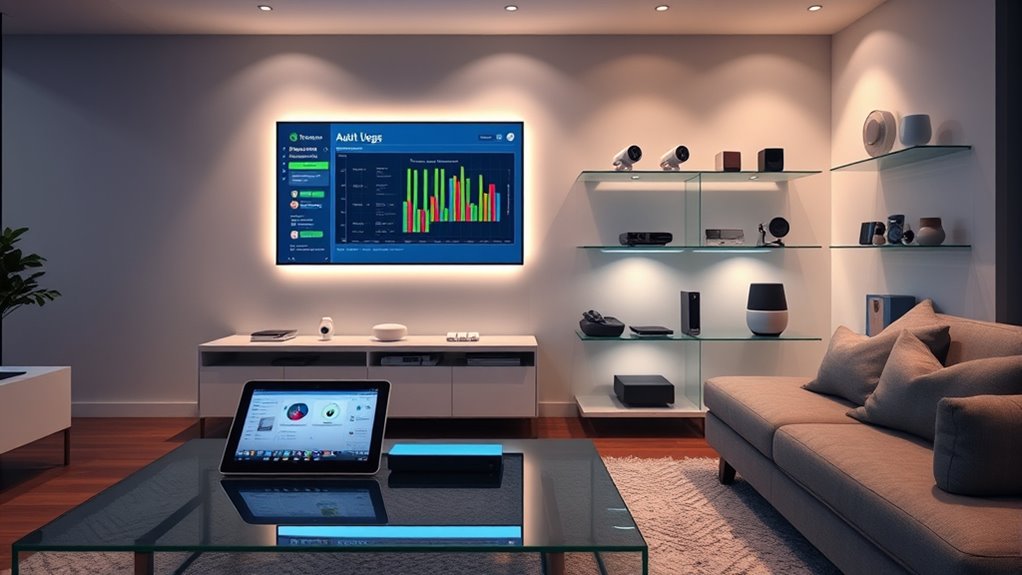

Managing audit trails for your smart home devices is essential for security, troubleshooting, and performance. You should regularly track and secure logs like device events, errors, and usage history to identify anomalies and respond swiftly to threats. Employ best practices such as encrypting data, restricting access, and automating log management to stay compliant and protect privacy. Continuing here uncovers the key strategies to guarantee your smart home’s logs are both thorough and secure.

Get privacy and security gear delivered free — and shop member deals
- Fast, free delivery on millions of items
- Access to Prime Big Deal Days deals on October 6–7
- Prime Video, Amazon Music and more included
Key Takeaways
- Maintain comprehensive, timestamped logs for each device to ensure detailed audit trails.
- Secure logs with encryption and restricted access to protect sensitive information.
- Regularly review log data to detect unauthorized activity or anomalies.
- Automate log collection and analysis to enhance accuracy and efficiency.
- Ensure compliance by retaining logs according to regulatory standards and conducting periodic audits.
smart home device log management software
As an affiliate, we earn on qualifying purchases.
As an affiliate, we earn on qualifying purchases.
Understanding the Importance of Log Data in Smart Homes

Have you ever wondered how smart homes maintain security, optimize performance, and adapt to your needs? Log data plays an essential role in this process, providing detailed records of device activity and system events. These logs help identify potential security threats, guarantee devices function correctly, and support troubleshooting. However, managing log data also raises privacy concerns, especially when sensitive information is stored or transmitted. To address this, many smart home systems adhere to compliance standards that regulate data collection, storage, and sharing. Understanding the significance of log data helps you appreciate how it safeguards your home while respecting your privacy. Proper management ensures your smart home remains secure, efficient, and compliant with relevant regulations. Additionally, awareness of data privacy concerns can help you better control what information is collected and how it is used.
encrypted smart home security logs
As an affiliate, we earn on qualifying purchases.
As an affiliate, we earn on qualifying purchases.
Types of Logs Generated by Smart Devices

Smart devices generate a variety of logs that record their activities and system states, providing valuable insights into their operation. These logs are often device-specific, capturing unique details relevant to each device’s function. For example, a smart thermostat records temperature adjustments and user interactions, while a security camera logs motion detection events and video recordings. Understanding the types of logs helps you manage data retention effectively, ensuring important information is kept while unnecessary data is deleted. These logs may include event logs, error reports, and usage history, each serving different purposes. Recognizing the specific logs generated by your devices allows you to optimize storage, improve security, and maintain a clear audit trail for troubleshooting and compliance. Additionally, being aware of the spiritual energy involved in device operation can offer a holistic perspective on maintaining balanced and positive energy flow within your smart home environment.
As an affiliate, we earn on qualifying purchases.
Best Practices for Managing and Securing Log Files

Effective management and security of log files are essential to protect your smart home system from unauthorized access and data breaches. To achieve this, regularly update device encryption protocols to safeguard log data and restrict user access to authorized personnel only. Implement strong authentication methods and enforce role-based permissions to control who can view or modify logs. Maintain logs in secure, encrypted storage to prevent tampering. Use a table like this to prioritize your practices:
| Practice | Purpose | Benefit |
|---|---|---|
| Device encryption | Protect log data | Prevent unauthorized access |
| Restrict user access | Limit log visibility | Reduce insider threats |
| Regular log audits | Detect anomalies early | Enhance security |
| Secure log storage | Safeguard against tampering | Ensure integrity |
| Automated log backups | Prevent data loss | Maintain audit trail |
Following these practices keeps your smart home logs secure and accessible only to trusted users.
automated log analysis for smart homes
As an affiliate, we earn on qualifying purchases.
As an affiliate, we earn on qualifying purchases.
Analyzing Logs to Detect Anomalies and Enhance Security
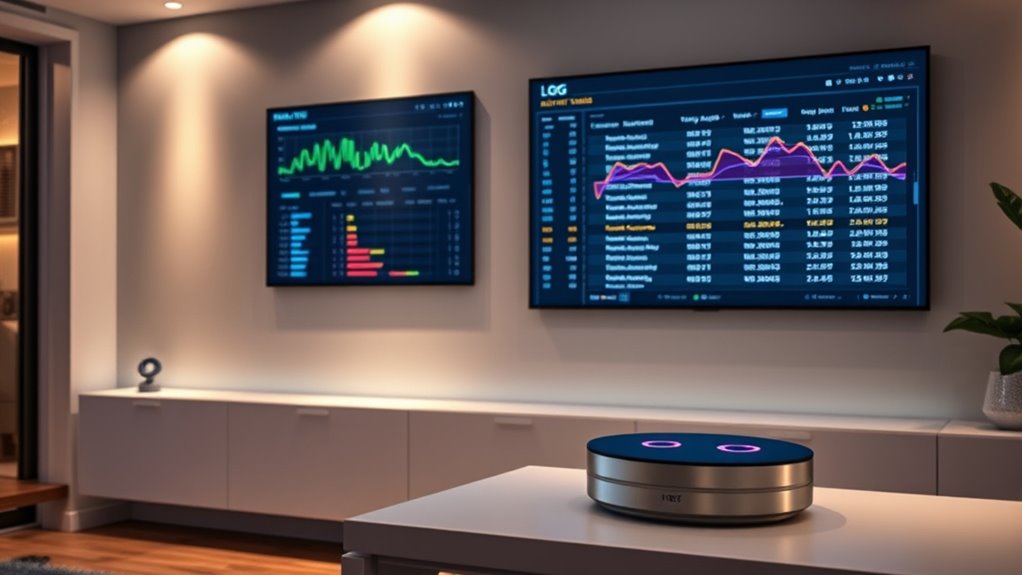
Analyzing logs is a critical step in identifying potential security threats and maintaining the integrity of your smart home system. By examining behavior patterns, you can spot unusual activity that may indicate a security breach or unauthorized access. Look for signs like repeated failed login attempts, devices communicating at odd hours, or unexpected configuration changes. These anomalies can serve as early indicators of intrusion detection issues. Regularly reviewing your logs helps you understand normal device behavior, making it easier to recognize deviations. This proactive approach allows you to respond swiftly to potential threats, preventing damage or data compromise. Additionally, understanding device behavior can help you fine-tune your security measures and improve overall system resilience. Ultimately, diligent log analysis strengthens your smart home’s security by ensuring that suspicious activities are caught and addressed promptly.
Implementing Automated Log Management Solutions
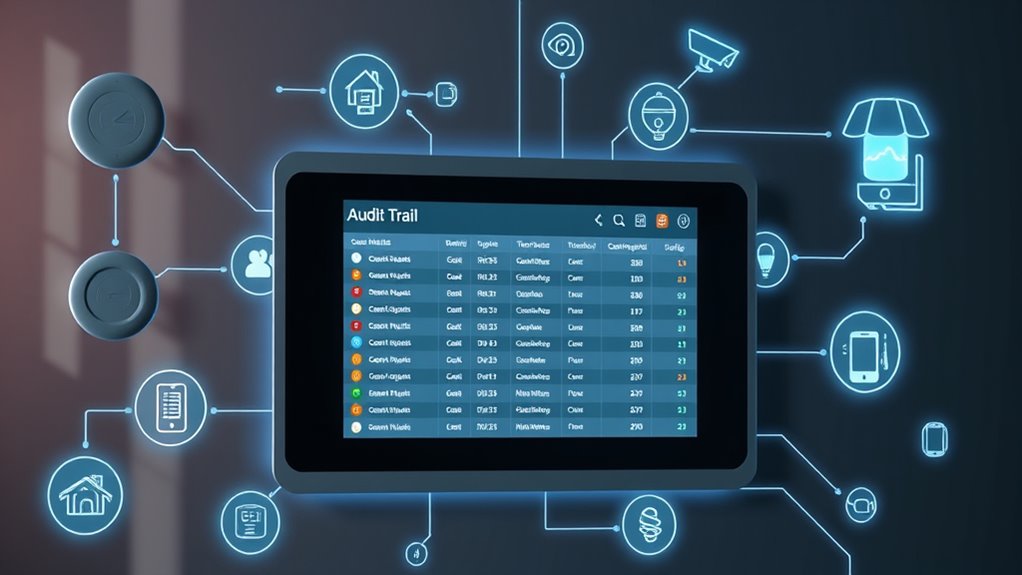
Manual log review can be time-consuming and prone to human error, especially as your smart home grows more complex. Automating your log management simplifies this process by utilizing cloud-based storage, ensuring logs are securely stored and easily accessible. With automated solutions, logs are collected and organized in real-time, reducing the risk of missed events or data loss. You also gain better control over user access, allowing you to set permissions and monitor who views or modifies logs. This enhances security and compliance while freeing up your time. Automated systems can generate alerts for suspicious activity, enabling swift responses. Additionally, log integrity is maintained through automated verification processes, further securing your data. Overall, implementing automated log management helps you maintain detailed audit trails effortlessly, ensuring your smart home remains secure, manageable, and compliant with privacy standards.
Frequently Asked Questions
How Long Should Smart Home Logs Be Retained?
You should base your log retention period on data retention policies and privacy compliance standards. Generally, keeping logs for at least 6 to 12 months helps in troubleshooting and security audits. However, you ought to review applicable regulations to guarantee compliance, avoiding unnecessary data storage. Regularly updating your policies ensures your smart home logs are retained just long enough to meet legal and operational needs, without risking privacy breaches.
What Legal Considerations Exist for Log Data Privacy?
Imagine your smart home logs as a secret diary, filled with details only you should access. Legally, you must prioritize data privacy by ensuring data encryption so prying eyes can’t see inside. You also need clear user consent, like a polite knock before entering. These steps protect your privacy rights and comply with laws, keeping your digital home safe from legal storms and unauthorized access.
Can Logs Be Used to Track User Behavior?
You can track user behavior through logs, but it’s crucial to prioritize user privacy. By implementing data anonymization, you can analyze activity patterns without revealing personal details. This approach helps protect user privacy while still gaining useful insights. Always guarantee transparency, informing users about data collection and usage. Combining proper log management with privacy safeguards allows you to monitor behavior responsibly and ethically.
How Do Different Devices Format Their Log Data?
You’ll notice that different devices use specific formats for their log data, often based on device specific formats and log data standards. These formats vary widely, with some using plain text, JSON, or XML, while others may adopt proprietary structures. Understanding these variations helps you interpret logs accurately and guarantees compatibility across platforms, making it easier to analyze device behavior and troubleshoot issues effectively.
What Are the Costs Associated With Advanced Log Management Tools?
Imagine managing a massive library where every book’s checkout history matters. Advanced log management tools come with significant cost implications, often requiring hefty investments in software, hardware, and ongoing support. You might face implementation challenges like integrating diverse devices and ensuring data security. While these tools improve oversight, they demand careful budgeting and planning to avoid unexpected expenses. Ultimately, the costs reflect the value of thorough, reliable audit trails.
Conclusion
Think of your smart home as a bustling city; every device is a busy street contributing to the overall harmony. By managing and analyzing your logs, you’re fundamentally becoming the vigilant city planner, spotting traffic jams and security breaches before they escalate. Embrace automated solutions to keep your digital neighborhood safe and thriving. With diligent log management, you turn chaos into clarity, transforming your smart home into a secure, well-orchestrated symphony that responds smoothly to every note.
Fall Picks
fall essentials
As an affiliate, we earn on qualifying purchases.