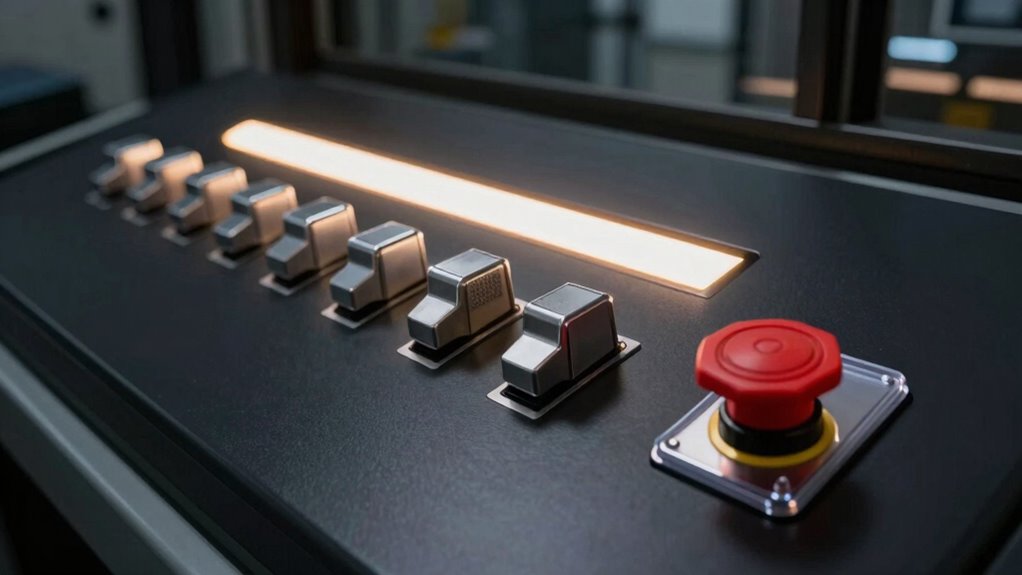

To design smarter manual overrides for emergencies, focus on creating simple, intuitive interfaces with clear visual cues and feedback mechanisms to guarantee quick recognition and response. Incorporate safety features like protective covers and confirmation prompts to prevent accidental activation while keeping emergency access unhindered. Make certain seamless integration with control systems and establish clear reset procedures for returning to normal operations. If you keep exploring, you’ll discover key principles to make your overrides more effective and trustworthy.

Get privacy and security gear delivered free with Prime
- Fast, free delivery on millions of items
- Prime Video, Amazon Music and more included
- Member-only deals all year
Key Takeaways
- Incorporate intuitive, clear visual cues like illuminated buttons and color codes to quickly communicate system status.
- Use safety features such as protective covers and dual-action controls to prevent accidental activation.
- Ensure seamless integration with automated systems, providing reliable feedback through alarms and visual signals.
- Design straightforward reset procedures to restore normal operations safely and efficiently after override use.
- Prioritize functionality, clarity, and safety protocols to enable confident, quick manual interventions during emergencies.
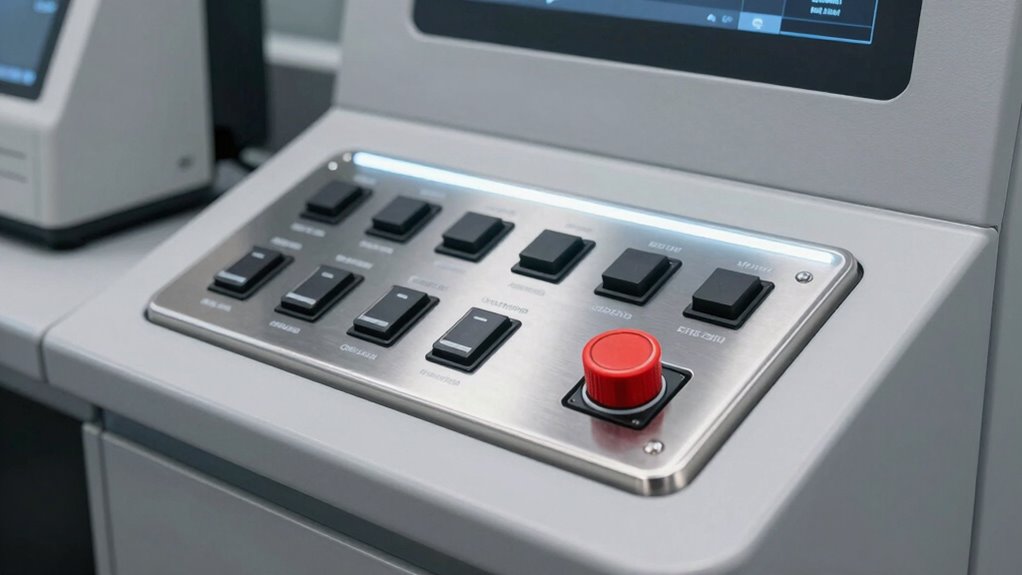
Have you ever wondered how manual overrides can be smarter and more intuitive? When emergencies strike, quick and effective action is essential. That’s why designing a manual override system with a user interface that’s simple, clear, and responsive makes all the difference. Instead of forcing users to sift through complex menus or decipher confusing signals, you want to create an interface that guides them effortlessly toward critical controls. Visual cues, such as illuminated buttons or color-coded indicators, instantly communicate status and priority, reducing hesitation and errors. A well-designed user interface should feel natural and straightforward, guaranteeing that anyone, regardless of experience, can activate the override swiftly when it matters most. Incorporating safety protocols directly into the design further ensures that accidental activation is minimized while emergency access remains unhindered. You must embed safety measures directly into the interface so that accidental activation is minimized but emergency access remains unhindered. Incorporate features like protective covers, dual-action buttons, or confirmation prompts to prevent unintended engagement. For instance, requiring users to press two buttons simultaneously or confirm their action with a secondary prompt adds an extra layer of security without sacrificing speed. These safety protocols are not just about protecting the equipment; they’re about safeguarding lives, which means every design choice should prioritize minimizing risks while maximizing accessibility during crises. You should also consider how the override interacts with the overall control system. A seamless integration ensures that activating the manual override doesn’t cause confusion or conflict with automated safety features. It’s essential to have clear feedback mechanisms—like audible alerts or visual signals—that confirm the override is engaged and that the system is in a safe state. This transparency reassures the user that their action has been recognized and that the system has responded appropriately. Furthermore, providing intuitive reset procedures after emergency use helps users return control to normal operations smoothly, maintaining safety and operational integrity. In designing smarter manual overrides, keep in mind that the user interface isn’t just about aesthetics; it’s about functionality, safety, and trust. Prioritize clarity, incorporate safety protocols thoughtfully, and guarantee the system responds predictably. By doing so, you create a manual override that’s not only quick to activate but also reliable and safe, turning what could be a moment of chaos into a controlled, manageable response. Ultimately, a smarter override system empowers users to act confidently during emergencies, protecting both personnel and equipment.
As an affiliate, we earn on qualifying purchases.
Frequently Asked Questions
How Do Manual Overrides Impact Overall System Security?
Manual overrides can introduce system vulnerabilities if not carefully secured, potentially allowing unauthorized access during emergencies. They impact overall system security by creating a point where security protocols might be bypassed, so you need robust safeguards. When designing overrides, you guarantee that they function only in emergencies, maintaining system integrity while minimizing risks. Properly implemented, manual overrides support safety without compromising your system’s security protocols.
What Training Is Needed for Emergency Override Procedures?
Did you know that 80% of emergency failures are due to improper training? To guarantee effective emergency override procedures, you need thorough training modules that cover all aspects of emergency protocols. You should train staff regularly, practicing manual overrides under realistic conditions, so they’re confident and prepared. This ongoing education minimizes errors, enhances safety, and ensures quick, decisive action during crises.
How Are Manual Overrides Tested Regularly for Reliability?
You should conduct regular redundancy testing to guarantee manual overrides remain reliable. During these tests, you simulate emergency scenarios to verify that the override functions correctly under different conditions. Failures are carefully analyzed to identify weaknesses, allowing you to improve the system. Consistent testing and failure analysis help catch potential issues early, ensuring your manual overrides are dependable when emergencies happen.
Can Manual Overrides Be Integrated With Automated Safety Systems?
Yes, you can integrate manual overrides with automated safety systems by focusing on redundancy planning and a clear user interface. Redundancy guarantees backup functions work seamlessly if automation fails, while an intuitive user interface allows quick, accurate manual activation during emergencies. Proper integration minimizes risks, maintains safety, and simplifies operation under stress, ensuring manual overrides complement automated systems effectively without causing confusion or delays in critical situations.
What Are the Legal Considerations for Manual Override Design?
You might think legal considerations are a hassle, but ignoring them is riskier. You must guarantee your manual override design complies with legal standards, focusing on safety regulations and industry-specific laws. Proper legal compliance helps you manage liability effectively, shielding you from costly lawsuits. Ironically, neglecting these legal aspects could turn a safety feature into a legal nightmare, so prioritize clear documentation and adherence from the start.
emergency control panel with visual cues
As an affiliate, we earn on qualifying purchases.
As an affiliate, we earn on qualifying purchases.
Conclusion
By designing smarter manual overrides, you’re building a safety net that catches you just in time, rather than leaving you to fall blindly. Think of it as planting a well-placed lighthouse beacon in a storm—guiding you safely through chaos. When emergencies strike, your override becomes a trusted compass, steering you away from disaster. With thoughtful design, you turn chaos into clarity, ensuring safety is always within reach, no matter how turbulent the situation.
dual-action emergency stop button
As an affiliate, we earn on qualifying purchases.
As an affiliate, we earn on qualifying purchases.
As an affiliate, we earn on qualifying purchases.
Columbus Day / Indigenous Peoples' Day Picks
long weekend sales
As an affiliate, we earn on qualifying purchases.