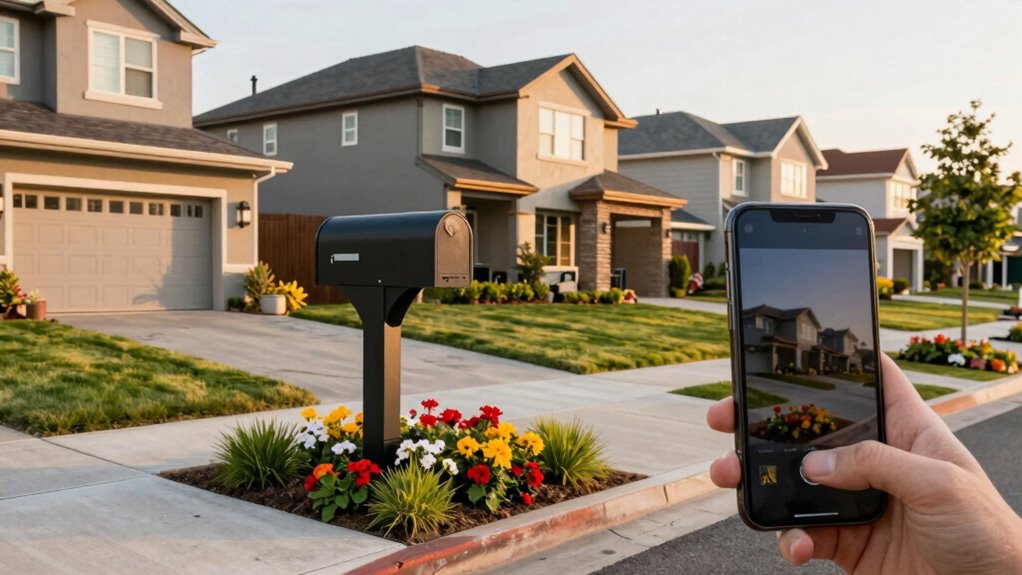

To share footage with neighbors securely without revealing your address, use encrypted platforms with strong privacy controls, like end-to-end encrypted messaging apps or cloud services. Anonymize your videos by blurring landmarks, license plates, and timestamps, and disable location metadata in your camera settings. Consider using virtual addresses or P.O. boxes for mailing, and craft private links with passwords or expiration dates. If you want to keep your location confidential while supporting your community, there’s more to learn ahead.
Key Takeaways
- Mask or crop identifiable landmarks, street signs, or house numbers in the footage before sharing.
- Use privacy-focused platforms with strong encryption and privacy controls to restrict access.
- Remove or disable embedded location metadata in video files prior to sharing with neighbors.
- Share footage via secure, password-protected links with expiration dates to limit access.
- Create anonymized clips by blurring faces, license plates, and background details to protect your address.
Why Does Protecting Your Address Matter When Sharing Footage?
Even when you’re sharing footage with neighbors, protecting your address is essential because revealing it can lead to privacy breaches or unwanted visits. Address privacy is vital to maintain control over your personal space and prevent potential security risks. If your location becomes accessible, strangers might track your movements or target your property. Ensuring footage confidentiality means only trusted individuals can view your videos, reducing the chance of misuse or malicious intent. Sharing sensitive footage without safeguarding your address can compromise your safety and privacy. By taking steps to protect your address, you uphold your privacy rights and prevent unwanted intrusion. Remember, maintaining control over who sees your footage and where it’s from helps you stay secure and preserves your peace of mind. Content security is also a key aspect of safeguarding your personal information when sharing videos. Additionally, understanding the importance of privacy protection in your digital content can further shield your personal details from exposure, especially since cookie management can help control data sharing. Incorporating security best practices can significantly reduce the risk of your personal information being compromised when sharing footage.
What Are the Best Secure Platforms for Sharing Video Footage?

Choosing the right platform is essential when sharing video footage securely. Look for services that prioritize video encryption, which protects your footage from unauthorized access during transfer and storage. Cloud storage platforms like Tresorit or Sync.com offer end-to-end encryption, ensuring only you and designated neighbors can view the videos. These services also provide secure access controls, so you can restrict who sees the footage. Avoid platforms that lack encryption or rely solely on public sharing links, which can expose your videos to broader audiences. Opt for platforms with strong security features, transparent privacy policies, and reliable data protection measures. Additionally, leveraging European cloud infrastructure can enhance data sovereignty and compliance with local privacy standards. Ensuring that your chosen platform supports end-to-end encryption gives you an extra layer of security for your videos. Platforms that integrate local automation and privacy-focused features can further help you control access and prevent unintended exposure. Implementing privacy-first design principles can help you maintain greater control over your footage and prevent exposure of your address or personal information. Incorporating regular security audits into your data management practices can further strengthen your video privacy measures. By choosing a secure platform, you safeguard your footage and maintain control over who can access it, without risking exposure of your address or personal information.
How Can You Anonymize Your Video Footage Before Sharing?

How can you protect your privacy before sharing video footage? Start by anonymizing your footage through techniques like blurring faces or license plates. Use anonymous streaming services that don’t require personal details, ensuring your identity stays hidden. Data encryption is essential; encrypt your video files before sharing to prevent unauthorized access. Consider tools that automatically mask identifiable information or apply filters to obscure backgrounds. Here’s a quick overview:
| Method | Description | Benefits |
|---|---|---|
| Face Blurring | Automatically or manually obscure faces | Protects identities |
| License Plate Masking | Obscures vehicle identifiers | Maintains privacy |
| Data Encryption | Secures footage during transfer | Prevents hacking or interception |
| Use of VPNs | Hides your IP address during sharing | Anonymizes your online presence |
How Do Virtual Addresses and P.O. Boxes Help Mask Your Location?

Virtual addresses and P.O. boxes serve as effective tools to conceal your real location when sharing footage or communicating online. By using a virtual address, you create a separate mailing address that isn’t linked to your physical property, keeping your home address private. P.O. boxes offer a similar benefit, allowing you to receive mail and packages without revealing your actual address. When you share footage, these options help mask your geographic location, making it harder for others to trace where you live. They act as a buffer between your online activities and your physical whereabouts, protecting your privacy. Additionally, understanding privacy protection techniques can help you further secure your personal information, such as employing secure communication methods to enhance your security. Employing location masking strategies can provide an extra layer of anonymity when sharing sensitive content. Using tools like privacy-focused services can further reduce the risk of exposure. Incorporating proper security practices can also prevent unauthorized access to your information and maintain your anonymity. Whether you’re sharing videos or correspondence, virtual addresses and P.O. boxes ensure your location remains confidential, adding an extra layer of security to your online interactions.
Which Encrypted Messaging Apps Are Ideal for Sharing Footage Safely?

If you want to share footage securely, using encrypted messaging apps is essential. Look for apps that utilize robust encryption protocols like end-to-end encryption, ensuring only you and your recipient can access the content. These apps often incorporate data masking features, which hide sensitive information or metadata that could reveal your location or identity. Popular options include Signal and Telegram, both known for strong encryption standards and privacy-focused design. They prevent third-party access and protect your footage from interception. When choosing an app, verify its encryption protocols and privacy policies. By selecting a platform that emphasizes data masking and secure transmission, you can confidently share footage with neighbors without risking exposure of your address or personal details.
How Can You Adjust Camera Settings to Keep Your Location Private?
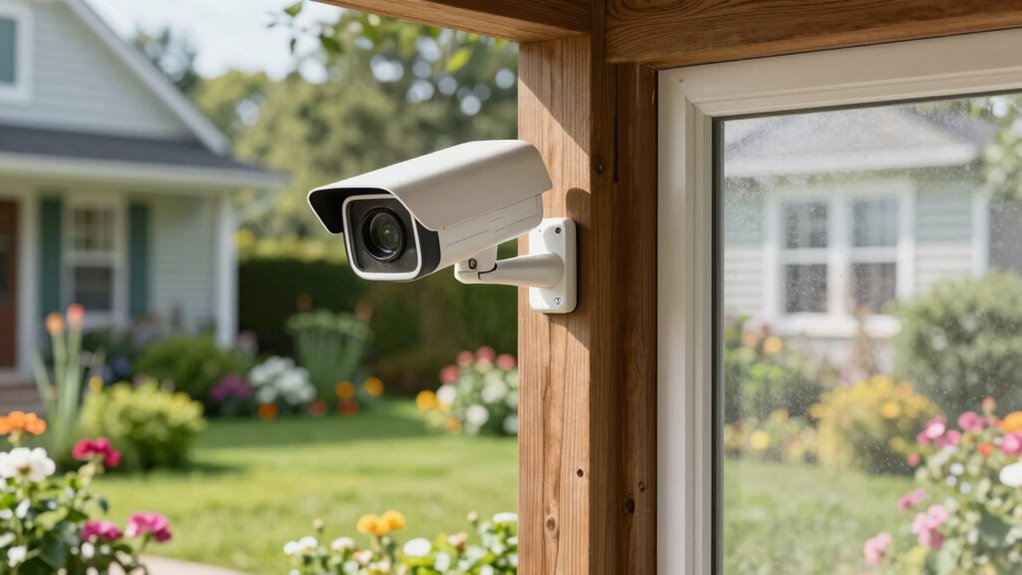
To protect your privacy, start by adjusting your camera angle so it doesn’t capture your address or other identifying features. Make sure to disable geolocation data in your camera’s settings, so no location info is stored or transmitted. These simple steps help you share footage safely without revealing your exact whereabouts, and understanding how to configure your network hardware can further prevent unintentional data leaks. Additionally, reviewing your digital footprint can help identify and mitigate other potential privacy risks. Regularly updating your security settings on connected devices can also enhance your privacy protections. Being aware of metadata removal techniques can further ensure your footage remains anonymous, especially when sharing online, by stripping out embedded location data from your videos.
Adjust Camera Angle
Adjusting your camera angle is a crucial step in protecting your privacy when sharing footage with neighbors. Proper camera positioning helps you capture necessary areas without revealing your address or personal details. Aim the camera away from your home’s most identifiable features, focusing instead on common areas like sidewalks or driveways. When selecting your lens, choose one with an appropriate field of view—wider lenses can overreach and expose more than needed, so opt for a narrower angle if privacy is a concern. By fine-tuning your camera’s angle and carefully choosing your lens, you can monitor the desired space while keeping your private details hidden. Regularly review footage to ensure your camera angle doesn’t accidentally reveal sensitive information.
Disable Geolocation Data
Since geolocation data can reveal your exact location, disabling this feature in your camera settings is essential. To protect your privacy, access your device’s privacy settings and locate the geolocation options. Turn off or disable geolocation to prevent your camera from recording or sharing location information. Look for options related to geolocation removal or location privacy, making sure your footage doesn’t include GPS data. Many cameras automatically embed location data in their files unless you turn off this feature. Regularly review and update your privacy settings to maintain control over your location information. Disabling geolocation data is a simple yet effective way to keep your address private while sharing footage with neighbors. Always double-check settings after updates or resets to guarantee your location remains hidden. Understanding how embedded data like metadata can contain sensitive information helps you better protect your privacy. Additionally, metadata removal tools can help clear any residual location data from your videos before sharing. Being aware of camera settings ensures you can customize your privacy preferences effectively. Furthermore, understanding how file formats influence data storage can help you choose options that support your privacy goals.
How Do You Create Private, Access-Controlled Links for Sharing?

Creating private, access-controlled links for sharing footage guarantees only authorized neighbors can view your videos. To do this effectively, focus on the platform’s access control features—many services let you set permissions or expiration dates for links. This is especially important for maintaining your digital privacy when sharing sensitive footage. This enhances link security by limiting who can access the footage and for how long. When generating a link, make sure it’s set to private or restricted, not public. Use password protection if available, adding an extra layer of security. Always double-check the sharing settings before sending out the link. By controlling access and implementing security measures, you prevent unauthorized viewers from seeing your footage, maintaining your privacy while sharing with trusted neighbors. Ensuring your sharing practices align with content security best practices helps protect your privacy and digital assets.
What Are Best Practices for Communicating Without Revealing Your Address?

To keep your address private when communicating with neighbors, consider using pseudonymous accounts to mask your identity. Share footage through secure, temporary links instead of email or messaging that reveals location details. Also, limit the amount of personal information and avoid mentioning specific locations to maintain your privacy.
Use Pseudonymous Accounts
Using pseudonymous accounts is an effective way to share footage with neighbors without revealing your home address. By creating pseudonymous identities, you can participate in discussions or share footage anonymously, reducing the risk of exposing personal details. When engaging in anonymous posting, choose a username that doesn’t link back to your real identity or location. Use separate email addresses and avoid sharing personal information that could identify you. Keep your online activity consistent and avoid revealing clues about your address through your posts or comments. Setting up these pseudonymous accounts ensures your privacy while maintaining open communication with neighbors. This approach helps you share footage securely, without compromising your location or personal security.
Share Via Secure Links
Sharing footage via secure links allows you to control access without revealing your address, making it a reliable method to communicate with neighbors privately. When using this approach, verify the platform’s privacy policies prioritize data security and user permissions. Choose services that enable you to set expiration dates or require passwords for access, preventing unauthorized viewing. Regularly review who has permission to view your shared footage and revoke access when necessary. Avoid sharing links through insecure channels like public email or social media, which could expose your location indirectly. By implementing these best practices, you maintain control over your footage, protect your privacy, and prevent accidental exposure of your address while staying connected with neighbors securely.
Limit Location Details
When communicating footage or information with neighbors, it’s essential to carefully omit or obscure details that could reveal your address. To protect your privacy concerns, focus on effective location masking. Avoid sharing timestamps, landmarks, or background features that could identify your property. Instead, consider cropping videos or blurring specific areas. Use the table below to identify what details to hide or emphasize:
| Detail to Mask | How to Mask | What to Highlight |
|---|---|---|
| Address signs | Blur or crop | Neighborhood context |
| Street signs | Cover or remove | Nearby landmarks |
| House numbers | Blur or pixelate | General location |
| Vehicle plates | Obscure | Activity or timestamp |
| Background clutter | Edit out | Key information |
Limiting location details guarantees your privacy concerns are addressed while sharing footage responsibly.
What Common Mistakes Can Expose Your Location, and How Can You Avoid Them?

One common mistake that can expose your location is inadvertently including identifiable landmarks or background details in your footage. These details can reveal your neighborhood safety zone or specific address, risking your privacy. To avoid this, review your footage carefully before sharing, cropping out any recognizable signs, house numbers, or unique features. Be mindful of reflections or shadows that might hint at your location. Overlooking these details compromises footage privacy and can unintentionally give away your whereabouts. Remember, even small clues—like a familiar streetlamp or a nearby park—can lead others to pinpoint your address. Always double-check your recordings and consider blurring or blacking out background elements that could compromise your anonymity. Protecting your privacy helps maintain your safety and peace of mind.
Additional Privacy Tips for Supporting Your Community Safely
Using privacy-focused platforms can help you share footage without revealing your location. Sharing anonymized clips guarantees your neighbors get the information they need without exposing personal details. Consider these tools to support your community while keeping your privacy intact.
Use Privacy-Focused Platforms
To protect your privacy while sharing footage with neighbors, opt for platforms designed with strong privacy features. Look for services that prioritize privacy settings, data encryption, and user control. Here are key features to think about:
- Privacy settings that let you control who sees your footage.
- End-to-end data encryption, ensuring your videos stay secure during upload and sharing.
- User authentication options that restrict access even further.
Choosing platforms with these features minimizes the risk of exposing your address or personal details. They help maintain your anonymity while fostering community support. Always review the platform’s privacy policies to confirm your data remains protected. Using privacy-focused platforms ensures your footage supports neighbors safely without compromising your personal information. This way, you can contribute confidently, knowing your privacy is a top priority.
Share Anonymized Clips
Sharing footage anonymously is a smart way to support your community while protecting your privacy. To do this effectively, start by using video compression techniques to reduce file size, making it easier to share without revealing sensitive details. Before sharing, apply audio masking to obscure voices or sounds that could identify you or others. This step ensures your audio remains private even if someone reviews the clip. When editing, remove or blur recognizable backgrounds and timestamps that could hint at your location. By combining video compression and audio masking, you can create anonymized clips that contribute valuable community information without exposing your identity or address. This approach keeps your privacy intact while helping neighbors stay informed and safe.
Frequently Asked Questions
Can I Share Footage Without Giving Access to My Home Network?
Yes, you can share footage without giving access to your local network. Use secure methods like cloud storage or encrypted file sharing services. make certain your footage is encrypted before sharing, which keeps your data safe from unauthorized access. Avoid granting direct access to your home network or devices. This way, you control who views the footage, and your network stays protected from potential threats.
How Do I Verify the Privacy Features of Sharing Platforms?
To verify the privacy features of sharing platforms, you should check if they use camera encryption to protect your footage during transmission and storage. Also, look for access controls that let you specify who can view your recordings. Make sure the platform provides clear privacy policies, and test its security settings. This way, you guarantee your footage stays private and only accessible to trusted neighbors or friends.
Are There Legal Considerations When Anonymizing Footage?
You must be aware that anonymizing footage isn’t just a good idea—it’s a legal minefield. Ignoring legal compliance and data protection laws can lead to serious consequences. Always verify that your methods respect privacy rights and local regulations. Protect yourself by understanding the legal considerations involved, such as ensuring no identifiable data remains. This way, you keep your footage safe, legal, and respectful of everyone’s privacy.
What Are the Risks of Sharing Footage via Social Media?
Sharing footage via social media carries significant social media risks and privacy concerns. You might unintentionally reveal sensitive details or locations, putting your privacy at risk. Once posted, your footage can be copied, shared, or misused by others, making it hard to control. Always consider these privacy concerns and social media risks before sharing, and use privacy settings or anonymize footage to protect your personal information.
How Often Should I Update My Privacy Settings?
You should update your privacy settings at least quarterly, as studies show that over 60% of users don’t review their privacy controls regularly. Staying proactive enhances your privacy awareness and keeps your information secure. By following security best practices, you reduce risks from evolving threats. Regular updates confirm your settings reflect current preferences, helping you control who sees your footage and personal info, and safeguarding your digital life effectively.
Conclusion
Remember, sharing footage is like opening your home—trust is key, but your privacy matters more. Always stay one step ahead by masking your address and using secure platforms. Don’t put all your eggs in one basket; diversify your methods to keep your location safe. As the saying goes, “A stitch in time saves nine.” Stay vigilant and protect your privacy while supporting your community.