
To securely download and preserve your Ring videos as evidence, first log into your Ring account through the app or website. Locate the footage you need and click the download button to save it locally. Make sure to organize your files in dedicated folders and back them up on encrypted drives or cloud services. Handle the footage carefully to keep its integrity intact. If you continue, you’ll discover detailed steps to ensure your evidence stays court-ready.
Key Takeaways
- Log into your Ring account via the official app or website to access your videos securely.
- Download the desired footage directly from the platform, ensuring original quality preservation.
- Organize and label videos properly, keeping detailed records of download dates and sources.
- Back up the footage using encrypted cloud services or external drives, creating multiple copies.
- Maintain a chain of custody by documenting the collection, storage, and handling process for court use.
Why Saving Ring Videos as Evidence Matters

Saving Ring videos as evidence is crucial because they provide a reliable record of events as they happened. By preserving these videos, you ensure you have concrete proof if disputes arise or legal matters require clarification. Properly saving your Ring videos guarantees you’re prepared for any situation, while also respecting privacy boundaries. Additionally, being aware of video storage policies helps you manage footage in compliance with regulations, safeguarding you from potential legal issues and ensuring the integrity of the evidence when it’s needed most. Knowing the video retention period allows you to plan your storage and ensure important footage is preserved before it is automatically deleted. Familiarity with secure storage methods further ensures that your evidence remains unaltered and protected from tampering, and understanding legal considerations assists in determining what footage is admissible in court. Moreover, understanding the quality of recordings can influence their usefulness as credible evidence in legal proceedings.
How to Access and Download Ring Footage Securely
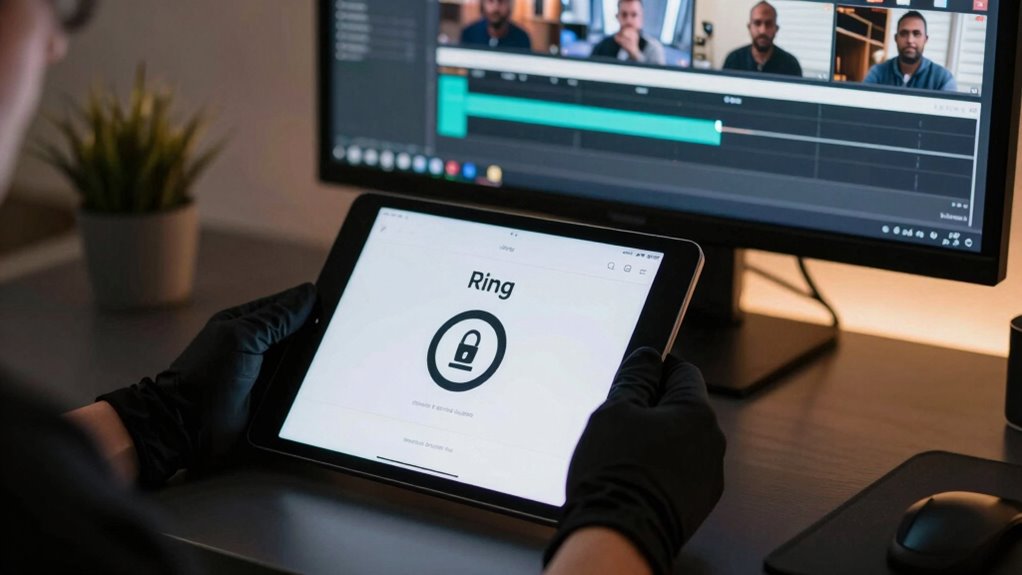
To access and download your Ring footage securely, start by logging into your Ring account through the official app or website using your credentials. Be mindful of privacy concerns, ensuring that you only share access with trusted individuals. Once logged in, locate the specific video you want to save. Download directly from the platform to maintain security, avoiding third-party sites that could compromise your data. If you plan to edit the video, use reputable video editing software to preserve the original quality and integrity. Always keep your login information confidential and enable two-factor authentication if available. This approach helps protect your footage from unauthorized access while allowing you to securely download and prepare the video for evidence or personal review. Understanding privacy protections policies can also help you recognize potential biases in product recommendations related to your security devices. Additionally, being aware of security best practices can further safeguard your footage from unauthorized access. Being informed about data security measures can further enhance the safety of your downloads and stored footage. Incorporating regular account audits can help identify and mitigate any vulnerabilities in your security setup.
Step-by-Step Guide to Downloading Ring Videos

Getting started with downloading your Ring videos is straightforward. First, log into your Ring account via the app or website. Locate the video you want to save from your cloud storage library. Tap or click the download button, which saves the footage directly to your device. Once downloaded, you can use video editing tools to trim or highlight key sections if needed. Confirm you store the file securely, especially if it serves as evidence. Downloading and storing videos securely is crucial when they are intended for legal purposes. Downloaded videos are saved locally, giving you control outside of cloud storage. For easier access later, consider organizing files in dedicated folders. This process allows you to preserve important footage reliably, whether for personal review or legal purposes. Additionally, understanding European cloud innovation can help you choose secure and compliant storage solutions for sensitive videos. Being aware of video format compatibility ensures that your downloaded files are accessible across different devices and software. Following these steps ensures your Ring videos are safely downloaded and ready for any further editing or documentation required.
Tips for Preserving and Backing Up Your Ring Footage

Because digital footage can be vulnerable to loss or corruption, taking proactive steps to preserve and back up your Ring videos is essential. To address privacy concerns, avoid storing sensitive footage on unsecured devices or cloud services without proper encryption. Use reliable storage solutions like external hard drives or encrypted cloud services that offer automatic backups. Regularly update your backup files to guarantee you have the latest footage preserved. Consider creating multiple copies in different locations to prevent data loss from theft, damage, or technical failures. Keep your backups organized and protected with strong passwords to maintain privacy. Additionally, understanding digital footage security best practices can help you prevent unauthorized access. Employing encryption techniques can further safeguard your recordings from potential breaches. Implementing proper storage protocols ensures your footage remains secure and accessible when needed. Staying informed about home security systems can also enhance your overall data protection strategy. Being aware of the Youngster Choice can provide insights into how personal stories can influence security and privacy awareness. By implementing these tips, you ensure your Ring footage remains accessible, secure, and preserved for future needs.
Making Sure Your Ring Video Evidence Is Court-Ready
Ensuring your Ring video evidence is court-ready requires more than just backing up footage; it involves verifying its integrity and proper documentation. You must confirm the video hasn’t been altered and clearly shows relevant details, maintaining its credibility. Be mindful of privacy concerns, especially if others are captured unintentionally, and handle the footage carefully to respect individuals’ rights. Legal considerations also come into play, so keep detailed records of how and when you collected and stored the video. Use secure methods to preserve the original evidence, avoiding any modifications. Properly labeling and organizing your files makes it easier to present the evidence in court. Additionally, understanding media literacy can help you interpret and present your evidence accurately. Employing digital security measures can further protect your footage from tampering or unauthorized access. Implementing file integrity verification techniques can help detect any unauthorized changes to your recordings. Maintaining chain of custody documentation is essential for establishing the authenticity of your evidence. Taking these steps helps ensure your Ring footage remains admissible and trustworthy as legal proof.
Frequently Asked Questions
How Long Does Ring Store Video Footage Before Deletion?
Ring stores your video footage for up to 60 days, giving you ample time to review and download important clips. After this storage duration, the videos are automatically deleted unless you save them manually or subscribe to a Ring Protect Plan, which extends storage. If you’re concerned about privacy, be aware that this limited storage duration helps protect your data and reduces privacy concerns related to long-term storage.
Can I Download Videos From Multiple Ring Devices at Once?
Yes, you can perform a bulk download of videos from multiple Ring devices using multi-device management. The Ring app or desktop portal allows you to select several clips across different devices and download them simultaneously. This makes it easier to preserve important footage quickly. Just make certain you have the necessary permissions and storage space, and you’ll be able to efficiently manage and download videos from all your Ring devices at once.
What File Formats Are Used When Downloading Ring Videos?
When you download Ring videos, you’ll find they are saved in MP4 file formats, which are widely compatible with most media players and devices. Ring’s download options typically include selecting individual clips or bulk downloads, making it easy to save multiple videos at once. MP4 is the standard format because it balances quality and file size, ensuring you can access and review your footage conveniently whenever needed.
Are There Legal Restrictions on Using Ring Footage as Evidence?
You can use Ring footage as evidence, but you must address privacy concerns and guarantee legal compliance. Laws vary by jurisdiction, so you should verify local regulations about recording and sharing footage. Avoid violating privacy rights, obtain necessary consent, and handle the footage responsibly. By doing so, you protect yourself legally, respect others’ privacy, and strengthen your case, ensuring your evidence remains valid and admissible in court.
How Can I Ensure My Backup Copies Are Secure From Theft?
To keep your backup copies secure from theft, you should implement strong encryption protocols and access controls. Encrypt your files both during transfer and storage, making them unreadable without a key. Use multi-factor authentication and restrict access to trusted individuals only. Regularly update your security measures, and store backups in a secure location, such as a password-protected external drive or cloud service with advanced security features.
Conclusion
By following these steps, you’ll find that saving your Ring videos as evidence becomes second nature—almost effortless. A simple download, a secure backup, and you’re ready for anything that comes your way. It’s no coincidence that being prepared can make all the difference when it matters most. Stay vigilant, keep your footage safe, and trust that your efforts now can save you trouble later. Because in the end, safeguarding your evidence is just good sense.


