
Setting up privacy zones is essential to protect your personal space from unwanted eyes and access. Start by identifying sensitive areas and defining clear boundaries using physical barriers like fences, plants, or curtains. Incorporate smart tools such as sensors, cameras, and privacy dashboards to monitor and adjust zones as needed. Regularly review and update your privacy setups to stay ahead of new risks. If you keep exploring, you’ll discover how to optimize your privacy zones effectively.
Key Takeaways
- Clearly define and customize privacy zones to control who can see or access sensitive areas or data.
- Use physical barriers, strategic camera placement, and natural elements to obstruct unwanted views effectively.
- Regularly review and adjust privacy zones to adapt to environmental or technological changes.
- Incorporate digital tools like privacy dashboards and sensor automation for proactive privacy management.
- Conduct periodic privacy impact assessments and security audits to identify vulnerabilities and strengthen boundaries.
Why Privacy Zones Matter in Protecting Your Personal Space

Have you ever felt exposed or uneasy because someone was watching your private space? That discomfort often comes from privacy misconceptions—believing your space is protected when it’s not. Privacy zones are essential because they create clear boundaries that shield your personal area from unwelcome eyes or intrusion. Proper zone customization allows you to control who can see, access, or enter your space, giving you peace of mind. Without these zones, you might unknowingly leave yourself vulnerable to privacy breaches or constant surveillance. Setting up effective privacy zones helps you reclaim control, ensuring your personal space remains just that—personal. Whether it’s your home, office, or digital environment, understanding why privacy zones matter is the first step toward safeguarding your boundaries and maintaining your comfort. Additionally, understanding the importance of contrast ratio can help you better evaluate how well your physical or digital privacy measures are functioning.
How to Assess Your Privacy Needs Effectively
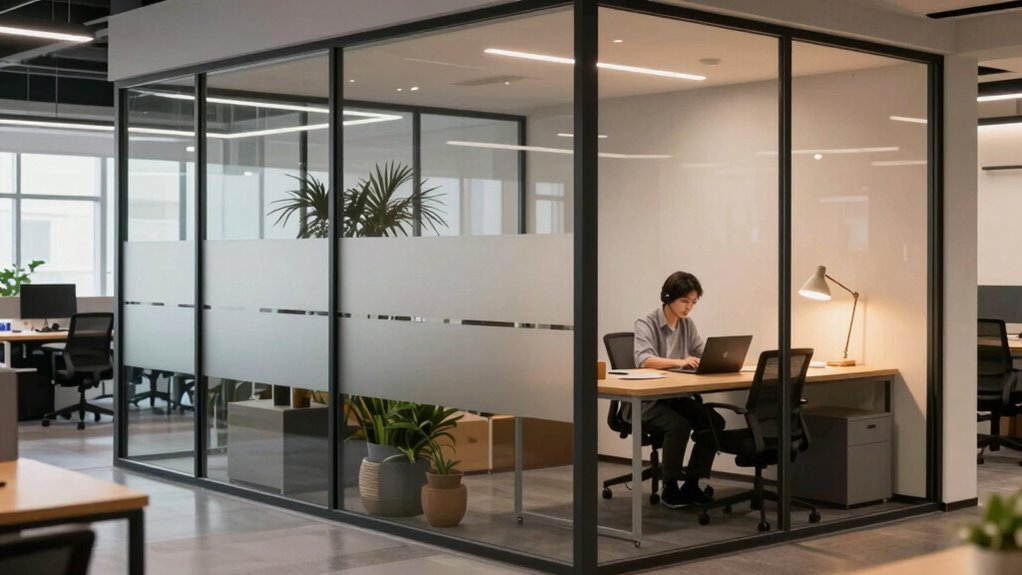
Start by clarifying what you want to protect and set clear privacy goals. Next, pinpoint the types of information you consider sensitive and need to keep private. This approach helps you tailor your privacy zones** to effectively meet your specific needs. Additionally, incorporating privacy zones like physical barriers or digital safeguards can help enhance your overall privacy strategy. Understanding the differences between various styling products** can also aid in maintaining a consistent and discreet personal space.
Assess Your Privacy Goals
Determining your privacy goals requires a clear understanding of what you want to protect and why. Start by defining your privacy boundaries—what areas of your life need protection and where you’re comfortable sharing. Consider your personal boundaries, which help you decide how much information you’re willing to disclose and with whom. Think about your daily routines, online activities, and personal relationships. Are there specific details you want to keep private? Identifying these priorities helps you focus on the most critical areas. Setting clear privacy goals ensures you create effective privacy zones that align with your comfort level and needs. This intentional approach makes it easier to implement boundaries that genuinely safeguard your personal life. For example, understanding privacy zones related to your digital interactions can help you better control who accesses your information.
Identify Sensitive Information
To assess your privacy needs effectively, it’s essential to identify which information is most sensitive and could cause harm if exposed. Focus on personal data like financial details, health records, and login credentials. Use strong password management techniques to protect accounts, ensuring passwords are unique and complex. Implement data encryption for stored and transmitted information to add an extra layer of security. Recognize that some details require tighter control, such as social security numbers or private communications. By pinpointing these critical items, you can prioritize your privacy zones and take targeted actions. Regularly review your sensitive data to stay ahead of potential risks. Additionally, understanding your European cloud infrastructure options can help you choose secure hosting environments aligned with data sovereignty laws. This proactive approach helps you set up effective privacy zones and maintain control over what’s shared and protected.
What Tools and Technologies Can Help You Create Privacy Zones

Creating effective privacy zones is easier when you leverage modern tools and technologies designed for this purpose. Sensor integration allows you to monitor activity and automatically adjust privacy settings, ensuring sensitive areas stay protected. Privacy analytics help you identify potential vulnerabilities and optimize your privacy zones over time. Smart sensors can detect movement or unauthorized access, triggering security measures instantly. Additionally, privacy dashboards visualize data, making it easier to manage and improve your zones. Smart Home Devices can further enhance your privacy by integrating multiple systems for comprehensive protection. Here’s a quick overview:
| Tool/Technology | Purpose | Key Benefit |
|---|---|---|
| Sensor Integration | Detects activity in real-time | Automated adjustments |
| Privacy Analytics | Analyzes data for vulnerabilities | Continuous improvement |
| Smart Sensors | Monitor access and movement | Enhanced security |
Using these tools, you can create dynamic, reliable privacy zones tailored to your needs. Incorporating security-focused tools ensures your privacy zones remain effective against evolving threats. Additionally, staying informed about privacy protocols helps you adapt your setup to new challenges. Employing advanced monitoring systems can further strengthen your privacy infrastructure and provide peace of mind. For example, understanding the odor characteristics associated with certain substances can prevent misinterpretations or security breaches.
How to Design Your Privacy Zones for Maximum Privacy

To design your privacy zones for maximum privacy, focus on strategic camera placement to cover sensitive areas effectively. Incorporate obscuring barriers like fences or plants to block views where needed, and regularly adjust your zones to respond to changes or new risks. These steps help guarantee your privacy remains protected over time, especially when integrating smart‑home devices that can sometimes inadvertently expose private areas. Additionally, understanding the importance of privacy impact assessments can help identify potential vulnerabilities before they become issues. Conducting privacy audits periodically can further enhance your privacy measures by ensuring all aspects are up-to-date and fully protected. Consulting with professional services specializing in privacy consulting can further enhance the effectiveness of your privacy zones by providing tailored solutions based on your specific property layout and concerns. Incorporating natural barriers like dense shrubbery can also serve as an effective and aesthetically pleasing way to boost privacy.
Strategic Camera Placement
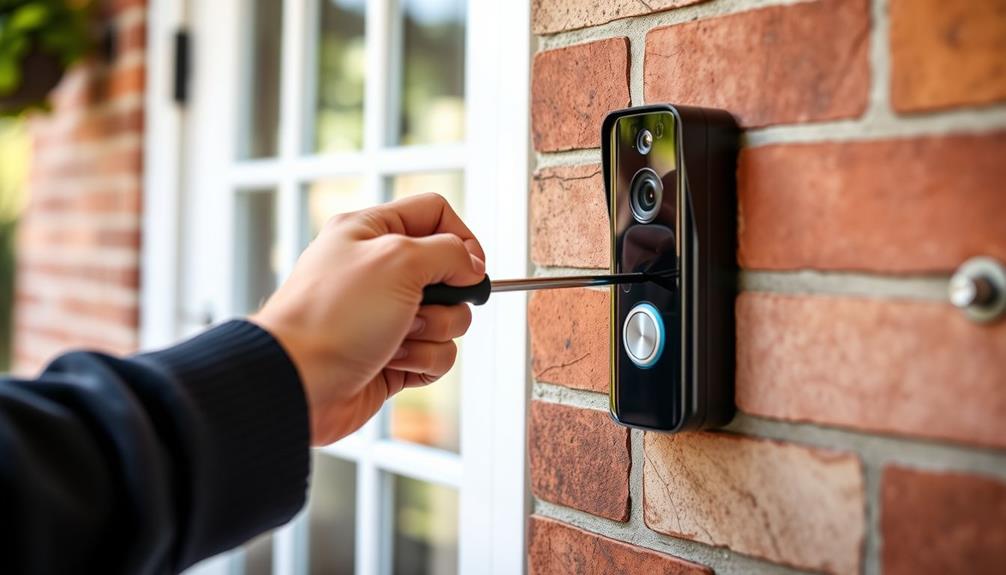
Strategic camera placement is essential for designing effective privacy zones that protect your personal space. To do this, consider your camera angles carefully. Position cameras so they cover high-traffic areas while avoiding direct views into private spaces, creating blind spots where you can’t be seen. Think about the natural flow of movement around your property and place cameras where they capture activity without intruding on your privacy. Adjust angles to minimize overlapping fields of view, reducing the risk of blind spots that could compromise your privacy. Remember, the goal is to monitor key areas without exposing your personal space. Proper camera placement helps you maintain control, ensuring your privacy zones stay intact and effective. Incorporating privacy-conscious design into your setup ensures your security measures respect your personal boundaries while providing peace of mind. Additionally, understanding field of view limitations can help you optimize camera positions for maximum privacy and security. Using the right camera angles can further enhance your ability to create effective privacy zones without sacrificing security. Being aware of camera placement best practices also plays a crucial role in avoiding unintended privacy breaches.
Use Obscuring Barriers
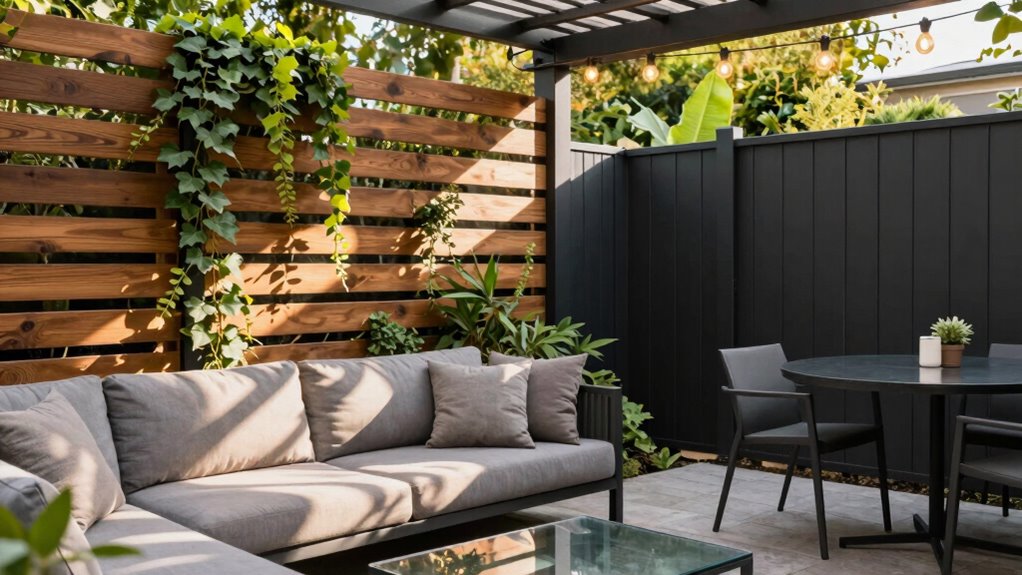
Using obscuring barriers is one of the most effective ways to enhance your privacy zones. Visual barriers, like frosted glass or tinted film, block clear views while maintaining natural light. Physical screens, such as lattice panels, privacy fences, or large potted plants, create tangible separation between your space and outside view. These barriers serve as effective obstructions, preventing passersby or neighbors from peering in. Positioning them strategically around your privacy zone ensures maximum coverage and minimizes blind spots. Choose materials and designs that complement your environment, blending function with aesthetics. Incorporating filtration elements like window films or screens can further improve privacy without sacrificing airflow or light. Additionally, considering visual obstruction techniques can help block unwanted sightlines more effectively. By incorporating these visual barriers and physical screens, you create a more secure, private space that discourages unwanted observation, giving you peace of mind and control over your privacy.
Regular Zone Adjustments
Adjusting your privacy zones regularly guarantees they continue to serve your needs effectively. Over time, sensor calibration can drift, making zones less reliable. To optimize privacy, reassess your zones periodically, ensuring they align with your current environment. Consider these steps:
- Review sensor calibration to maintain accurate detection and prevent false triggers.
- Update your privacy policy to reflect any changes in zone boundaries or data handling.
- Reevaluate zone placement based on shifts in your physical space or activities.
- Test zones to confirm they block unwanted views and monitor for gaps.
Steps to Implement Your Privacy Zones at Home or Work
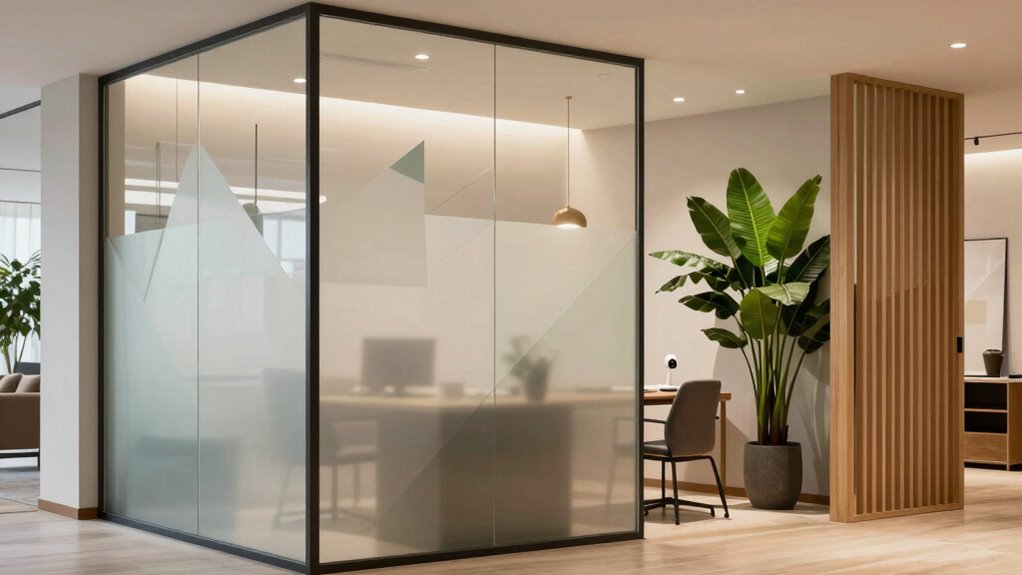
Setting up your privacy zones at home or work begins with identifying the areas you want to shield from cameras or monitoring devices. Focus on spaces where privacy matters most, such as personal workstations, home offices, or private corners. Once identified, consider physical barriers like curtains or privacy screens, or digital solutions like adjusting camera angles or disabling certain devices. To prevent privacy breaches, ensure your Wi-Fi and network connections use data encryption, protecting your data from unauthorized access. Installing privacy zones might also involve configuring device settings to limit data collection or monitoring. Regularly review and update these zones to adapt to any changes in your environment or technology. Additionally, understanding media literacy can help you recognize and mitigate potential privacy threats online. Being aware of deep-sky imaging techniques and their applications can also inform you about how certain surveillance devices operate and how to counteract unwanted monitoring. Incorporating privacy-conscious technology practices can further enhance your security. Taking these steps helps safeguard your privacy and keeps your personal or sensitive information secure.
Tips for Maintaining and Adjusting Your Privacy Zones Over Time
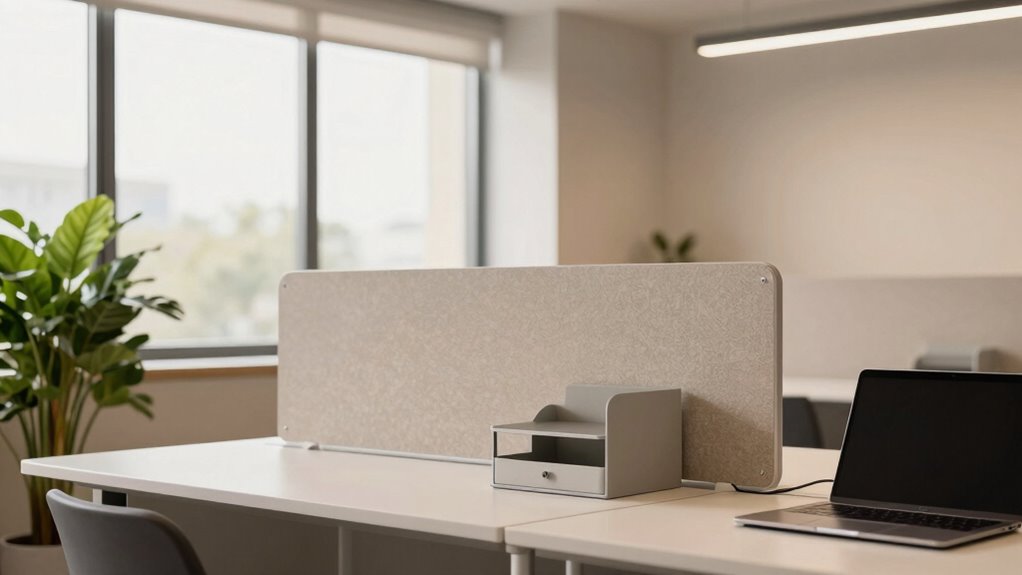
To guarantee your privacy zones remain effective over time, it’s essential to regularly review and update them as your environment and technology evolve. Conduct periodic security audits to identify vulnerabilities or outdated equipment. Refresh your privacy policies to reflect any changes in your setup or behavior. Consider adjusting physical barriers or digital settings as needed. Keep an eye on new devices or apps that could impact your privacy. Maintain an updated inventory of sensitive areas. Regularly test your privacy zones to ensure they still block unwanted views or access. Remember, privacy is an ongoing process—not a one-time setup. By staying proactive and revising your strategies, you protect your space and maintain control over your personal information.
Common Mistakes to Avoid When Setting Up Privacy Zones

One common mistake is assuming that a single privacy zone will suffice for all situations, which can leave certain areas vulnerable. Overlooking hacking vulnerabilities is risky; if your zones aren’t properly secured, malicious actors could exploit gaps. Additionally, neglecting legal considerations can lead to unintended privacy violations or legal action. For example, setting up zones without understanding local laws may cause you to accidentally record or share footage improperly. Avoid assuming that generic privacy zones are enough—customize each zone based on its specific use and location. Regularly review and update your zones to address evolving threats and legal standards. Taking these precautions helps protect your privacy, reduces vulnerability, and keeps you compliant with applicable laws.
Next Steps: Making Your Privacy Zones Work for You

Once you’ve established your privacy zones, the next step is to guarantee they serve your needs effectively. Start by regularly reviewing your digital footprints—what information is accessible online—and adjust your privacy settings accordingly. Use data encryption on your devices and in your communications to protect sensitive information from unwanted access. Imagine:
Regularly review your digital footprints and update privacy settings to keep your information secure.
- Locking down your social media profiles to hide personal details
- Encrypting emails and files to prevent interception
- Setting up VPNs to mask your online activity
- Monitoring your digital footprints to catch any leaks early
These steps help your privacy zones function at their best, keeping your data secure and reducing exposure. Making small adjustments today can prevent bigger privacy breaches tomorrow. Stay proactive and keep your online life protected.
Frequently Asked Questions
Can Privacy Zones Be Legally Enforced in Shared or Public Spaces?
Yes, privacy zones can be legally enforced in shared spaces, but it depends on local laws and regulations. You need to clearly define and communicate these zones to guarantee legal enforceability. In shared or public spaces, authorities or property owners can implement rules to protect privacy, but enforcement may require signage, agreements, or policy adherence. Always consult legal experts to confirm your privacy zones comply with applicable laws and regulations.
How Often Should I Reassess My Privacy Zones?
You should reassess your privacy zones regularly—at least every few months or whenever your environment changes. Conduct privacy audits to identify any gaps or new risks, then make zone updates accordingly. Staying proactive guarantees your privacy zones remain effective and compliant with evolving regulations. Don’t wait for issues to arise; routine reviews help you maintain control over your privacy and adapt to new challenges seamlessly.
Are There Cost-Effective Options for Creating Privacy Zones?
Yes, there are cost-effective solutions for creating privacy zones. You can use budget-friendly options like installing temporary or adhesive privacy screens, hanging curtains, or using strategic furniture placement. These solutions are affordable and easy to update or move as needed. By choosing versatile, inexpensive materials, you can guarantee your privacy zones are effective without overspending, making them perfect for any budget-conscious setup.
What Are the Best Practices for Privacy Zones in Outdoor Areas?
Like a knight guarding his castle, you should prioritize strategic landscaping suggestions and privacy zone technology for outdoor privacy. Plant tall, dense hedges or bamboo to create natural barriers, and consider installing outdoor privacy screens or fences. Use smart technology, like motion sensors and cameras, to enhance security and privacy. Keep paths and furniture arrangements thoughtfully positioned to minimize visibility from neighbors, ensuring your outdoor space remains a private retreat.
How Do Privacy Zones Impact Home Security Systems?
Privacy zones enhance your home security by customizing camera placement to exclude private areas, reducing false alerts and safeguarding your privacy. When you set up zone customization, you control what the system monitors, focusing on vulnerable entry points while avoiding sensitive spaces. This balance improves security efficiency and ensures you maintain privacy where needed, making your system more effective and tailored to your home’s specific needs.
Conclusion
Think of your privacy zones as a garden you nurture—regularly tending and adjusting them ensures they stay private and flourishing. By evaluating your needs, using the right tools, and staying vigilant, you can create protected spaces that feel safe and comfortable. Remember, setting up privacy zones isn’t a one-time task; it’s an ongoing process, like watering a plant. Keep refining your approach, and your personal space will remain a secure haven you can always rely on.