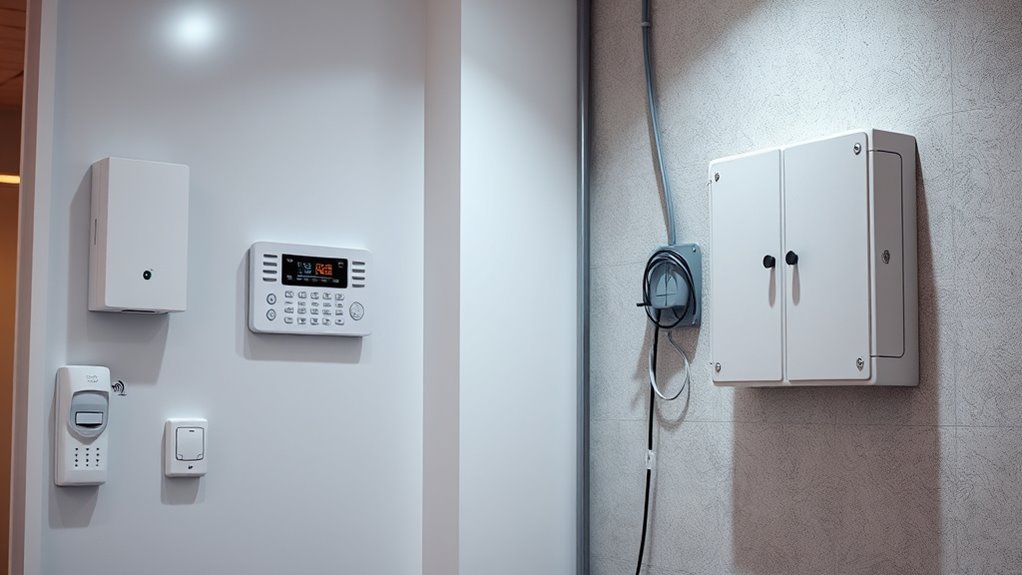
If you want a system that’s easy to install and expand, a wireless alarm might be best for you since it’s quick to set up and flexible. However, if your priority is reliability and strict security, a hardwired system can offer more dependable performance. Consider your environment, future upgrade plans, and comfort with DIY projects. To find out which option fits your needs perfectly, explore more about the differences and benefits each type offers.

Get privacy and security gear delivered free with Prime
- Fast, free delivery on millions of items
- Prime Video, Amazon Music and more included
- Member-only deals all year
Key Takeaways
- Wireless systems are easier and quicker to install, ideal for DIY setups and flexible expansion.
- Hardwired systems offer greater reliability and are less prone to signal interference.
- Wireless alarms are more cost-effective and suitable for future upgrades; hardwired systems suit critical, permanent installations.
- Hardwired systems require professional installation and may involve wall modifications, while wireless systems are more convenient.
- Choose wireless for flexibility and ease, or hardwired for dependability and security needs.
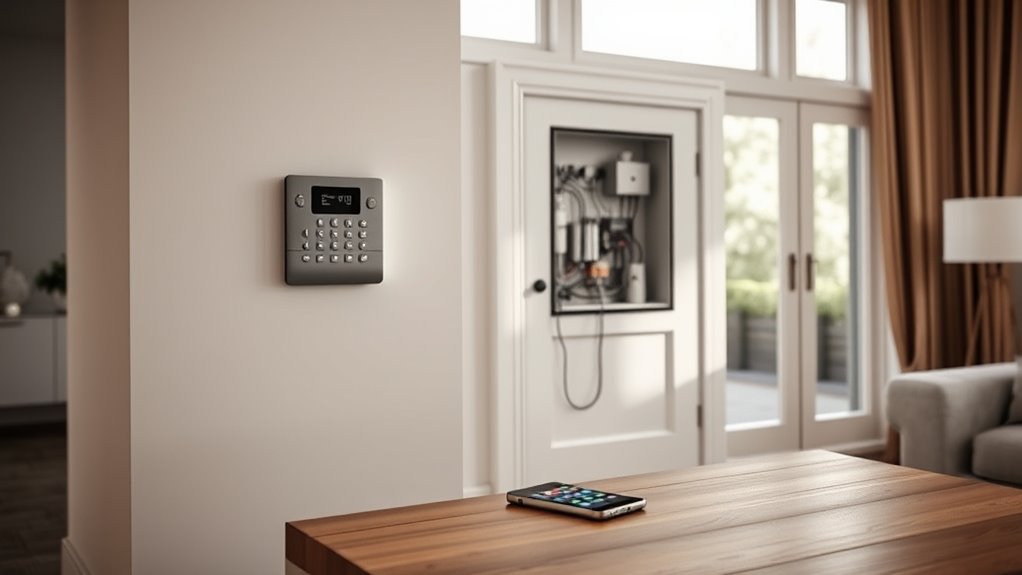
Are you trying to decide between a wireless or hardwired alarm system for your home? The choice hinges on several factors, including how easy you want the installation to be and how much you might want to expand or modify your system later. Wireless alarm systems are known for their DIY installation, making them a popular choice if you prefer to set everything up yourself without hiring professionals. With wireless setups, you just need to place the sensors and connect them to the main control panel via Wi-Fi or radio signals. This approach saves time and money, especially if you’re comfortable handling basic tech tasks. On the other hand, hardwired systems require running cables through your walls, which can be more labor-intensive. If you’re not experienced with electrical work or don’t want the hassle of drilling holes and managing wires, a hardwired system might seem intimidating. However, once installed, hardwired systems tend to be more reliable since they aren’t prone to interference from Wi-Fi or radio signals. Additionally, the reliability of a hardwired system can be crucial for life safety applications. Another critical aspect to evaluate is system scalability. Wireless systems generally excel in this area because expanding them is straightforward. Adding new sensors, cameras, or sensors is often as simple as pairing new devices with the existing system. This flexibility allows you to customize and grow your security setup over time without major reconfiguration. Conversely, hardwired systems can be less flexible when it comes to expansion. Installing additional sensors or cameras often means running new wires, which can be costly and disruptive, especially if your home is already built. If you anticipate needing to scale your system in the future or want the ability to easily upgrade, wireless might be the more practical choice.
As an affiliate, we earn on qualifying purchases.
Frequently Asked Questions
Can Wireless Systems Be Used With Existing Home Wiring?
Yes, wireless systems can be integrated with your existing home wiring. They typically don’t require extensive wiring, making installation easier and less invasive. You can use wireless integration to connect sensors and control panels seamlessly, even if your home already has wiring in place. This flexibility allows you to enjoy the benefits of wireless security without needing to redo your current home wiring, ensuring a smooth setup process.
How Do Installation Costs Compare Between Wireless and Hardwired Systems?
Wireless alarm systems generally have lower installation costs because they don’t require extensive wiring, making setup quicker and easier. Hardwired systems tend to be more expensive upfront due to wiring compatibility and professional installation needs. If you want to save on installation costs and avoid complex wiring, a wireless system is a practical choice. However, if your home is already wired, a hardwired system might be more cost-effective long-term.
Are Wireless Alarms More Vulnerable to Hacking or Interference?
Wireless alarms are more vulnerable to hacking and interference concerns, much like a Wi-Fi network can be compromised if not secured properly. You need to make certain your system uses strong encryption and regular firmware updates to mitigate security risks. While wireless systems are convenient, they require vigilant cybersecurity practices. With proper safeguards, you can enjoy the flexibility without compromising your security, but stay aware of potential vulnerabilities.
What Maintenance Is Required for Each System Type?
You need to regularly check your wireless alarm’s battery life and replace batteries as needed to keep it functioning smoothly. For both systems, software updates are essential; they fix bugs and improve security. Hardwired systems require minimal maintenance but should be inspected periodically for wiring issues. Wireless systems might need more frequent checks for battery and signal strength, ensuring your alarm stays reliable and effective.
Can I Upgrade or Expand Either System Easily Later?
Think of your alarm system as a garden: flexible and ready to grow. With a wireless system, you can easily upgrade or expand using a remote control, making adjustments simple without affecting power consumption. Hardwired systems are less adaptable; adding sensors may require invasive work. So, if you want convenience and future growth, wireless is the better option, allowing you to expand smoothly as your needs evolve.
As an affiliate, we earn on qualifying purchases.
Conclusion
Ultimately, choosing between wireless and hardwired alarm systems depends on your unique needs. Think of it like picking a suit—wireless is flexible and easy to move, while hardwired is reliable and built-in. Consider your home’s layout and your maintenance preferences. Whichever you choose, guarantee it fits your lifestyle, so you feel secure and confident. Remember, the right system is like a good friend—there when you need it most, always there to keep you safe.
As an affiliate, we earn on qualifying purchases.
professional hardwired alarm system
As an affiliate, we earn on qualifying purchases.
As an affiliate, we earn on qualifying purchases.
Halloween Picks
halloween
As an affiliate, we earn on qualifying purchases.