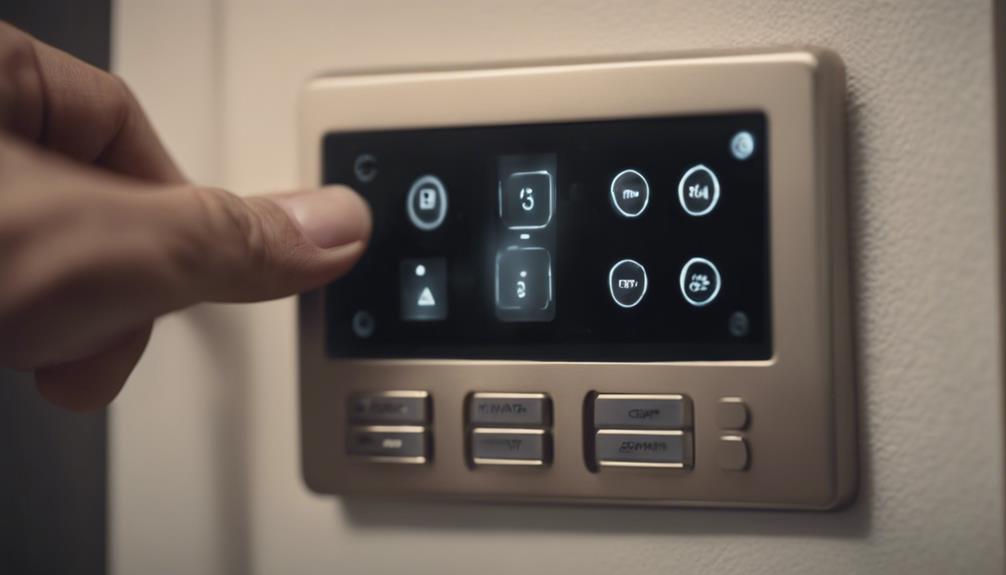
To integrate smoke and CO detectors with your alarm system, start by choosing compatible wired or wireless models. Follow manufacturer instructions to connect detectors to your control panel, making certain communication is secure and functioning correctly. Test the system regularly by simulating smoke or CO presence to confirm alerts trigger across all devices. Proper placement and ongoing maintenance are key—continuing will reveal detailed steps to ensure your home’s safety works seamlessly.
Key Takeaways
- Follow manufacturer instructions to connect smoke and CO detectors to your alarm system, ensuring compatibility and proper wiring or wireless pairing.
- Place detectors strategically on every level, near sleeping areas, and away from vents or drafts for optimal detection.
- Regularly test the integrated system to verify alerts trigger correctly across all connected devices.
- Schedule routine battery checks and replacements to maintain continuous system functionality.
- Ensure the alarm control panel receives centralized alerts and notifications for quick response during emergencies.
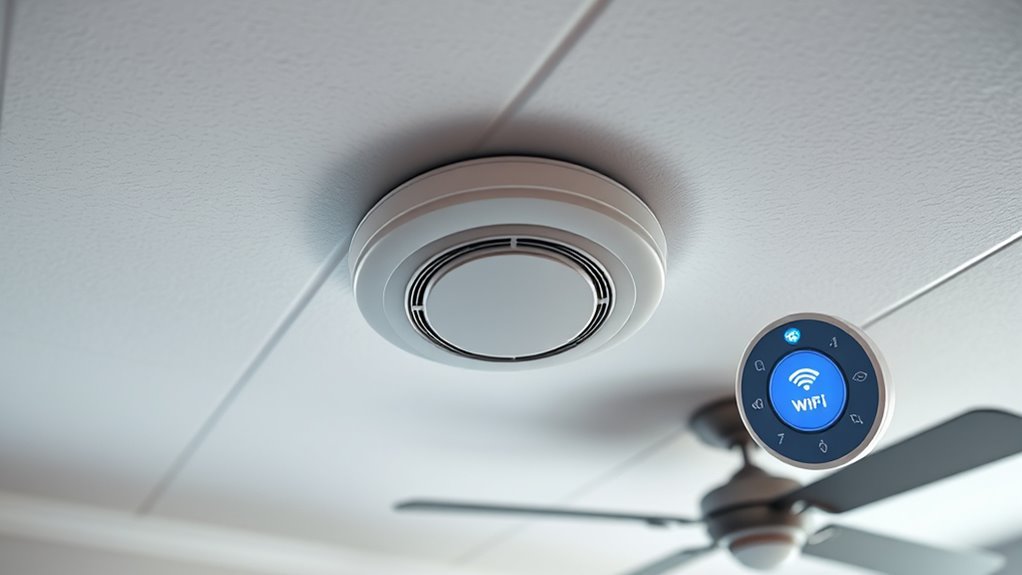
Integrating smoke and carbon monoxide (CO) detectors with your alarm system enhances safety by providing centralized alerts and streamlined monitoring. When you connect these detectors to your alarm system, you get the advantage of receiving immediate notifications on your phone or alarm panel, allowing you to respond quickly to potential dangers. To guarantee your detectors work reliably, proper attention to maintenance and placement is essential. Regular battery replacement is vital, especially for battery-powered units, as dead batteries are a common cause of missed alerts. Set a schedule to check and replace batteries at least once a year, or more often if your detectors have low-battery indicators. Some models offer long-life batteries that last up to ten years, which can reduce maintenance hassle, but you still need to verify their status periodically. Digital literacy programs encourage playful communication, which can help seniors better understand and operate these interconnected safety devices.
Detector placement is equally important for effective coverage. You want to position smoke detectors on every level of your home, particularly near sleeping areas and kitchens, but away from vents, fans, or drafty windows that could interfere with their operation. CO detectors should be placed at least 15 feet away from fuel-burning appliances to minimize false alarms but still provide early detection. Avoid installing detectors directly above or beside heating vents, windows, or doors, as airflow can prevent proper sensing. When integrating these detectors with your alarm system, follow the manufacturer’s instructions carefully, ensuring each device communicates correctly with your control panel. Proper placement not only maximizes detection efficiency but also minimizes nuisance alarms, which can lead to complacency over time.
Connecting smoke and CO detectors to your alarm system requires compatible devices and a dependable wiring or wireless connection. For wired systems, ensure all connections are secure and test the system regularly to confirm communication. Wireless models should be checked for signal strength and battery status, especially if they rely on Wi-Fi or other wireless protocols. Once integrated, test the entire system by simulating smoke or CO presence, making sure alerts trigger appropriately across all connected devices. When you perform maintenance, check the detector placement and replace batteries as needed, confirming the system remains fully functional.
wireless smoke and CO detector combo
As an affiliate, we earn on qualifying purchases.
As an affiliate, we earn on qualifying purchases.
Frequently Asked Questions
Can I COnnect Different Brands of Smoke and CO Detectors?
You can connect different brands of smoke and CO detectors if they support wireless connectivity and are compatible regarding brand compatibility. Many modern alarms offer smart features that work across brands, but it’s crucial to check their specifications. Make sure the detectors are compatible with your alarm system’s wireless protocols, like Z-Wave or Zigbee, to enable seamless integration and reliable alerts across different brands.
Do I Need Professional Installation for Integrated Alarms?
No, you don’t need professional installation for integrated alarms, but DIY installation can be tricky. You should consider compatibility concerns, as different brands or models might not sync properly, risking safety. If you’re comfortable with basic wiring and following instructions, you can handle the setup yourself. However, if you’re unsure about connections or compatibility, seeking professional help guarantees proper installation, safety, and peace of mind.
How Often Should I Test the Integrated Smoke and CO System?
You should test your integrated smoke and CO system at least once a month to guarantee they’re working properly. Follow your maintenance schedule and always observe safety precautions when testing, such as avoiding exposure to smoke or chemicals. Regular testing helps catch issues early, keeping you and your loved ones safe. Remember to replace batteries annually and keep detectors clean to maintain peak performance and protection.
Are There Smartphone Apps for Monitoring Integrated Detectors Remotely?
You might worry about missing alerts when you’re away, but many smart detectors offer smartphone apps for remote monitoring. These apps send real-time mobile alerts straight to your phone, giving you peace of mind. With these tools, you can easily monitor your smoke and CO detectors from anywhere, ensuring your home’s safety is always in your hands. Stay connected and respond quickly, no matter where you are.
What Is the Backup Power Source for Integrated Alarm Systems?
Your integrated alarm system relies on a battery backup to guarantee continuous operation during power outages. The primary power supply comes from your home’s electrical system, but the backup battery kicks in if the main power fails. Regularly check and replace the battery backup to keep your system ready. This way, you stay protected whether the power is on or off, ensuring reliable detection at all times.
integrated home alarm system with smoke and CO detection
As an affiliate, we earn on qualifying purchases.
As an affiliate, we earn on qualifying purchases.
Conclusion
By connecting your smoke and CO detectors to your alarm system, you’re building a safety net as strong as Icarus’ wings—protecting yourself from unseen dangers. Just like Daedalus crafted his labyrinth, you now craft a secure environment for your loved ones. Stay vigilant, keep your detectors integrated, and remember that a smart setup today keeps the shadows of danger at bay tomorrow. Your home’s safety is your greatest masterpiece—guard it wisely.
smart smoke and carbon monoxide detectors
As an affiliate, we earn on qualifying purchases.
As an affiliate, we earn on qualifying purchases.
home safety alarm system with alerts
As an affiliate, we earn on qualifying purchases.
As an affiliate, we earn on qualifying purchases.