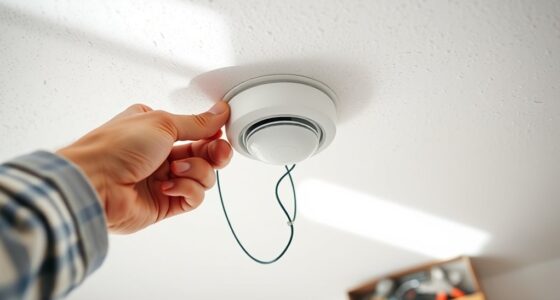
Glass-break sensors often fail when you need them most because environmental factors like loud noises, vibrations, or temperature changes can disrupt their ability to detect shattered glass. Poor placement or incorrect calibration makes it easier for false alarms or missed detections to happen. External vibrations from nearby activities, sunlight heating the glass, or structural movements can all interfere with sensor performance. Keep going to discover how to guarantee your sensors work reliably when it matters most.
Key Takeaways
- Poor sensor calibration can cause missed detections during actual glass break events.
- Environmental vibrations from nearby activities often trigger false alarms or interfere with sensor sensitivity.
- Incorrect sensor placement near heat sources, sunlight, or noise areas reduces detection reliability.
- Dust, dirt, or debris buildup on sensors impairs their ability to detect glass break sounds accurately.
- Lack of regular maintenance and calibration leads to sensor degradation and failure when needed most.

Qolsys QS1431-840 IQ Wireless S-Line Encrypted Glass Break Sensor
Detects breaking glass windows up to 25 feet away
As an affiliate, we earn on qualifying purchases.
As an affiliate, we earn on qualifying purchases.
Why Do Glass-Break Sensors Fail When You Need Them Most?

Glass-break sensors can fail precisely when you need them most because they rely on specific sound patterns and vibrations that can be unpredictable or disrupted. One common reason is poor sensor calibration; if your sensor isn’t properly calibrated, it may not recognize the sound of shattered glass. Regular maintenance routines are essential to keep sensors functioning correctly. Dust, dirt, or debris can interfere with their ability to detect vibrations, so cleaning and inspecting them periodically is vital. Additionally, environmental factors like loud noises or vibrations from nearby appliances can cause false alarms or missed detections. Ensuring your sensors are correctly calibrated and following consistent maintenance routines helps optimize their performance, reducing the risk of failure during critical moments when security matters most. Proper sensor calibration is crucial to adapt to changing conditions and maintain reliable detection. Moreover, environmental conditions such as humidity can affect sensor sensitivity and accuracy, so monitoring and adjusting for these factors is important. Furthermore, understanding security system specifications and limitations can help you choose the right sensors for your environment. For example, adjusting sensor sensitivity settings can improve detection accuracy in various conditions. For optimal performance, consider the sensor placement to minimize interference from external sources.

EVA LOGIK Modern Ultra-Thin Window Alarm with Loud 120dB Sound and Vibration Sensors Compatible with Virtually Any Window, Glass Break Alarm Perfect for Home, Office, Dorm Room- 8 Pack
Vibration Window Alarm: Built-in vibration sensor that activates a loud alarm when vibrations are detected, offering reliable security…
As an affiliate, we earn on qualifying purchases.
As an affiliate, we earn on qualifying purchases.
How Do Glass-Break Sensors Detect Shattered Glass?

When a window breaks, sensors detect the sound waves and vibrations produced by the shattering glass. They analyze these signals to distinguish real glass break events from everyday noise. Proper sensor calibration guarantees accurate detection, reducing false alarms. Factors like window tinting can dampen sound and vibration transmission, making detection trickier. Glass-break sensors typically use microphones to pick up specific frequencies associated with shattered glass. Some models combine accelerometers for vibration detection. You can improve performance by maintaining correct sensor calibration and ensuring the sensor is positioned correctly. Keep in mind, the sensor’s sensitivity settings should match your environment for peak results. Regularly testing your system helps confirm it detects genuine glass breakage without triggering unnecessarily. Additionally, understanding installation best practices can significantly enhance the reliability of your sensors. Also, sound wave analysis plays a crucial role in differentiating between actual glass breakage and false positives, further improving sensor accuracy. Incorporating advanced detection technology can further boost sensor reliability in various environments. To optimize performance, paying attention to sensor placement and environmental factors can make a noticeable difference in detection accuracy. Proper environmental conditions such as minimizing background noise can also help sensors perform more reliably in detecting true glass break events.

WSDCAM Glass Break Sensor Alarm 125dB Ultra-Slim Wireless Glass Break Detector Window Alarm Vibration Sensor for Home Window and Door Security – 4 Pack
Glass break alarm work by detecting the physical vibrations, with 125 dB loud alarm sound and red indicator…
As an affiliate, we earn on qualifying purchases.
As an affiliate, we earn on qualifying purchases.
What Environmental Factors Can Trigger False Alarms in Glass Sensors?

Environmental factors can often cause glass sensors to trigger false alarms, undermining their reliability. Temperature fluctuations can make the glass expand or contract suddenly, mimicking the sound of shattering glass. Rapid changes in temperature, like moving from a heated room to cold outdoors, can set off the sensor unexpectedly. Sunlight exposure also plays a role; direct sunlight heating the glass can cause it to expand or create vibrations that the sensor misinterprets as a break. Wind or nearby construction can shake windows or cause vibrations, leading to false alarms as well. To minimize these issues, position sensors away from direct sunlight and areas prone to extreme temperature changes. Additionally, sensor placement is crucial to avoid environmental triggers that can cause false alarms. Understanding these environmental factors helps you prevent unnecessary alarms and ensures your sensor functions correctly when it matters most. Proper installation techniques can further reduce the likelihood of false triggers caused by these environmental influences.

Window Alarm System 4-Pack – Ultra-Loud 120dB Alarms with Advanced Vibration Sensors – Window Security Alarms for Glass Break Detection – Features Low Battery LED Indicator
Specialized Window Alarm System: This window alarm is specifically designed to offer security to glass windows in your…
As an affiliate, we earn on qualifying purchases.
As an affiliate, we earn on qualifying purchases.
Does Glass Type and Thickness Affect Sensor Effectiveness?

The type and thickness of glass considerably influence how effectively a sensor detects breakage. Different glass compositions, such as tempered, laminated, or standard, respond uniquely to vibrations and sound waves. Thickness variation also plays a vital role, as thicker glass may dampen the sensor’s signals, reducing sensitivity. To optimize sensor performance, consider these factors:
- Thinner glass allows easier detection of breakage signals.
- Laminated glass can absorb or weaken vibrations, affecting detection.
- Tempered glass tends to produce clearer signals when shattered.
- Variations in glass composition change the sound and vibration patterns.
- Thicker glass may require more sensitive sensors for reliable detection.
- Glass properties such as density and resonance impact how vibrations are transmitted to the sensor. Additionally, understanding the vibration transmission properties of different glass types can help in selecting the appropriate sensor sensitivity settings for optimal detection. Recognizing how material properties influence vibration behavior can further enhance sensor reliability, especially when considering the material’s acoustic characteristics.
Why Is Sensor Placement Critical for Reliable Detection?

Proper sensor placement directly impacts its ability to detect glass breakage reliably. If installed too far from the glass, the sensor may miss vibrations or noise signals. Conversely, placing it too close can cause false alarms from nearby disturbances, requiring careful sensor calibration. Regular sensor maintenance ensures it remains sensitive and accurate. Consider the environment: walls, corners, and high-traffic areas affect detection. Use the following table to visualize ideal placement:
| Placement Location | Why It Matters |
|---|---|
| Near the glass edge | Detects vibrations quickly, reduces false alarms |
| Avoid corners | Vibrations may be dampened or distorted |
| Away from noise sources | Prevents interference from ambient sounds |
Strategic placement, calibration, and maintenance are key for reliable glass-break detection. Understanding sensor sensitivity and how environmental factors influence performance can further improve detection accuracy, especially when accounting for environmental interference. Additionally, awareness of signal propagation can help in optimizing sensor placement for different environments. Being mindful of sound attenuation properties within the space can also enhance detection reliability.
How Do Noise and Vibrations Disrupt Glass Sensor Performance?
Noise and vibrations from nearby sources can considerably disrupt glass sensor performance by generating signals that mimic actual glass breakage. These disturbances cause false alarms or missed detections, undermining reliability. Sound interference from loud noises, like traffic or appliances, can trigger sensors unintentionally. Structural vibrations from heavy footsteps, machinery, or nearby construction can resonate through walls and windows, confusing the sensor. To minimize issues, be aware of these potential disruptors:
- Nearby loud sounds causing sound interference
- Structural vibrations from heavy traffic or equipment
- Sudden impacts or shocks near windows
- Vibrations from HVAC systems or appliances
- Mechanical noises from nearby activities
- Environmental noise and vibrations can also alter the sensor’s sensitivity, making calibration essential for reliable performance.
Understanding these factors helps you optimize sensor placement and reduce false alarms caused by noise and vibrations. Additionally, recognizing how sound waves and vibrations influence sensor sensitivity allows for better troubleshooting and deployment strategies. Furthermore, selecting sensors with enhanced vibration resistance can improve overall reliability in noisy environments. Incorporating sensors with built-in noise filtering features can also significantly enhance performance amidst environmental disturbances.
Troubleshooting Why Your Glass-Break Sensor Misses Break-Ins

If your glass-break sensor isn’t detecting actual break-ins, several factors could be to blame. First, check if the sensor needs calibration; improper calibration can cause missed detections. Many sensors require periodic adjustments to maintain accuracy, especially after environmental changes. Additionally, firmware updates are vital—outdated firmware may hinder performance or cause false negatives. Verify that your sensor’s firmware is current, as manufacturers often release updates to improve detection capabilities and fix bugs. Also, ensure the sensor is correctly positioned and free of obstructions, as misalignment can reduce sensitivity to glass breaks. Regularly calibrate and update your sensor to keep it functioning at its best, minimizing the chances of missing an actual break-in.
Tips to Ensure Your Glass-Break Sensors Work When It Matters Most

To guarantee your glass-break sensors perform reliably when it matters most, you need to optimize their placement and settings. Proper sensor calibration ensures they detect glass breaks accurately without false alarms. Make sure your power supply is stable and consistent, preventing interruptions that could disable the sensor. Position sensors near glass panes but avoid placing them directly next to vents, fans, or loud appliances, which can cause false triggers. Regularly test your sensors to confirm they respond correctly to glass break sounds. Adjust sensitivity settings based on your environment to reduce false alarms while maintaining detection accuracy. Keep these tips in mind:
Optimize glass-break sensor placement and calibration for reliable detection and fewer false alarms.
- Calibrate sensors regularly for accuracy
- Use a stable power supply
- Position sensors away from noise sources
- Conduct periodic testing
- Adjust sensitivity as needed
Frequently Asked Questions
Can Weather Conditions Cause False Alarms in Glass-Break Sensors?
Weather conditions can cause false alarms in glass-break sensors by interfering with their sensor sensitivity. Heavy rain, strong winds, or hail can create noise or vibrations that trigger the sensor unnecessarily. To prevent this, you should adjust the sensor sensitivity settings or install weather-resistant sensors designed to minimize weather interference. Regular maintenance and testing can also help guarantee your sensor only activates when actual glass breakage occurs.
Do Different Types of Glass Affect Sensor Accuracy?
Did you know that certain glass types can reduce sensor effectiveness by up to 30%? Different glass compositions, like laminated or tempered glass, emit varying sound frequencies when broken, which can challenge sensor calibration. As a result, you might experience false alarms or missed detections. To guarantee your system works reliably, it’s essential to select sensors designed for your glass type and regularly calibrate them for peak accuracy.
How Often Should Glass-Break Sensors Be Tested?
You should test your glass-break sensors at least quarterly to guarantee proper functioning. Regular testing helps identify issues related to sensor calibration and placement that could cause failure during an incident. When testing, listen for the alarm activation and verify the sensor’s response. Proper sensor placement, away from sources of false alarms, and periodic calibration are key to maintaining reliable protection and avoiding sensor failure when you need it most.
Are There Specific Maintenance Steps to Prevent Sensor Failure?
To prevent sensor failure, you should regularly perform sensor calibration and check sensor placement. Confirm your glass-break sensors are correctly positioned, away from vents, speakers, or objects that could interfere with sound detection. Calibrate them periodically to maintain accuracy, especially after any changes in environment or maintenance. Proper sensor placement and calibration help reduce false alarms and ensure reliable performance when you need it most.
Can Pets or Indoor Vibrations Trigger False Alarms?
Ever wondered if your pets or indoor vibrations set off false alarms? Yes, they can. Pet interference often triggers glass-break sensors, especially if your pets jump or scratch near windows. Indoor vibrations from loud music, heavy footsteps, or even closing doors can mimic the shockwaves of breaking glass. To prevent this, consider pet-friendly sensors or adjusting sensitivity settings, ensuring your system stays reliable without false alarms.
Conclusion
Remember, a glass-break sensor’s failure isn’t always about faulty equipment. Sometimes, it’s the environment, placement, or glass type that lets you down when you need protection most. While technology advances, human awareness and proper installation remain your best defenses. Don’t rely solely on sensors—they’re crucial, but understanding their limits ensures you’re truly protected. When it matters most, combining smart placement with knowledge is what keeps your home safe.