Alarm response time is more important than volume because how quickly you react can prevent disasters before they escalate. Loud alarms grab attention, but if there’s a delay in noticing or acting, the danger grows. Fast response involves proper system design, effective communication, and quick detection. Prioritizing quick reaction times helps keep you safer and reduces damage. Want to find out how to improve your alarm response and save lives? Keep exploring.
Key Takeaways
- Rapid response time prevents escalation of minor issues into major hazards or disasters.
- Faster reactions enable timely containment and mitigation, reducing potential damages.
- Alarm volume alone does not guarantee immediate recognition or action from responders.
- Proper system design and training improve response time more effectively than increasing volume.
- Delays in response increase risks, hazards, and complicate emergency management efforts.
What’s the Difference Between Alarm Volume and Response Time?

Have you ever wondered what truly sets alarm volume apart from response time? The alarm sound is what initially grabs your attention; it’s loud and designed to alert you immediately. Response speed, on the other hand, refers to how quickly you or others react once the alarm sounds. While a loud alarm can be effective at drawing attention, it doesn’t guarantee a swift response. A highly responsive system ensures that once the alarm sound is triggered, action follows promptly. It’s not just about how loud the alarm is, but how fast you respond to it. Understanding this difference helps you appreciate why response time is critical in emergency situations, often more than just having a loud alarm. Additionally, reaction time can be influenced by factors such as system design and user training, making it a crucial aspect of effective alarm response. Proper maintenance and inspection of alarm systems can also significantly improve response effectiveness and ensure timely alerts. Moreover, implementing automated response protocols can further reduce delays and enhance overall safety. Integrating local automation features can help minimize human reaction delays, leading to quicker safety measures.
Why Response Time Is More Important Than Loud Alarms

Even if an alarm is loud enough to grab your attention, it won’t save lives unless people respond quickly. That’s why response time matters more than alarm volume. Proper sensor placement guarantees alarms trigger immediately when danger arises, reducing delays. When alarms are customized to suit specific environments, they activate faster and more accurately, prompting quicker action. Loud alarms can be ignored or cause fatigue over time, but timely responses depend on how quickly you’re alerted and how well the system communicates the threat. Prioritizing quick response over sheer volume means investing in strategic sensor placement and alarm customization, which directly influence how fast occupants react. Sensor placement is crucial for ensuring alarms activate promptly in critical situations, especially in complex pool environments. In emergencies, every second counts, and fast responses can mean the difference between safety and catastrophe. Additionally, understanding the response delay involved in alarm systems allows for better design and implementation of effective safety measures. Implementing response time optimization strategies ensures that the entire safety system functions efficiently during emergencies. Recognizing the impact of system latency helps in refining alarm technologies for quicker activation and response.
How Faster Response Saves Lives in Emergencies

When emergencies happen, quick detection allows you to act before the situation worsens. Responding immediately can prevent minor issues from turning into major disasters. Every second counts in saving lives and minimizing damage. Additionally, rapid alarm response enhances overall safety by reducing reaction delays and ensuring prompt intervention. Improving alarm response times can be achieved through smart alarm systems that quickly notify responders and occupants alike, which further minimizes response time delays and enhances overall safety. Incorporating connected appliances into alarm systems can further streamline response efforts by providing detailed information to responders. Implementing instant notification technologies ensures that alerts reach relevant parties without delay, significantly boosting overall safety and response efficiency.
Rapid Detection Prevents Escalation
Rapid detection of emergencies is crucial because it allows responders to act before situations worsen. Proper alarm calibration ensures sensors detect threats accurately without false alarms, saving critical seconds. Correct sensor placement is equally essential; placing sensors strategically improves early warning and coverage. When your alarm system responds swiftly, you prevent a small incident from escalating into a disaster. Key points include:
- Regularly calibrate alarms for accuracy
- Optimize sensor placement for maximum coverage
- Maintain sensors to prevent malfunctions
- Use multiple sensors for redundancy
- Train staff to recognize early signals
- Understanding alarm system science helps improve overall effectiveness. Incorporating sensor maintenance practices further enhances reliability and response times. Additionally, understanding detection algorithms can help fine-tune alarm sensitivity and minimize false positives.
Immediate Response Saves Lives
A quick alarm response can be the difference between containment and catastrophe. When emergencies strike, every second counts. Fast reactions help suppress hazards before they escalate, saving lives and property. By responding immediately, you minimize the impact of noise pollution that can desensitize users and hinder their response. Understanding user alert preferences ensures alarms are effective without causing unnecessary stress or confusion. Recognizing the importance of alarm response time helps in designing systems that activate swiftly, ultimately protecting individuals and property more effectively. Incorporating timely action into emergency protocols emphasizes the critical need for rapid response in safeguarding lives. Additionally, integrating connected technology can enhance response speed by providing real-time alerts and data.
Limitations of Relying Only on Loud Alarm Sounding

Relying solely on a loud alarm can cause you to overlook other threats that don’t produce sound. Response delays can happen if people ignore or don’t hear the alarm in time. It’s important to recognize these limitations to make certain a faster, more effective response. Incorporating comprehensive security measures can significantly enhance overall safety. Additionally, voice alerts and notifications can provide immediate, clear communication that complements audible alarms.
Auditory Overlooked Threats
While loud alarm sounds are designed to alert occupants quickly, they can also be easily overlooked or ignored, especially in noisy environments or when you’re distracted. Relying solely on sound volume ignores the importance of auditory cues and sound clarity. You might miss subtle signals if alarms lack distinct auditory cues, or if background noise masks critical sounds. Additionally, high volume alone doesn’t guarantee prompt action. People can become desensitized to loud alarms or experience auditory fatigue. This over-reliance can lead to overlooked threats, delaying responses when time matters most. To improve safety, systems should incorporate clear auditory cues, varied sound patterns, and distinct tones that cut through noise and grab your attention immediately.
- Auditory cues need to stand out clearly
- Sound clarity enhances recognition and response
- Loud alarms can cause desensitization
- Background noise masks critical sounds
- Distinct tones reduce missed alerts
Response Delays Risk
Even if alarms are loud and attention-grabbing, solely depending on their volume can still cause dangerous delays in response times. Relying only on sound ignores the importance of alarm system upkeep, which ensures alarms trigger accurately and promptly. Without proper maintenance, alarms may fail to activate or be delayed, increasing risk during emergencies. Additionally, operator training is essential; untrained personnel might overlook alarms or react slowly, regardless of volume. Response delays can escalate hazards, making quick, informed action difficult. To minimize this risk, you need a thorough approach that combines reliable alarm systems with regular maintenance and thorough operator training. This way, responses are faster, more effective, and less dependent on just how loud an alarm sounds.
How Alarm System Design Can Speed Up Emergency Response

A well-designed alarm system can substantially reduce emergency response times by ensuring alerts are clear, immediate, and easy to interpret. The key lies in optimizing alarm system architecture and user interface design. A streamlined architecture minimizes signal delays, while an intuitive interface helps responders quickly understand the situation. To speed up responses, focus on:
Effective alarm design accelerates emergency response through clear alerts and streamlined interfaces.
- Clear visual and auditory alerts tailored to your environment
- Priority levels that highlight urgent alarms
- Simplified, easy-to-navigate user interface design
- Integration with existing communication systems
- Automated instructions or guidance for responders
Real-World Cases Showing Response Time’s Impact
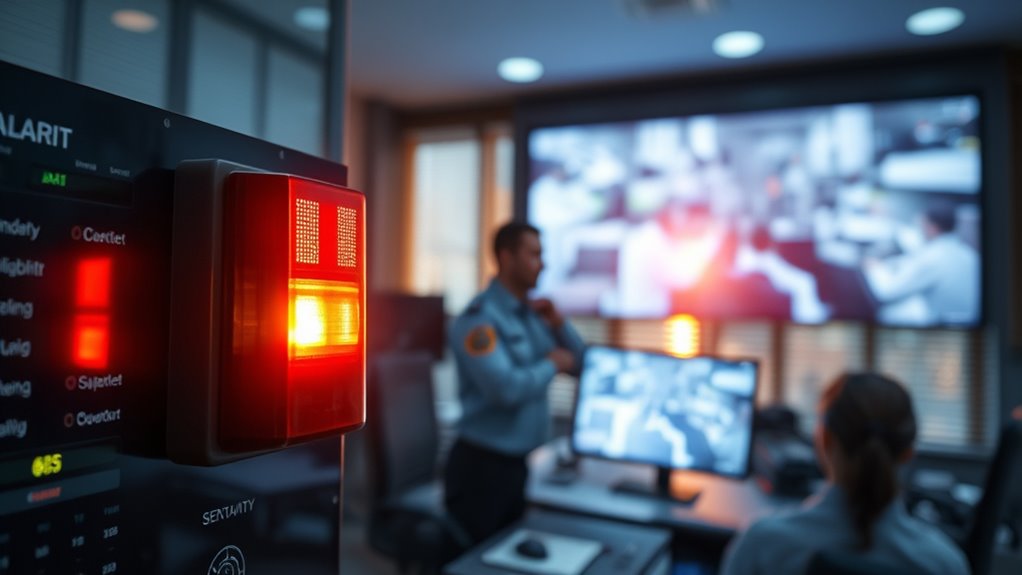
Real-world incidents demonstrate that rapid alarm response can be the difference between containment and catastrophe. For example, in a manufacturing plant, a quick response to an alarm tone prevented a small fire from spreading, saving thousands in damages. Conversely, delayed reactions, often caused by confusing alarm tones or frequent false alarms, escalated the situation, leading to major facility damage. False alarms can desensitize staff, making them less responsive when real emergencies occur. In another case, a hospital’s slow response to a security alert allowed a breach to go unnoticed, risking patient safety. These examples highlight that response time is critical. An effective alarm system minimizes false alarms and delivers clear, timely alerts, ensuring you act swiftly before minor issues turn into disasters.
Strategies and Technologies to Reduce Response Time

Implementing targeted strategies and advanced technologies can considerably cut alarm response times. Proper sensor placement ensures alarms activate promptly when needed, reducing delays caused by blind spots. Customizing alarms to suit specific environments allows you to prioritize critical alerts, minimizing false alarms and unnecessary responses. You can also integrate smart systems that automatically notify responders faster. Additionally, using real-time monitoring tools helps identify and address response bottlenecks quickly. Regularly updating alarm settings and sensor configurations keeps your system optimized. By focusing on these strategies, you streamline your response process and improve overall safety.
Targeted strategies and smart tech reduce alarm response times and enhance safety efficiency.
- Optimize sensor placement for maximum coverage
- Customize alarms based on risk levels
- Use real-time alert monitoring
- Automate responder notifications
- Regularly review and adjust alarm settings
How to Choose an Alarm System That Responds Quickly

Choosing an alarm system that responds quickly starts with understanding how its core components are designed to work together. Focus on the alarm signal, ensuring it’s loud enough and clear enough to trigger immediate action. A reliable alarm system should generate a prompt, unmistakable alarm signal that grabs attention instantly. Response efficiency depends on how quickly the system alerts you and connects to emergency services. Look for systems with fast communication protocols, such as cellular or internet-based alerts, rather than traditional landlines. Additionally, check for integrated features like real-time notifications and rapid dispatch capabilities. The key is selecting a system that minimizes delays, ensuring the alarm signal triggers an immediate response, ultimately protecting your property and loved ones more effectively.
Practical Steps to Improve Emergency Response Time
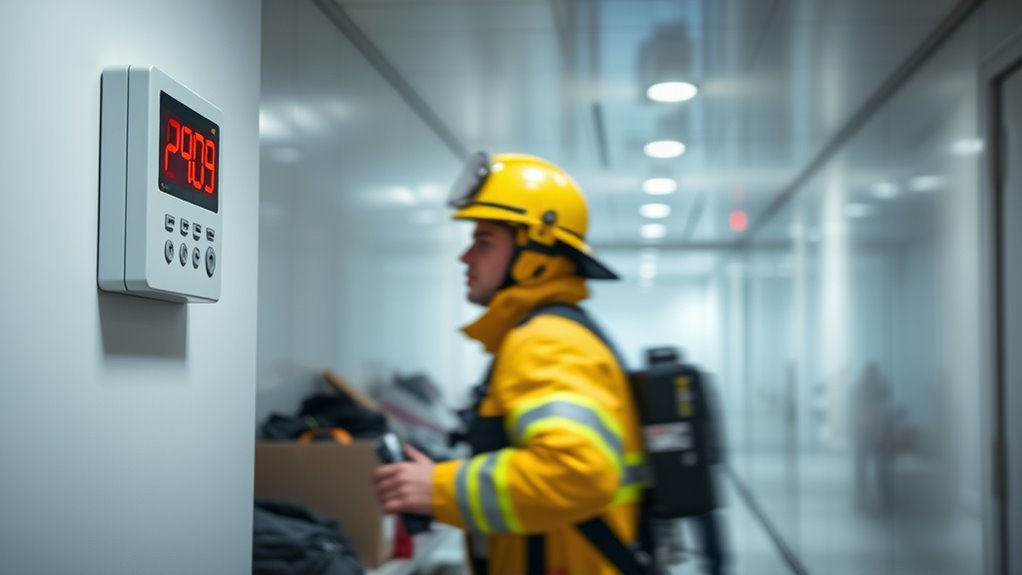
Once you’ve selected an alarm system that responds swiftly, the next step is to take practical actions that further cut down emergency response times. Focus on alarm customization to guarantee alerts reach the right personnel immediately. Regular personnel training is vital so everyone knows how to react quickly and efficiently. Additionally, establish clear communication protocols and assign specific roles for emergency scenarios. Conduct routine drills to identify response gaps and reinforce training. Keep contact information updated for all responders and integrate your alarm system with other security measures. Simplify alarm notifications to avoid delays or confusion. Finally, review and refine your response plan periodically, making sure it adapts to evolving risks and technology. These steps help streamline your emergency response, saving vital seconds when every moment counts.
Frequently Asked Questions
How Does Alarm Response Time Affect Overall Safety?
Alarm response time directly impacts your safety by enabling quick threat detection and action. Faster response times improve alarm prioritization, ensuring critical issues get immediate attention. It also enhances response coordination among team members, reducing delays and confusion. When alarms are addressed promptly, you minimize risks and prevent escalation. Prioritizing quick responses ultimately creates a safer environment, giving you confidence that threats are managed efficiently and effectively.
Can Technology Improve Alarm Response Times Effectively?
Yes, technology can improve alarm response times effectively. Smart sensors detect issues quickly and send instant alerts, reducing delays. Automated dispatch systems ensure emergency responders are notified immediately and directed efficiently, cutting down response times even further. By integrating these tools, you get faster, more accurate reactions to alarms, which can markedly enhance safety and minimize damage or harm during emergencies.
What Are Common Factors Causing Delays in Emergency Response?
You might experience delays in emergency response due to poor sensor placement, which prevents early detection, or because operators aren’t alert enough to act quickly. Factors like sensor coverage gaps or misaligned equipment can slow response times. Additionally, operator alertness plays a vital role; if operators are distracted or fatigued, they may not respond promptly. Ensuring proper sensor positioning and maintaining alertness can greatly reduce these delays.
How Does Human Training Influence Alarm Response Efficiency?
You might think training methods are just formalities, but they directly cut human error and boost alarm response efficiency. When you actively engage in realistic drills and clear protocols, you’re less likely to hesitate or misjudge an alarm’s urgency. Ironically, neglecting proper training turns responders into the very bottleneck they should be avoiding, making response times slower despite louder alarms. Effective training transforms reactions from guesswork into swift, confident actions.
Are There Industry Standards for Acceptable Response Times?
Yes, industry standards for acceptable response times exist, often guided by alarm response benchmarks and response time metrics. These benchmarks specify how quickly personnel should react to alarms to ensure safety and minimize damage. You should familiarize yourself with the standards relevant to your industry, such as NFPA, OSHA, or ISO guidelines, and implement procedures that meet or surpass these response time metrics to improve overall safety and efficiency.
Conclusion
Remember, a loud alarm alone won’t save lives if it doesn’t prompt a quick response. The real game-changer is how fast you act after hearing it. Are you prepared to trust just noise, or will you prioritize systems that get you to safety faster? The right choice could mean the difference between life and death. Don’t wait until it’s too late—your quick reaction can make all the difference when seconds count.