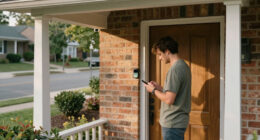
False alarms happen when sensors misinterpret harmless movements or environmental factors like rain, snow, or vibrations. User errors, poor placement, or faulty equipment can also trigger unnecessary alerts. To reduce these, make sure proper sensor calibration, position sensors carefully, and keep your system maintained. Using advanced technology like smart detection can also help. Stay with us to discover practical steps and expert tips to minimize false alarms and boost your system’s reliability.

Get privacy and security gear delivered free with Prime
- Fast, free delivery on millions of items
- Prime Video, Amazon Music and more included
- Member-only deals all year
Key Takeaways
- Frequent false triggers cause alarm fatigue and desensitization, often from environmental factors or sensor miscalibration.
- Proper user training and clear procedures help distinguish genuine alarms from false ones, reducing unnecessary responses.
- Correct sensor placement and regular maintenance prevent malfunctions and environmental interference that lead to false alarms.
- Implementing smart detection technology and machine learning improves accuracy by analyzing movement patterns and reducing false positives.
- Regular calibration, sensitivity adjustments, and user education are practical steps to minimize false alarms effectively.
security system sensor calibration kit
As an affiliate, we earn on qualifying purchases.
As an affiliate, we earn on qualifying purchases.
Why Do False Alarms Happen and How Can You Stop Them?

Why do false alarms happen, and what can you do to prevent them? False alarms often occur due to alarm fatigue, where users become desensitized after frequent false triggers, leading to delayed or ignored responses. Proper user training is vital to minimize this issue; it guarantees everyone understands how the system works and how to avoid common mistakes. When users are well-trained, they’re better equipped to recognize genuine alerts from false ones, reducing unnecessary activations. Regularly reviewing alarm procedures and encouraging clear communication also help. Additionally, understanding the contrast ratio of projectors can be crucial for ensuring optimal image quality, which can be affected by false triggers or misinterpretations of visual signals. By addressing alarm fatigue through effective user training, you can substantially cut down on false alarms, making your system more reliable and ensuring prompt responses when they’re truly needed. Incorporating alarm system maintenance into your routine can further prevent false triggers caused by technical issues, and sensor technology advancements can lead to more sophisticated sensors that reduce false positives.
smart motion detector with false alarm reduction
As an affiliate, we earn on qualifying purchases.
As an affiliate, we earn on qualifying purchases.
What Causes False Alarms in Security and Safety Systems?

False alarms in security and safety systems often result from environmental factors, user errors, or equipment malfunctions. To diminish these, understanding common causes helps. First, poor sensor calibration can cause sensors to misinterpret harmless movements or environmental changes as threats. Second, user error, like accidental disarming or incorrect settings, triggers false alarms. Third, environmental factors such as heavy rain, snow, or vibrations can activate sensors unexpectedly. Fourth, equipment malfunctions, like faulty wiring or aging components, can send false signals. In addition, improper placement of sensors can lead to false triggering if they pick up irrelevant movements sensor placement. By regularly calibrating sensors and training users properly, you can substantially lower false alarms. Addressing environmental influences and maintaining equipment also helps ensure your system responds accurately, reducing unnecessary disruptions and enhancing security reliability. Maintaining system components and conducting routine inspections provide early detection of potential issues. Additionally, selecting top-rated security systems with reliable sensors and features can further minimize false alarms and improve overall system performance.
security alarm system maintenance tools
As an affiliate, we earn on qualifying purchases.
As an affiliate, we earn on qualifying purchases.
How Can Sensor Placement and Maintenance Reduce False Alarms?

Proper sensor placement and routine maintenance are essential for minimizing false alarms. Ensuring sensors are correctly calibrated helps them respond accurately to real threats, reducing false triggers caused by sensitivity issues. Strategic positioning is equally important; place sensors where they can reliably detect genuine activity without interference from environmental factors like vents, lights, or moving objects. Regular maintenance, including cleaning and recalibrating sensors, keeps them functioning properly and prevents malfunctions that could generate false alarms. By carefully calibrating sensors and choosing ideal locations, you decrease the chances of false triggers. Consistent maintenance also helps identify and fix potential problems early, maintaining system integrity. This approach ensures your security system remains reliable, reducing unnecessary disruptions caused by false alarms.
environmental sensor for security systems
As an affiliate, we earn on qualifying purchases.
As an affiliate, we earn on qualifying purchases.
What Technologies Help Minimize False Alarms?

Advancements in technology have introduced various tools designed to reduce false alarms and improve system accuracy. These innovations include:
- Smart detection systems that differentiate between humans, animals, and objects to prevent unnecessary alerts.
- Machine learning algorithms that analyze patterns over time, learning to recognize genuine threats.
- Video analytics that assess movement and context to validate alarms before triggering.
- Integrated sensors that cross-check data from multiple sources, reducing false triggers from single-point errors.
How to Prevent False Alarms: Practical Steps You Can Take

Taking proactive steps can substantially reduce the likelihood of false alarms disrupting your security system. First, verify your sensors are properly calibrated; incorrect calibration can cause sensors to interpret harmless movement or environmental changes as threats. Regularly check and adjust sensor sensitivity to match your environment. Second, invest in user training—make sure everyone understands how the system works and what can trigger alarms. Educate users on avoiding common mistakes, such as accidental disarming or blocking sensors. Additionally, consider scheduling routine maintenance and testing to identify potential issues early. Implementing these practical steps minimizes false alarms, ensuring your system functions reliably when it truly matters. Proper calibration combined with informed users creates a more accurate, trustworthy security setup. Also, understanding the thermal behavior of your sensors can help in preventing false triggers caused by temperature fluctuations or environmental factors. Being aware of the sensor environment can further improve alarm accuracy and system reliability. Paying attention to sensor placement can significantly reduce environmental interference and false alarms. Regularly reviewing sensor sensitivity settings can help adapt to changing conditions and prevent unnecessary alerts. Moreover, staying informed about sensor environmental factors can help you anticipate and mitigate potential false triggers before they occur.
Frequently Asked Questions
How Do False Alarms Impact Emergency Response Resources?
False alarms strain emergency response resources by causing unnecessary deployments, leading to false alarm costs and diverting responders from real emergencies. You might notice responder fatigue as teams respond repeatedly to alarms that turn out to be false, reducing their effectiveness. These incidents also waste time and money, which could be better spent on genuine emergencies. Managing false alarms helps keep resources available and responders alert for true crises.
Can User Behavior Influence the Frequency of False Alarms?
Your user behavior can definitely influence false alarm frequency. For example, if you ignore security protocols or tamper with sensors, it can trigger unnecessary alerts. By practicing user compliance, you help reduce false alarms. Additionally, optimizing the system through proper maintenance and updates minimizes errors. Staying informed about best practices guarantees your actions support system reliability, ultimately decreasing false alarms and improving overall emergency response efficiency.
Are There Legal Penalties for Frequent False Alarms?
Yes, there are legal consequences for frequent false alarms. You could face penalties enforcement such as fines or service fees if you repeatedly trigger false alarms. Local laws often set limits on the number of false alarms allowed within a certain period, and exceeding those can lead to legal penalties. It’s important to comprehend your community’s regulations to avoid these consequences and ensure proper alarm use.
How Does Weather Affect False Alarm Rates?
Weather impact can substantially increase false alarm rates, especially during storms, heavy rain, or snow. Climate influence causes sensors to misinterpret weather conditions as security breaches, triggering unnecessary alarms. You might notice more false alarms during extreme weather events because moisture, wind, or temperature fluctuations interfere with detection systems. To reduce these, make sure your equipment is weatherproof and regularly maintained, so it can better distinguish between genuine threats and weather-related disturbances.
What Role Does System Calibration Play in Preventing False Alarms?
Think of your system calibration like tuning a musical instrument—you need precise calibration procedures to guarantee sensor accuracy. When you regularly calibrate, you prevent false alarms caused by sensor drift or misreads. Skipping calibration is like playing out of tune, leading to unnecessary alerts. By maintaining proper calibration, you keep your system accurate and reliable, reducing false alarms and ensuring it responds only when truly needed.
Conclusion
Think of false alarms as storm clouds gathering on your horizon—they can obscure your peace of mind. By understanding their causes and taking proactive steps, you clear the sky for calm and clarity. Proper sensor placement, maintenance, and smart technology act as your shield, guiding you through the turbulence. With vigilance and care, you turn away the storms, letting confidence and security shine through like the sun breaking through the clouds.
Halloween Picks
halloween
As an affiliate, we earn on qualifying purchases.