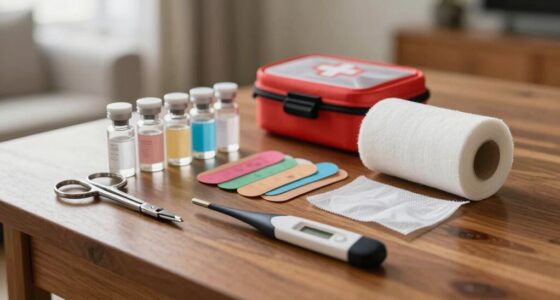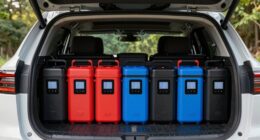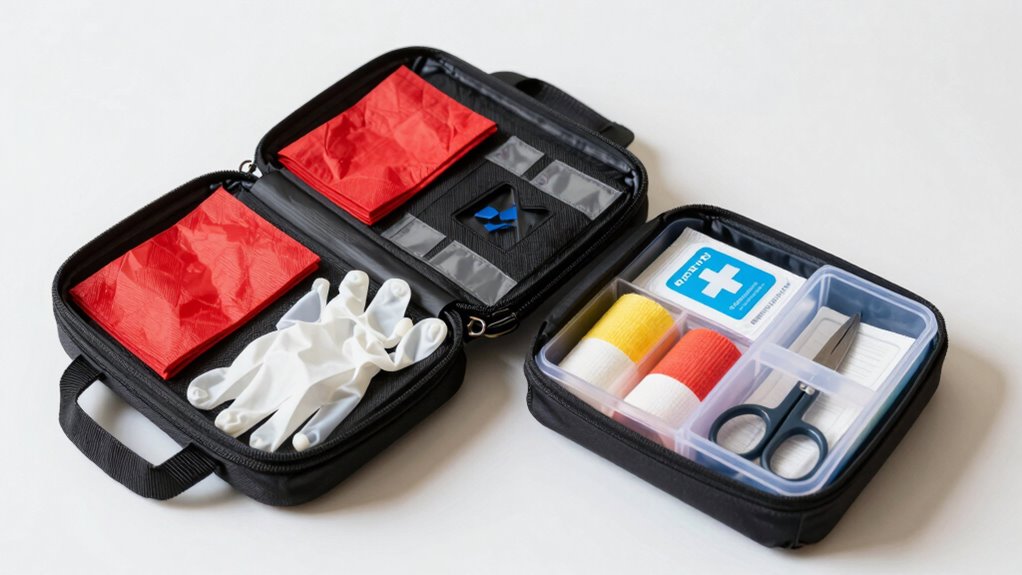

Trauma kits and first aid kits serve different emergency needs. First aid kits are perfect for minor injuries like cuts, scrapes, and burns, providing basic supplies for quick stabilization. Trauma kits are designed for severe injuries such as critical bleeding or broken bones and include specialized tools like tourniquets and chest seals. Knowing the differences helps you respond effectively in emergencies—continue exploring to learn how to choose and maintain the right kit for your situation.
Key Takeaways
- First aid kits handle minor injuries like cuts and burns; trauma kits address severe, life-threatening injuries such as bleeding and broken bones.
- Trauma kits include specialized tools like tourniquets, hemostatic agents, and airway management devices, unlike standard first aid kits.
- First aid kits are suitable for everyday emergencies; trauma kits are designed for high-impact, wilderness, or rescue situations.
- Preparedness and environment influence kit choice; trauma kits are for critical incidents, first aid kits cover general, minor injuries.
- Proper training on kit contents improves response speed and effectiveness for both first aid and trauma emergencies.
What Are Trauma Kits and First Aid Kits?
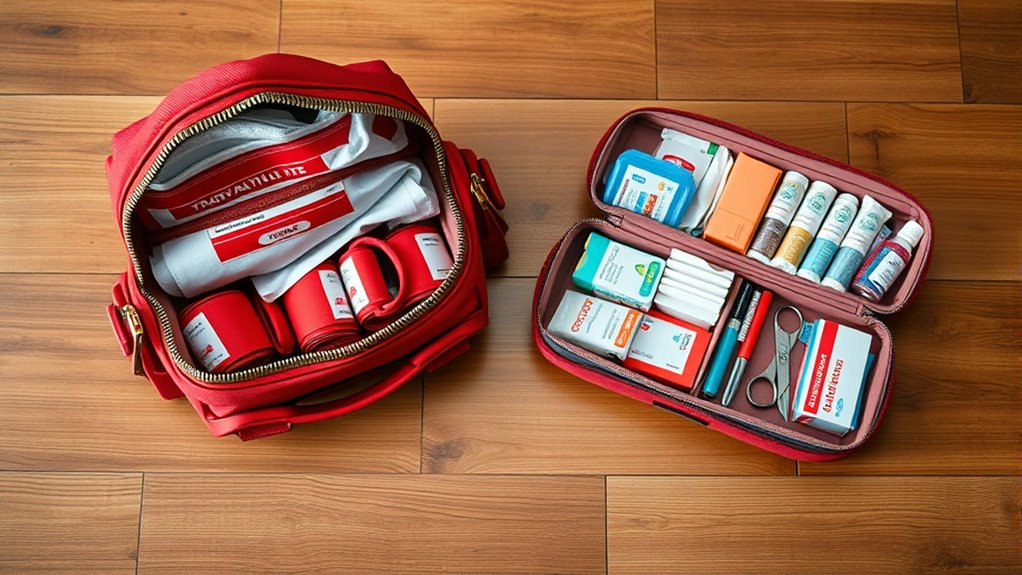
Have you ever wondered what sets trauma kits apart from first aid kits? The key difference lies in their purpose and contents. Trauma kits are designed for severe injuries, often requiring medical training for proper use. They typically include advanced supplies like tourniquets, hemostatic agents, and chest seals. Medical emergency preparedness is crucial when selecting the appropriate kit, as it determines the scope and complexity of the supplies needed. Additionally, horsepower of electric dirt bikes can influence the level of performance you might expect from specialized rescue or emergency equipment, especially in off-road or challenging environments. The specialized nature of trauma kits means they often contain items tailored for specific emergencies, making them more comprehensive for critical situations. First aid kits, on the other hand, focus on minor injuries such as cuts, scrapes, and burns, with bandages, antiseptics, and basic tools. Kit customization plays an essential role; trauma kits can be tailored to specific risks or environments, ensuring you’re prepared for emergencies that demand more than basic first aid. Understanding these distinctions helps you select the right kit for your needs, whether for everyday safety or specialized medical response. Moreover, emergency response equipment varies greatly in technology and design, affecting how effectively it can be used in different situations.
When and Why Should You Use a Trauma or First Aid Kit?
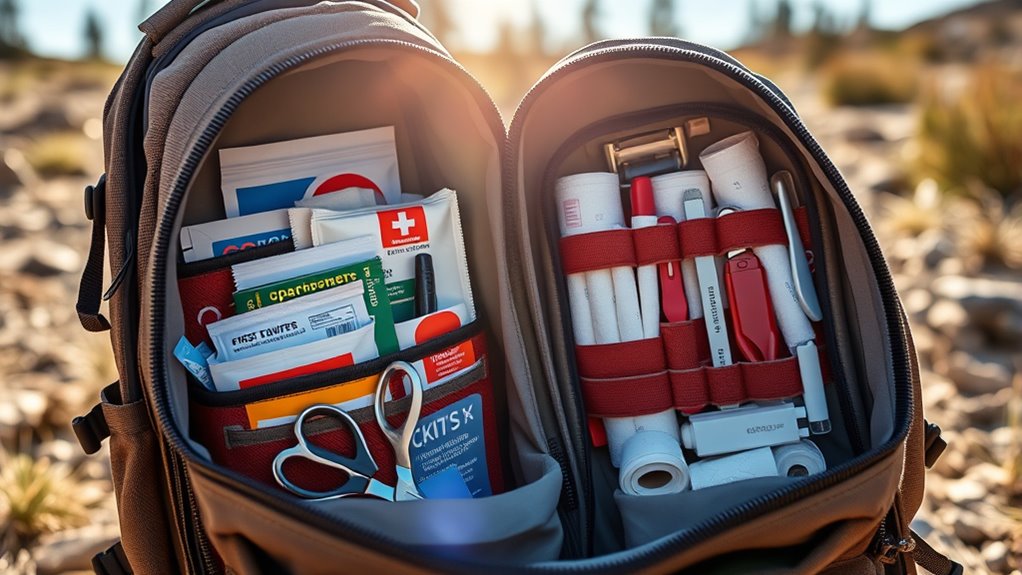
Knowing when to use a trauma kit versus a first aid kit can make a critical difference in emergency situations. If you encounter severe bleeding, broken bones, or other serious injuries, a trauma kit provides advanced tools for wound management and stabilization. These kits are essential during emergencies where quick, professional-grade intervention is needed to prevent further harm. Proper trauma kit usage ensures you can effectively address life-threatening injuries promptly. Additionally, understanding appropriate kit selection can help prevent complications and improve patient outcomes. On the other hand, a first aid kit is suitable for minor injuries like cuts, scrapes, or burns, helping you provide immediate care and prevent infection. Your emergency preparedness should include understanding these differences so you can respond appropriately. Using the right kit at the right time ensures effective treatment, reduces risks, and can ultimately save lives during both everyday accidents and unexpected crises. Proper kit selection is vital for effective emergency response and appropriate care. Moreover, having a basic knowledge of first aid procedures can significantly improve the effectiveness of your response when professional help is not immediately available.
How Do Trauma and First Aid Kits Differ?
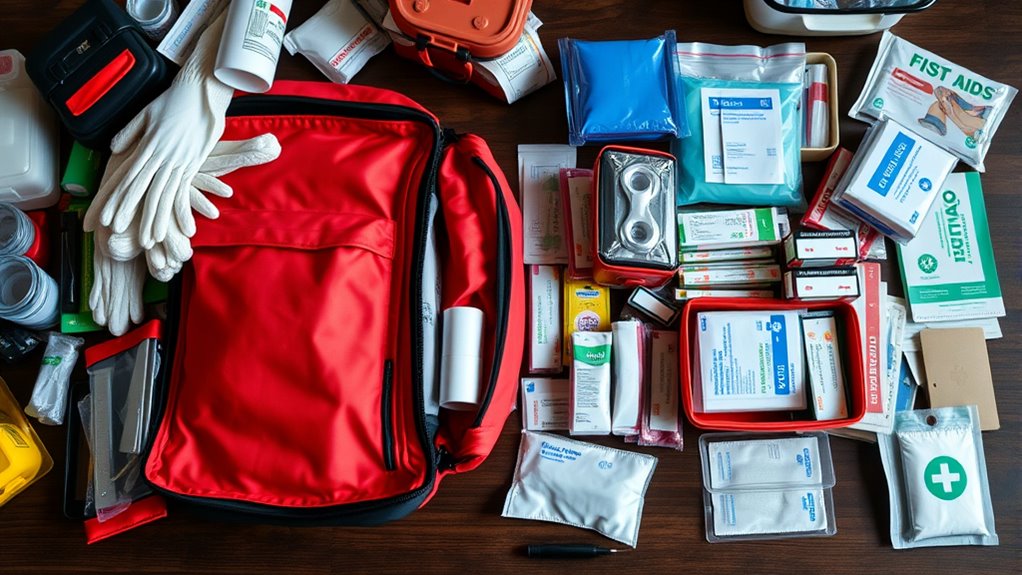
Trauma and first aid kits differ mainly in the supplies they contain and how they’re meant to be used. Trauma kits usually have specialized tools for serious injuries, allowing for faster, more targeted responses. First aid kits offer basic supplies for minor issues and are designed for broader, less urgent care. Additionally, trauma kits often include first responder tools such as tourniquets and hemostatic agents, which are essential for managing severe bleeding.
Supplies Included Differently
While both trauma kits and first aid kits are designed to provide immediate medical assistance, they differ considerably in their supplies. Trauma kits focus on critical injuries, so they include items like tourniquets, hemostatic agents, and airway management tools. In contrast, first aid kits feature bandages, antiseptics, and pain relievers aimed at minor injuries.
Key differences include:
- Emphasis on controlling severe bleeding and maintaining personal safety
- Inclusion of advanced devices for life-threatening situations
- Customization options to suit specific scenarios or environments
Your kit’s contents should reflect your needs, emphasizing kit customization for ideal preparedness. Knowing these differences ensures you’re ready to respond effectively, whether it’s a minor scrape or a serious trauma.
Intended Usage Variations
The primary difference in intended usage between trauma kits and first aid kits lies in the severity and type of injuries they’re designed to address. Trauma kits target serious, life-threatening conditions in emergency scenarios, such as severe bleeding or chest injuries. First aid kits handle minor injuries like cuts, burns, or sprains, typical in everyday situations. To clarify, here’s a quick comparison:
| Aspect | Trauma Kit | First Aid Kit |
|---|---|---|
| Typical Use | Major injuries, emergencies | Minor injuries, everyday incidents |
| Medical Context | Critical, life-threatening situations | Routine, minor medical needs |
| Equipment Focus | Bleeding control, airway management | Bandages, antiseptics, pain relievers |
| Response Intensity | Fast, decisive in crisis | Slower, routine care |
Understanding the emergency response priorities can help you select the appropriate kit for your needs, depending on the emergency scenario’s severity. Additionally, having a well-stocked trauma kit can make a critical difference in saving lives during severe incidents. Being aware of the appropriate contents ensures your kit is prepared for different types of emergencies, especially considering the different severity levels of injuries that may occur. Proper knowledge of trauma intervention techniques can further enhance your preparedness in critical situations.
Response Speed Variance
Since emergency situations demand quick action, the response speed of trauma kits and first aid kits varies considerably. Trauma kits are designed for rapid medical response, often containing specialized tools that allow you to address life-threatening injuries immediately. First aid kits, while essential, focus on basic care and may lack advanced supplies for urgent intervention. Your medical readiness depends on how quickly you can access the right tools. Key differences include:
- Trauma kits provide immediate access to critical life-saving equipment like tourniquets and bleeding control
- First aid kits offer bandages and antiseptics, requiring more time to stabilize severe injuries
- Trauma kits facilitate faster emergency response, reducing overall injury severity
- Incorporating Natural Pool features can enhance backyard safety and create a more inviting environment for emergency preparedness
- Understanding response speed and kit contents helps you select the most effective option for urgent situations.
- Being aware of response time variations enables you to better coordinate emergency care and improve outcomes in critical moments. Additionally, familiarizing yourself with kit contents can significantly impact how quickly you can provide effective aid.
- Having proper training on how to use the contents of each kit ensures that you can act swiftly and effectively in emergencies.
How to Choose the Best Emergency Kit for Your Needs

Choosing the right emergency kit depends on your specific needs and circumstances. If you’re into personal training or outdoor survival, consider a kit that’s compact yet all-encompassing, tailored to your activity level. For outdoor adventures, opt for a kit with sturdy supplies like bandages, antiseptics, and tools to handle injuries in remote areas. If you’re preparing for everyday emergencies at home or work, a standard first aid kit with essentials will suffice. Think about where you’ll use it most and what risks are present. For more advanced situations, such as wilderness survival or high-impact activities, a trauma kit with specialized supplies is better. Always assess your environment, activity type, and potential hazards to select an emergency kit that truly meets your needs. Incorporating advanced medical supplies into your kit can make a significant difference in critical situations, especially in environments where immediate professional help may not be available. Evaluating the environmental risks you face will help ensure you choose a comprehensive and effective emergency kit, and understanding the difference between trauma and first aid kits can guide you in selecting the appropriate gear.
How to Stock and Maintain Your Emergency Medical Supplies

To guarantee your emergency supplies are ready when needed, regularly stock and check your kit for expiration dates and wear. Proper storage organization helps keep items accessible and in good condition, preventing waste and confusion during emergencies. Establish maintenance schedules to review supplies and replace used or expired items promptly. Consider these tips:
- Keep supplies in clearly labeled containers for quick identification
- Rotate items regularly to ensure freshness and usability
- Store your kit in a cool, dry place to prevent deterioration
Common Mistakes to Avoid When Picking Emergency Kits
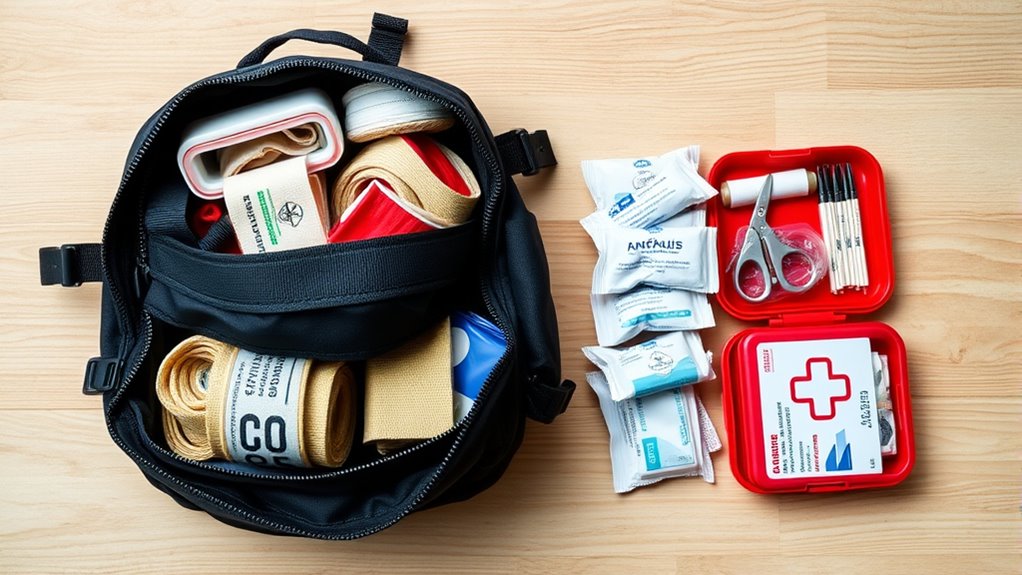
One common mistake is overlooking the kit’s contents and whether they fit your specific needs. You might choose a generic kit that doesn’t include essential items for your activities or environment. To avoid this, carefully evaluate what supplies are necessary before making a selection.
Overlooking Kit Contents
Many people make the mistake of overlooking crucial contents when selecting emergency kits, which can compromise your safety in critical moments. Missing key items like medication oversight tools or redundant equipment can hinder effective response. For example, neglecting to include multiple bandages of various sizes limits your ability to treat different wounds. Failing to ensure medication redundancy might mean running out of vital drugs when needed most. Additionally, overlooking basic supplies such as gloves or antiseptics reduces your preparedness and increases infection risk. Carefully review your kit to include:
- Multiple wound dressings and bandages
- Redundant medication supplies for critical drugs
- Essential tools like gloves, antiseptics, and scissors
This attention to detail guarantees your kit is comprehensive and ready for any emergency.
Ignoring Specific Needs
Overlooking your specific needs when choosing an emergency kit can lead to major gaps in your preparedness. Every situation involves tailored injuries that require specialized equipment. If you ignore these needs, you risk missing essential tools for your unique risks, whether it’s severe bleeding or burns. For example, a standard first aid kit may lack trauma supplies like tourniquets or chest seals needed for serious injuries. Conversely, a trauma kit might include specialized equipment that’s unnecessary for minor incidents, wasting space and resources. Assess your environment, activities, and potential hazards carefully. By ignoring these factors, you limit your ability to respond effectively. Selecting a kit without considering your specific needs compromises your readiness and could worsen outcomes during emergencies.
Frequently Asked Questions
Are Trauma Kits Suitable for Home Use or Only Professional Settings?
Trauma kits are suitable for home use and can enhance your family’s preparedness and home safety. They contain advanced supplies to handle serious injuries, making them a valuable addition to your first aid arsenal. While professional settings use larger trauma kits, having one at home allows you to respond effectively to emergencies, ensuring your loved ones are protected and ready for unexpected injuries.
How Often Should Emergency Kits Be Inspected and Replenished?
You should check your emergency kit regularly—at least once a month—to guarantee it’s in top shape. During your inventory checks, replace expired or used items and verify that all supplies are intact. Proper kit maintenance prevents surprises when you need it most. Think of it like tending a garden; consistent care keeps everything ready to bloom in an emergency, giving you peace of mind knowing your kit is always prepared.
Can a First Aid Kit Handle Severe Injuries Effectively?
A basic first aid kit can handle minor injuries effectively, but it’s not equipped for severe injury response. For serious wounds, you’ll need advanced supplies like gauze, bandages, and possibly tourniquets. In emergencies involving severe injuries, rely on more comprehensive trauma kits or professional medical help. While a first aid kit is valuable for initial care, it’s vital to understand its limits and seek urgent medical assistance when needed.
What Legal Considerations Exist for Carrying Trauma Kits?
You should know that carrying trauma kits involves liability concerns and storage regulations. Laws vary by location, so you need to verify if you’re legally allowed to carry and use them. Some areas require proper training, and improper storage could lead to liability if misuse occurs. Always check local regulations and make sure your trauma kit is stored safely and accessibly, so you’re prepared without legal complications.
Are There Specific Training Requirements for Using Trauma Kits Properly?
You should seek proper training certification before using trauma kits to guarantee you’re prepared for emergency procedures. Many organizations offer courses that teach you how to correctly apply tourniquets, control bleeding, and handle severe injuries. Completing this training helps you act confidently and safely in emergencies. Remember, proper use of trauma kits can make a critical difference, so investing in certified instruction is essential for effective and legal response.
Conclusion
Did you know that having the right emergency kit can increase your chances of saving a life by up to 50%? By understanding the differences between trauma and first aid kits, you’re better prepared to handle emergencies confidently. Regularly stocking and maintaining your supplies guarantees you’re ready when it matters most. Don’t overlook common mistakes—being prepared is the key to protecting yourself and your loved ones in unexpected situations. Stay informed, stay safe.