A home first aid kit should include essential supplies like bandages, sterile gauze, antiseptic wipes, antibiotic ointments, scissors, gloves, pain relievers, and a thermometer. Organize everything clearly and store it in accessible spots, checking regularly for expiration or wear. Customize the kit for your household’s needs, such as allergies or pets, and guarantee everyone knows how to use the supplies properly. Keep updating your kit to stay prepared for any situation. If you explore further, you’ll learn more about creating an effective first aid kit.
Key Takeaways
- Include essential supplies like bandages, antiseptics, gauze, gloves, and pain relievers, stored in organized, easily accessible locations.
- Regularly check, replace expired items, and keep an updated inventory to ensure readiness and safety.
- Customize the kit with allergy medications, pet supplies, and seasonal items based on household needs and hazards.
- Store supplies safely out of children’s reach, using labeled bins and safety practices to prevent accidents or contamination.
- Provide family training on wound care, emergency procedures, and regular drills to ensure quick, confident responses.
home first aid kit supplies
As an affiliate, we earn on qualifying purchases.
As an affiliate, we earn on qualifying purchases.
What Essentials Should Be in Your Home First Aid Kit
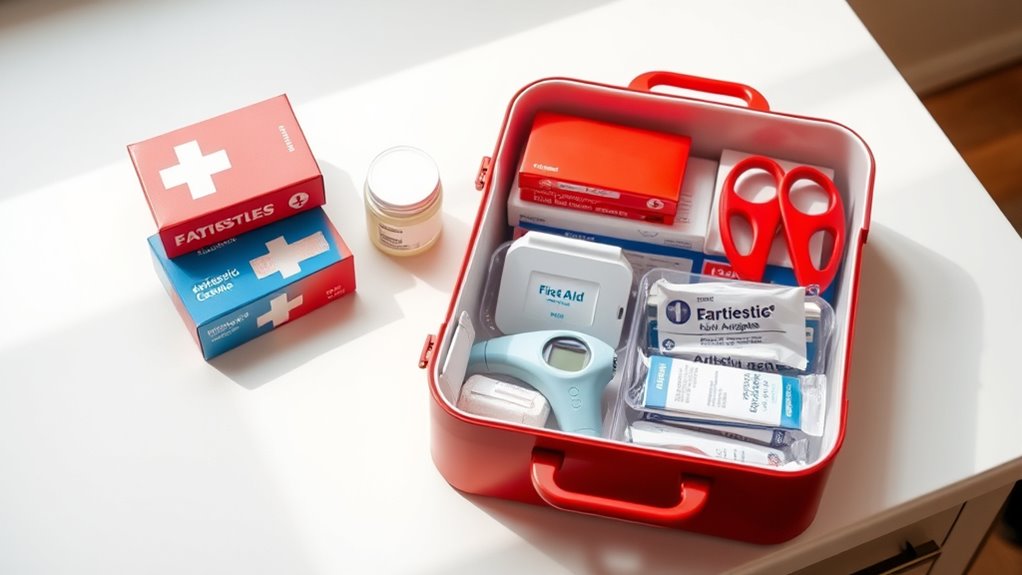
When assembling your home first aid kit, it is vital to include basic supplies that can handle common injuries. Your first aid kit contents should cover cuts, burns, sprains, and minor medical issues. An emergency supply checklist typically includes adhesive bandages in various sizes, sterile gauze pads, adhesive tape, antiseptic wipes, tweezers, scissors, and gloves. You’ll also want pain relievers, antibiotic ointment, and a digital thermometer. Don’t forget a cold pack, alcohol swabs, and a first aid manual for guidance. These essentials guarantee you’re prepared for everyday accidents. Regularly review and restock your supplies to keep everything current and effective. Having these items ready can make a significant difference in providing immediate care before professional help arrives. Additionally, including essential oils such as lavender or peppermint can be helpful for minor discomforts or calming effects in stressful situations.
waterproof first aid kit organizer
As an affiliate, we earn on qualifying purchases.
As an affiliate, we earn on qualifying purchases.
How to Organize Your First Aid Supplies for Quick Access
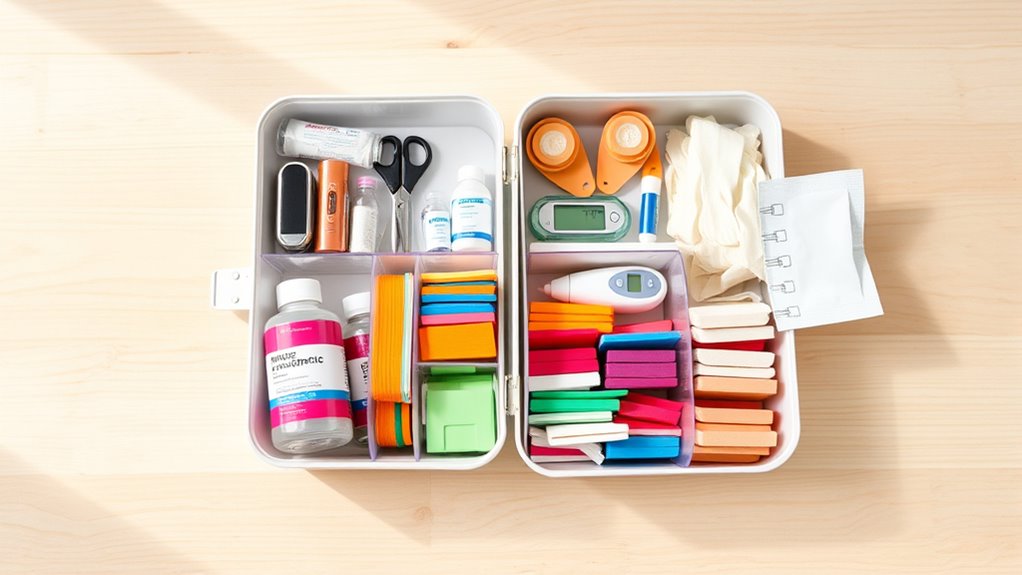
To guarantee you can find supplies quickly, set up a clear labeling system for your first aid kit. Store your items in accessible locations around your home, like the kitchen or bathroom. Proper organization helps you respond faster during emergencies, saving valuable time. Incorporating Free Floating principles can also help ensure your supplies are easy to locate without cluttering your space. Additionally, considering energy-efficient storage solutions can contribute to a more sustainable home environment. You might also explore storage organization methods used in other fields to optimize space and accessibility.
Clear Labeling System
Have you considered how easily accessible your first aid supplies are during an emergency? A clear labeling system guarantees quick retrieval when seconds count. Use labeling clarity with descriptive tags like “Bandages” or “Burn Cream.” Incorporate color coding to differentiate categories—red for emergencies, blue for medications, green for tools. Organize labels consistently across containers for instant recognition. To deepen understanding, consider this visual guide:
| Category | Label Color | Example Items |
|---|---|---|
| Wound Care | Red | Bandages, Gauze |
| Medications | Blue | Pain relievers, ointments |
| Tools | Green | Scissors, tweezers |
This system minimizes confusion, speeds up access, and enhances safety during stressful moments. Additionally, implementing consistent organization practices ensures your first aid kit remains efficient and user-friendly.
Accessible Storage Locations
Organizing your first aid supplies in easily accessible locations guarantees you can respond quickly during emergencies. Choose storage spots that are obvious and convenient, like a dedicated cabinet or a labeled bin. Consider using hidden compartments in furniture or walls for discreet storage of smaller items, so they’re not lost or misplaced. Outdoor storage options, such as waterproof boxes or cabinets, are ideal for garden or garage areas, protecting supplies from the elements. Keep essential items within reach of high-traffic areas like the kitchen or bathroom, but ensure they’re out of children’s reach. Regularly check these locations to maintain organization and replace expired supplies. Proper storage locations make sure your first aid kit is always ready when you need it most, and storage organization helps maintain easy access and quick retrieval. Additionally, understanding first aid kit essentials ensures you include all necessary supplies for common emergencies. Implementing safety-first mindset in your storage approach guarantees that safety considerations are prioritized alongside accessibility. Incorporating emergency preparedness into your planning further enhances your readiness for unexpected situations. Maintaining an awareness of storage safety ensures that your supplies are stored securely and safely, preventing accidents or contamination.
kids safe first aid kit
As an affiliate, we earn on qualifying purchases.
As an affiliate, we earn on qualifying purchases.
When and How to Use Medications and Topical Treatments
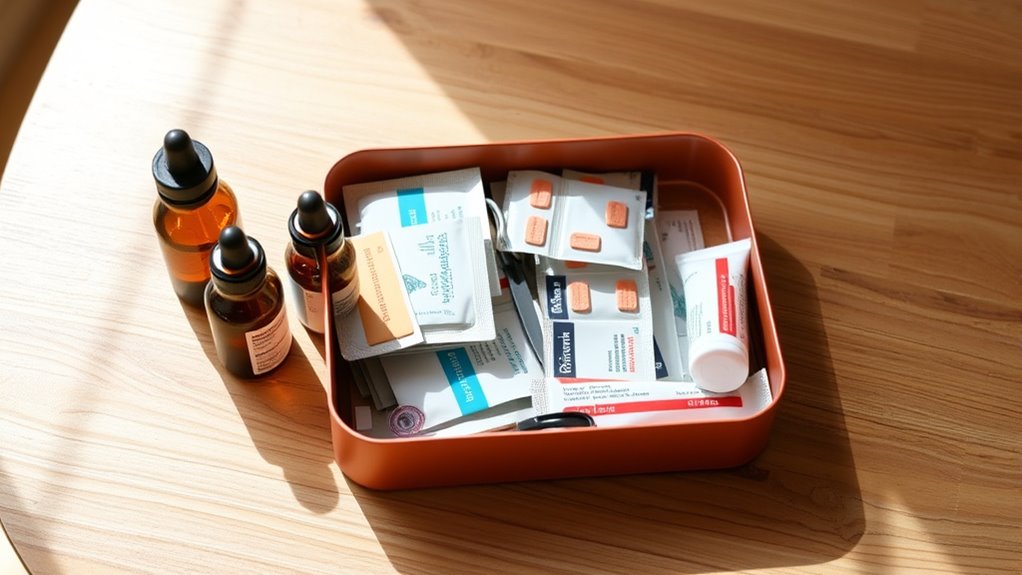
Knowing when to use medications or topical treatments is key to proper first aid. You should follow instructions carefully and apply treatments correctly to guarantee effectiveness. Keep an eye on how your patient responds to decide if further action is needed.
Recognizing Medication Needs
Understanding when and how to use medications and topical treatments is essential for effective first aid. You need to recognize the signs that indicate medication is necessary, such as persistent pain, fever, or infection. Always prioritize medication safety by carefully reading labels and following dosage instructions. Be aware of potential drug interactions, especially if multiple medicines are involved, to prevent adverse effects. If you’re unsure whether a medication is appropriate, consult a healthcare professional before administering it. Remember, not all injuries or symptoms require medication; sometimes, simple remedies suffice. Properly identifying the need for medication ensures you provide effective treatment without risking unnecessary complications. Being vigilant and informed helps you make the right choices in urgent situations. Additionally, understanding medication safety and proper administration techniques can significantly impact the effectiveness of treatments.
Proper Application Techniques
Proper application of medications and topical treatments is essential for effective first aid. Using correct application techniques ensures the medication is effective and helps prevent further injury. Always clean the area before applying any treatment to promote healing and avoid infection. Apply medications gently and evenly, following the instructions on the label. To prevent injury, avoid over-application or applying treatments to broken skin unless specified. Use the table below to guide your application techniques and injury prevention tips:
| Application Techniques | Injury Prevention Tips |
|---|---|
| Clean the wound thoroughly before applying | Use gloves if possible to prevent infection |
| Apply medication gently and evenly | Cover with a sterile bandage |
| Follow instructions for dosage and frequency | Keep first aid supplies organized to act quickly |
| Ensure proper medication storage to maintain effectiveness | Regularly check supplies for expiration dates |
Monitoring Effectiveness
Monitoring how well medications and topical treatments work is crucial to ensuring proper healing. You should regularly perform injury assessments to check for signs of improvement or worsening. Observe symptom monitoring closely—note changes in pain level, swelling, redness, or any new symptoms. If you notice that symptoms persist or worsen after applying treatments, it’s time to reassess and consider adjusting your approach. Keep track of how long it takes for the injury to improve and whether the prescribed medication or topical ointment is effective. Consistent monitoring helps you determine if further medical attention is needed or if treatments should be continued. Staying attentive to these signs ensures you respond promptly and support proper healing. Additionally, understanding the importance of filter maintenance can aid in managing minor injuries effectively. Proper medication adherence and regular evaluation of treatment effectiveness are essential components of effective first aid management. Being aware of home safety practices can also prevent future injuries and reduce the need for medical interventions. Regularly inspecting your solar panels can prevent damage and ensure optimal performance, which is crucial for energy efficiency and safety.
pet first aid kit
As an affiliate, we earn on qualifying purchases.
As an affiliate, we earn on qualifying purchases.
How to Restock and Replace Used or Expired Supplies

When you use supplies from your home first aid kit, it’s essential to regularly check and replace them to guarantee your kit remains effective. Practice proper medication safety by inspecting expiration dates and discarding expired items promptly. Implement supply rotation to ensure fresh stock and prevent waste. Keep a schedule to review your kit monthly, replacing used or expired supplies with new ones. For medications, follow specific storage instructions to maintain potency. Organize your supplies so you can quickly identify what needs restocking. Always keep a list of supplies on hand to track what’s been used. Staying informed about crypto market trends can help you anticipate potential shortages or necessary updates to your kit, especially if you include digital tools or resources. This proactive approach ensures your first aid kit is ready when emergencies happen and helps you avoid shortages or ineffective treatments. Regularly reviewing your supplies with simple tools and checklists helps maintain overall readiness and safety. Additionally, understanding the importance of proper storage conditions can extend the shelf life of your supplies and ensure their effectiveness when needed. Incorporating good inventory management practices can further optimize your readiness and prevent last-minute shortages. Moreover, being aware of specialized supplies for pets, such as dog-specific medications or accessories, can be crucial if you have animals like Golden Retrievers or Rottweilers at home.
Customizing Your First Aid Kit for Allergies and Special Needs

To guarantee your first aid kit effectively addresses allergies and specific health needs, you should customize its contents based on your family’s unique conditions. Identify common allergy triggers like pollen, pet dander, or certain foods, and include relevant medications such as antihistamines, epinephrine auto-injectors, or inhalers. Regularly review and adjust medication dosages to ensure they’re current and effective. If anyone has specific health conditions, add items like allergy-friendly ointments or specialized medical devices. Personalizing your kit helps you respond swiftly to allergic reactions and accommodate medication adjustments. Be aware of top rated vacuums of 2024 to maintain a clean environment that minimizes allergen buildup. Keep these supplies in an accessible spot and update them as your family’s health needs evolve, ensuring you’re prepared for any allergy-related emergency.
Tips for Preparing Your First Aid Kit Based on Your Home Environment

Your home environment plays a crucial role in determining the supplies you should include in your first aid kit. Consider seasonal preparedness by adding items like cold packs for winter injuries or insect repellent for summer. If you have pets, include pet-specific first aid supplies such as wound cleaning solutions and pet bandages to guarantee their safety. Evaluate your surroundings for potential hazards, like sharp tools or chemicals, and keep appropriate supplies nearby. For homes with children, stock child-safe medications and antiseptics. Regularly review your kit to replace expired items and adapt it to changes in your environment. Tailoring your first aid kit to your home’s unique needs assures you’re prepared for common injuries and emergencies specific to your living situation.
How to Teach Your Family to Use First Aid Supplies Properly
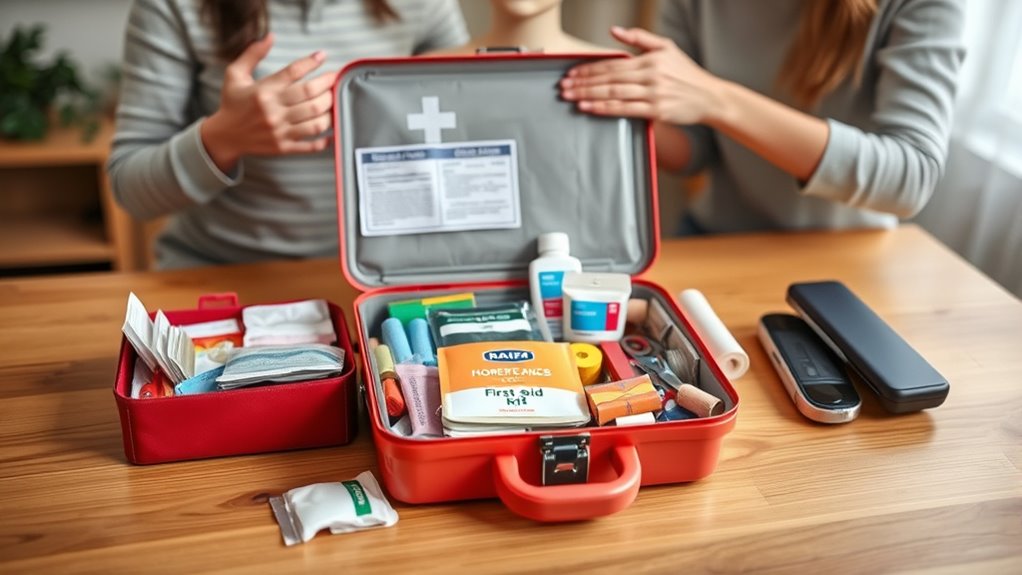
Teaching your family to use first aid supplies effectively is essential for guaranteeing quick and confident responses during emergencies. Family training should include hands-on practice with basic first aid techniques, like wound care, CPR, and using an AED. Regular emergency drills help everyone become familiar with the kit’s contents and procedures, reducing panic in real situations. During these drills, assign roles, simulate common injuries, and review steps to ensure clarity. Encourage questions and provide positive feedback to build confidence. Keep training sessions brief but frequent, so skills stay fresh. By practicing regularly, your family will be better prepared to respond calmly and correctly, ultimately making your home safer in crisis moments.
Frequently Asked Questions
How Often Should I Review and Update My First Aid Kit?
You should review and update your first aid kit at least once every six months. Conduct a seasonal check to guarantee supplies are intact and not expired, especially after holidays or emergencies. Keep an updated supply inventory to identify missing items promptly. Regular updates help you stay prepared for any situation, ensuring all essential items are available and safe to use when needed.
Are There Specific First Aid Kits for Children or Pets?
Yes, there are specific first aid kits designed for children and pets. These kits help address child safety concerns and pet emergencies effectively. Child-specific kits often include items like baby-safe antiseptics and thermometers, while pet-focused kits contain bandages, antiseptics, and tick removers. Using tailored kits guarantees you’re prepared for unique needs and emergencies, keeping your little ones and pets safe during unforeseen injuries.
Can I Use Expired Supplies Safely in an Emergency?
Don’t throw caution to the wind—using expired supplies isn’t usually a good idea. While some items like ointments or medications may lose potency over time, their safety isn’t guaranteed, and expiration concerns could lead to ineffective treatment or infection. If you’re in a pinch, check the expiration date and consider safety precautions; when in doubt, replace expired supplies to guarantee your first aid kit stays reliable and safe.
What Are Common Mistakes to Avoid When Using First Aid Supplies?
You should avoid improper supply usage errors, like using expired or damaged items, which can worsen the injury. Always follow proper supply instructions and verify your first aid kit has the right, up-to-date supplies. Don’t improvise with unapproved materials, as this risks infection or further harm. Stay calm, use each item correctly, and seek professional help if you’re unsure. Proper supply usage is key to effective first aid.
How Do I Store My First Aid Kit to Keep It Accessible and Safe?
Did you know that over 70% of injuries happen at home? To stay prepared, store your first aid kit in a cool, dry place within easy reach, like a kitchen or bathroom. Follow storage tips that keep supplies organized and protected from moisture. Consider accessibility, ensuring everyone in your household knows where it is and can access it quickly during emergencies. Proper storage keeps your kit ready when you need it most.
Conclusion
Think of your first aid kit as your home’s first line of defense, much like a shield in a battle. By keeping it well-stocked, organized, and tailored to your needs, you’re ready to face minor emergencies head-on. Don’t wait for the storm to hit—prepare now and empower your family with the knowledge to act swiftly. Like a trusty compass, your kit guides you safely through unexpected moments, ensuring you’re always ready to protect what matters most.