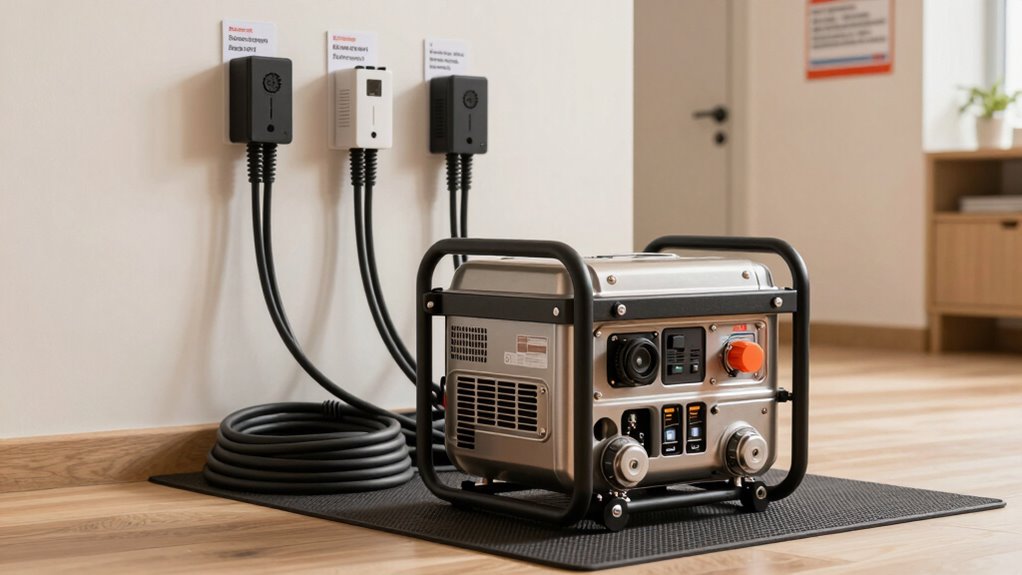

To use backup power equipment safely indoors, choose devices with proper certifications and designed for indoor use, such as those with ventilation and spark arrestors. Always set up equipment in well-ventilated, outdoor areas or separate rooms with exhaust piping directed outside. Install carbon monoxide detectors and avoid overloading circuits or placing devices near flammable objects. Follow safety tips closely to minimize risks—continuing will help you understand essential safety measures and proper setup techniques.
Key Takeaways
- Always operate backup power devices outdoors or in well-ventilated areas to prevent carbon monoxide poisoning.
- Use certified, indoor-specific generators with proper ventilation and exhaust systems to ensure safety.
- Install carbon monoxide detectors to monitor indoor air quality during backup power use.
- Keep equipment away from windows, vents, and flammable objects, and maintain at least 20 feet distance from entry points.
- Regularly inspect and maintain equipment and ventilation systems to prevent hazards like leaks, fires, and emissions buildup.
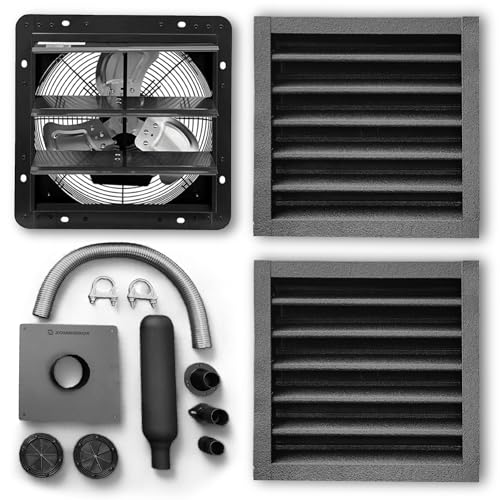
DIY Generator Shed Ventilation & Exhaust Kit with Cooling System. Includes High-Flow Shutter Fan, Flexible Exhaust Extension, Weatherproof Louvered Vents, and Cable Grommets for Outdoor Enclosures
- Complete Climate Control System: All-in-one solution for overheating and CO buildup
- High-Velocity Shutter Exhaust Fan: Rapidly expels hot air and fumes
- Automatic Gravity Shutters: Open when fan runs, close to block elements
As an affiliate, we earn on qualifying purchases.
As an affiliate, we earn on qualifying purchases.
How to Choose Safe Backup Power Devices for Indoor Use
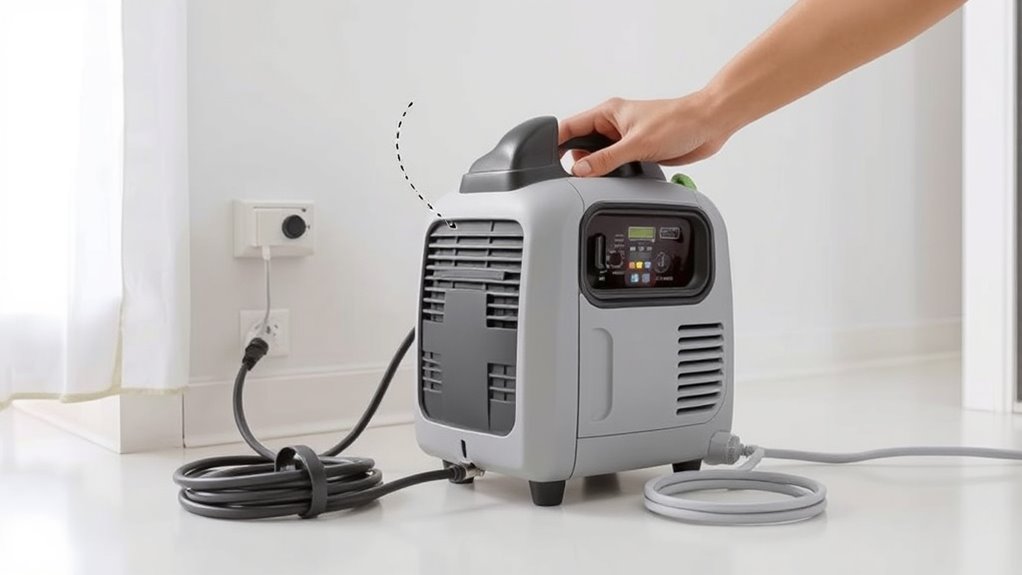
When selecting backup power devices for indoor use, safety should be your top priority. Start by understanding the fuel types your device uses; propane, natural gas, and other fuels can produce hazardous fumes if not properly vented. Always look for devices with proper certifications, such as UL or CSA, which guarantee they meet safety standards. Certified equipment reduces the risk of fires, electrical faults, and harmful emissions. Avoid untested or uncertified models, as they may lack essential safety features. Choose devices designed specifically for indoor use, with features like spark arrestors and proper ventilation. By paying attention to fuel types and making sure your device has the right certifications, you minimize safety risks and protect your household. Additionally, understanding safe and smart power solutions can help you select equipment that is both effective and secure for indoor environments. Incorporating proper ventilation and following manufacturer guidelines further enhances safety when operating backup power indoors. Ensuring proper fuel storage is also crucial to prevent leaks and accidental hazards. Being aware of fuel combustion byproducts can help you recognize potential indoor risks associated with backup power equipment. Moreover, selecting equipment with automated safety shutoffs can provide extra protection during operation.
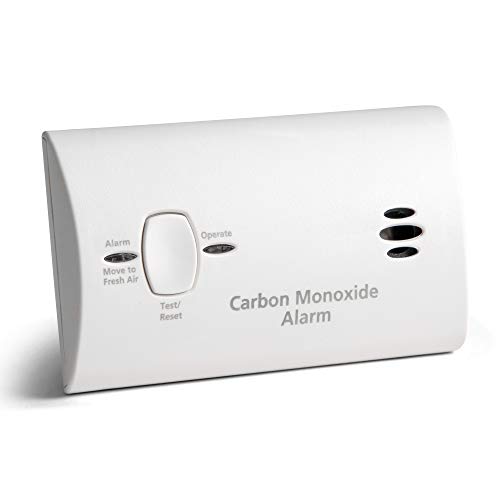
Kidde Carbon Monoxide Detector, AA Battery Powered, Portable for Travel or Home, 85 dB Alarm, LED Status Indicators, 3rd Edition
- Sensor Technology: Electrochemical CO detection
- Easy Installation: No wiring, portable on wall or tabletop
- Power Source: Operates on 2 AA batteries
As an affiliate, we earn on qualifying purchases.
As an affiliate, we earn on qualifying purchases.
What Are the Risks of Using Generators and Inverters Indoors?
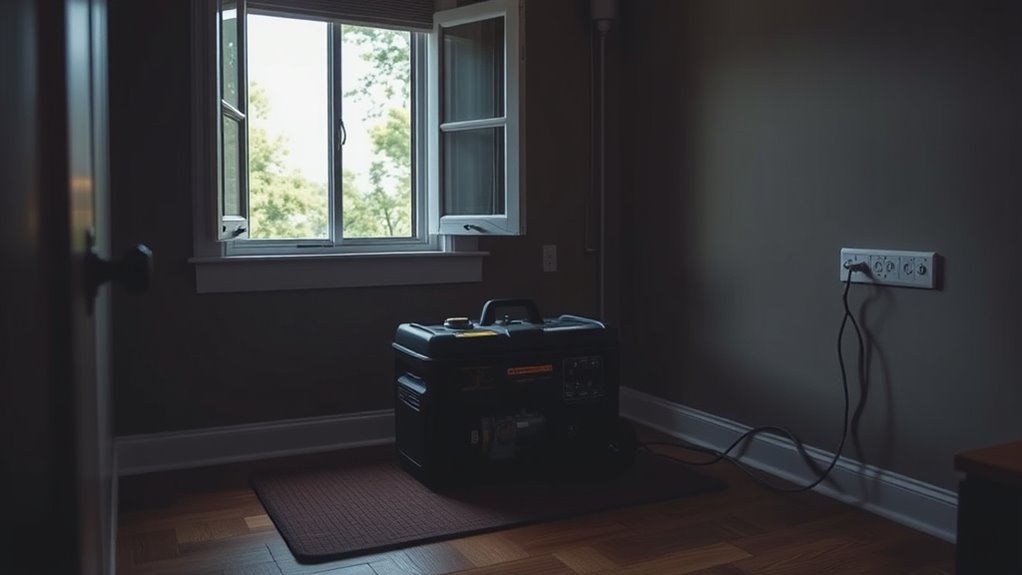
Using generators and inverters indoors can pose serious risks if safety precautions aren’t followed. Carbon monoxide buildup is a hidden danger that can cause poisoning, even in well-ventilated spaces. Additionally, improper placement may increase fire hazards, making proper ventilation and safety measures essential. To reduce these risks, it is important to be aware of home security systems that can alert you to potential hazards and ensure timely response in case of emergencies. Proper understanding of projector safety can further help prevent accidents related to electrical equipment indoors. Knowing how ventilation practices impact indoor safety can also significantly reduce health risks associated with backup power use. Incorporating protective measures such as carbon monoxide detectors and proper setup guidelines is crucial for safe operation indoors. Furthermore, understanding the importance of landscaping and outdoor features can aid in creating a safer environment by improving airflow and reducing the accumulation of dangerous gases indoors.
Carbon Monoxide Poisoning Risks
Have you ever considered the dangers of running a generator or inverter indoors? Carbon monoxide (CO) is a silent, deadly threat when these devices are used improperly.
To protect yourself, remember:
- CO buildup can quickly reduce indoor air quality, making it unsafe to breathe.
- Running generators in enclosed spaces releases dangerous fumes that can accumulate unnoticed.
- Even small inverters produce some emissions, so avoid indoor use entirely.
- Proper ventilation is essential, but best avoided indoors to ensure noise reduction and safety.
- Being aware of hydrotherapy techniques can help you understand alternative safe methods for water-related recovery instead of risking indoor generator use.
- The safety guidelines provided by manufacturers emphasize outdoor operation to prevent hazardous exposure.
- Recognizing indoor air quality risks can help you make safer choices when managing backup power.
Ignoring these risks can cause poisoning, leading to headaches, dizziness, or worse. Always operate backup power equipment outdoors or in well-ventilated areas to prevent CO exposure and keep your indoor air safe.
Fire Hazard Concerns
Running a generator or inverter indoors not only risks carbon monoxide poisoning but also substantially increases the chance of fire hazards. Electrical hazards are a major concern because improper setup or damaged cords can cause sparks or short circuits, leading to fires. Overloading outlets or using equipment not rated for indoor use can generate heat and ignite nearby materials. Poor wiring or faulty connections heighten the risk, especially when safety measures aren’t followed. To guarantee fire safety, always keep backup power equipment away from flammable objects and never operate them in enclosed spaces. Regularly inspect cords and connections for damage, and follow manufacturer instructions diligently. Being cautious and proactive helps prevent indoor fires caused by backup power equipment. Additionally, understanding transfer switch fundamentals can help ensure proper setup and reduce fire risks. Proper ventilation and adherence to safety standards are essential to minimize fire hazards when using backup power indoors. Moreover, employing proper grounding techniques is critical for reducing electrical fire risks and ensuring safe operation.
Proper Ventilation Necessities
Because generators and inverters produce exhaust gases and heat, proper ventilation is essential when operating them indoors. Without adequate airflow, dangerous carbon monoxide can accumulate, risking poisoning. To ensure portable safety, follow these steps:
- Always operate generators and inverters in well-ventilated areas, preferably outdoors or in open garages.
- Keep electrical connections dry and properly insulated to prevent sparks or shorts.
- Use exhaust fans or vents to remove harmful gases if used indoors temporarily.
- Avoid placing equipment near windows or vents that could reintroduce exhaust into the living space.
- Regularly inspect ventilation systems and ensure they function correctly to prevent toxic buildup. Additionally, ensure that ventilation systems are adequately maintained to prevent hazards.
Proper ventilation reduces the risk of toxic buildup and overheating, protecting both your health and your equipment. Always prioritize safety and adhere to manufacturer guidelines.

DaranEner Portable Power Station, 192Wh LiFePO4 Battery Backup Solar Generator with w/2 300W (Peak 600W) AC Outlets, USB-C PD 60W Fast Charge, Power Bank for Camping, Outdoor, Home,Emergency
- Capacity: 192Wh LiFePO4 battery capacity
- Power Output: 300W pure sine wave, 600W surge
- Versatile Usage: Suitable for camping, home, emergency
As an affiliate, we earn on qualifying purchases.
As an affiliate, we earn on qualifying purchases.
How to Set Up Generators and Inverters Safely Inside Your Home

Setting up generators and inverters safely inside your home requires careful planning to prevent hazards like carbon monoxide buildup and electrical fires. Always place your devices on a flat, dry surface away from windows, vents, and doors to avoid fumes entering your living space. Keep a clear area around the equipment for proper airflow, and ensure cords are properly rated for indoor use to maintain portable safety. Regular device maintenance is vital; inspect cords, connections, and the unit itself for damage before each use. Never overload your generator or inverter, and follow the manufacturer’s instructions carefully. Being aware of safety guidelines and best practices can further reduce risks. Proper ventilation is essential to ensure exhaust gases do not accumulate indoors, which can be dangerous. Understanding electrical load management helps prevent overloads and potential fires. Additionally, consulting professional installation can help ensure your backup power system is set up correctly and safely. Proper equipment placement is crucial to avoid accidental contact or interference with household systems. By taking these steps, you minimize risks and guarantee your backup power setup remains safe and reliable during an outage.

Westinghouse 12000 Peak Watt Tri-Fuel Portable Inverter Generator, Remote Start, Transfer Switch Ready, Gas/Propane/Natural Gas Powered, Low THD, Safe for Electronics, Parallel Capable, CO Sensor
- Home Backup Power: Safe for sensitive electronics with ≤3% THD
- Tri-Fuel Compatibility: Runs on Gasoline, Propane, Natural Gas
- High Power Output: Peak 12,000W, Continuous 9,000W (gas)
As an affiliate, we earn on qualifying purchases.
As an affiliate, we earn on qualifying purchases.
How to Ventilate and Place Exhausts for Backup Power Devices
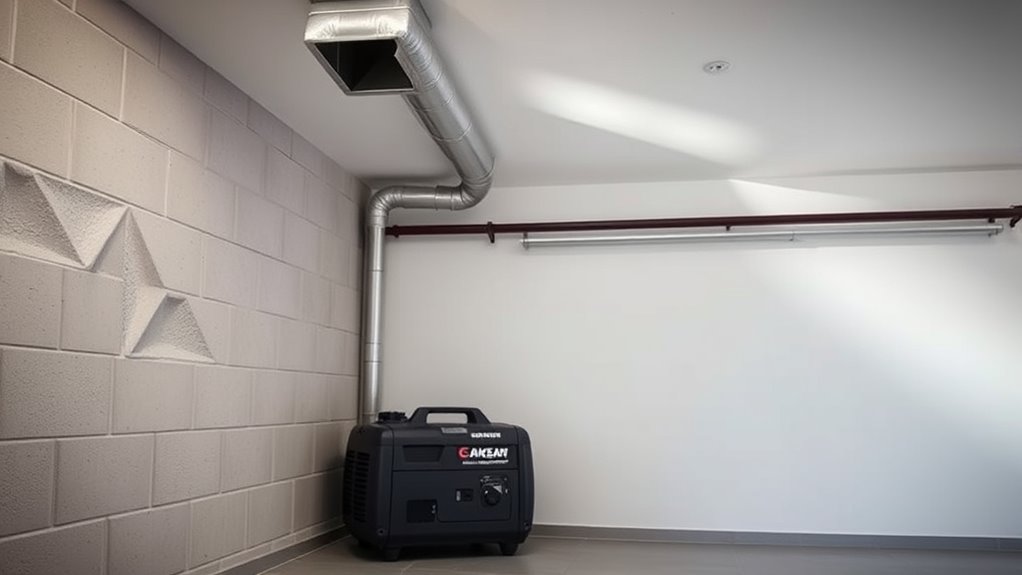
Proper exhaust placement is essential to prevent dangerous buildup of fumes. You should guarantee your backup power devices are located where fresh air circulates well and exhaust gases exit safely. Choosing the right location and ventilation strategy keeps your space safe and compliant with safety guidelines.
Proper Exhaust Placement
To guarantee safety and prevent carbon monoxide buildup, you need to carefully plan the placement of exhaust outlets for your backup power devices. Proper exhaust placement is vital to ensure harmful gases don’t accumulate indoors. Consider these ventilation strategies:
- Position exhaust outlets away from windows, doors, and vents to prevent recirculation.
- Install exhaust pipes at a high point to facilitate the dispersion of gases.
- Use weatherproof, sealed fittings to direct exhaust safely outdoors.
- Regularly inspect and maintain exhaust paths to avoid blockages or leaks.
Adequate Ventilation Strategies
Effective ventilation is vital for safely operating backup power devices, as it helps prevent the buildup of dangerous gases like carbon monoxide. To guarantee proper air circulation, install ventilation fans near exhaust outlets to direct fumes outdoors. Position the fans so they create a continuous flow of fresh air into the space while expelling contaminated air. Keep vents clear of obstructions and regularly check that ventilation systems are functioning correctly. Using high-quality ventilation fans enhances airflow, reducing the risk of gas accumulation inside. Proper placement of exhausts also plays a key role in maintaining good air quality. By prioritizing effective ventilation strategies, you minimize health risks and guarantee a safer environment when using backup power equipment indoors.
Location Selection Tips
Choosing the right location for backup power equipment is key to guaranteeing safe ventilation and exhaust placement. Proper generator placement prevents dangerous buildup of fumes and supports indoor safety. When selecting a spot, consider these tips:
- Keep the generator outdoors or in a well-ventilated area, away from windows and vents.
- Position exhaust outlets so fumes are directed away from living spaces and air intakes.
- Ensure the generator is on a stable, level surface to avoid leaks or movement.
- Maintain at least a 20-foot distance from doors, windows, and vents to prevent exhaust intrusion.
Following these guidelines guarantees ideal indoor safety and effective ventilation, reducing the risk of carbon monoxide poisoning and other hazards related to generator operation.
Why Installing Carbon Monoxide Detectors Is Essential
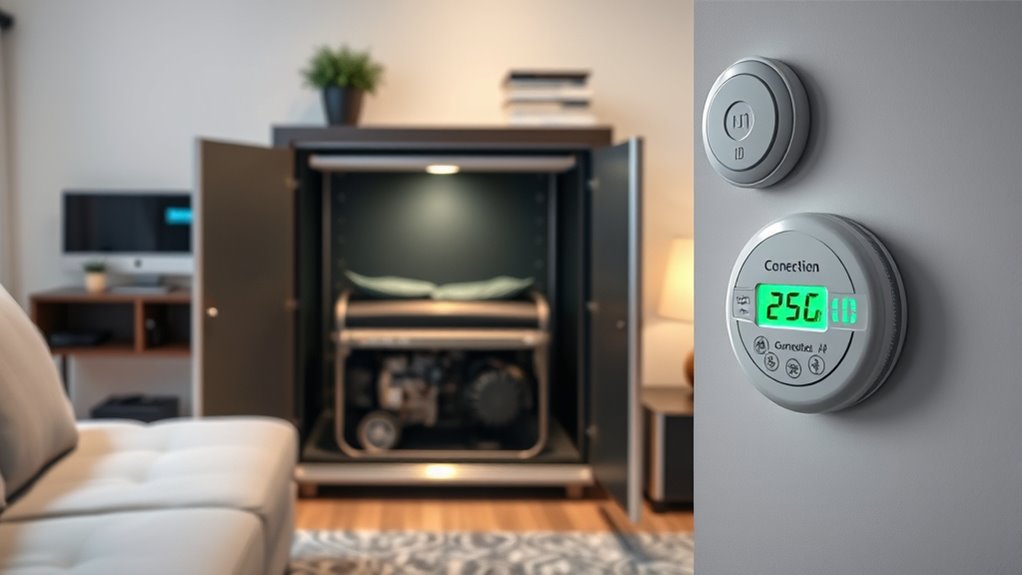
Have you considered how easily carbon monoxide (CO) can build up unnoticed during a power outage? When you use backup power equipment indoors, CO leaks pose a serious risk if not properly monitored. Installing carbon monoxide detectors is essential because these safety alarms alert you immediately if CO levels become dangerous. Unlike smoke alarms, CO detectors specifically sense this odorless, colorless gas, giving you critical time to ventilate the area or shut down equipment. Relying solely on your senses isn’t enough—CO can’t be seen or smelled. By installing reliable safety alarms, you ensure your family’s safety and reduce the risk of poisoning from backup power use. Protect yourself by making CO detectors a priority whenever operating indoor backup power sources.
Common Mistakes to Avoid When Using Backup Power Indoors
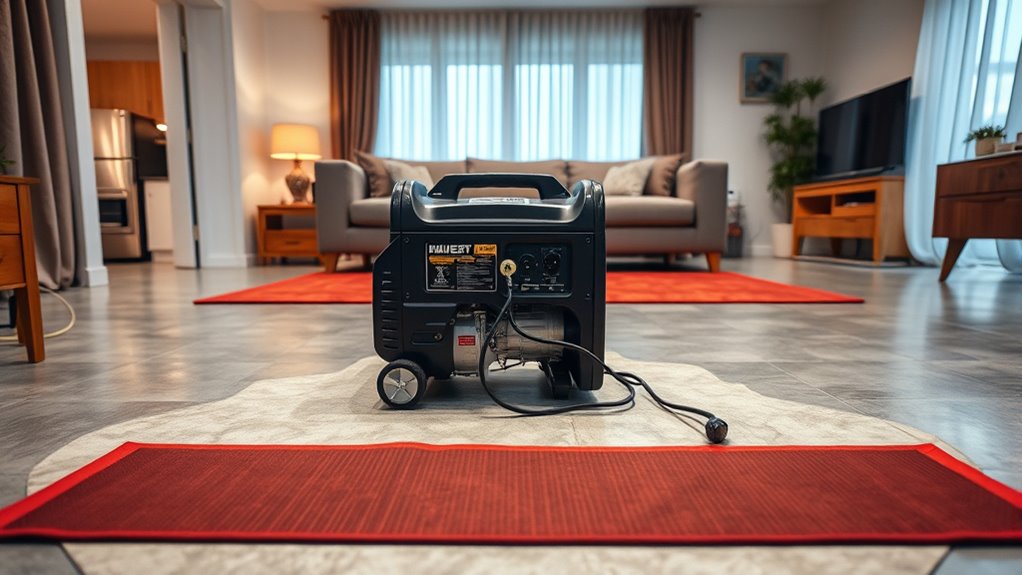
Using backup power indoors can be lifesaving, but many people make common mistakes that compromise safety. One mistake is neglecting portable safety measures, like guaranteeing proper ventilation to prevent carbon monoxide buildup. Second, avoid running generators or other equipment near windows or vents, which can allow dangerous gases inside. Third, skip appliance maintenance—faulty wiring or damaged cords increase fire risk and reduce efficiency. Lastly, don’t overlook the importance of regular checks; poorly maintained devices can malfunction, creating hazards. Always follow manufacturer instructions and keep portable safety in mind. Proper appliance maintenance ensures your backup power operates safely and reliably, preventing accidents and health risks indoors. Being aware of these mistakes helps you use backup power confidently and securely.
What to Do During a Power Outage to Stay Safe Indoors

When a power outage occurs, your first priority should be ensuring everyone’s safety. Stay indoors and avoid using portable fuels like gasoline or propane indoors, as they can produce dangerous carbon monoxide fumes. Keep your backup power equipment properly ventilated and away from windows and vents. Confirm that electrical safety measures are in place—don’t overload circuits or attempt to repair equipment yourself. Use flashlights instead of candles to prevent fire hazards. Stay informed through a battery-powered radio or phone alerts. Remember, never connect backup generators directly to your home’s electrical system without a transfer switch, as this can pose serious safety risks. By following these steps, you can protect yourself and your loved ones during a power outage.
Frequently Asked Questions
Can I Use Solar-Powered Backup Systems Indoors Safely?
You should not use solar-powered backup systems indoors unless they’re specifically designed for indoor installation. Solar safety is essential, and most systems require proper ventilation and outdoor placement to prevent risks like fire or carbon monoxide buildup. Always check the manufacturer’s guidelines and make sure the system is rated for indoor use. If in doubt, consult a professional to safely integrate solar backup systems indoors, avoiding potential hazards.
How Often Should I Inspect Indoor Backup Power Equipment?
Think of your backup power equipment as a trusty steed that needs regular grooming. You should inspect it at least once a month, following a detailed maintenance schedule and inspection checklist. Check for corrosion, loose connections, and battery health. Regular inspections guarantee your equipment’s readiness and safety, preventing surprises during an outage. Staying vigilant keeps your indoor power backup reliable and safe for use when you need it most.
Are There Specific Indoor Safety Certifications for Backup Devices?
There aren’t specific indoor safety certifications for backup devices, but you should prioritize proper indoor ventilation and safety training. Ensuring your space is well-ventilated helps prevent dangerous buildup of carbon monoxide or fumes. Additionally, taking safety training courses teaches you how to operate and maintain backup power equipment properly, reducing risks. Always follow manufacturer instructions and local codes to keep your indoor environment safe when using backup power devices.
What Emergency Procedures Should I Follow if Carbon Monoxide Is Detected?
If carbon monoxide is detected, you should immediately evacuate the area because symptoms like headache, dizziness, or nausea indicate CO poisoning. Call emergency services right away and get everyone to fresh air. Do not re-enter the space until professionals declare it safe. Use your CO alarm to verify the presence of carbon monoxide, and follow emergency response steps to ensure everyone’s safety.
Can I Connect Multiple Backup Devices for Increased Power Indoors?
You shouldn’t connect multiple backup devices indoors, as it can overload your power load management system and cause hazards. Always check device compatibility before linking units, and follow manufacturer instructions carefully. To safely increase power capacity, consider using a single, properly rated backup device designed for indoor use. If you need more power, consult a professional electrician to guarantee your setup remains safe and compliant with electrical codes.
Conclusion
Remember, using backup power indoors is like walking a tightrope—you must stay vigilant. By choosing the right devices, setting them up carefully, and installing detectors, you guarantee your safety during blackouts. Don’t let the silent threat of carbon monoxide catch you off guard, just as Pandora’s box once released chaos. Stay informed, stay cautious, and keep your home a safe haven when the lights go out. Your safety depends on it.