
To store medical supplies for long-term readiness, focus on choosing airtight, non-reactive containers in a cool, dry, and stable environment. Keep supplies organized with clear labels, regular inspections, and a rotation schedule to prevent expiration. Use proper storage techniques like pest-proof containers and temperature monitoring. Staying compliant with safety standards guarantees your stockpile remains effective and accessible when needed. Keep exploring to learn more about optimizing your medical storage system.
Key Takeaways
- Use airtight, non-reactive containers and store supplies in cool, dry, and stable environments to preserve potency over time.
- Regularly inspect storage conditions and supplies for signs of deterioration or packaging damage.
- Label all supplies with expiration dates and organize them using FIFO to ensure timely rotation and replacement.
- Maintain proper ventilation, monitor temperature and humidity levels, and avoid exposure to direct sunlight or heat sources.
- Follow safety standards and conduct routine audits, staff training, and documentation for compliance and safety.
airtight medical storage containers
As an affiliate, we earn on qualifying purchases.
As an affiliate, we earn on qualifying purchases.
Why Long-Term Storage of Medical Supplies Matters
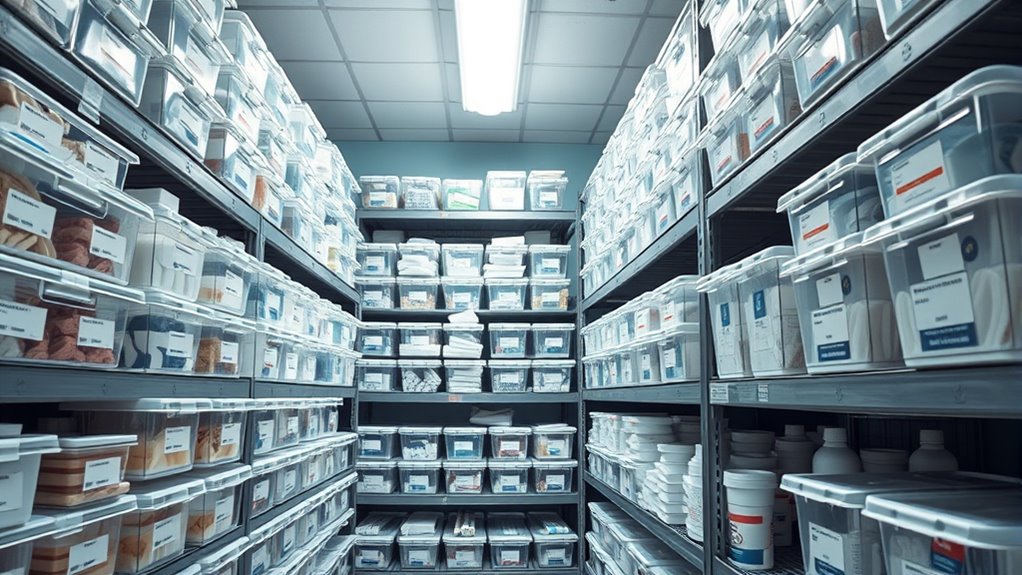
Have you ever considered how essential it is to store medical supplies properly for the long term? If you want your emergency kits to be effective during a crisis, proper storage is vital. Long-term storage preserves the potency of medicinal herbs, ensuring they remain beneficial when needed most. Without proper care, these supplies can degrade, making them unreliable in emergencies. Storing medical supplies correctly also means you’re prepared for unforeseen situations, whether a natural disaster or extended power outage. Keeping items like medicinal herbs and other essentials in ideal conditions helps maintain their effectiveness over time. This proactive approach ensures you can rely on your supplies when emergencies strike, giving you peace of mind and a practical advantage in critical moments. Understanding proper storage techniques can significantly extend the shelf life of your supplies and ensure they function when necessary. Additionally, knowing how to store supplies safely can prevent contamination and spoilage, further enhancing their reliability. Regularly checking expiration dates and conducting storage inspections also helps identify potential issues before they compromise your supplies. Proper storage methods are key to maintaining the quality and safety of long-term supplies.
long-term emergency medical kit storage
As an affiliate, we earn on qualifying purchases.
As an affiliate, we earn on qualifying purchases.
How to Choose the Right Storage Containers and Environment

Choosing the right containers and environment is key to keeping your medical supplies safe. You need containers made from materials that won’t react with your supplies and a storage environment that maintains proper conditions. Proper ventilation can help prevent moisture buildup and mold growth inside storage areas. Adequate airflow is essential for maintaining a dry and healthy storage space. Additionally, selecting containers with appropriate sealing mechanisms can further protect supplies from environmental factors. Organized labeling also helps you quickly find what you need and prevents mishandling. Ensuring your storage setup can accommodate your supplies’ power and durability needs will help maintain their effectiveness over time. Incorporating modern storage solutions can optimize space utilization and enhance overall safety.
Material Suitability for Supplies
Selecting the appropriate storage containers and environment is essential to maintaining the integrity of medical supplies. You should choose containers made from medical grade materials, which are specifically designed to be safe and non-reactive with pharmaceuticals and sterile items. These materials help prevent contamination and degradation over time. Make certain that the containers offer chemical resistance to prevent interactions with cleaning agents, disinfectants, or other chemicals you might store alongside supplies. Avoid materials that can leach harmful substances or degrade when exposed to certain conditions. Proper material choice safeguards the supplies’ efficacy and safety, reducing the risk of spoilage or contamination. Additionally, choosing energy-efficient storage solutions aligns with sustainable practices and can help reduce operational costs. Incorporating quality control standards in storage practices ensures ongoing safety and compliance. By selecting containers with the right material properties, you set a strong foundation for long-term storage and preparedness. Ensuring the environment maintains appropriate temperature and humidity levels is also critical to preventing spoilage and extending shelf life. Regular monitoring of storage conditions and implementing climate control measures can further help preserve supply effectiveness over time. Maintaining a consistent environment minimizes material degradation and preserves supply effectiveness over time.
Optimal Storage Conditions
To guarantee medical supplies remain effective and safe, you need to pay close attention to the storage environment and container choices. Maintaining proper climate control is essential to prevent degradation caused by humidity, temperature fluctuations, and light exposure. Select containers that are airtight, durable, and resistant to pests, ensuring supplies are protected from pests and contaminants. Additionally, choosing proper storage solutions designed specifically for sensitive items can further enhance preservation. Consider these factors: – Keep storage areas cool, dry, and consistently climate-controlled – Use sealed, pest-proof containers to prevent infestation – Avoid storing supplies near direct sunlight or heat sources – Ensure good ventilation to reduce moisture buildup and maintain optimal air quality. Proper storage conditions also involve temperature regulation to prevent spoilage and ensure long-term readiness. Incorporating climate monitoring devices can help maintain ideal conditions and alert you to any environmental fluctuations that could compromise your supplies. Regularly inspecting storage environments for signs of moisture and pests can help catch issues early and preserve the integrity of your supplies.
Organization and Labeling
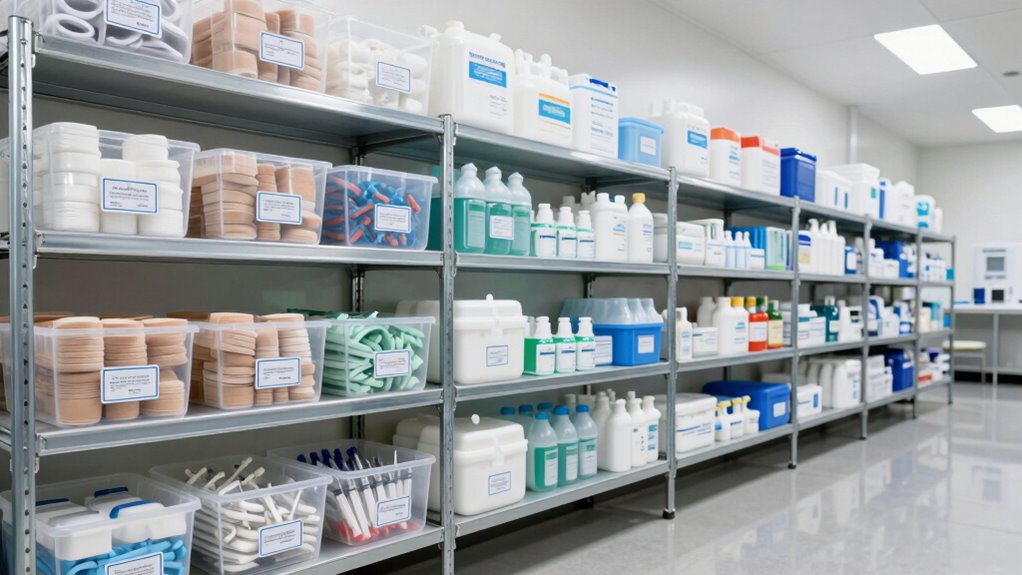
Proper organization and labeling of medical supplies help maintain their integrity and streamline access. Use clear, legible shelf labeling to quickly identify contents without rummaging through boxes. Choose storage containers that are transparent or clearly labeled on the outside to guarantee easy identification, reducing the risk of using expired or incorrect supplies. Label each container with detailed information, including contents, expiration date, and storage instructions, to enhance labeling clarity. Group similar items together and arrange them logically, such as by type or usage frequency. Regularly update labels as supplies are used or replenished. Effective shelf labeling minimizes confusion, saves time during emergencies, and ensures that all supplies remain in ideal condition for long-term readiness.
pest-proof medical supply containers
As an affiliate, we earn on qualifying purchases.
As an affiliate, we earn on qualifying purchases.
Organizing Your Medical Supplies for Easy Access
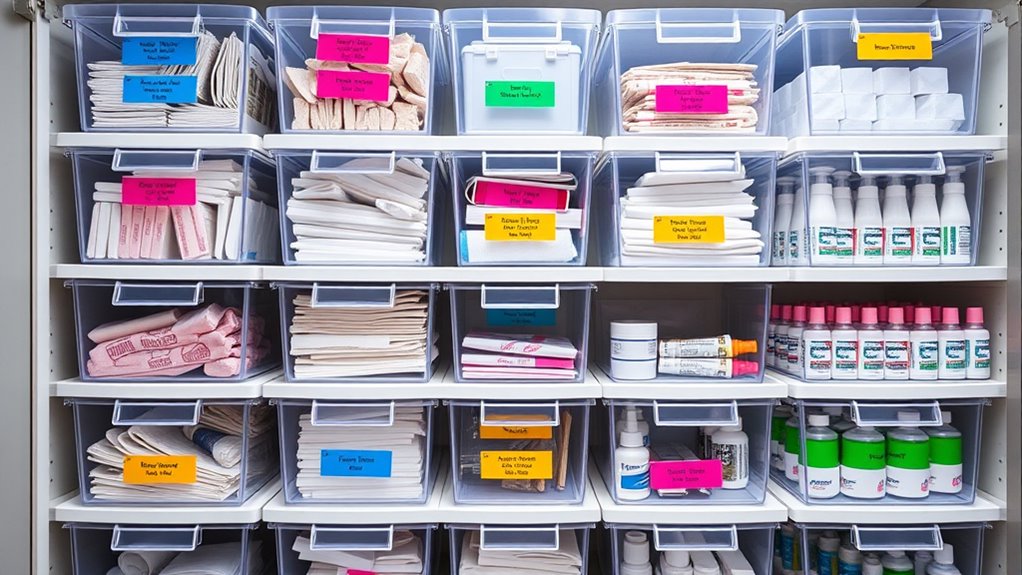
Organizing your medical supplies so you can find what you need quickly makes managing emergencies much easier. Well-organized supplies ensure your first aid kits are accessible and ready when seconds count. To improve your setup, consider grouping items by type—bandages, antiseptics, medications, and tools—so you can grab everything needed at once. Use clear containers and labels to keep everything visible and easy to identify. Regularly check and update your storage system to prevent expired supplies from cluttering your kit. Keep frequently used items at the front for quick access, especially in emergency preparedness scenarios. Also, designate a specific spot for your first aid kits, keeping them separate from other supplies for rapid retrieval during crises. Proper organization is key to effective emergency response. Implementing simple storage strategies can make a significant difference in maintaining a calm and functional home during emergencies. Ensuring your supplies are well-sourced and properly documented helps you verify the quality and expiration dates of your items. Additionally, understanding emergency preparedness principles can help you refine your storage system for maximum efficiency. Incorporating navigation and mapping techniques can also assist in locating supplies quickly in high-stress situations.
temperature monitoring for medical storage
As an affiliate, we earn on qualifying purchases.
As an affiliate, we earn on qualifying purchases.
Techniques to Preserve Medical Supplies’ Effectiveness
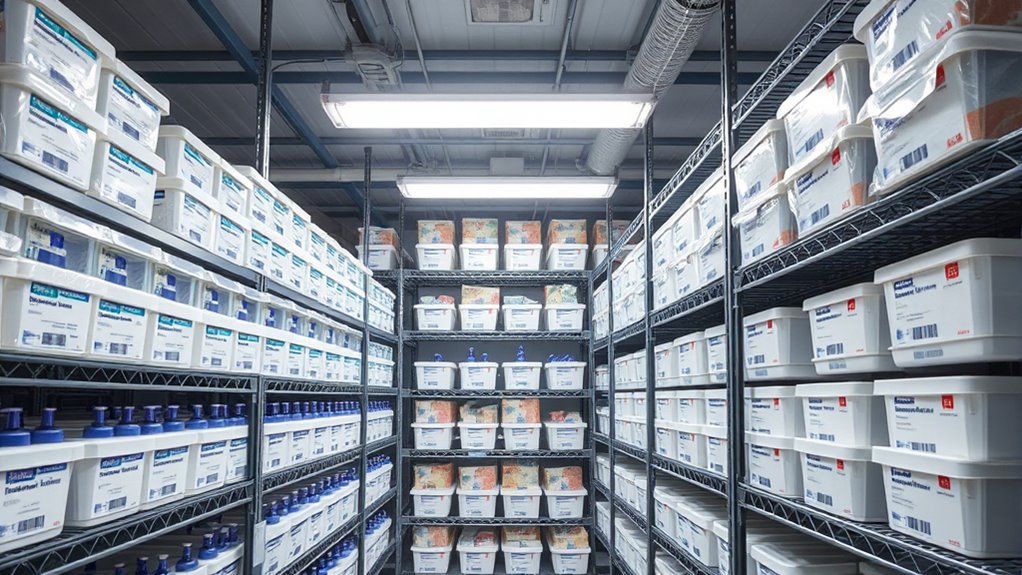
Maintaining the effectiveness of your medical supplies requires careful handling and storage techniques. Proper storage techniques prevent deterioration and ensure supplies remain usable when needed. Store temperature-sensitive items, like vaccines and certain medications, in cool, stable environments, avoiding extreme heat or cold. Use airtight containers or sealed packaging to protect supplies from moisture and contamination. Follow preservation methods recommended by manufacturers, such as keeping items away from direct sunlight or humidity. Label all supplies clearly with expiration dates to monitor their shelf life. Regularly check storage conditions and inspect supplies for signs of degradation. Proper handling and adherence to storage techniques extend the shelf life of your medical supplies, ensuring they remain effective and safe for emergency use.
Setting Up Rotation and Replacement Schedules
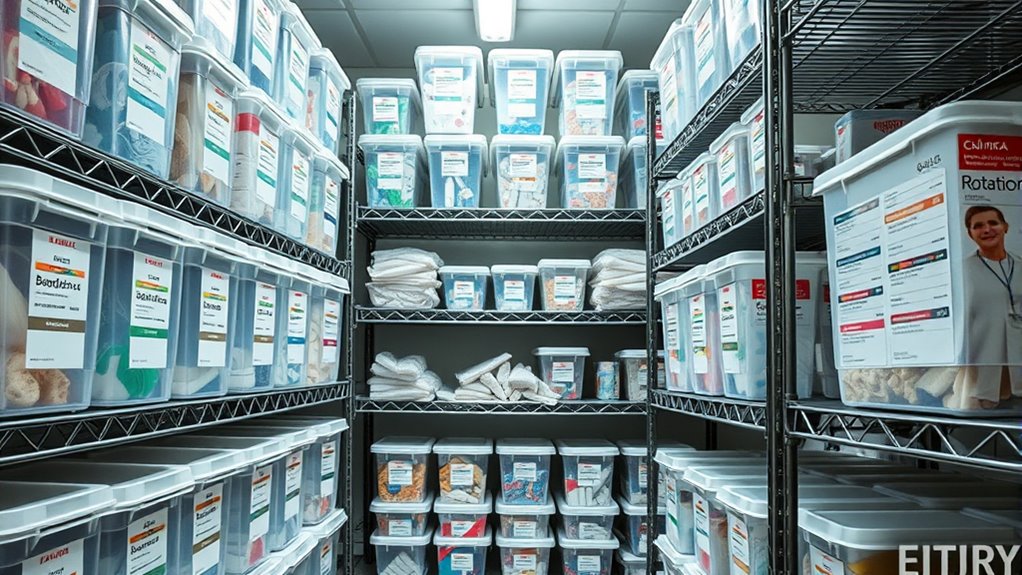
To keep your medical supplies effective, you need to establish clear rotation procedures and perform regular inventory checks. These steps help you identify expired or unused items before they become a problem. Setting up a consistent schedule guarantees your supplies stay fresh and ready when needed.
Regular Inventory Checks
Regular inventory checks are essential to make certain that your medical supplies are always ready for use and safely stored. By routinely reviewing your stock, you ensure medications haven’t expired and that storage conditions, like temperature, remain ideal. This helps prevent the use of compromised supplies during emergencies. During checks, verify expiration dates and adjust stock according to usage patterns. Proper rotation prevents wastage and keeps supplies fresh. Additionally, inspect packaging for damage and ensure storage areas stay within recommended temperature ranges. Consistent checks also identify items that need replenishing before running out. Staying disciplined with these routines minimizes risks and guarantees your supplies are reliable when needed most.
- Confirm medication expiration dates regularly
- Maintain storage temperature logs
- Rotate stock to prevent spoilage
- Replace supplies nearing expiration
Clear Rotation Procedures
How can you guarantee your medical supplies stay fresh and ready when needed? Implement clear rotation procedures by establishing a consistent schedule for expiration tracking and replacement. Regularly check expiration dates to prevent using outdated items, and document these dates to streamline the process. Maintain proper storage temperature to slow down degradation and extend shelf life. Rotate stock so older supplies are used first, ensuring nothing expires unexpectedly. Set up a system where new supplies are added behind existing stock, promoting a first-in, first-out approach. This not only keeps your inventory current but also minimizes waste. By staying vigilant with expiration tracking and controlling storage temperature, you ensure your supplies remain effective and reliable in emergencies.
Ensuring Safety and Staying Compliant With Storage Rules

Ensuring safety and staying compliant with storage rules is essential to preventing accidents and maintaining the integrity of medical supplies. Proper storage minimizes hazards and supports disaster preparedness plans. Stay informed about local regulations and manufacturer guidelines to avoid violations. Regularly inspect storage areas for potential risks, such as leaks or contamination. Keep emergency training up to date so you can respond quickly if issues arise. Make sure all staff understands safe handling procedures. Use clear labeling for expiration dates and storage instructions. Maintain secure, organized storage spaces to prevent unauthorized access. Adhering to these practices safeguards both your supplies and your team, ensuring readiness for emergencies.
Proper storage and safety practices protect medical supplies and ensure emergency readiness.
- Follow OSHA and other relevant safety standards
- Implement routine safety audits
- Train staff on emergency procedures
- Keep detailed documentation for compliance
Tips for Growing and Securing Your Medical Supply Stockpile
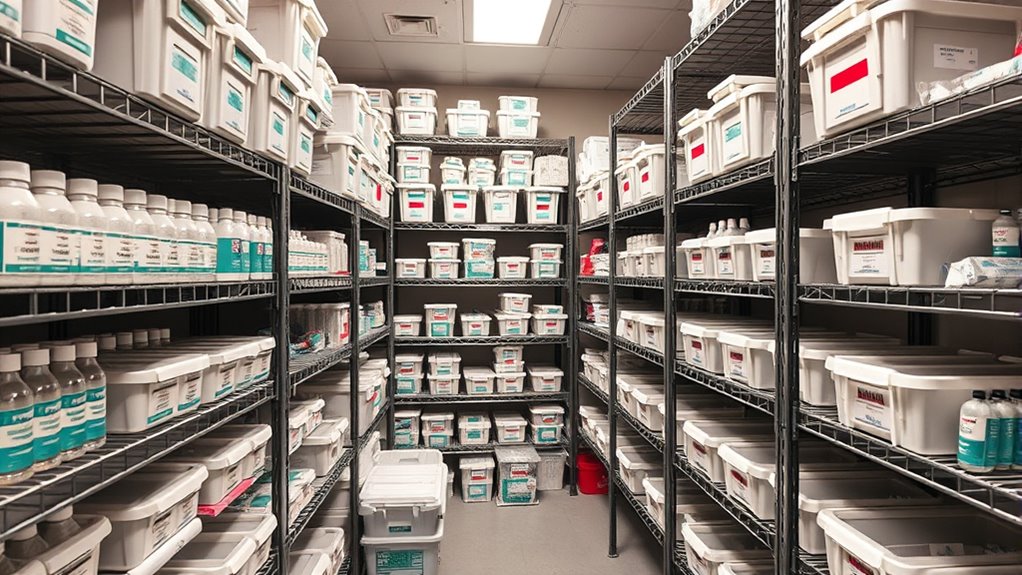
Building a strong medical supply stockpile starts with strategic planning and careful management. To enhance your emergency preparedness, regularly assess your needs based on potential risks and community distribution requirements. Diversify your supplies to cover various scenarios, ensuring you have essentials like medications, bandages, and PPE. Store items in secure, climate-controlled environments to prevent spoilage and theft. Keep detailed inventory records and rotate stock to maintain freshness. Collaborate with local organizations or authorities to improve community distribution plans, so your stockpile can effectively support others if needed. Secure your supplies with locks or alarms, and limit access to trusted individuals. Consistent updates and audits guarantee your stockpile remains reliable and ready for any emergency situation.
Frequently Asked Questions
How Often Should I Review and Update My Medical Supplies Inventory?
You should review and update your medical supplies inventory every 6 to 12 months. Regular inventory rotation helps prevent expiry issues, guaranteeing you always have fresh supplies. Keep your storage organized so you can quickly identify what needs replacing. Check for expired or damaged items during each review, and update your list accordingly. Staying proactive ensures your supplies remain reliable and ready when you need them most.
What Are the Signs That Stored Supplies Have Expired or Become Unsafe?
You might notice discoloration, a strange smell, or changes in texture—these are signs your supplies have expired or become unsafe. Sometimes, it’s a coincidence that these issues appear just as shelf life or storage conditions deteriorate. Always check expiration dates, keep supplies in proper storage conditions, and regularly inspect them. If anything looks or smells off, discard and replace to guarantee safety and effectiveness.
How Can I Prevent Pests and Contamination in Long-Term Storage Areas?
To prevent pests and contamination, you should use pest-proof containers and regularly inspect storage areas. Keep supplies in airtight, sealed containers to block pests and avert contamination. Maintain cleanliness by cleaning shelves and floors frequently, and store supplies off the ground. Implement contamination prevention techniques like proper ventilation and controlling humidity. Regularly check for signs of pests or spoilage, and address issues immediately to ensure your supplies stay safe and effective.
What Are the Legal Requirements for Storing Prescription Medications Long-Term?
You need to follow legal compliance and storage regulations when storing prescription medications long-term. Make certain you keep medications in a secure, cool, and dry place, and adhere to manufacturer guidelines. Proper documentation and inventory management are essential, and you must prevent unauthorized access. Regularly review local, state, and federal laws, including DEA regulations if applicable, to stay compliant and ensure medications remain safe and effective over time.
How Do I Train Staff on Proper Storage and Handling Procedures?
Imagine a clinic where staff recently received thorough training on storage protocols. To guarantee proper handling, you should develop clear procedures, conduct hands-on training sessions, and use visual aids like charts. Regularly review and update these protocols, and assess staff understanding through quizzes or practical demonstrations. This approach helps maintain consistent standards, reduces errors, and ensures that everyone knows how to handle supplies safely and effectively.
Conclusion
By properly storing and maintaining your medical supplies, you’re building a safety net that’s as reliable as a trusted friend. Stay organized, follow safety guidelines, and keep your stockpile fresh like a garden in bloom. With these steps, you’ll create a fortress of preparedness, ready to face any emergency that comes your way. Remember, a well-kept supply is your best defense—your peace of mind, standing tall against the storms ahead.