
To plan effectively, assess your power needs, outage duration, and environmental goals. Battery backups are ideal for short-term support of essential devices and are quiet and eco-friendly. Generators suit long-term outages and high power demands, but they require fuel and maintenance. Avoid overkill by matching your backup to your actual needs and budget. For a balanced approach and smarter choices, explore how to size your system correctly and choose what suits you best.

Get privacy and security gear delivered free — and shop member deals
- Fast, free delivery on millions of items
- Access to Prime Big Deal Days deals on October 6–7
- Prime Video, Amazon Music and more included
Key Takeaways
- Assess your power needs and outage duration to choose an appropriately sized system, avoiding unnecessary overcapacity.
- Prioritize renewable battery backups for short-term, essential electronics, and reserve generators for long-term or high-demand outages.
- Consider environmental impact: batteries are cleaner and quieter, while generators produce emissions and require fuel management.
- Evaluate maintenance requirements and costs—batteries need minimal upkeep; generators demand regular servicing and fuel costs.
- Match backup solutions to your specific reliability needs and environmental goals to prevent overinvestment and ensure effective preparedness.
As an affiliate, we earn on qualifying purchases.
Which Power Backup Is Right for You? Battery Backups or Generators?
Choosing the right power backup depends on your specific needs and circumstances. If you’re aiming for renewable options, battery backups are a great choice since they can be charged using solar or wind energy, reducing environmental impact. They’re quiet, clean, and ideal for short-term outages or powering essential devices. Battery backups also often feature energy storage capacity that can be scaled according to your requirements. Additionally, technology advancements are making energy efficiency more efficient and affordable, expanding options for sustainable backup solutions. For instance, renewable energy integration allows for more seamless and eco-friendly power management. Generators, on the other hand, often rely on fossil fuels, which can have a higher environmental impact due to emissions. They’re better suited for long-term outages or situations where high power output is needed. Consider how often you experience outages, your environmental priorities, and whether you prefer a quiet, eco-friendly solution or a more robust, fuel-based backup. Your choice should align with your goals and the specific demands of your power needs, including energy sources and sustainability considerations.
portable generator for emergency power
As an affiliate, we earn on qualifying purchases.
As an affiliate, we earn on qualifying purchases.
Assess Your Power Needs First
Before selecting a power backup solution, you need to accurately assess your energy requirements. Start by listing your essential appliances and their power consumption to determine the total load. Next, consider how long you need backup power during outages. Evaluate your current energy efficiency efforts to reduce unnecessary usage. You should also analyze the contrast ratio of your power system to ensure it can handle dynamic changes in load without loss of performance. Additionally, understanding your power demand profile helps optimize your backup solution for fluctuating energy needs. It’s also beneficial to review the fuel storage options to ensure reliable and safe operation of your backup power system. Incorporating smart home integration can further enhance your system’s efficiency and responsiveness. Being aware of thermal behavior in your power setup can help prevent overloads and system failures. Finally, think about the environmental impact of your choice—opting for solutions with lower emissions and better sustainability.
In summary:
- List essential devices and their power needs
- Estimate backup duration requirements
- Assess opportunities to improve energy efficiency
- Consider environmental impact and sustainability
As an affiliate, we earn on qualifying purchases.
How Reliable and Long-Lasting Are Battery Backups and Generators?

Understanding how dependable and durable your backup power options are is key to making an informed decision. Battery backups typically have a limited battery lifespan, often around 5 to 15 years, depending on usage and environmental conditions. They require less maintenance frequency, mainly occasional inspections and battery replacements. Additionally, advancements in smart‑home integrations can optimize how your backup power systems function during outages. Modern battery technologies, such as lithium-ion, improve battery longevity and performance. As technology advances, the cost of batteries has decreased, making them more accessible for everyday use. Generators, on the other hand, tend to last longer if properly maintained, sometimes exceeding 20 years. However, they demand regular maintenance, including oil changes, filter replacements, and inspections to ensure reliable operation. While batteries provide quick, quiet backup, their longevity depends heavily on proper care. Generators can be more durable over time but need consistent upkeep. Modern kitchen technology can include backup power solutions to keep your appliances running smoothly during outages. Your choice should consider both reliability and how much effort you’re willing to invest in maintenance.
As an affiliate, we earn on qualifying purchases.
What Do They Cost and How Hard Are They to Maintain?
Battery backups generally cost less upfront, with prices ranging from a few hundred to a few thousand dollars depending on capacity and brand. When considering the cost comparison, you’ll find that batteries require a smaller initial investment but may need replacement every 5 to 15 years. Maintenance complexity varies: 1. Battery backups typically need periodic inspections and occasional software updates. 2. Generators demand more frequent maintenance, including oil changes, filter replacements, and fuel checks. 3. Fuel-powered generators may incur ongoing fuel costs and storage concerns. 4. Battery systems are quieter and cleaner but may have higher replacement costs over time. Additionally, understanding Free Floating systems can help optimize your backup power strategy for resilience and efficiency. Regular monitoring of maintenance requirements ensures your backup system remains reliable and ready when needed. For optimal performance, it’s important to consider system scalability, which can influence long-term satisfaction with your backup solution. Incorporating renewable energy options can also enhance your backup system’s sustainability and reduce ongoing costs. Moreover, evaluating fuel choices is essential to balance cost, availability, and environmental impact over the system’s lifespan.
When Should You Use Battery Backups or Generators? Practical Scenarios

You’ll want to consider battery backups for short-term power outages in your home, especially to keep essential devices running. Generators are better suited for longer outages or when you need reliable power in remote or outdoor settings. Understanding these practical scenarios helps you choose the right backup solution for each situation. Additionally, evaluating cost considerations and maintenance requirements can further inform your decision. For instance, assessing the technology reliability of different options can ensure consistent performance when it matters most. It’s also helpful to consider setup complexity to determine how easily each system can be integrated into your home. Moreover, understanding power capacity ensures your backup system can handle your specific energy needs without overkill.
Residential Power Outages
When a power outage hits your home, choosing the right backup solution depends on how long you’ll need power and what appliances are essential. If outages are brief, a battery backup may suffice, especially for critical devices like medical equipment or Wi-Fi routers. For longer outages, a generator ensures sustained power, but consider renewable options for a greener environmental impact.
Practical scenarios include:
- Short outages during storms—battery backups protect essential electronics.
- Extended outages in winter—generators keep heating systems running.
- Frequent outages—consider renewable options like solar with battery storage.
- Emergency preparedness—balance environmental impact with reliability, choosing solutions that match your needs without overkill.
Emergency Backup Needs
Determining the right backup solution depends on how quickly and reliably you need power during an outage. If you face frequent outages or need power immediately, a battery backup offers instant, quiet support, ideal for essential devices like medical equipment or communication tools. For longer outages or critical needs, a generator becomes necessary, especially when renewable options like solar-powered generators are considered for a more sustainable, environmentally friendly approach. Consider your environment and impact; batteries have minimal environmental footprint, while generators produce emissions that may matter in eco-conscious settings. Use batteries for short-term, low-impact backup, and opt for generators when extended power is critical. Matching your needs with these scenarios ensures you’re prepared without overkill, balancing reliability and environmental responsibility.
Outdoor and Remote Use
Outdoor and remote settings often present unique challenges for backup power solutions. You need reliable options that suit limited access and portability considerations. Consider these scenarios:
- Camping trips—solar options like portable panels or battery packs keep devices charged without fuel.
- Remote cabins—generators provide consistent power, but a lightweight, high-capacity battery backup offers quiet, maintenance-free support.
- Outdoor events—quick setup favors portable generators, especially when solar options aren’t feasible due to weather.
- Emergency situations—solar-powered chargers or portable generators ensure essential devices stay operational when grid power is unavailable.
Matching your needs with these practical options ensures you’re prepared, whether relying on solar options for sustainability or choosing portable solutions for convenience.
How to Size Your Backup System Without Overspending
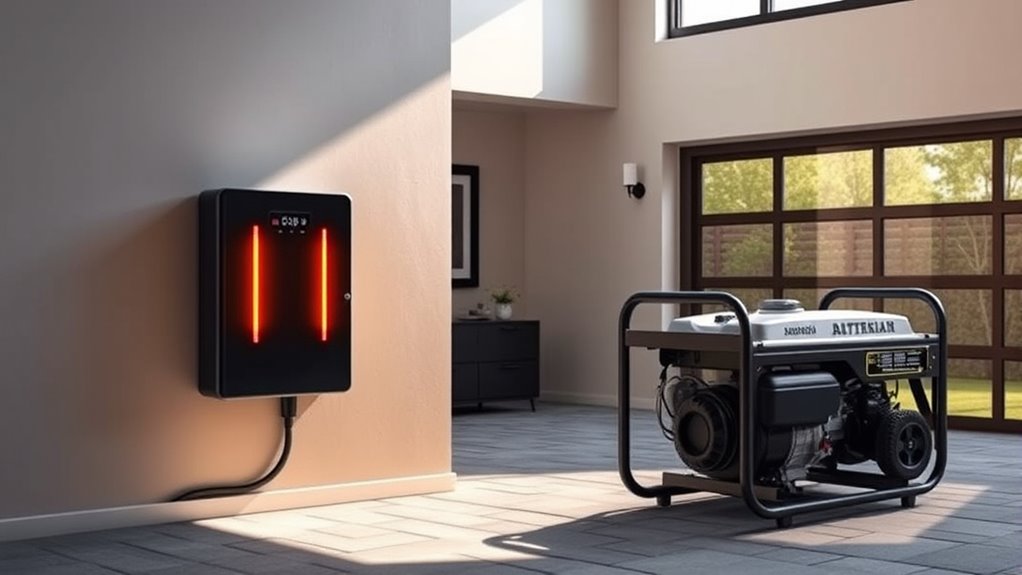
To avoid overspending on your backup system, start by carefully evaluating your actual power needs. Conduct a thorough cost analysis to determine which appliances and devices require backup power and identify their wattage. This helps prevent purchasing an overly large system that wastes money and resources. Consider the environmental impact of your choice; smaller, efficient systems typically have a lower carbon footprint. For example, a battery backup might be sufficient for essential electronics, while a generator may be necessary for higher power demands. Avoid overestimating your needs, as this can lead to unnecessary expenses. By accurately sizing your backup system, you ensure reliable power during outages without overspending, reducing both your upfront costs and long-term environmental impact.
Frequently Asked Questions
Can Battery Backups Handle Prolonged Power Outages?
Battery backups can handle short-term power outages well, but for prolonged ones, they often fall short unless paired with solar integration. This combo extends backup duration and reduces reliance on grid power. However, keep in mind that maintenance costs for batteries increase over time, so plan accordingly. If you expect extended outages regularly, investing in generators might be more reliable, but batteries with solar are a cleaner, quieter option for shorter disruptions.
Are Generators Suitable for Indoor Use?
Generators aren’t suitable for indoor use; they’re like roaring monsters that can turn your cozy home into a hazardous jungle. For indoor safety, they produce dangerous fumes and carbon monoxide, which can be deadly in enclosed spaces. Plus, noise considerations make them a royal pain—imagine a thunderstorm inside your living room! Stick to outdoor generators and keep your indoor air safe and sound.
How Do Weather Conditions Affect Backup System Performance?
Weather conditions critically impact your backup system’s performance. Storms can cause power surges, affecting solar efficiency and potentially damaging equipment. Heavy rain or snow may hinder solar panel output, reducing energy supply during storms. To guarantee storm preparedness, consider a backup system that adapts to weather variations, like batteries or generators, so you stay powered even when weather disrupts solar efficiency. Proper planning minimizes outages and keeps your home safe.
What Safety Precautions Are Necessary for Generator Operation?
Imagine a dark room suddenly lit by your generator; safety is vital. You must guarantee proper ventilation to prevent dangerous carbon monoxide buildup and keep fuel stored safely, away from heat sources. Always operate your generator outdoors in well-ventilated areas, never inside enclosed spaces. Regularly inspect fuel lines for leaks, and follow manufacturer guidelines. These precautions protect you and your loved ones from potentially deadly fumes and fire hazards.
Can Hybrid Systems Combine Batteries and Generators Effectively?
Yes, hybrid systems can combine batteries and generators effectively, especially when integrated with solar power. This setup offers the benefits of solar integration, reducing fuel use and emissions, while providing backup during extended outages. You’ll enjoy increased reliability and flexibility, optimizing energy use based on demand. Just make certain proper planning and safety measures, like automatic transfer switches and regular maintenance, to maximize efficiency and safety in your hybrid system.
Conclusion
Choosing between battery backups and generators is like picking the right tool for the job—each has its strengths. By evaluating your needs and understanding their reliability, costs, and maintenance, you can avoid overkill and find the perfect fit. Remember, a well-sized backup system is your shield against power outages, not a fortress. With the right plan in place, you’ll stay powered up smoothly, turning potential chaos into just a flicker in the past.
Evergreen bestsellers Picks
bestsellers
As an affiliate, we earn on qualifying purchases.