
TL;DR

Get privacy and security gear delivered free — and shop member deals
- Fast, free delivery on millions of items
- Access to Prime Big Deal Days deals on October 6–7
- Prime Video, Amazon Music and more included
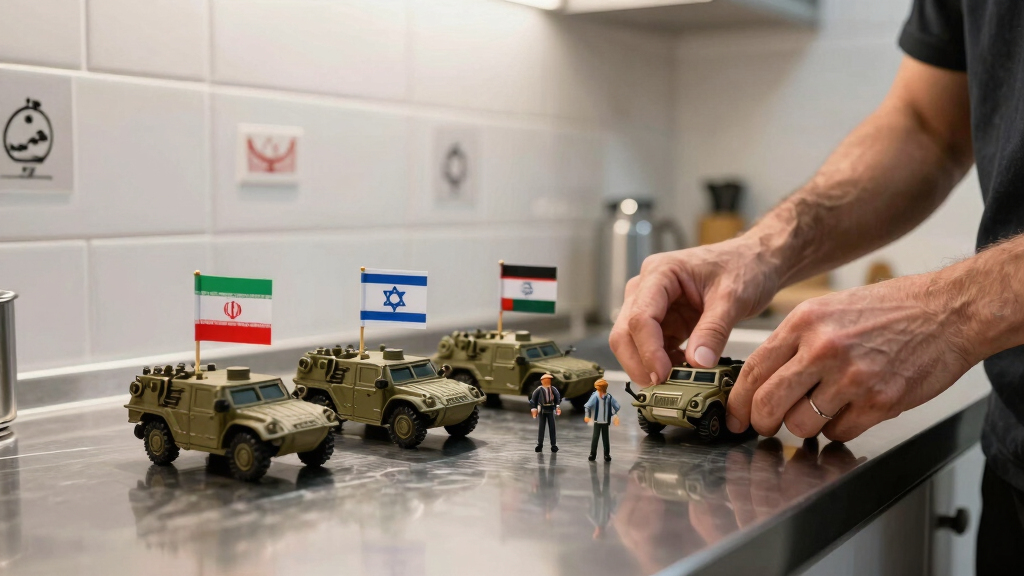
Iran, Israel, and Arab nations have entered a new strategic ‘balance of terror’ characterized by mutual deterrence and heightened military posturing. This shift impacts regional stability and future conflict risks.
Iran, Israel, and several Arab nations are now engaged in a new ‘balance of terror,’ according to regional analysts, driven by mutual deterrence and increased military activity. This development marks a significant shift in Middle East strategic dynamics, with implications for regional stability and security.
Experts, including Vali Kaleji of the Institute for Iran-Eurasia Studies, describe this new ‘balance of terror’ as a strategic equilibrium where each side maintains credible military capabilities to deter attack. Iran’s ongoing missile program and nuclear ambitions, Israel’s advanced defense systems, and Arab nations’ increasing military cooperation contribute to this environment.
Recent military exercises, missile tests, and diplomatic signals from all parties suggest a mutual understanding that escalation could lead to catastrophic conflict, prompting a focus on deterrence rather than active confrontation. While some analysts view this as a stabilizing factor, others warn it risks entrenching tensions and reducing the space for diplomatic resolution.
Why It Matters
This new ‘balance of terror’ influences regional stability by creating a deterrence-based environment that may prevent large-scale conflict but also risks prolonging tensions and arms races. It underscores the importance of diplomatic efforts to manage escalation and avoid miscalculations that could ignite broader hostilities.
As an affiliate, we earn on qualifying purchases.
Background
Over the past decade, Iran’s nuclear program and missile development have heightened regional fears, prompting Israel and Arab nations to bolster their military capabilities. The 2020 Abraham Accords and recent normalization efforts have shifted some alliances, but underlying tensions persist. The current strategic environment reflects a complex interplay of deterrence, military posturing, and diplomatic signals, with recent incidents of missile tests and military drills exemplifying this trend.
“The region is now characterized by a new ‘balance of terror,’ where mutual deterrence shapes strategic calculations among Iran, Israel, and Arab states.”
— Vali Kaleji, senior research fellow at the Institute for Iran-Eurasia Studies
“Our military capabilities are designed to deter any aggression. We are committed to maintaining this strategic balance.”
— Israeli defense official (unnamed)
“While we seek stability, the regional arms race continues, driven by mutual fears and strategic calculations.”
— Arab diplomat (unnamed)
advanced military defense technology
As an affiliate, we earn on qualifying purchases.
As an affiliate, we earn on qualifying purchases.
What Remains Unclear
It remains unclear how long this ‘balance of terror’ will persist or whether diplomatic efforts will succeed in reducing tensions. The potential for miscalculation or accidental escalation remains a concern, and the future trajectory of regional relations is uncertain.
As an affiliate, we earn on qualifying purchases.
What’s Next
Regional actors are expected to continue military posturing and diplomatic signaling in the coming months. International mediators may attempt renewed diplomatic efforts to de-escalate tensions, but the strategic environment remains fragile. Monitoring military movements and diplomatic exchanges will be crucial to assess whether this balance shifts or stabilizes further.
As an affiliate, we earn on qualifying purchases.
Key Questions
What is meant by a ‘balance of terror’ in this context?
It refers to a strategic situation where Iran, Israel, and Arab nations possess sufficient military capabilities to deter attack, creating a fragile equilibrium based on mutual threat rather than active conflict.
Does this new balance reduce the risk of war?
It may reduce the likelihood of large-scale conflict by deterring aggression, but it also risks prolonging tensions and increasing the chances of accidental escalation due to military miscalculations.
What role do diplomatic efforts play now?
Diplomatic efforts are ongoing but face challenges due to entrenched mistrust and strategic rivalries. Success depends on sustained negotiations and confidence-building measures among regional actors.
How does this affect regional stability?
While it may prevent open warfare, the ongoing arms race and military posturing contribute to a tense environment that could erupt into conflict if misjudgments occur or diplomatic efforts fail.
What are the next key developments to watch?
Observers will monitor military exercises, missile tests, diplomatic statements, and any signs of escalation or de-escalation in the coming weeks and months.
Source: Nikkei Asia
Fall Picks
fall essentials
As an affiliate, we earn on qualifying purchases.