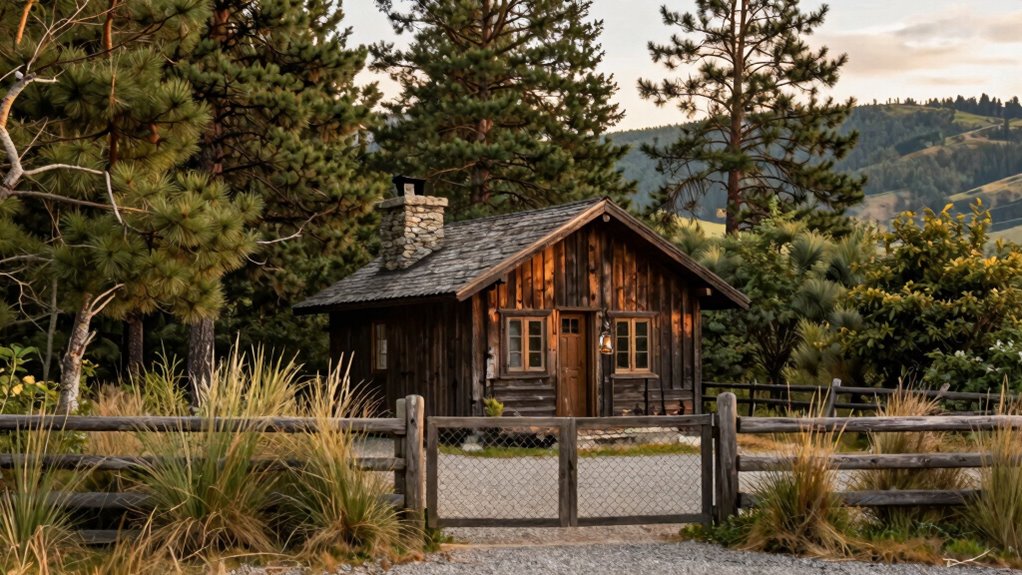
To secure a remote cabin with few neighbors, install sturdy fencing and wildlife-proof barriers to keep animals and intruders out. Keep the area clear of food sources and trash to reduce attraction. Use surveillance cameras and motion-activated deterrents to monitor activity. Create a defensible space around the cabin by removing flammable debris, and have fire safety measures in place. Taking these steps helps protect your cabin, and more tips follow if you explore further.

Get privacy and security gear delivered free with Prime
- Fast, free delivery on millions of items
- Prime Video, Amazon Music and more included
- Member-only deals all year
Key Takeaways
- Install sturdy, wildlife-proof fencing to prevent unauthorized animal and human entry around the cabin.
- Use surveillance cameras and regular inspections to monitor activity remotely.
- Clear vegetation and potential hiding spots near the cabin to enhance security.
- Create a defensible space with fire-resistant materials and remove combustible debris within 30 feet.
- Develop and rehearse emergency plans, including evacuation routes and accessible emergency equipment.
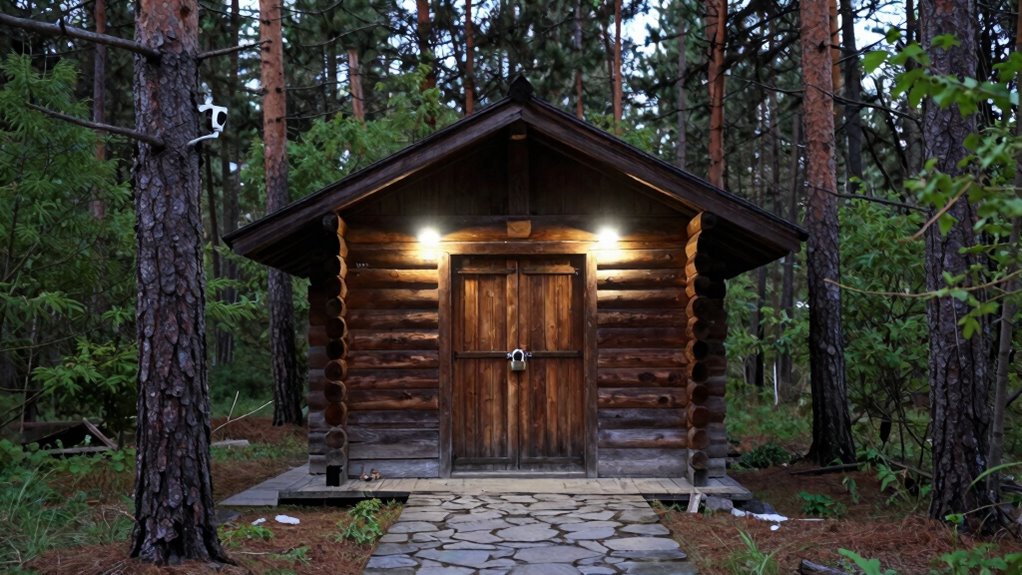
Ever wondered how to keep your remote cabin safe from intruders and nature’s surprises? When you’re miles away from neighbors, security becomes even more critical. You need to take proactive steps to protect your property from both human threats and natural hazards. Wildlife protection is an essential aspect of safeguarding your cabin, especially in areas where animals roam freely. Installing sturdy fencing around the perimeter helps keep out larger wildlife that might damage your property or cause disturbances. Consider using wildlife-proof barriers that prevent animals from entering without trapping or harming them. Clear away food sources, like trash or bird feeders, that might attract curious creatures and increase the risk of unwanted visits. Regularly inspect your property for signs of animal activity, and if necessary, set up motion-activated lights or deterrents. These not only discourage wildlife from approaching but also alert you to any intruders. Additionally, using wildlife deterrents can help prevent animals from approaching your cabin without causing harm. Ensuring your cabin’s exterior is well-maintained and free of scent attractants can further reduce wildlife encounters. Incorporating natural repellents can also serve as an effective, eco-friendly method to keep animals at bay. To enhance wildlife safety, consider installing wildlife cameras to monitor activity around your property without disturbing the natural environment. Regularly removing potential food attractants from your property can significantly decrease the likelihood of wildlife visits, creating a safer environment for both your cabin and the surrounding ecosystem.
Fire safety is another top priority, particularly in remote locations where emergency response can take longer. You must create a defensible space around your cabin by removing dead branches, leaves, and other combustible debris within at least 30 feet of the structure. Keep your roof and gutters free of leaves and pine needles that could ignite during a wildfire. Consider installing fire-resistant materials on your cabin’s exterior, such as metal roofing and siding, to reduce vulnerability. Having a well-stocked fire extinguisher nearby and knowing how to use it can make a significant difference during an emergency. Keep a water source—like a large water tank or hydrant—close to your property for quick access. Planning and practicing evacuation routes, and ensuring all family members or visitors are familiar with fire safety procedures, can save lives if disaster strikes. Establishing a fire safety plan tailored to your remote location can enhance preparedness and response efforts. Additionally, maintaining clear access routes and keeping emergency equipment ready are additional steps that can significantly improve your safety measures.
Products Worth Considering

Arlo Pro 2K HDR Wireless Security Camera (6th Gen), 4-Camera Kit

Ring Alarm 8-Piece Kit (Newest Model) – Home Security System

Samsung 55-Inch S90H OLED 4K UHD Smart TV Bundle with Full-Motion Mount and Surge Protector
As an affiliate, we earn on qualifying purchases.
Frequently Asked Questions
What Are the Best Ways to Monitor My Remote Cabin Remotely?
To monitor your remote cabin remotely, install a reliable CCTV system with remote access capabilities. Pair it with motion sensors to alert you instantly of any activity. Regularly check the footage via your smartphone or computer, ensuring you’re always aware of what’s happening. Keep the system updated with the latest software, and consider integrating a security alarm for added protection. This setup gives you peace of mind, no matter where you are.
How Can I Prevent Wildlife From Damaging My Property?
Wildlife can be like uninvited guests crashing your peaceful retreat, so you need effective barriers. Install wildlife barriers around gardens and trash areas to keep animals at bay. Use predator deterrents, like motion-activated lights or sound devices, to scare off larger animals. Regularly clear food sources and secure trash bins. These steps help protect your property from wildlife damage, keeping your cabin safe and serene.
What Insurance Options Are Recommended for Remote Cabins?
You should consider extensive insurance coverage that specifically addresses remote cabin risks, including fire, theft, and natural disasters. Look for policies providing liability protection in case someone gets injured on your property. It’s wise to discuss these options with an insurer who understands remote property needs, ensuring your cabin is well protected. Having the right insurance gives you peace of mind, knowing you’re covered against unforeseen events.
How Do I Set up Reliable Power Sources for Security Systems?
To set up reliable power sources for your security systems, you should install a solar backup system paired with battery storage. Solar panels harness sunlight during the day, providing sustainable energy, while batteries store excess power for nighttime or cloudy days. This setup guarantees your security cameras and alarms stay operational even when off-grid, giving you peace of mind knowing your cabin remains protected regardless of power outages or remote location challenges.
Are There Legal Considerations for Installing Security Devices in Remote Areas?
Yes, you need to take legal compliance and privacy concerns into account when installing security devices in remote areas. Check local laws to guarantee you’re allowed to deploy cameras or alarms on your property, and avoid infringing on neighbors’ privacy. Obtain permits if required, and inform neighbors if necessary. Being mindful of these legal aspects helps you avoid disputes and ensures your security measures are lawful and respectful of others’ privacy.
Conclusion
Securing your remote cabin is like tending a delicate garden—you must stay vigilant and nurture its defenses. Regularly check locks, install security cameras, and keep neighbors or local authorities informed. Trust your intuition and never become complacent; the peace of solitude depends on it. By staying proactive, you turn your cabin into a fortress, a sanctuary nestled safely amid the wilderness, where tranquility reigns and threats stay at bay.