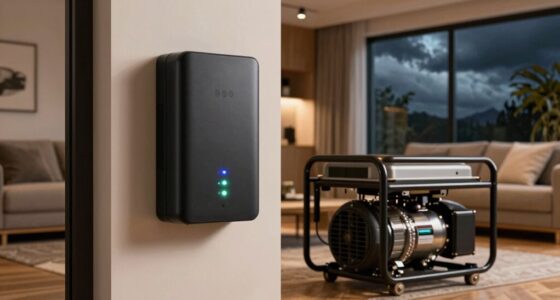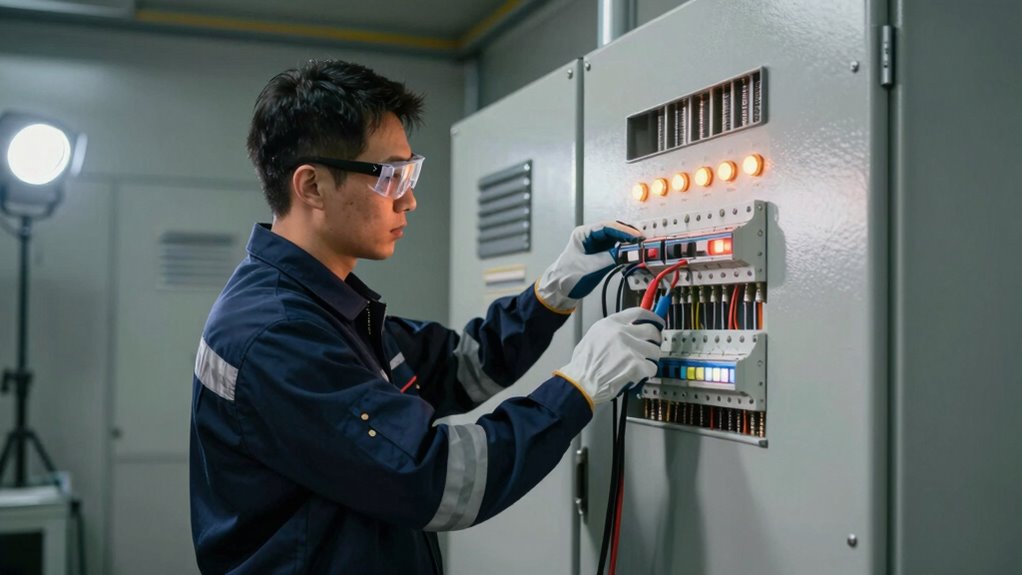
To test emergency power systems safely, start by inspecting components like batteries and wiring for corrosion, damage, or loose connections. Follow proper safety procedures, wear PPE such as gloves and glasses, and guarantee the system is in good calibration. Choose ideal conditions for testing, record all results immediately, and avoid bad weather or heavy loads. If issues arise, troubleshoot by checking batteries and circuit integrity. For detailed tips, keep exploring the best practices to guarantee reliable operation.
Key Takeaways
- Verify system components, such as batteries and wiring, are in good condition before testing.
- Follow proper safety procedures, including equipment calibration and clear communication during testing.
- Wear appropriate PPE like insulated gloves, safety glasses, and flame-resistant clothing.
- Schedule tests during stable conditions, avoiding adverse weather or peak load times, and record all results.
- Troubleshoot identified issues by inspecting batteries, wiring, and control panels, then perform necessary repairs before retesting.
Check Your Emergency Power System Components

Before testing your emergency power system, you need to verify that all components are in proper working condition. Start with battery maintenance—check the batteries for corrosion, ensure terminals are tight, and verify the charge level. Proper battery care prevents failures during an outage. Next, perform circuit inspections to confirm all wiring and connections are secure and free of damage. Look for worn insulation, loose terminals, or signs of overheating. Ensuring the circuit pathways are intact helps prevent unexpected failures. Regularly scheduled checks of these components can identify issues early, saving you from costly repairs or system downtime later. Additionally, referencing system compatibility considerations can help ensure your power setup functions reliably under emergency conditions. Being aware of power system testing procedures can further enhance safety and effectiveness during your inspections. Understanding testing protocols can help you follow proper procedures and avoid hazards during system checks. Incorporating preventive maintenance steps into your routine can extend the lifespan and reliability of your emergency power system. To further ensure safety, it’s important to understand emergency shutdown procedures, especially when dealing with complex power systems. By thoroughly inspecting batteries and circuits beforehand, you set a solid foundation for a safe and effective emergency power test.
Follow Safety Procedures During Testing
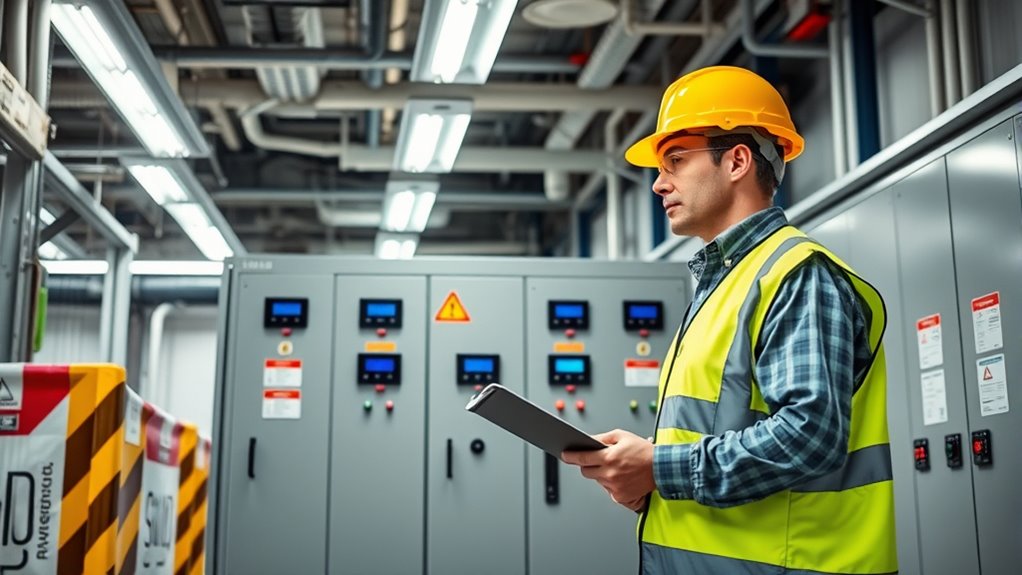
When testing your emergency power system, following strict safety procedures is essential to prevent accidents and equipment damage. Before testing, verify that all equipment calibration is accurate, ensuring the system will operate correctly during an emergency. Review your system documentation thoroughly to understand the testing procedures and identify any specific safety warnings. Always adhere to manufacturer guidelines and your organization’s safety protocols. Keep clear communication with team members and establish a safe testing zone, preventing unauthorized access. Regularly updating system documentation ensures everyone knows the correct procedures and safety measures. Proper calibration is crucial for projector image quality and system reliability, so double-check calibration settings before testing. Additionally, implementing safety protocols can help mitigate unforeseen risks during testing. Conducting periodic system audits can help identify potential issues before testing and improve overall safety. Ensuring that all personnel are trained on emergency procedures can further reduce risks and enhance safety during testing. Incorporating routine maintenance checks into your testing schedule can also help prevent unexpected failures. By maintaining proper calibration and following documented procedures, you reduce risks and ensure reliable system performance during actual emergencies. Safety during testing isn’t just best practice—it’s a vital responsibility.
Wear PPE and Stay Safe
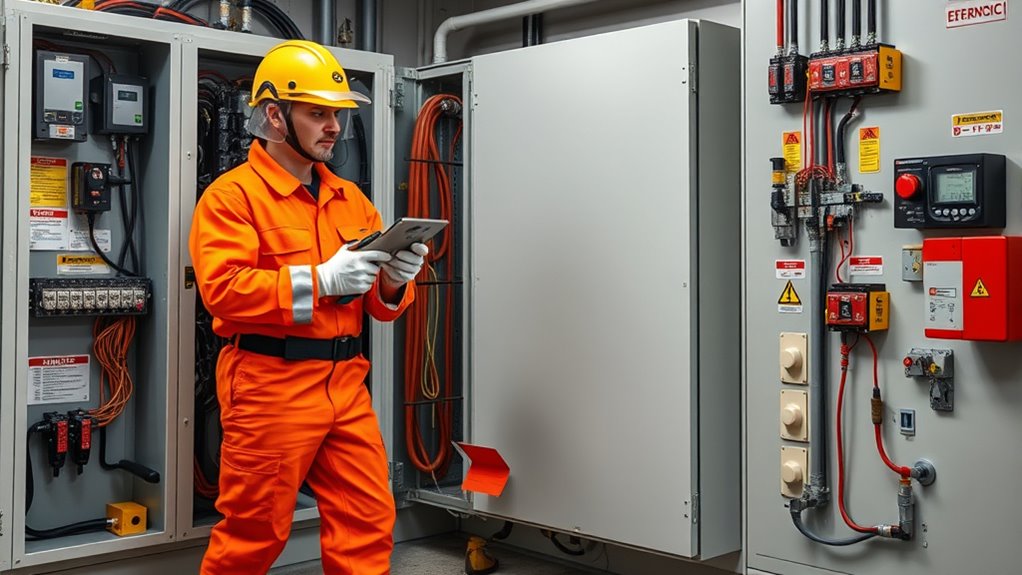
Wearing personal protective equipment (PPE) is essential to safeguard yourself during emergency power system testing. PPE, such as insulated gloves, safety glasses, and flame-resistant clothing, shields you from electrical hazards and potential arc flashes. Always follow established safety protocols to minimize risks, including inspecting your PPE before use and ensuring it fits properly. Stay alert and keep your focus on the task, avoiding distractions that could lead to accidents. Remember, PPE is your first line of defense; never compromise on safety gear. Additionally, understanding modern safety technology can enhance your awareness and response during testing procedures. Being familiar with safety protocols helps you react quickly and appropriately if an emergency occurs. Regularly reviewing emergency response procedures ensures you are prepared to act swiftly in case of an incident. Familiarity with market regulations can also help you stay compliant and safe during testing. Moreover, applying risk assessment techniques can help identify potential hazards before starting the procedure.
Test When Conditions Are Right and Record Results
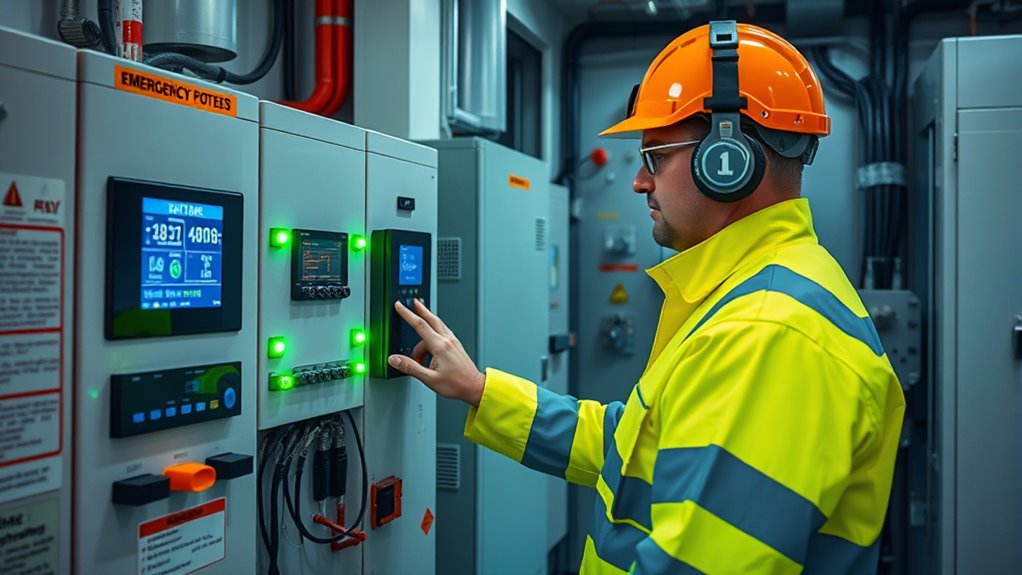
Testing emergency power systems only when conditions are ideal guarantees accurate results and reduces safety risks. Confirm the power supply is stable and fully operational before starting your test. Schedule testing intervals during periods of low activity to avoid disruptions and gather clear data. Record your results immediately after each test, noting how the system responded and whether it maintained power as expected. Accurate documentation helps identify trends and potential issues over time. Avoid testing during adverse weather or when the system is under heavy load, as these conditions can skew results or cause safety hazards. Proper testing protocols ensure your procedures are safe and effective. Understanding system specifications and proper configuration can improve testing accuracy and safety. Additionally, being aware of testing best practices can further enhance your safety and reliability. Environmental conditions are crucial to consider, as testing in unsuitable conditions can compromise both safety and data accuracy. By testing under the right conditions and keeping detailed records, you ensure your emergency power system remains reliable and ready when needed. Properly calibrating your testing equipment and regularly maintaining it can also contribute to testing accuracy.
Troubleshoot and Fix Issues Found During Testing
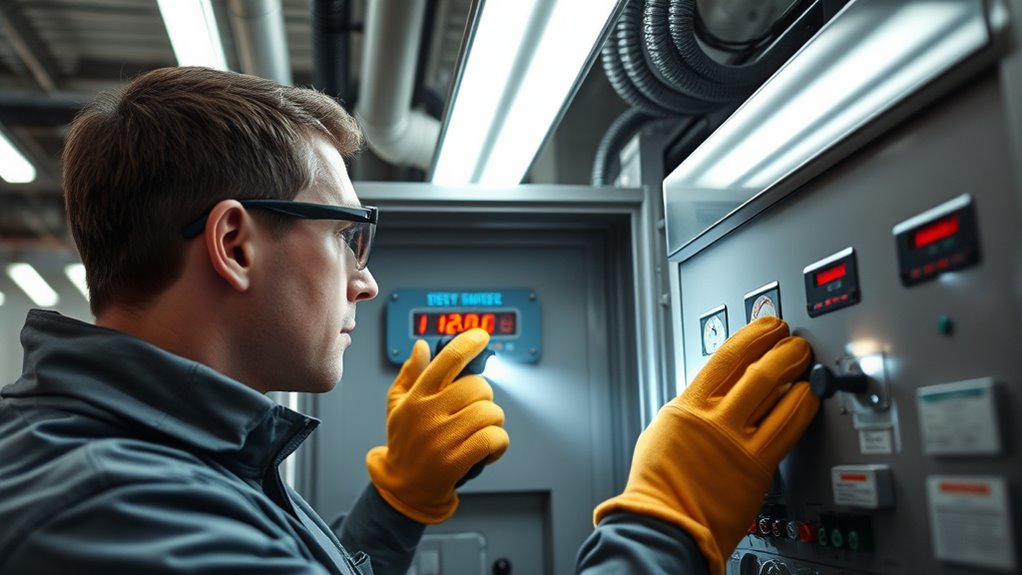
Identifying and addressing issues promptly is essential to guarantee your emergency power system functions reliably. When problems arise during testing, focus on circuit diagnostics to locate faults efficiently. Check the battery maintenance status, ensuring terminals are clean and batteries are fully charged. Use the following table to guide troubleshooting:
| Issue | Solution |
|---|---|
| Battery not holding charge | Replace or recharge batteries |
| Circuit faults | Inspect wiring, reset breakers |
| System not activating | Test control panel connections |
| Unusual noises | Examine for loose components |
| Slow response time | Verify circuit diagnostics |
Regular testing also helps identify potential European cloud vulnerabilities before they impact operations. Proper testing procedures are vital to ensure the system’s reliability and effectiveness during emergencies. Additionally, understanding Rhythm Failure concepts can aid in diagnosing complex issues within electronic components.
Frequently Asked Questions
How Often Should Emergency Power Systems Be Tested?
You should test your emergency power systems at least quarterly to guarantee they’re reliable during an outage. Incorporate maintenance schedules that include regular testing and equipment calibration to keep everything in top condition. This proactive approach helps identify issues early, preventing failures when you need backup power most. Consistent testing and calibration also extend the lifespan of your equipment, ensuring your emergency systems remain fully operational when necessary.
Can Testing Disrupt Normal Power Supply?
Think of testing emergency power systems like a fire drill—necessary but planned carefully. Testing procedures are designed to prevent disruptions, so they rarely cause a power outage. During tests, the system switches automatically, ensuring your normal power supply stays steady. Properly scheduled tests prevent surprises, just like rehearsing a fire drill keeps everyone safe. So, with well-planned testing, your power stays reliable without disruption.
What Are the Common Signs of System Failure?
You’ll notice signs of system failure through battery maintenance issues like corrosion or low voltage, which can cause unexpected shutdowns. During system diagnostics, look for alarms, irregular behavior, or failure to activate during power outages. Regular testing helps identify these problems early, ensuring your emergency power system functions reliably when needed. Stay vigilant and perform routine checks to prevent system failures and maintain peak performance.
Are There Specific Certifications Required for Testing Personnel?
Like a knight needing his armor, testing personnel must meet specific certification requirements to guarantee safety and competence. You should verify that testing personnel possess relevant certifications such as NICET or factory-trained credentials, depending on your system. These certifications validate their knowledge and skills, reducing risks during testing. Always verify that your team is properly certified, as this guarantees they can safely and effectively handle emergency power system testing.
How Long Should Emergency Power Systems Be Tested Each Session?
You should test your emergency power systems at least once a year, ensuring thorough battery maintenance and load testing. During each session, run the system under simulated power failure conditions for about 30 minutes to verify reliability. Regular testing helps identify potential issues early, maintaining system readiness. Keep detailed records of each test to track performance and compliance, and always follow safety protocols during the process.
Conclusion
Regularly testing your emergency power system is vital for safety. Did you know that nearly 60% of system failures occur due to overlooked testing protocols? By following proper procedures, wearing PPE, and recording results, you guarantee your system’s reliability when it’s needed most. Stay vigilant, troubleshoot issues promptly, and never skip a test. A proactive approach keeps everyone safe and your emergency systems ready to perform under pressure.