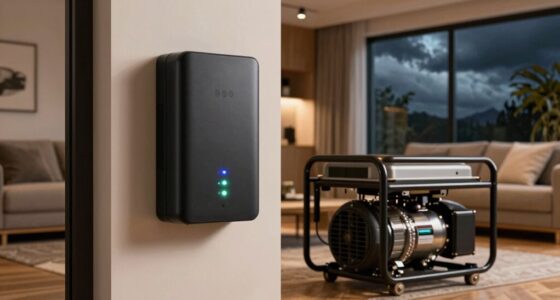
During a blackout, essential devices include reliable flashlights or lanterns to see clearly, backup power sources like power banks or generators to keep your phones and communication gear charged, and emergency radios to stay updated on crucial information. Hands-free lighting options such as headlamps improve safety, while first aid kits help handle medical needs. Knowing which devices matter most can keep you safe and connected—if you keep exploring, you’ll find simple ways to guarantee you’re prepared.
Key Takeaways
- Battery-powered communication devices like emergency radios and cell phones ensure vital information and alerts are received.
- LED flashlights, lanterns, and headlamps provide essential illumination for safety and daily tasks.
- Backup power sources such as generators, solar panels, and power banks keep critical devices operational.
- First aid kits and safety equipment are crucial for health emergencies and injury management during outages.
- Storage and maintenance of chargers, batteries, and lighting devices maximize reliability and readiness.
Why a Reliable Flashlight Is a Must-Have During a Blackout
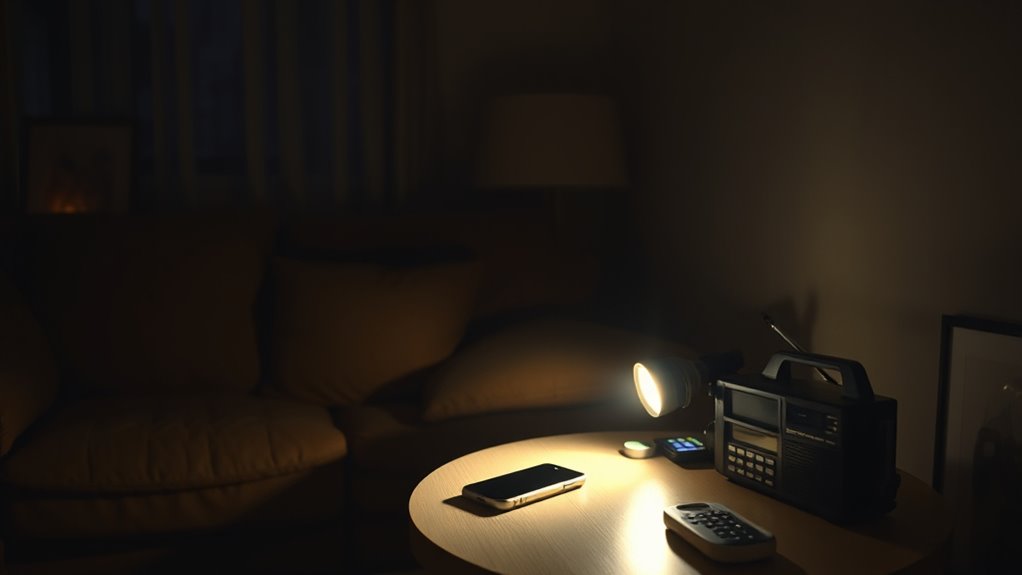
During a blackout, a reliable flashlight becomes an essential tool because it provides immediate, focused light when your main power source fails. When visibility drops, you need to quickly locate emergency food and water purification supplies, which can be difficult in the dark. A sturdy flashlight ensures you can find these essentials safely and efficiently. It also helps you navigate safely around your home or yard, avoiding hazards. Without proper lighting, accessing critical items like bottled water or water purification systems becomes more challenging. A dependable flashlight keeps you prepared, reducing panic and confusion. Keeping extra batteries nearby to maintain its functionality during extended outages is also recommended. Using a protective styling flashlight also helps prevent damage to the device from accidental drops or impacts, ensuring it remains functional when most needed. Additionally, understanding the contrast ratio of your flashlight can help you select one that performs well in low-light conditions, enhancing visibility. Choosing a flashlight with a high lumens output can significantly improve your ability to see in complete darkness, making your emergency management easier. Moreover, selecting a model with a long battery life ensures continuous illumination during prolonged outages, providing peace of mind. A well-chosen flashlight with features like water resistance can also withstand unexpected weather conditions, keeping you safe and prepared. Having a reliable light source simplifies managing your emergency supplies and helps you stay safe until power is restored.
How to Keep Your Devices Charged With Power Banks and Portable Chargers
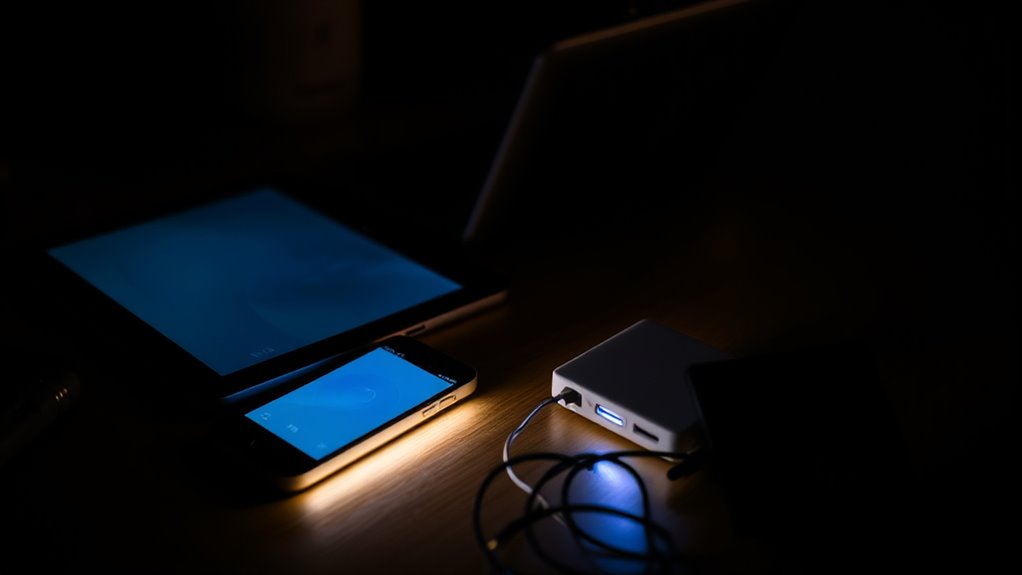
Choosing the right power bank guarantees your devices stay charged when the power goes out. You’ll want to take into account capacity, compatibility, and portability to meet your needs. Proper maintenance and storage will keep your chargers ready for any blackout situation. Additionally, understanding deep-sky imaging principles can help you make informed decisions about power needs for your specific equipment. For optimal performance, consider the types of portable chargers available to ensure they suit your device requirements and usage patterns. Being aware of evidence‑informed guidance can help you select the best devices to support your needs during emergencies. Knowing how to evaluate safe electrical practices will further ensure your backup power solutions are reliable and secure in crisis situations. Remember that transfer‑switch fundamentals are crucial when connecting backup power sources safely to your home systems.
Choosing Right Power Banks
When a blackout hits, having the right power bank can make all the difference in keeping your devices functioning. Look for a power bank compatible with solar panels, so you can harness renewable energy if the grid remains down. A solar-capable power bank is especially useful during extended outages, providing a sustainable charging option. Consider including a reliable power bank in your emergency kit, guaranteeing you have a backup power source for essential devices like phones and radios. Choose one with sufficient capacity to charge multiple devices and fast-charging features for convenience. Small, portable models are easy to carry, but larger units deliver longer-lasting power. Selecting the right power bank tailored to your needs helps ensure you stay connected and safe during a blackout. Additionally, understanding your water quality and flow rate needs can help you prepare more effectively for various emergencies. To maximize your preparedness, familiarize yourself with battery capacity and how it aligns with your device usage during outages. Having knowledge of power consumption rates can further optimize your device management during extended outages. It’s also beneficial to consider the overall device compatibility to ensure your devices can effectively utilize the power bank’s features. Incorporating load calculations can help you determine the appropriate capacity for your specific device needs and avoid overloading your power sources.
Charging Multiple Devices
To keep multiple devices powered up during a blackout, you’ll want to select a versatile power bank or portable charger with enough capacity and multiple output ports. Look for models that support solar backups, allowing you to recharge using sunlight when mains power is unavailable. This flexibility guarantees your devices stay charged longer. Effective battery management is vital; prioritize chargers with smart charging features that prevent overcharging and optimize power distribution among your devices. Consider a power bank with a high capacity to handle smartphones, tablets, and small gadgets simultaneously. Keep in mind that solar backups extend your power options, especially in prolonged outages. Additionally, understanding sound healing science can inspire creative ways to maintain mental well-being during stressful blackout situations. By choosing the right device, you make certain your essential electronics remain functional, keeping you connected and informed during emergencies. Choosing the right device involves understanding battery management and how to maximize your power sources effectively. Proper energy efficiency practices can further extend your device operation, conserving power for critical moments.
Maintenance and Storage
Proper maintenance and storage of your power banks and portable chargers guarantee they’re ready when you need them most. To assure reliable performance, regularly perform battery maintenance by charging devices fully and avoiding deep discharges. Use appropriate storage techniques: keep chargers in a cool, dry place, away from direct sunlight and extreme temperatures. Before storing for an extended period, charge them to about 50% to prevent battery degradation. Check and refresh the charge periodically if not used often. Keep cables and accessories organized to avoid damage. Proper care helps extend the lifespan of your devices and ensures they’re functional when blackout strikes. Additionally, understanding filtration principles can help you select the most efficient charging devices tailored for your needs. Regular filter maintenance, including cleaning and timely replacements, is also essential for keeping air purification devices functioning optimally in emergency situations. With good maintenance habits and smart storage, your portable power sources will always be prepared to keep your essential devices running. Incorporating energy management techniques can further optimize your backup power system and extend battery life during outages. Moreover, paying attention to battery technology advances can help you choose more reliable and longer-lasting portable chargers.
The Best Emergency Radios to Stay Informed When Power Is Out
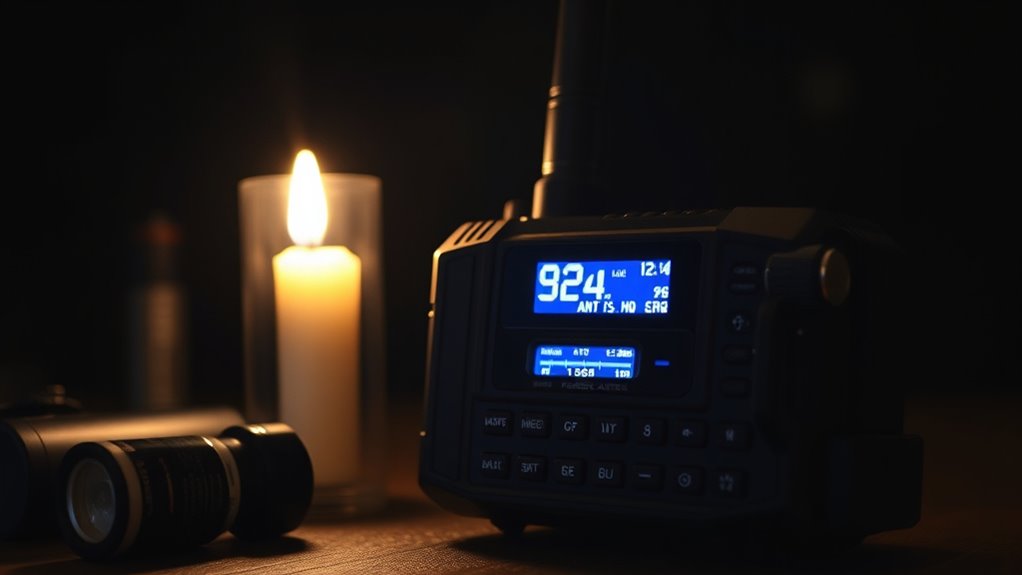
Choosing the right emergency radio depends on its signal reception, power options, and user-friendliness. You want a device that picks up broadcasts clearly, works with multiple power sources, and is simple to operate. These features guarantee you stay informed quickly and reliably during a blackout.
Signal Reception Capabilities
When the power goes out, having an emergency radio with strong signal reception becomes essential for staying informed. To improve reception, consider an antenna upgrade, which can greatly boost your radio’s ability to pick up distant broadcasts. Some radios also support signal boosters, amplifying weak signals for clearer sound and more reliable reception. Look for models with multi-band capabilities, as they can access a wider range of frequencies, including NOAA weather alerts and emergency broadcasts. A good antenna or booster helps you stay connected to critical information, even in challenging conditions. Keep in mind that a portable, durable radio with these features ensures you won’t miss crucial updates during a blackout. Enhancing signal reception keeps you better prepared and informed when it matters most.
Power Source Flexibility
During a blackout, having an emergency radio with flexible power options is essential to staying connected. Look for radios that can run on solar panels, backup batteries, or hand cranks. This guarantees you’re not dependent on a single power source, increasing your chances of staying informed. Flexibility means you can recharge during sunny days or use stored energy when needed.
| Power Source | Benefits |
|---|---|
| Solar Panels | Recharges with sunlight, eco-friendly |
| Backup Batteries | Portable, easy to replace or recharge |
| Hand Crank | No external power needed, instant use |
Ease of Use
In an emergency, you need a radio that’s simple to operate so you can quickly access vital information without fuss. Look for models with user-friendly interfaces that don’t require complicated setups. An intuitive operation means you can turn it on, tune in, and understand the information immediately, even under stress. Features like clearly labeled buttons, straightforward menus, and easy-to-read displays make a big difference during a blackout. Avoid radios with confusing controls or hidden functions, which can delay your response. The best emergency radios prioritize ease of use, so you can focus on staying safe instead of figuring out how to operate the device. Quick, simple access to news and alerts can be lifesaving when power is out.
When and Why to Invest in a Backup Generator for Your Home
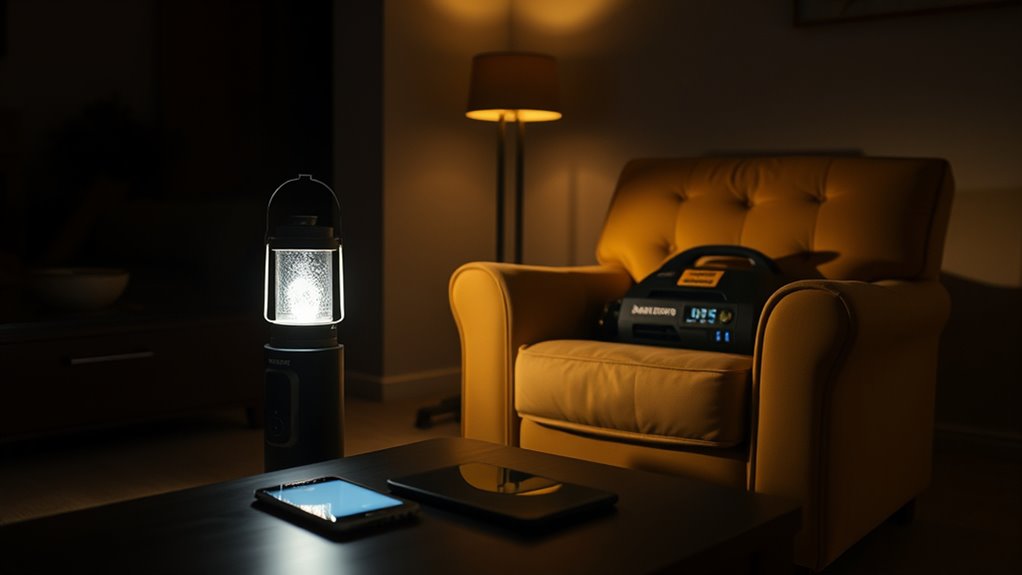
Power outages can strike unexpectedly, leaving your home without electricity when you need it most. Investing in a backup generator makes sense if you want reliable power during these times, especially if you rely on solar power or emergency kits that need consistent energy. Consider a generator if outages are frequent or last several hours, affecting essential appliances or medical devices. A generator can keep your refrigerator running, ensure heating or cooling, and power lights so you stay safe and comfortable. It’s a smart investment if you want peace of mind and independence during blackouts. Plus, having a backup power source makes it easier to maintain your emergency kits and keep your home functioning until the power is restored.
How to Stay Connected Safely With Cell Phones and Communication Devices

When a blackout occurs, staying connected with your cell phone and communication devices is crucial for safety and staying informed. To keep your devices powered, consider solar charging options, such as portable solar panels or solar power banks, which can recharge your phone without electricity. Signal boosting is equally important, especially if your service weakens during an outage. Use signal amplifiers or apps that help locate the best network signals, guaranteeing you can make calls or send messages. Keep a backup power source ready, like a portable charger, and conserve battery life by closing unused apps. Regularly test your solar charger and signal booster to verify they work when needed. Staying connected could be your lifeline in an emergency.
Hands-Free Lighting: LED Lanterns and Headlamps for Convenience

During a blackout, hands-free lighting options like LED lanterns and headlamps become invaluable for safety and convenience. Solar powered options are especially useful since they recharge during the day, providing eco-friendly, renewable light when needed most. Battery operated lights are reliable and easy to use, requiring no external power source, making them a practical choice. Headlamps allow you to keep your hands free while working or steering through dark areas, reducing accidents and increasing efficiency. LED lanterns distribute bright, even light throughout a room or outdoor space, helping you see clearly without holding a flashlight. Whether solar powered or battery operated, these devices guarantee you have reliable, hands-free illumination that makes managing a blackout safer and more manageable.
Essential First Aid and Safety Tools for Power Outages
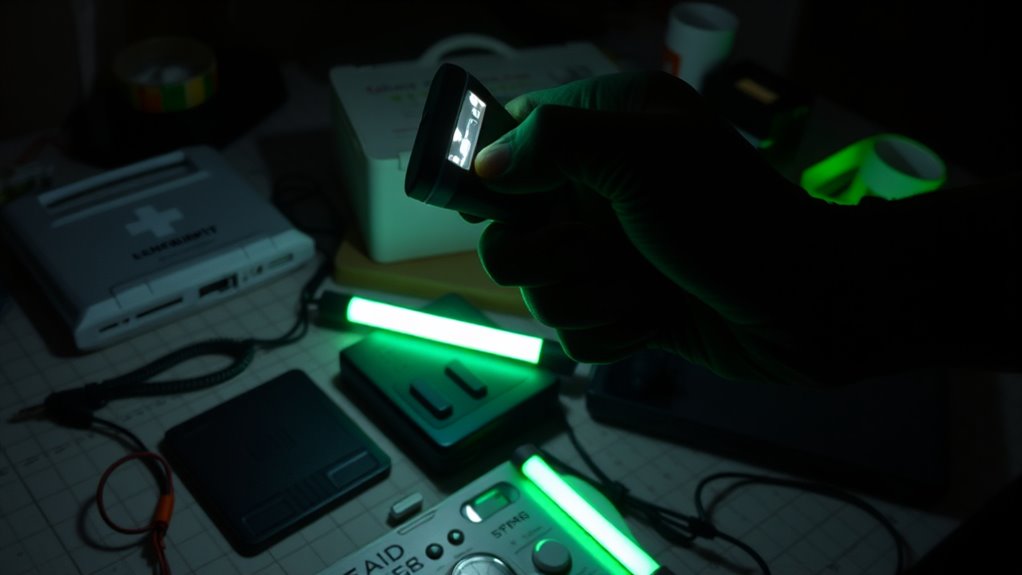
Having essential first aid and safety tools on hand is critical to handle emergencies effectively during a power outage. A well-stocked first aid kit ensures you can treat minor injuries, cuts, or burns promptly, preventing infections and complications. Keep it accessible and update supplies regularly. Emergency blankets are also indispensable; they help retain body heat if someone’s feeling cold or in shock, which can be common during outages. These lightweight, insulating blankets are easy to store and deploy quickly. Together, first aid kits and emergency blankets prepare you to respond confidently to health-related issues and sudden temperature drops. Being equipped with these tools reduces panic and helps protect you and your loved ones until normal conditions are restored.
Smart Home Devices That Help Manage Power Outages Effectively

Smart home devices can substantially improve how you manage power outages by providing automation, alerts, and backup solutions. With home automation systems, you can set your devices to automatically turn on essential appliances during a blackout, ensuring critical needs are met. Energy monitoring tools help you track your power consumption, identifying devices that drain energy unnecessarily and optimizing usage to extend backup power. Smart thermostats and lighting can be programmed to operate efficiently or turn off when grid power is lost, conserving energy. Additionally, alerts notify you immediately if your system detects a power outage or when power is restored. These devices make managing outages easier, reducing stress and keeping you informed, safe, and comfortable even when the lights go out.
Non-Electronic Essentials to Prepare for Extended Blackouts

Preparing for extended blackouts requires more than just electronic devices; it’s crucial to have non-electronic essentials on hand. Solar cooking allows you to prepare meals without electricity, saving fuel and reducing dependency on power sources. It’s a dependable way to cook during prolonged outages, especially in sunny conditions. Water purification is equally important; stock water filters or purification tablets to ensure access to clean drinking water. These supplies help prevent dehydration and waterborne illnesses. Additionally, keeping manual tools like can openers, flashlights, and batteries will support your daily needs. Having these non-electronic essentials ready ensures you can stay safe, nourished, and healthy even when the grid goes down. Preparing now minimizes stress and keeps you resilient during extended blackouts.
Frequently Asked Questions
How Can I Protect My Electronic Devices From Power Surges During Outages?
To safeguard your electronic devices from power surges during outages, always use surge protectors to block unexpected voltage spikes. Regular device maintenance helps guarantee your equipment remains in good condition, reducing vulnerability. Unplug devices when not in use or during severe storms. Additionally, consider investing in a whole-house surge protector for thorough security. These steps keep your electronics safe and extend their lifespan, giving you peace of mind during power disruptions.
What Are the Best Ways to Conserve Battery Life on Essential Devices?
To conserve battery life on essential devices, focus on battery preservation and smart charging strategies. Dim your screen brightness and turn off unnecessary notifications to reduce power drain. Use power-saving modes whenever possible, and keep devices unplugged when not charging. Avoid overcharging by unplugging once fully charged. These tactics help extend your device’s battery life, ensuring they stay operational longer during power outages.
Which Devices Are Most Reliable for Emergency Communication When Cell Service Is Down?
Satellite phones and two-way radios are your most reliable devices for emergency communication when cell service is down. Satellite phones connect directly to satellites, ensuring you can call or text from remote areas. Two-way radios are great for local communication, especially if you’re in a group or community. Keep these devices charged, have spare batteries, and practice using them so you’re prepared when a blackout hits.
How Do I Choose the Right Backup Power Solution for My Specific Needs?
To select the right backup power solution, consider your battery capacity needs and how you’ll manage power during an outage. Assess which devices you need most, like communication tools or essential appliances, and select a system with enough capacity to keep them running. Focus on effective power management features, such as automatic shutoff or adjustable output, to maximize efficiency and ensure uninterrupted operation when you need it most.
What Are the Legal Considerations for Using Backup Generators in Residential Areas?
When using backup generators in residential areas, you need to follow generator regulations and obtain legal permits as required by local authorities. Make sure your generator complies with noise and emissions standards to avoid fines. Check with your city or county regulations before installation. Properly planning and securing the necessary permits guarantee safe operation and compliance, preventing legal issues during power outages.
Conclusion
When a blackout strikes, having the right devices guarantees your safety and comfort. From trusty flashlights to reliable power banks, these essentials keep you connected and secure—think of them as your modern-day lanterns guiding you through the dark ages. Prepare now, before the lights go out, so you’re not left to fend in the shadows like a castaway on a deserted isle. Stay ready, stay safe, and keep your devices close!