In public and private settings, you use AEDs to respond quickly during cardiac emergencies by following clear voice prompts and applying adhesive pads to the person’s chest. Devices are placed in accessible locations like airports, gyms, offices, or schools to make certain of fast assistance. Proper training and regular maintenance keep AEDs ready to go. If you’d like to understand how to use and maintain them effectively, there’s more to discover on this topic.
Key Takeaways
- AEDs are strategically placed in public venues like malls, airports, and sports arenas for quick access during emergencies.
- In private settings such as offices and gyms, AEDs are located in high-traffic areas like entrances and common rooms.
- Users follow voice prompts and visual cues from AEDs, ensuring proper operation during cardiac emergencies.
- Regular maintenance, including battery and pad checks, ensures AED readiness in both public and private environments.
- Legal protections, like Good Samaritan laws, encourage bystanders to use AEDs promptly without fear of liability.
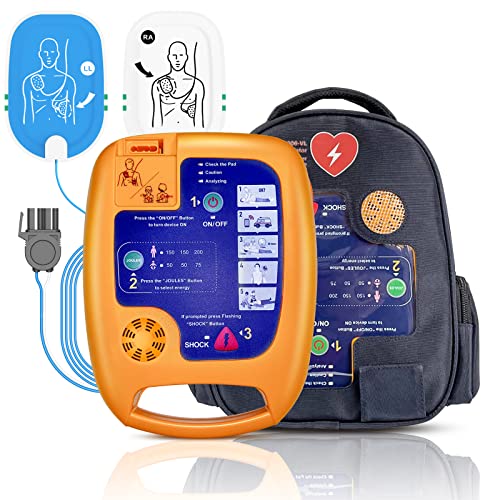
AED Automatic External Defibrillator Portable Emergency Device Suitable for Home Use in Gyms, Subways, and Companies
1
As an affiliate, we earn on qualifying purchases.
As an affiliate, we earn on qualifying purchases.
What Are AEDs and How Do They Save Lives?
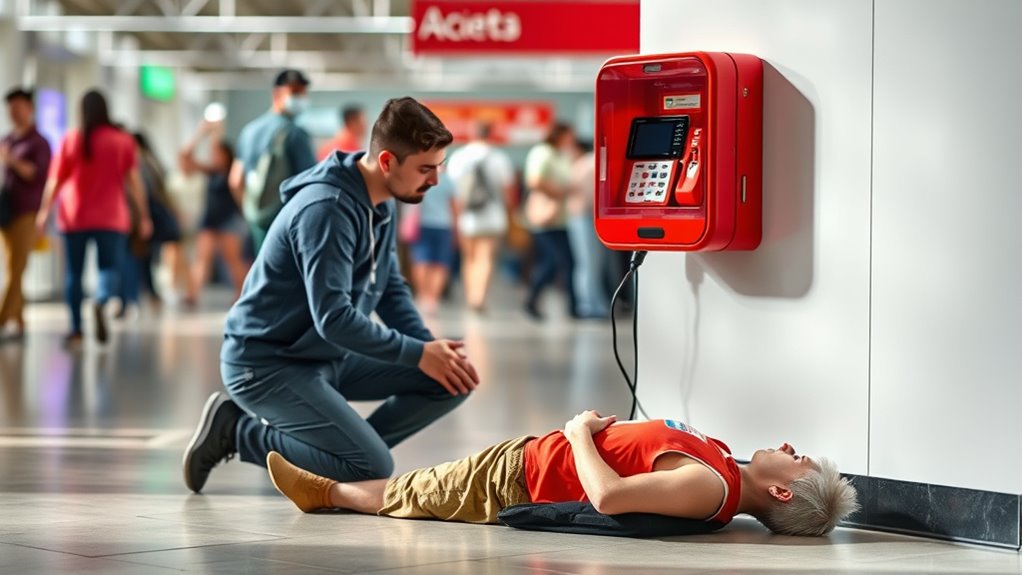
An Automated External Defibrillator (AED) is a portable device designed to analyze a person’s heart rhythm and deliver an electric shock if needed to restore a normal heartbeat. Automated External Defibrillators are essential tools in emergency preparedness because they can considerably increase survival chances during sudden cardiac arrest. When someone collapses and is unresponsive, using an AED quickly can make the difference between life and death. The device guides you through each step with clear voice prompts, making it accessible even if you’re not medically trained. By acting swiftly and confidently with an AED, you help restore heart rhythm and buy precious time until professional help arrives. Proper knowledge and readiness to use AEDs are crucial components of effective emergency preparedness. Quality assessment of AEDs ensures they are reliable and effective in critical moments. Having training and familiarity with AED operation can significantly improve outcomes in emergency situations. Additionally, understanding the role of AEDs in public and private settings helps communities prepare better for cardiac emergencies, including the importance of location accessibility to ensure quick response times. A diverse range of AED models also exists to meet various environment needs, further emphasizing the importance of selecting appropriate devices for different settings.
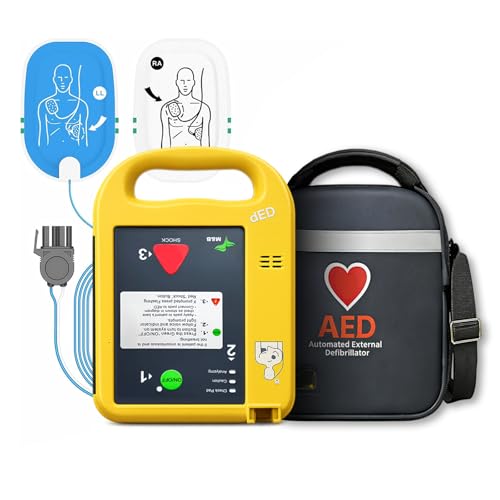
AED Automatic External Defibrillator, Portable Machine Emergency Suitable for Home, Gym, Office, School, and Public Access (Subway/Mall)
Safety Precautions:Do not immerse in water . If accidental exposure is suspected, do not operate the unit until…
As an affiliate, we earn on qualifying purchases.
As an affiliate, we earn on qualifying purchases.
Where Are AEDs Located in Public and Private Spaces?
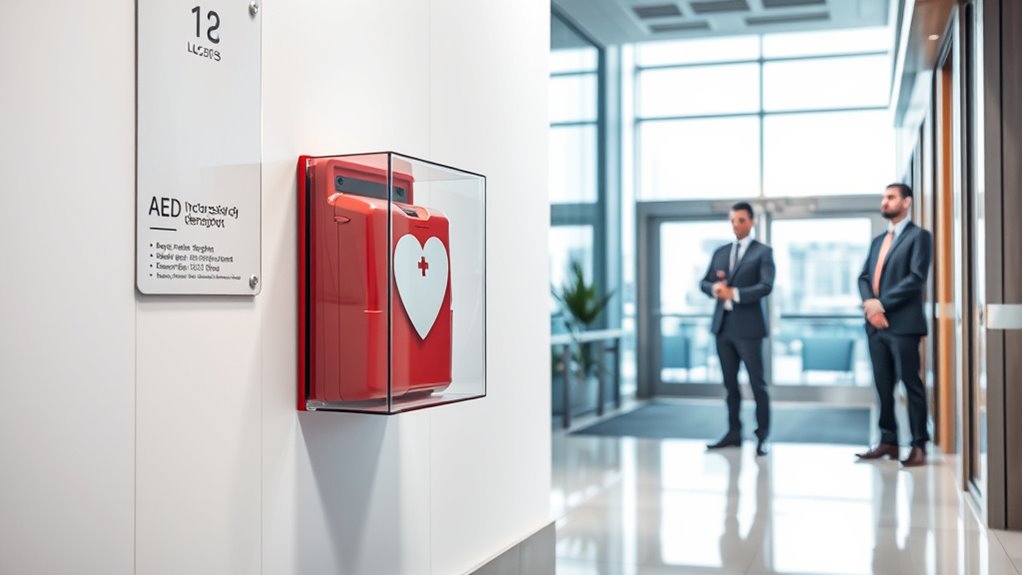
You’ll find AEDs in many public spaces like airports, malls, and sports venues, making them available during emergencies. Private facilities, such as offices and gyms, also place AEDs strategically to guarantee quick response times. Knowing where these devices are situated helps you act swiftly if someone needs life-saving assistance. Proper placement and accessibility of AEDs are essential to ensure rapid use during critical moments. Additionally, public access defibrillation programs aim to increase AED availability and encourage bystander intervention in emergencies. Ensuring trained responders are familiar with AED locations further enhances the effectiveness of emergency response efforts. Proper AED signage and clear instructions also play a crucial role in facilitating immediate use when every second counts. Being aware of environmental considerations, such as outdoor or high-traffic areas, can improve response times and device accessibility.
Public Space Locations
Where are AEDs typically found in public and private spaces? You’ll often see AEDs in high-traffic areas where quick access can save lives. Effective AED placement is essential for emergency preparedness, ensuring devices are accessible during sudden cardiac events. Common public space locations include:
- Sports arenas and stadiums
- Airports and train stations
- Shopping malls and plazas
- Schools and universities
These strategic placements help reduce response time and increase survival chances. By understanding where AEDs are usually located, you can better recognize potential access points during emergencies. Proper AED placement isn’t just about compliance; it’s about readiness. Knowing the locations in public spaces empowers you to act swiftly and confidently if someone needs life-saving assistance. Strategic placement is vital for maximizing the effectiveness of AED deployment in various environments.
Private Facility Placement
AEDs are strategically placed in private facilities to guarantee quick access during emergencies. These locations are chosen based on the facility’s layout, high-traffic areas, and the need for rapid response. Proper emergency preparedness involves not only placing AEDs but also ensuring staff are trained in AED use through AED training programs. This readiness can make the difference between life and death. Consider the following placement strategies:
| Location | Accessibility | Staff Training |
|---|---|---|
| Main Entrances | Visible and unobstructed | Regular AED training |
| Gyms & Fitness Centers | High-traffic zones | Emergency response drills |
| Conference Rooms | Central and easy to reach | Staff familiarization |
| Cafeterias | Close to dining areas | Basic AED operation |
| Private Offices | Strategic and accessible | Periodic refreshers |
Additionally, understanding AED placement strategies ensures that these devices are optimally positioned for maximum effectiveness during emergencies. Proper placement is especially crucial in areas with high foot traffic, where rapid response can significantly improve survival rates.

Training AED Ultratrainer, Single, Training Prestan AED
The Prestan Professional AED Trainer outperforms the competition in terms of quality, durability, and training
As an affiliate, we earn on qualifying purchases.
As an affiliate, we earn on qualifying purchases.
How Do You Use an AED? Training and Accessibility Tips
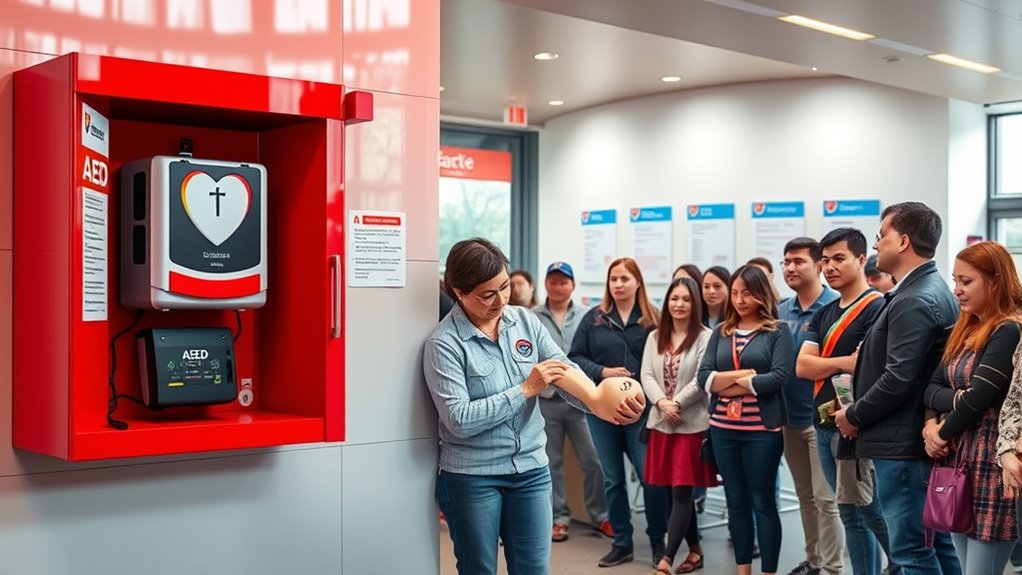
Knowing how to use an AED quickly and confidently can make the difference between life and death during a cardiac emergency. Proper AED training guarantees you’re prepared to act swiftly, following clear prompts and combining it with essential CPR techniques. To improve accessibility and readiness, consider these tips:
- Familiarize yourself with AED operation through regular training sessions
- Keep AEDs in visible, easily accessible locations
- Practice CPR techniques regularly to stay confident
- Encourage public awareness to reduce hesitation in emergencies
- Understand the importance of AED accessibility to ensure timely intervention
- Recognize that Free Floating environments often lack designated AED placement, making awareness even more critical
- Being aware of Vetted information about AEDs ensures you rely on accurate and trustworthy guidance during emergencies
- Regularly review small appliances and comfort devices to ensure they are functioning properly and accessible in case of emergencies
- Staying informed about AED operation and maintenance enhances your ability to respond effectively in critical moments

AED First Kit with CPR, Gloves, Razor, Scissors, Gauze Pads, and Cleansing Wipes for AED Training
CPR mask with one-way valve prevents mouth-to-mouth contact and risk of infection or contamination (with user instruction).
As an affiliate, we earn on qualifying purchases.
As an affiliate, we earn on qualifying purchases.
What Are the Legal Protections for AED Use in Different Settings?

You’re protected by laws that often grant immunity to bystanders who use an AED in emergencies, encouraging quick action without fear of legal consequences. Workplace policies typically include liability protections to guarantee employees can assist without worry. Understanding these legal protections helps you respond confidently when every second counts. Additionally, being aware of the regulatory framework surrounding AED use can further empower individuals to act appropriately in critical situations. Knowing the legal protections available can also reduce hesitation and promote prompt intervention, especially when combined with knowledge about vetted procedures for wave and wind conditions that might affect emergency response efforts. Moreover, familiarity with personal debt forgiveness programs and credit management can alleviate stress during emergencies, allowing responders to focus fully on saving lives. Recognizing the importance of emergency response training can also enhance overall readiness and confidence in using AEDs effectively.
Legal Immunity for Bystanders
Legal protections for bystanders who use AEDs vary depending on the setting, but they generally aim to encourage prompt assistance without fear of liability. These laws support your bystander response during emergencies, emphasizing the importance of quick action in saving lives. When you’re prepared with AED training and awareness of legal protections, you help strengthen emergency preparedness in your community.
- Good Samaritan laws often shield you from legal consequences when providing emergency care.
- Good-faith use means your efforts are protected as long as you act reasonably and without gross negligence.
- Coverage scope may differ between public and private settings, but the goal remains to promote immediate aid.
- Legal immunity encourages more people to step forward, ensuring help arrives faster in critical moments.
Liability Protections in Workplaces
In workplaces, liability protections for AED use are designed to encourage prompt assistance during emergencies. These protections help guarantee that employees or trained responders feel confident using AEDs without fear of legal repercussions. Many states have Good Samaritan laws that extend immunity to those providing emergency aid, including AED use, as long as actions are reasonable and within their training. Workplace safety regulations often incorporate these laws, creating a supportive environment for quick response. By establishing clear liability protections, employers promote a culture of safety and preparedness. This legal framework helps prevent hesitation in critical moments, ensuring that life-saving interventions happen swiftly. Overall, liability protections are essential for maintaining effective workplace safety protocols involving AEDs.
How Do You Maintain and Check AEDs in Public and Private Environments?
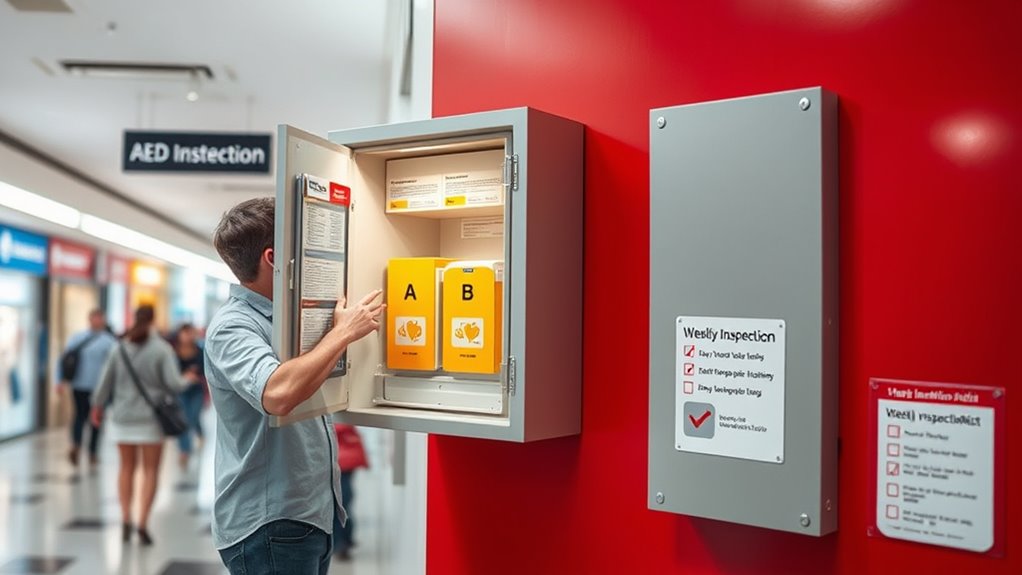
Regular maintenance and inspections are essential to guarantee AEDs are ready to use when needed. Proper AED maintenance involves checking the device’s battery life, ensuring electrode pads are within their expiration date, and confirming the equipment inspection logs are up to date. You should perform visual inspections weekly or as recommended by the manufacturer.
Regularly inspect AEDs to ensure readiness and proper functioning.
Key points to keep in mind include:
- Regularly test the AED’s power and readiness status
- Replace expired or used electrode pads
- Keep the device clean and dry
- Document all maintenance activities for accountability
Why Increasing AED Availability Can Save More Lives
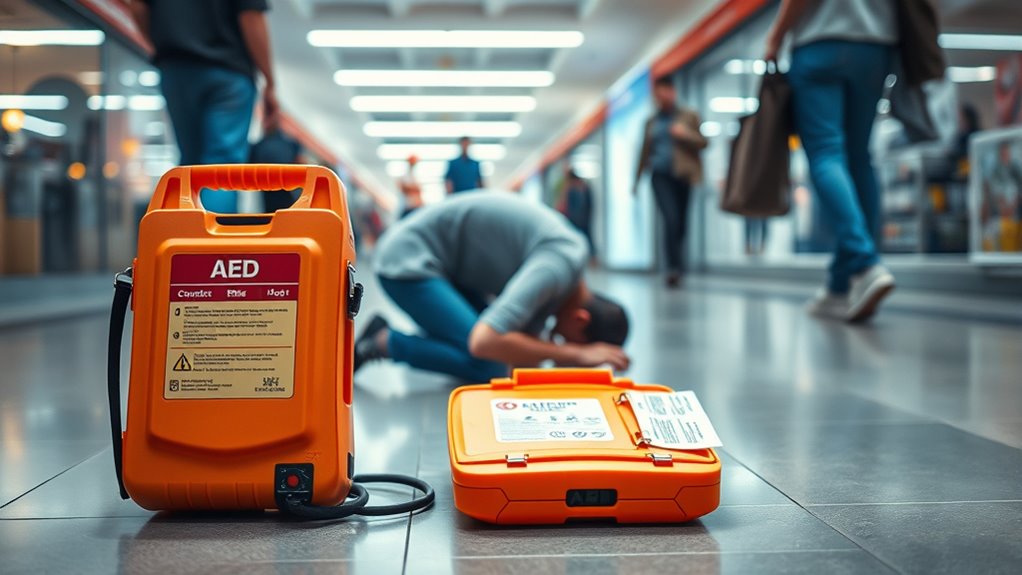
Ensuring AEDs are properly maintained is only part of the equation; making these devices more accessible in public and private spaces can considerably increase survival chances during sudden cardiac emergencies. Automated external defibrillators are crucial tools that, when readily available, drastically reduce response time and improve outcomes. Increasing AED availability enhances emergency preparedness by ensuring help is close at hand, especially in high-traffic areas like schools, gyms, and workplaces. The more AEDs you have accessible, the more lives you can save, as every second counts during a cardiac arrest. Expanding access to automated external defibrillators empowers bystanders to act confidently and effectively, turning ordinary people into lifesavers and strengthening community resilience against sudden cardiac events.
How Do Public and Private AED Deployments Differ?
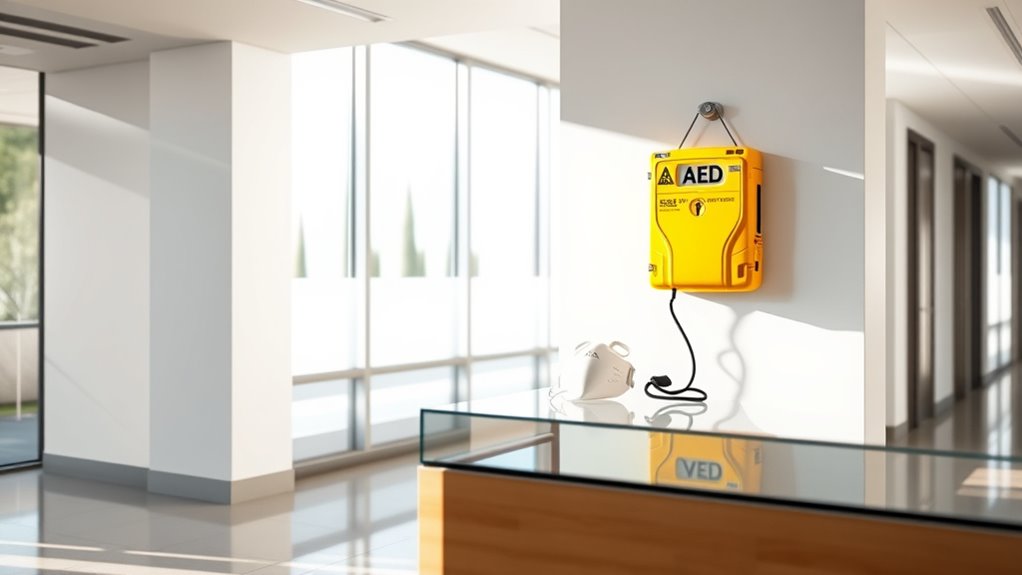
How do public and private AED deployments differ in their approach to saving lives? Public deployments focus on maximizing AED accessibility in high-traffic areas, emphasizing widespread availability for emergency preparedness. Private deployments are typically limited to workplaces or homes, where AED access depends on individual planning. Public settings often have clear signage and regular maintenance to ensure readiness, while private setups rely on owners’ awareness and preparedness.
Public AEDs are strategically placed for quick access, while private AEDs depend on owner awareness and maintenance.
- Public AEDs are strategically placed for quick access during emergencies
- Private AEDs depend on owner awareness and maintenance
- Public deployment supports community-wide emergency response
- Private AEDs require individual readiness and training
Understanding these differences helps you recognize the importance of both environments in saving lives through effective AED deployment.
How Can You Prepare Your Home or Workplace for Cardiac Emergencies?
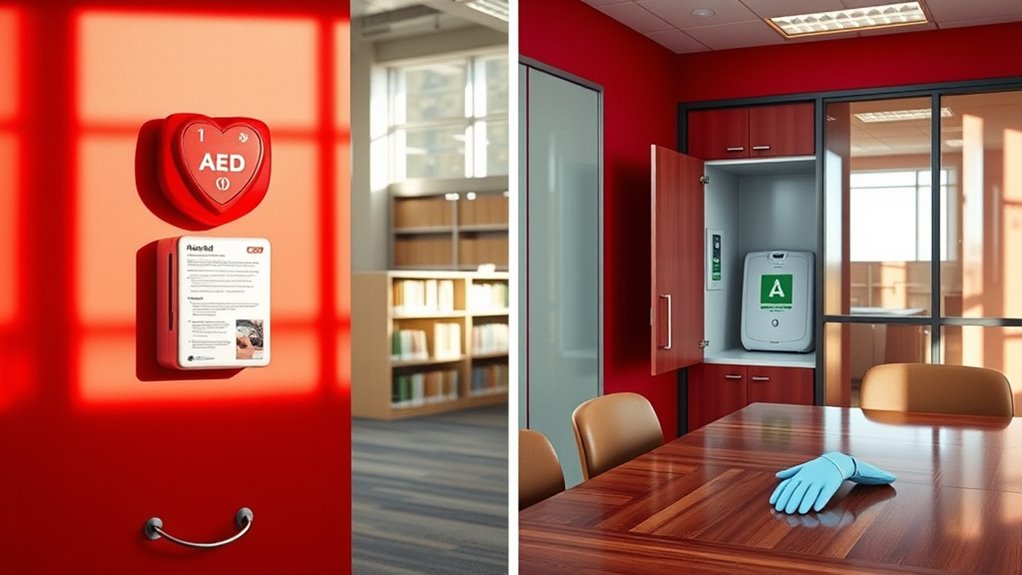
Preparing your home or workplace for cardiac emergencies starts with proactive planning and easy access to life-saving equipment. First, make sure that an AED is available and maintained regularly, so it’s ready when needed. Incorporate home safety measures by teaching family members or coworkers CPR and AED use, making sure everyone knows how to respond quickly. Workplace preparedness includes creating emergency response plans, clearly posting AED locations, and conducting regular drills. Keep the AED in a visible, accessible spot, free of clutter or obstructions. Additionally, keep emergency contact information nearby. By taking these steps, you create a safer environment that minimizes response time during cardiac events, increasing the chances of survival and reinforcing the importance of preparedness in both home safety and workplace settings.
Frequently Asked Questions
Who Is Authorized to Operate an AED During Emergencies?
You are authorized to operate an AED during emergencies if you have completed the necessary training certification. Legal requirements typically specify that anyone trained in AED use can operate it, regardless of their professional background. It’s vital to stay current with your training to guarantee you’re confident and capable during a real emergency. Remember, the goal is to provide prompt assistance and increase the victim’s chances of survival.
How Often Should AED Batteries and Pads Be Replaced?
Imagine you’re at a sports event when someone suddenly collapses. To guarantee your AED is ready, you need to check battery maintenance and pad replacement regularly. Typically, replace AED batteries every 3-5 years and pads every 2-5 years, or sooner if expired. Regularly inspecting your AED ensures it’s prepared for emergencies, so stay vigilant about battery and pad updates to save lives effectively.
Can AEDS Be Used on Children or Infants?
Yes, AEDs can be used on children and infants, but you need pediatric shock pads or a special pediatric mode. For infants, infant resuscitation is critical, and you should follow specific guidelines to guarantee safety. Using pediatric shock pads decreases the risk of harm, and if unavailable, adult pads can be used with caution, ensuring proper placement. Always follow the AED’s instructions and seek emergency medical help immediately.
Are There Any Costs Associated With AED Training Programs?
Yes, there are costs associated with AED training programs. You’ll typically pay AED certification costs and training program fees, which vary depending on the provider. These fees cover your instruction, certification, and sometimes access to practice devices. Investing in proper training guarantees you’re confident in using an AED effectively. Look for local courses or online options to find affordable training that fits your budget and learning style.
How Do AEDS Function in Outdoor or Extreme Weather Conditions?
You can rely on AEDs designed for outdoor placement, as they feature weather durability to withstand extreme conditions. These units are built to operate effectively in rain, heat, cold, or humidity, ensuring quick access in emergencies. When placing an outdoor AED, choose a sheltered but accessible location and verify it’s weatherproof. Regular maintenance and checks are essential to confirm the device functions properly despite outdoor weather challenges.
Conclusion
By knowing how AEDs work and where to find them, you hold the power to be a hero in moments of crisis. Think of AEDs as silent guardians, ready to spring into action when lives hang in the balance. With proper training and awareness, you become the spark that ignites hope and saves lives. The more accessible these life-saving devices are, the brighter the future becomes—your quick action could be the key that turns a tragedy into a triumph.